
Pruning
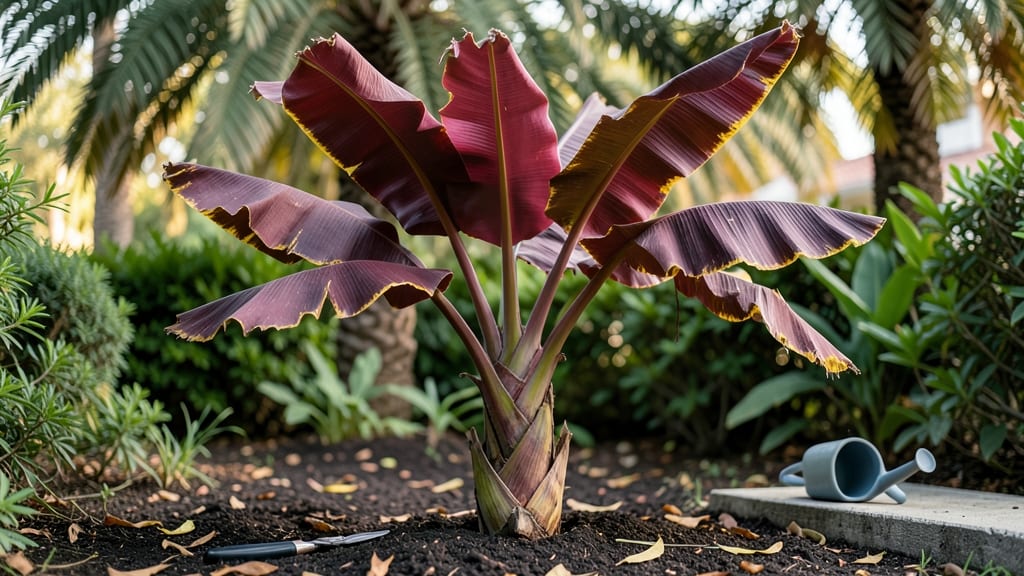
Pruning your Red Dacca banana tree transforms it from a wild tropical giant into a showstopping ornamental centerpiece with bold red stems and glossy leaves. 🌿 I learned the hard way—skipping pruning means losing that striking red bark under a tangle of old fronds, and the plant puts all its energy into fruit instead of foliage.
The key is timing: prune when the current bunch of bananas is ready to harvest, and you'll trigger new growth that keeps your plant lush year-round.
You only need a few simple tools: sharp pruners for clean cuts, a hose for cleaning up, and a bucket for composting the fronds. The process takes about 30 minutes for a mature plant, and the results—thicker stems, brighter foliage, and better air circulation—are worth every minute.
Even in colder zones, proper pruning helps protect the plant from frost damage by keeping it compact and healthy.
What you end up with is a banana tree that looks like it belongs in a tropical paradise, not your backyard. The red stems glow against green leaves, and new fronds unfurl with dramatic flair.
Plus, you'll encourage more banana production because the plant focuses its energy where you want it—on both beauty and harvest.
This method works in containers too, making it perfect for patios or balconies where space is limited. Just be patient: tropical plants like this one reward consistent care with stunning growth that turns heads in any season.
📚 In This Guide
- What you need
- Instructions
- Tips and common mistakes
- Wrapping up and next steps
What you need
- ● Pruning shears or loppers: Sharp, sterilized tools (7–10 inches blade length) for clean cuts.
- ● Disinfectant (70% isopropyl alcohol or bleach solution): 1 part bleach to 9 parts water to sanitize tools between cuts.
- ● Gloves: Heavy-duty, cut-resistant gloves (e.g., gardening or pruning gloves) to protect hands from sap and sharp edges.
- ○ Pruning saw (optional): For thicker pseudostems (10–12 inches blade) if your tree is mature.
- ● Rope or twine (½-inch width): 10–15 feet to secure large fronds during removal.
- ● Compost or mulch: 2–3 inches of organic matter (e.g., coconut coir or well-aged compost) to replenish soil post-pruning.
- ○ Fungicide (copper-based, optional): For prevention if your area has high humidity or fungal risks.
- ● Weather: Prune on a dry, overcast day to minimize stress on the tree.
- ● Timing: Best done in early spring or after fruit harvest (avoid winter in cold climates).
- ● Safety gear: Long sleeves/pants to avoid sap irritation (Red Dacca sap can be mildly irritating!).
- ● Water source: 5-gallon bucket or hose for post-pruning hydration.
- ● Disposal plan: Large trash bags (20–30 gallons) for removing pruned fronds and debris.
Step-by-step guide to pruning your Red Dacca banana tree
Here's how I keep my Red Dacca thriving with clean, strategic cuts all year.
🌿 Step 1: Identify the Right Time for Pruning
Prune your Red Dacca banana tree when it's actively growing—spring through early summer is ideal. Look for these visual cues: new leaves unfurling from the center (the pseudostem) and existing leaves that are fully extended and mature. Avoid pruning during dormancy or when the plant is under stress from extreme heat or cold.
Here's the thing—banana trees grow from the center outward. The oldest leaves are on the outside, and new growth emerges from the heart. I always wait until at least one-third of the leaves are fully mature before pruning. This ensures the plant has enough energy reserves to recover. You'll know it's time when the outer leaves start yellowing naturally from the edges inward.
✂️ Step 2: Remove Dead and Damaged Leaves
Start by cutting away any leaves that are completely brown, torn, or diseased. Use clean, sharp pruning shears to make clean cuts about 1-2 inches above the point where the leaf meets the pseudostem. This prevents water from pooling and causing rot. I always sanitize my shears with rubbing alcohol between cuts to avoid spreading pathogens.
Don't skip this step—even if the leaf looks mostly green but has brown spots or tears. Diseased leaves can spread problems to the rest of the plant. You'll notice the pseudostem looks cleaner and more organized after removing these leaves. This also improves airflow, which is critical for preventing fungal issues in the dense center of the plant.
🌱 Step 3: Thin Out Crowded Foliage for Better Growth
Once the dead leaves are gone, focus on thinning out the remaining foliage to improve light penetration and air circulation. Look for leaves that are growing too close together or overlapping significantly. Select one or two leaves from each cluster, cutting them at the base where they meet the pseudostem. I aim to leave about 6-8 healthy, mature leaves on a well-established Red Dacca.
This might seem counterintuitive—after all, more leaves mean more photosynthesis, right? But banana trees need space for new growth to emerge from the center. Thinning encourages the plant to produce larger, healthier leaves and prevents the center from becoming too dense. You'll see new shoots emerging from the heart of the plant within 4-6 weeks after thinning.
⏰ Step 4: Prune Flower Stems for Larger Fruit
If your Red Dacca produces flower stalks (called "bracts"), you have a choice: leave them for fruit or remove them for larger, more vigorous growth. I usually remove the first flower stalk that emerges because it often produces small, underdeveloped fruit. Use your shears to cut the stalk at the base, right where it meets the pseudostem.
Real talk: Removing flower stalks can be tough if you're hoping for fruit, but it redirects the plant's energy into producing a stronger, more robust pseudostem. If you do decide to keep a flower stalk, watch for fruit development and remove any that look diseased or underdeveloped. You'll notice the remaining leaves grow larger and greener after removing flower stalks, which is a sign the plant is putting its energy into foliage growth.
💧 Step 5: Post-Pruning Care for Recovery
After pruning, give your Red Dacca banana tree a deep watering to help it recover. Water at the base of the plant, avoiding the leaves to prevent fungal diseases. I usually water in the early morning so the leaves have time to dry before evening. Over the next 2-3 weeks, monitor the plant closely for signs of stress like wilting or yellowing leaves.
Here's where it gets fun—watch the center of the plant for new growth. You'll see new leaves unfurling from the heart of the pseudostem within 3-4 weeks. This is your signal that the pruning was successful. During this recovery period, I avoid fertilizing the plant heavily. Instead, I use a light application of balanced fertilizer (like 10-10-10) every 4-6 weeks to support new growth without overwhelming the plant.
Tips & tricks for pruning your Red Dacca banana tree
These simple strategies will help you keep your tropical beauty thriving year-round with minimal stress.
Timing is Everything: Spring and early summer are your prime windows for pruning Red Dacca banana trees. I always check for two key visual cues before I start: new leaves unfurling from the center (the pseudostem) AND at least one-third of the existing leaves showing natural yellowing at the edges. This tells me the plant has enough energy reserves to recover. Confession: I skipped this step for years and wondered why my trees always looked stressed after pruning.
Tool Prep Matters: Never skip sanitizing your pruning shears between cuts! I use rubbing alcohol on a paper towel to wipe down the blades after each cut, especially when dealing with diseased leaves. This prevents cross-contamination that could spread fungal infections throughout your plant. I also make sure my shears are sharp—I can tell when they're dull because the cuts look jagged instead of clean. A dull blade can actually damage the plant tissue more than a clean cut.
Visual Cues for Perfect Pruning: When thinning foliage in Step 3, look for leaves that are growing in tight clusters or overlapping significantly. I aim to leave about 6-8 healthy, mature leaves on a well-established Red Dacca. You'll know you've done it right when you can see light penetrating to the center of the plant. This improved light exposure is what triggers those new shoots within 4-6 weeks—it's like giving your plant a breath of fresh air!
Pro Tips for Red Dacca Banana Tree
- These simple strategies will help you keep your tropical beauty thriving year-round with minimal stress.
- Timing is Everything: Spring and early summer are your prime windows for pruning Red Dacca banana trees.
- Tool Prep Matters: Never skip sanitizing your pruning shears between cuts!
Frequently asked questions
When is the best time to prune a Red Dacca banana tree?
The ideal time to prune is after harvest or during the dry season (if in tropical climates). For indoor trees, prune in late winter or early spring to encourage new growth. Avoid heavy pruning during flowering or fruiting—this can stress the plant and reduce yields. Pro tip: Light trimming of dead leaves can happen anytime!
How do I know if I’m pruning too much?
Over-pruning shows up as yellowing leaves, stunted growth, or no new shoots. The Red Dacca is hardy but sensitive—never cut more than 1/3 of the fronds at once. If you see bare stems or slow recovery, you’ve likely gone too far. Rule of thumb: Leave at least 3-4 healthy leaves per trunk.
Can I propagate my Red Dacca banana tree from cuttings?
Yes! Use suckers (pups) from the base of the mother plant for propagation. Gently separate a healthy sucker with roots, replant in well-draining soil, and keep it moist but not soggy. Avoid using top cuttings—they rarely root successfully. Bonus: Suckers grow faster than seeds!
Why are my Red Dacca banana leaves turning brown or spotted?
Brown spots or edges often signal fungal issues (like sigatoka) or pests (e.g., spider mites). Treat with neem oil or copper fungicide, and improve airflow around the plant. Yellowing between veins? Likely nutrient deficiency—feed with a banana-specific fertilizer high in potassium and magnesium.
How do I protect my Red Dacca banana tree in cold climates?
Red Dacca bananas are tropical and cannot tolerate frost. If temps drop below 50°F (10°C), move potted trees indoors or use burlap wraps + heat lamps. For outdoor plants, mulch heavily and cover with frost cloth. Warning: Even light frost can kill the plant—act fast!
Will pruning my Red Dacca banana tree increase fruit production?
Pruning doesn’t directly boost fruit, but it improves air circulation and redirects energy to healthier growth. Focus on removing dead fronds and diseased leaves to maximize yields. For bigger bunches, ensure the tree gets full sun (6+ hours/day) and balanced fertilization (especially potassium).
Wrapping up and next steps
Growing a Red Dacca banana tree is a rewarding journey that brings tropical beauty to your garden year-round! With the right pruning techniques—like selective trimming, fertilizing, and pest management—you’ll keep your tree thriving and productive.
Whether you’re a seasoned gardener or just starting, these hacks make the process simple and effective.
Ready to take the next step? Start small: pick one technique to practice, observe your tree’s response, and gradually refine your approach. Before you know it, you’ll have a lush, fruit-bearing Red Dacca that’s the envy of the neighborhood! 🌿✨