
Pruning
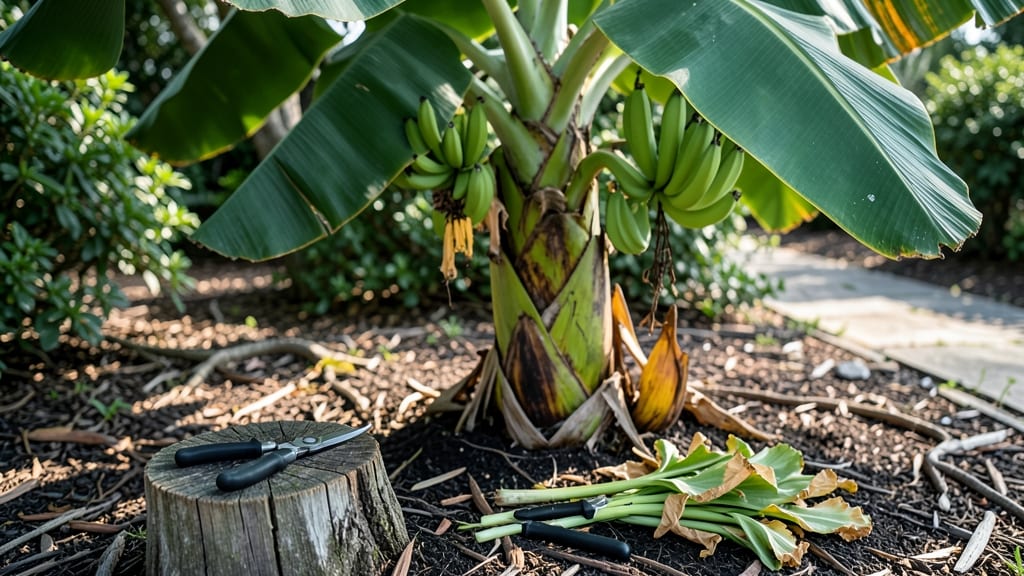
Pruning banana trees isn't just about cutting back overgrowth—it's the secret to disease-resistant plants that produce year after year. After years of watching banana plants struggle with weak stems and poor fruit sets, I learned that strategic trimming transforms a tropical giant into a reliable producer.
The key lies in understanding when and how to cut, not just hacking away at the largest leaves. This approach saved my first banana plant from fungal rot and doubled my fruit yield within two seasons.
You'll need sharp pruners, disinfectant, and a clear plan for two cutting phases: the first after fruiting, the second during dormancy. Most gardeners make the mistake of pruning too aggressively in spring, which stresses the plant before it's ready to regrow.
Instead, focus on removing only the dry leaves and damaged pseudostems—never more than one-third of the plant at once. This method keeps the plant's energy balanced for both growth and fruiting.
What you'll achieve is a banana plant that stays healthy year-round, with fewer pests and diseases clinging to dead foliage. The roots remain strong, the pseudostems grow thicker, and you'll notice larger, more uniform fruit clusters by the next harvest.
Pruning at the right time also opens up airflow, reducing the risk of fungal infections that plague many tropical plants. The transformation is subtle at first but becomes undeniable by the following growing season.
This technique works equally well for backyard plants, container-grown bananas, or even dwarf varieties. Whether you're in a warm climate like Florida or a frost-free zone like Hawaii, the principles remain the same—adjust timing based on your local growing season.
Let's get those pruners ready and turn your banana plant into a foolproof fruit machine.
📚 In This Guide
- What you need
- Instructions
- Tips and common mistakes
- Wrapping up and next steps
What you need
- ● Pruning shears or loppers: Sharp, sterilized tools (bypass pruners work best for clean cuts). Size: 6–8" for small branches, 12–18" loppers for thicker stems.
- ● Pruning saw: For stems thicker than 2 inches. Look for a curved blade for smoother cuts.
- ● Gloves: Heavy-duty, cut-resistant gloves (banana pseudostems pack a punch!).
- ● Disinfectant: 70% isopropyl alcohol or a bleach solution (1 part bleach to 9 parts water) to sterilize tools between cuts.
- ● Rubbing alcohol or hydrogen peroxide: For cleaning wounds on the tree (3% solution).
- ● Compost or mulch: To cover pruned areas and protect the tree.
- ○ Tarp or large bag: For collecting debris (optional but handy!).
- ● Safety glasses: Protect your eyes from flying sap or debris.
- ● Knee pads: Because banana trees love to sprawl low to the ground.
- ● Tree wound dressing: Pruning paste (like Tanglefoot) to seal large cuts and prevent disease.
- ● Ladder or stool: For reaching higher branches (if your tree is a towering giant!).
- ● Sharpie or marker: To label pruned sections if you’re experimenting with training the tree.
Step-by-Step guide for pruning banana trees
Here's how to maintain a thriving banana tree through precise, seasonal trimming.
Identify the Right Time to Prune
Banana trees respond best to pruning during their dormant season, which typically occurs in late fall or winter after the fruit has been harvested. This timing allows the plant to recover and regrow new leaves before the growing season begins. Avoid pruning during active growth or when the tree is flowering, as this can stress the plant and reduce fruit production.
Look for visual cues like yellowing or drying leaves, which signal the tree is slowing down. You'll also notice fewer new fronds emerging from the center. Pruning at this stage ensures the tree has enough energy to produce new shoots come spring. If you're in a tropical climate with no distinct seasons, prune after harvest when the tree naturally enters a resting phase.
Remove Dead or Damaged Fronds
Start by inspecting the entire tree for fronds that are brown, black, or completely dried out. These dead fronds no longer contribute to the tree's health and can harbor pests or diseases. Use clean, sharp pruning shears or a machete to cut these fronds at their base, making sure to leave a clean cut rather than a jagged edge.
Focus on fronds that are completely non-productive and show no signs of green tissue. If a frond is partially green, leave it alone—it may still recover or contribute to photosynthesis. Remove any fronds that are broken or damaged by storms, as these can become entry points for pathogens. Always sanitize your tools between cuts to prevent spreading disease.
Trim Overcrowded or Weak Growth
Next, assess the tree for fronds that are growing too close together or are weak and spindly. Overcrowding reduces air circulation, which can lead to fungal issues like sigatoka leaf spot, a common banana tree disease. Use your pruning tool to remove any fronds that are competing for space or growing in an unnatural direction.
Pay special attention to the center of the tree, where new growth emerges. If you see multiple fronds growing in the same direction or overlapping, thin them out to allow the strongest shoots to thrive. Aim to leave at least 6-8 inches of space between remaining fronds for proper airflow. This step is critical for maintaining the tree's structural integrity and long-term health.
Prune Flowering Stems (If Necessary)
If your banana tree has produced fruit and you're pruning after harvest, you may also need to address the flowering stem, also called the "heart" or "bunch." Once the fruit has been removed, the flowering stem will begin to dry out. Cut it off at the base using a clean, sharp tool to redirect the tree's energy toward new growth rather than seed production.
Be cautious not to prune the flowering stem prematurely, as this can reduce fruit yield. Only remove it after the fruit has been fully harvested and the stem has started to wither. This step is especially important for dwarf banana varieties, which produce fruit more frequently and benefit from consistent pruning to maintain vigor.
Fertilize and Monitor After Pruning
After pruning, apply a balanced, slow-release fertilizer to replenish nutrients lost during the process. Banana trees are heavy feeders, so use a fertilizer with a high potassium content to support regrowth. Water the tree deeply after fertilizing to help the nutrients absorb into the soil.
Monitor the tree closely in the weeks following pruning. Look for new fronds emerging from the center, which indicate successful regrowth. If you notice yellowing leaves or wilting, adjust your watering or check for pests. Pruning is a stressor, so keep an eye out for signs of recovery, such as fresh green growth and firm stems. With proper care, your banana tree will reward you with lush foliage and future harvests.
Tips & tricks for pruning banana trees
Between us, these insights will help you avoid the most common mistakes—and get the most out of your banana tree's natural growth cycle.
Timing is Everything: The dormant season timing in Step 1 is crucial because banana trees store energy in their pseudostem during active growth. Pruning too early disrupts this energy reserve, while waiting too long can stress the plant. In tropical climates without distinct seasons, always prune after harvest when the tree naturally slows down. I've seen trees recover beautifully when pruned at this optimal window, but struggle when pruned during flowering or active growth.
Tool Selection Matters: For Step 2, don't underestimate the importance of sharp tools. Dull pruning shears create jagged cuts that invite disease. I recommend sterilizing your tools with rubbing alcohol between cuts, especially when dealing with damaged fronds that might harbor pathogens. A machete works well for larger fronds, but always make clean cuts at the base rather than tearing—this prevents unnecessary stress on the tree.
Airflow Strategy: When thinning in Step 3, remember that proper spacing isn't just about aesthetics—it's about disease prevention. The 6-8 inch spacing recommendation creates that crucial airflow that prevents fungal issues like sigatoka leaf spot. I've found that trees with good airflow recover faster after pruning and show fewer signs of stress. Focus on removing fronds that are growing inward or overlapping, as these create shaded, humid microclimates perfect for fungal growth.
Post-Pruning Care: After completing all steps, the fertilization in Step 5 deserves special attention. Banana trees are potassium-hungry plants, so opt for a fertilizer with at least 10% potassium to support regrowth. I've had the best results with organic options like banana peel compost or greensand. Water deeply after fertilizing to help nutrient absorption, and consider applying mulch around the base to retain moisture and regulate soil temperature.
Pro Tips for Pruning Banana Trees
- Between us, these insights will help you avoid the most common mistakes—and get the most out of your banana tree's natural growth cycle.
- Timing is Everything: The dormant season timing in Step 1 is crucial because banana trees store energy in their pseudostem during active growth.
- Tool Selection Matters: For Step 2, don't underestimate the importance of sharp tools.
Frequently asked questions
Got questions about pruning banana trees? Here are some of the most common ones—and their answers—to help you keep your plants thriving!
When is the best time to prune banana trees?
The ideal time to prune banana trees is after harvest, when the fruit bunch has been removed. This is typically in late winter or early spring (just before new growth starts). Avoid pruning during heavy fruiting or extreme weather—wait for a mild, dry day to minimize stress on the plant.
How do I know if I’m pruning too much?
Over-pruning can weaken your banana tree, so aim to remove only dead, diseased, or overly crowded leaves. Leave at least half the healthy foliage intact to ensure the plant can still photosynthesize. If you see yellowing leaves or stunted growth after pruning, you may have gone too far—give it time to recover!
Can I prune banana trees during fruiting season?
Yes, but lightly! If you must prune while the tree is fruiting, focus on removing only damaged or diseased leaves to prevent pests or rot from spreading. Avoid heavy pruning—this can reduce fruit quality or cause the bunch to drop prematurely. Save major trimming for post-harvest.
What should I do if my banana tree doesn’t regrow after pruning?
If your tree isn’t recovering, check for root damage, pests, or disease. Ensure it’s getting 6+ hours of sunlight daily and well-draining soil. Apply a balanced fertilizer (high in potassium) and water deeply but infrequently. If the pseudostem (the "trunk") rots or collapses, the tree may be beyond saving—start fresh with a new plant!
Do I need special tools for pruning banana trees?
While you can use sharp pruners or a machete for larger leaves, a clean, sterilized saw works best for thicker stems. Disinfect tools with rubbing alcohol between cuts to prevent fungal/bacterial spread. Wear gloves—banana leaves can be razor-sharp!
Wrapping up and next steps
Pruning your banana trees isn’t just about keeping them tidy—it’s the secret to longer harvests, stronger growth, and fewer pests! 🌱 By following the right techniques (like timing, tool care, and safety), you’ll turn pruning into a rewarding routine that pays off year after year.
Now that you’re armed with the know-how, grab those shears and get trimming—your banana tree (and your future fruit bowl) will thank you!
💡 Next step: Start with one tree, practice your cuts, and observe how it responds. Over time, you’ll refine your skills and enjoy a thriving, productive banana grove!