
Trees
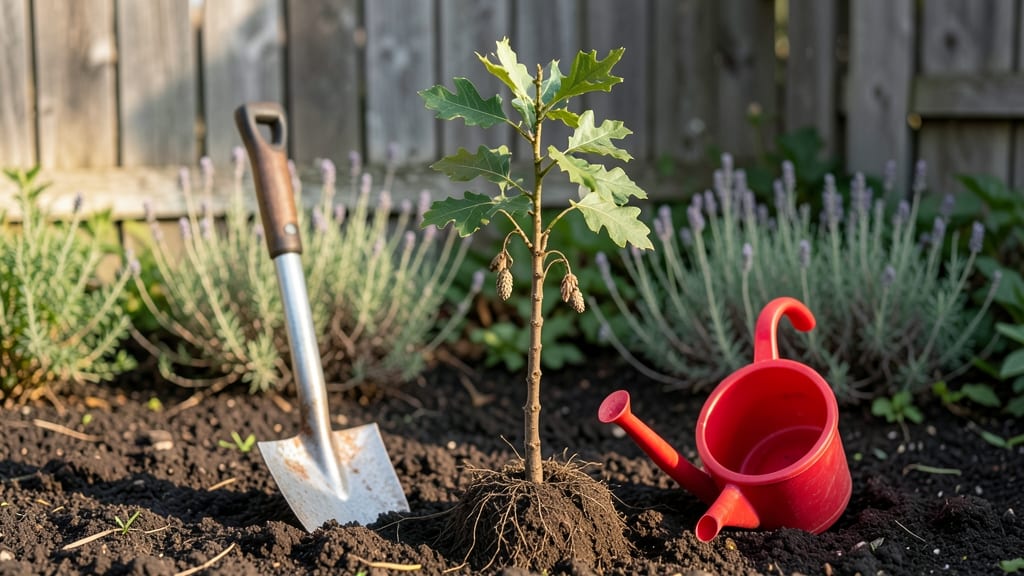
Planting oak trees isn't as complicated as it seems—those towering giants start with a simple hole and a little patience. 🌳 I've planted dozens, from delicate red oaks to sturdy white oaks, and the secret isn't in fancy tools but in understanding how their roots naturally spread.
The best time to plant is early spring or fall, when soil is workable but not freezing, giving those roots a full season to establish before winter.
You'll need a shovel, gloves, and a 5-foot-deep hole twice as wide as the root ball—no need for expensive amendments unless your soil is pure clay. Oaks thrive in native soil, so resist the urge to mix in compost or fertilizer.
The real trick is keeping the root flare (where roots meet trunk) just above ground level—burying it too deep suffocates the tree for years. Spacing matters too: plant red oaks 60-80 feet apart, white oaks 50-70 feet apart, to avoid future root competition.
What you'll end up with is a tree that grows 2-3 feet per year in ideal conditions, developing deep frost-resistant roots that outlast shallow-rooted plants. After planting, water deeply once a week for the first year, then let nature take over.
The first few years are about patience—no pruning, no fertilizing, just letting those roots stretch out into the earth. By year five, you'll see the real magic: a sturdy trunk and branches that will one day provide shade for generations.
This method works for red, white, bur, and pin oaks, whether you're planting in a suburban yard or a rural field. The key is giving them room to grow and trusting the process—oaks don't rush, and neither should you.
Here's how to make it happen without the common mistakes that stunt growth for decades.
📚 In This Guide
- What you need
- Instructions
- Tips and common mistakes
- Wrapping up and next steps
What you need
- ● Oak tree seedlings or saplings: 1-3 trees (depending on spacing needs; red oaks or white oaks recommended for frost resistance).
- ● Age: 1-2 years old (smaller roots = easier transplanting).
- ● Shovel or digging spade: 18-inch-wide for saplings, 24-inch-wide for larger roots.
- ● Garden gloves: Heavy-duty (to protect from thorns and rough bark).
- ● Watering can or hose: With a gentle spray nozzle (oaks hate soggy roots!).
- ● Mulch: 3-4 inches of wood chips or shredded bark (avoid dyed mulch—it’s toxic!).
- ○ Tree stakes (optional but helpful): 2-3 stakes per tree (if planting in windy areas).
- ● Root stimulator: Powder or gel to boost root growth (follow package instructions).
- ● Soil amendment: Compost or peat moss (if your soil is clay-heavy or sandy).
- ● Tree guard or wire cage: To protect young trunks from deer/browsers.
- ● pH test kit: Oaks prefer slightly acidic soil (pH 5.0–7.0).
How to plant oak trees for long-term frost resistance
Here's my straightforward method for establishing oak trees that thrive through winter's toughest freezes.
🌱 Step 1: Choose the Right Time and Location
Plant your oak trees in early spring—at least 4-6 weeks before your last frost date—when soil temperatures reach at least 50°F. This gives roots time to establish before summer heat arrives. Avoid fall planting unless you live in mild climates; young oaks planted too late often suffer winter dieback.
Select a site with full sun exposure (6+ hours daily) and well-draining soil. Oaks hate soggy roots, so avoid low spots where water pools. Test drainage by digging a 12-inch deep hole—if water doesn't drain within 4-6 hours, amend the soil with 2-3 inches of compost mixed into the top 12 inches of native soil.
🪴 Step 2: Prepare the Planting Hole and Amend Soil
Dig a hole twice as wide as the oak's root ball but no deeper—planting too deep suffocates roots and causes stress. The top of the root ball should sit 1-2 inches above ground level to prevent waterlogging. Loosen the sides of the hole with a shovel to encourage root spread into surrounding soil.
For clay-heavy soils, mix in 1 part sand to 3 parts native soil in the bottom 6 inches of the hole. If your soil is sandy, add 1 part peat moss to improve moisture retention. Gently tease out any circling roots in the root ball—these will strangle the tree as it grows. Real talk: Skipping this step often leads to weak, stunted growth later.
☀️ Step 3: Plant and Water Deeply for Root Establishment
Place the oak tree in the center of the hole, ensuring the root flare (where roots meet trunk) sits above soil level. Fill the hole with native soil, tamping down lightly every 2-3 inches to remove air pockets. Water deeply (about 5 gallons) immediately after planting to settle the soil and eliminate gaps.
Create a 4-inch high berm of soil around the outer edge of the planting hole to direct water toward the roots during irrigation. Mulch with 2-3 inches of wood chips, keeping mulch 6 inches away from the trunk to prevent rot. Water once weekly for the first month, then every 10-14 days during dry spells—oaks need deep, infrequent watering to develop strong taproots.
✂️ Step 4: Protect Young Trees from Frost and Wind
In the first two winters, wrap the trunk with tree guard (available at garden centers) to prevent voles and rabbits from gnawing bark. Install a stake and tie system only if the tree leans—use soft fabric ties and remove them by the second growing season to avoid girdling. Young oaks are surprisingly flexible and rarely need support if planted straight.
Apply a 2-inch layer of mulch in late fall to insulate roots, but remove it in early spring to prevent overheating. Here's the thing—oaks are tough, but sudden temperature swings (like a warm spell followed by a hard freeze) can shock young trees. If your area gets below 10°F, drape a breathable frost blanket over the tree for 24 hours during extreme cold snaps.
⏰ Step 5: Monitor Growth and Adjust Care
Check for new leaf growth in spring—this confirms roots are active. If leaves appear yellow or wilted, your tree may be overwatered or struggling with poor drainage. Oaks typically grow 12-24 inches annually when young; if growth stalls, fertilize with slow-release oak-specific fertilizer in early spring. Avoid high-nitrogen fertilizers—they encourage weak, frost-sensitive shoots.
Prune only to remove dead, crossing, or rubbing branches in late winter. Never "top" an oak—this creates weak, storm-prone growth. By year 3, your tree should show strong, upright branching and healthy fall color, signaling successful frost resistance. Patience is key: Oaks mature slowly, but proper early care ensures they'll outlive you.
Tips & tricks for planting oak trees that survive freezes
Took me years of trial and error to learn these little tricks that make all the difference for oak trees facing winter. Here's what nobody tells you about planting them right.
Timing is Everything: The 4-6 week window before your last frost date isn't just a suggestion—it's when soil temperatures hit that crucial 50°F threshold. I learned this the hard way after planting too early in cool spring soil, which delayed root establishment. Use a soil thermometer to confirm temperatures if you're unsure. Confession: I skipped this step for years and wondered why my oaks struggled through winters.
Root Ball Rescue: When you're teasing out those circling roots in Step 2, don't just pull them—gently separate them with your fingers or a butter knife. These roots will strangle your tree if left intact. I've seen trees planted with unaddressed circling roots grow only half as fast as properly prepared ones. The difference between a mediocre result and an absolutely stellar one often comes down to this single, seemingly insignificant step.
Watering Wisdom: That 5-gallon deep watering immediately after planting isn't just for show—it's what eliminates air pockets around the roots. I've seen trees planted without this step develop "air pockets" that create dry spots where roots can't access moisture. For the first month, set a timer to remind you about that weekly watering. After that, let the soil dry between waterings—oaks hate soggy feet but need consistent moisture to establish their deep taproots.
Frost Protection Secret: When temperatures drop below 10°F, that breathable frost blanket isn't just for show. I use a lightweight landscape fabric rather than heavy plastic—it lets sunlight through during the day while trapping warmth at night. The key is to drape it loosely so it doesn't touch the leaves, which could cause frost burn. Remove it during the day if temperatures rise above freezing to prevent overheating.
Pro Tips for Planting Oak Trees
- Took me years of trial and error to learn these little tricks that make all the difference for oak trees facing winter.
- Timing is Everything: The 4-6 week window before your last frost date isn't just a suggestion—it's when soil temperatures hit that crucial 50°F threshold.
- Root Ball Rescue: When you're teasing out those circling roots in Step 2, don't just pull them—gently separate them with your fingers or a butter knife.
Frequently asked questions
Got questions about planting oak trees? You’re not alone—these majestic giants require a little extra care! Here are answers to the most common queries to help you grow strong, frost-resistant oaks with confidence.
What’s the best time of year to plant oak trees?
Plant oaks in early spring or fall (4–6 weeks before frost) for ideal root establishment. Avoid extreme heat or cold—spring lets roots grow before summer drought, while fall gives them time to settle before winter. Pro tip: Container-grown oaks can be planted year-round if soil isn’t frozen!
How deep should I plant an oak tree?
The root flare (where roots meet the trunk) should sit 1–3 inches above ground. Dig a hole twice as wide as the root ball but no deeper—oaks hate "root-bound" stress. Backfill with native soil (no amendments) to prevent compaction. Warning: Planting too deep suffocates roots!
Can I plant oak trees in a small yard?
Yes! Choose dwarf or columnar varieties like ‘Arboretum’ or ‘Columnar White Oak’ (mature height: 20–30 ft). Avoid red oaks—they’re faster-growing but need more space. For tight spots, plant near fences (but 10+ feet away to avoid root damage).
How do I protect young oaks from frost?
Mulch heavily (3–4 inches of wood chips) around the base to insulate roots. Water deeply before winter to prevent drought stress. Wrap the trunk with tree guard if rabbits/deer are a threat. Bonus: Oaks under 5 years old benefit from a burlap windbreak in harsh climates.
What should I avoid when planting oaks?
- Amended soil: Oaks thrive in native soil—fertilizer or compost can burn roots.
- Over-pruning: Only trim dead branches; oaks rely on leaves for energy.
- Planting near sidewalks: Roots can crack concrete (keep 15+ ft away).
- Ignoring pests: Watch for oak wilt or borers—act fast with fungicides if spotted.
Wrapping up and next steps
Planting oak trees isn’t just about adding beauty to your landscape—it’s an investment in long-term resilience and sustainability. 🌳 From selecting the right sapling to nurturing frost-resistant roots, these five steps make the process simple and rewarding.
Whether you're a seasoned gardener or a first-timer, your efforts will help create a thriving ecosystem for generations to come.
Ready to get started? Mark your calendar, gather your tools, and take that first step toward a greener future! 🌱