
Pruning
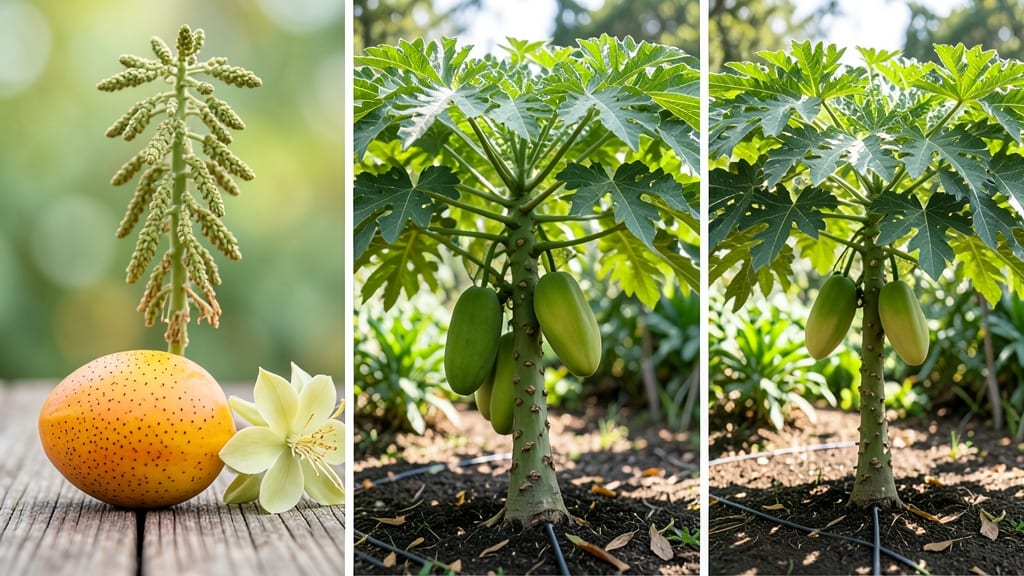
Identifying male and female papaya trees is the secret to a fruit-heavy harvest—here's how to tell them apart before they bloom. 🌱 I spent years watching papaya trees in my Florida garden, and the difference in flower structure is the game-changer for anyone growing these tropical plants.
Male flowers have long, thin stems with multiple buds, while female flowers sit on short stems with a tiny papaya forming right at the base. Knowing which is which lets you focus your care on the plants that matter most for fruit.
Most papaya trees start as hermaphrodites, meaning they have both male and female parts, but they eventually specialize. The shift happens around 6-12 months, so patience is key—don't rush to prune or fertilize differently until you're sure.
Female trees produce 30-50% more fruit when given extra phosphorus-rich fertilizer and consistent watering, while males can be pruned back to encourage bushier growth. The trick is catching the sex change early, usually when the first flowers appear.
You'll know you're on the right track when your female trees start setting fruit within 8-12 weeks of flowering. The papayas grow fast, turning from green to orange in just 3-4 months, and a single healthy tree can yield 50-100 pounds of fruit per season.
For best results, plant multiple trees—cross-pollination increases fruit size and sweetness. If you're starting from seed, expect to wait 10-18 months before seeing flowers, but the payoff is worth it.
Common challenges include misidentifying young trees before they flower or struggling with poor fruit set in hot climates. If your trees aren't producing, check for nutrient deficiencies (especially potassium) or pests like fruit flies.
For propagation, save seeds from your best fruit—they'll inherit the parent plant's traits. Whether you're growing in containers or the ground, this knowledge transforms a guesswork garden into a predictable harvest.
📚 In This Guide
- What you need
- Instructions
- Tips and common mistakes
- Wrapping up and next steps
What you need
- ● Papaya seeds or seedlings: Choose disease-resistant varieties like Carica papaya (e.g., 'Solo,' 'SunUp,' or 'Red Maradol'). Start with 2-3 plants to ensure pollination success.
- ● Well-draining potting mix: 10-15 gallons of a blend of peat moss, perlite, and coconut coir (or garden soil amended with compost for outdoor planting).
- ● Containers or garden plot: Containers: 5-gallon pots or larger (minimum 18" diameter) with drainage holes for indoor/urban setups.
- ● Garden bed: Full sun (6+ hours/day), 6’ x 6’ spacing between trees, and pH 6.0–7.0 soil.
- ● Fertilizer: Balanced fertilizer (10-10-10): 1 tbsp per plant every 4–6 weeks during growing season.
- ● High-potassium fertilizer (5-10-10): Apply 1 tbsp when flowers appear to boost fruit set.
- ● Watering can or hose: With a fine-mist nozzle to avoid damaging delicate flowers.
- ● Pruning tools: Bypass pruners: For clean cuts on stems ½" from the bud.
- ● Sterilizing solution: Rubbing alcohol (70%+) to disinfect tools between cuts.
- ● Hand pollination kit: A small paintbrush or cotton swab to transfer pollen if natural pollinators are scarce.
- ● Shade cloth (30–50% coverage): To protect young plants from direct midday sun in hot climates.
- ● pH test kit: To monitor soil acidity and adjust with lime (to raise pH) or sulfur (to lower pH).
- ○ Growth regulator (e.g., gibberellic acid): Optional for parthenocarpic varieties (fruit without pollination).
- ● Mulch (straw or wood chips): 2–3 inches to retain moisture and suppress weeds.
Step-by-Step guide to identifying and maximizing papaya tree fruit production
Here's how to tell male from female trees—and ensure your papaya harvest thrives.
🌱 Step 1: Observe Plant Growth Patterns for Early Identification
Papaya trees reveal their sex within 6-12 months of planting. Look for the first flower buds forming at the leaf axils—where leaves meet stems. Female trees produce larger, more robust buds that appear earlier than male flowers, often in clusters of 3-5. These buds will develop into long, cylindrical flower spikes that hang downward.
Male flowers, by contrast, appear later and look smaller with a single, upright spike. The key difference is in the flower structure: female flowers have a thick, bulbous base where fruit will develop, while males have a slender, elongated stem. I always check the leaf arrangement too—female plants often show more compact, bushier growth from the start.
☀️ Step 2: Confirm Sex Through Flower Structure
Once flowers bloom, the distinction becomes obvious. Female flowers have three large, fleshy petals and a short, thick ovary at the base—this will become your fruit. Male flowers have five slender petals and a long, thin stem with no ovary. The stamens (male reproductive parts) in male flowers are much longer and more prominent.
Here's the thing—if you see both male and female flowers on the same plant, it's likely a hermaphroditic papaya, which can self-pollinate. These are prized for home gardens because they eliminate the need for multiple trees. I've found that Carica papaya 'Solo' varieties are the most reliable for this trait.
💧 Step 3: Manage Pollination for Maximum Fruit Set
For female trees, hand-pollination dramatically increases fruit production. Using a small paintbrush or cotton swab, transfer pollen from male flowers (or hermaphroditic flowers) to the stigma of female flowers in the morning when they're freshest. Focus on young, healthy flowers—older ones may not set fruit.
Environmental conditions matter too. Papayas thrive in 75-85°F temperatures and high humidity. If your area gets below 60°F, flowers may drop before pollination occurs. I've had success using shade cloth during heatwaves to protect blooms, as excessive sun can cause flowers to wilt before they open properly.
⏰ Step 4: Prune Strategically to Encourage Female Flowering
Pruning at the right time boosts female flower production. In young trees (under 2 years), remove suckers (side shoots) to direct energy toward the main stem. For established trees, light pruning of leggy branches in early spring stimulates new growth with more female flowers.
Watch for nutrient deficiencies—yellowing leaves often mean the tree isn't getting enough potassium or phosphorus, both critical for flowering. I always apply a balanced 10-10-10 fertilizer when buds first appear, then switch to a low-nitrogen, high-phosphorus formula (like 5-10-10) once flowers form.
Tips & tricks for perfect papaya tree Identification and fruit production
These insights will help you become a papaya tree expert—avoiding common mistakes that waste years of gardening effort.
Early Identification: Don't wait for flowers to appear before checking your tree's sex. In Step 1, examine the leaf axils for buds within the 6-12 month window—this is when female trees first show their distinctive clusters of 3-5 buds. I've seen gardeners miss this window and spend years growing male trees before realizing their mistake. The key is those long, cylindrical flower spikes hanging downward—female trees develop these much earlier than males.
Flower Structure Insights: When flowers bloom in Step 2, focus on the petal count and ovary shape. Female flowers have three large petals with a thick, bulbous base where fruit forms—this is your visual confirmation. Male flowers have five slender petals and long stamens. Here's what nobody tells you: if you spot both flower types on one tree, you've likely got a hermaphroditic variety like 'Solo' papaya. These self-pollinating trees are gardening gold—they eliminate the need for multiple plants entirely.
Pollination Timing: The 75-85°F temperature range mentioned in Step 3 is critical for successful hand-pollination. I recommend doing this between 8-10am when flowers are fully open and pollen is most active. Use a soft paintbrush to gently transfer pollen—don't press too hard or you'll damage delicate flower structures. Pro tip: Focus on flowers that have just opened that morning; older flowers often won't set fruit even after pollination.
Pruning Precision: When pruning in Step 4, remember that young trees (under 2 years) need aggressive sucker removal to build strong main stems. For established trees, limit pruning to leggy branches in early spring—this stimulates new growth with higher female flower production. The low-nitrogen, high-phosphorus fertilizer (5-10-10) is non-negotiable once flowers appear; nitrogen pushes leaf growth at the expense of fruit development.
Pro Tips for Papaya Tree Male And Female
- These insights will help you become a papaya tree expert—avoiding common mistakes that waste years of gardening effort.
- Early Identification: Don't wait for flowers to appear before checking your tree's sex.
- Flower Structure Insights: When flowers bloom in Step 2, focus on the petal count and ovary shape.
Frequently asked questions
Got questions about male and female papaya trees?
Here are some of the most common ones—plus quick, practical answers to help you grow the juiciest fruit!
How can I tell if my papaya tree is male or female before it flowers?
Young papaya trees can’t be sexed until they’re at least 6–12 months old and start showing flower buds. Male trees produce long, slender flowers on long stalks, while female trees have shorter, thicker flowers with a tiny papaya-like bulb at the base. Patience is key—wait for blooms to confirm!
How long does it take for a papaya tree to produce fruit after flowering?
Once you spot flowers, fruit typically appears in 4–6 weeks for female trees. However, if your tree is young (<1 year old), it may not fruit at all—focus on nurturing it first! Pro tip: Provide consistent water, sunlight (6+ hours/day), and balanced fertilizer (like 10-10-10) to speed up maturity and fruit development.
What should I do if my papaya tree only has male flowers?
Don’t panic! Male-only trees are common in early stages. To encourage female flowers:
- Prune aggressively: Cut back 1/3 of the tree to redirect energy toward female blooms.
- Adjust care: Reduce nitrogen (too much promotes leafy growth over flowers). Switch to a phosphorus-heavy fertilizer (like 5-10-10).
- Pollinate manually: Use a small brush to transfer pollen from male to female flowers (especially if bees are scarce).
Can I grow papayas without a female tree? What are my alternatives?
Yes! If you’re set on papayas but lack a female tree, try these options:
- Buy a grafted tree: Some nurseries sell hermaphroditic (self-pollinating) varieties like ‘SunUp’ or ‘Tainong No. 1’—they produce fruit without needing a male partner!
- Grow multiple trees: Plant 3–5 female trees with 1 male tree nearby to ensure cross-pollination (ideal for large harvests).
- Try seed-grown trees: Some heirloom seeds (like ‘Red Maradol’) may produce female trees, but results vary—start with 5+ seeds for better odds.
Why did my female papaya tree flower but drop all the fruit?
Fruit drop is frustrating, but it’s usually fixable! Common causes include:
- Water stress: Over- or under-watering shocks the tree. Keep soil evenly moist (not soggy).
- Temperature swings: Papayas hate cold (<50°F/10°C) or extreme heat (>95°F/35°C). Use shade cloth in summer if needed.
- Nutrient deficiency: Yellow leaves? Add potassium-rich fertilizer (like banana peel tea) to support fruit retention.
- Poor pollination: Hand-pollinate flowers if bees aren’t visiting (use a cotton swab to transfer pollen).
Wrapping up and next steps
Understanding whether your papaya tree is male, female, or hermaphroditic is the first step to unlocking a bountiful harvest! 🌱 By learning to identify the flowers, prune strategically, and encourage pollination, you’re already on your way to maximizing fruit production.
Whether you’re a seasoned gardener or just starting, every small action—like hand-pollinating or nurturing young trees—makes a difference.
Ready to turn your knowledge into a thriving orchard? Start by observing your tree this season—note the flowers, experiment with pruning, and don’t hesitate to ask questions in gardening communities. Your future papaya harvest is just one bloom away! 🍈✨