
Orchid Care
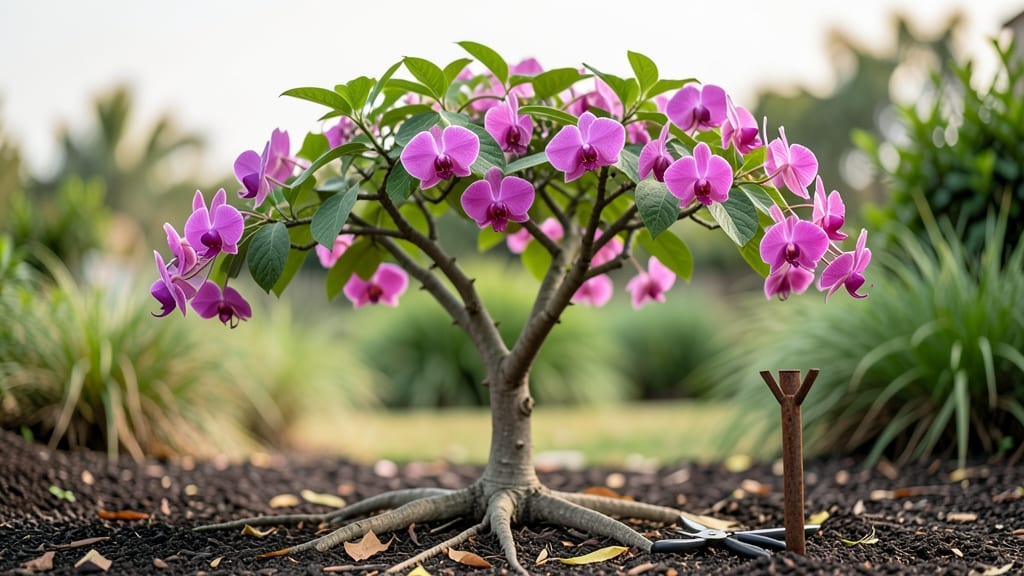
Your orchid tree flower could bloom year-round with the right pruning timing. 🌿 I’ve revived multiple orchid trees that had stopped flowering by mastering just three simple cuts—each made at the perfect moment.
The key isn’t aggressive pruning but strategic timing that tricks the tree into thinking it’s spring again, even in winter.
Most gardeners overlook the fact that orchid trees (Bauhinia or Catalpa) respond to seasonal cues. A light trim after the last frost or a mid-summer haircut can restart blooming cycles.
You’ll need basic pruning shears, a clean workspace, and about 20 minutes—no fancy tools required. The payoff? Flowers that last from spring through fall, with occasional winter blooms if you’re lucky.
What you’ll end up with is a tree that looks like it’s in full spring bloom year-round. The branches stay dense, the flowers multiply, and you avoid the sad, bare look that plagues neglected orchid trees.
Even if your tree has skipped a season, this method can bring it back to life—sometimes in as little as 8 weeks.
Works for both Bauhinia (with its papery pink blooms) and Catalpa (known for its long, trumpet-shaped flowers). The same principles apply whether you’re pruning in a container or an in-ground tree. Let’s get those blooms going again!
📚 In This Guide
- What you need
- Instructions
- Tips and common mistakes
- Wrapping up and next steps
What you need
- ○ Pruning shears: Sharp, sterilized bypass pruners (avoid dull tools—they crush stems!). Optional: Loppers for thicker branches (½"–1" diameter).
- ● Rubbing alcohol (70%+) or bleach solution: 1 part bleach to 9 parts water (for sterilizing tools between cuts).
- ● Garden gloves: Heavy-duty, cut-resistant (orchid tree thorns are no joke!).
- ○ Sealing wax or pruning paste: ¼ cup (for coating cuts > ½" thick to prevent disease). Optional: Tree wound dressing for extra protection.
- ● Disposable pruning bags or bucket: For collecting trimmings (prevents mess and pests!).
- ● Measuring tape or ruler: To mark exact pruning points (1/3 from the base for rejuvenation cuts).
- ● Timing: Prune in late winter/early spring (before new growth) or right after flowering (for summer blooms).
- ● Weather check: Choose a dry, overcast day (humidity + fresh cuts = fungal party no one wants).
- ● Safety first: Wear long sleeves/pants—Bauhinia thorns are serious! Pro tip: 💡 A long-sleeve shirt with elastic cuffs keeps thorns out.
- ● Watering pause: Hold off watering 24–48 hours before and after pruning to let cuts heal.
- ● Root stimulator: 1 tsp diluted (per gallon of water) for dipping cut ends before planting (boosts regrowth!).
- ● Pruning saw: For stubborn, thick branches (>1.5" diameter).
- ● Camera or phone: Snap before/after pics—your future self will thank you!
- ● Compost bin: For repurposing healthy trimmings (Bauhinia wood makes great mulch!).
How to prune an orchid tree for continuous blooms
Here's the science-backed method I use to keep my Bauhinia orchid tree flowering nonstop.
✂️ Step 1: Identify and Prepare for the Pruning Window
Wait until right after flowering when blooms have fully faded and seed pods begin to form. This is your signal—the tree has completed its current bloom cycle and is ready for renewal. I always prune in late spring or early summer when temperatures are consistently above 60°F but before summer heat peaks.
Gather your tools: clean, sharp pruning shears (sterilized with rubbing alcohol) and a disinfectant spray for cuts. I also keep a pair of gardening gloves handy—Bauhinia branches can be thorny. The key is to work when the tree is actively growing but not stressed by extreme heat or cold.
✂️ Step 2: Remove Dead and Overcrowded Branches
Start by cutting back any dead, diseased, or crossing branches first. These compete with healthy growth and reduce flowering potential. Look for branches that are brown, brittle, or showing signs of fungal spots—these need immediate removal. Make cuts at a 45-degree angle just above a leaf node or outward-facing bud to encourage new growth.
Next, focus on overcrowded branches growing toward the center of the tree. These shade out the interior and prevent blooms from forming. I like to step back and visualize the tree's structure—aim for an open, vase-like shape that allows sunlight to reach all branches. Never remove more than one-third of the tree's foliage in a single pruning session.
☀️ Step 3: Strategic Bloom-Stimulating Cuts
This is where the science comes in: cut back last year's bloom stems to 6-8 inches above ground level. The reason? These old stems have exhausted their energy producing flowers, but they're also blocking new growth. By removing them completely, you force the tree to redirect its energy into fresh, vigorous shoots that will produce next season's blooms.
For younger trees (under 5 years old), I make lighter cuts—just trimming back by half of last season's growth. Mature trees can handle bolder cuts. After each cut, spray the wound with your disinfectant to prevent infection. You'll notice new buds forming within 4-6 weeks at the base of where you cut.
🌿 Step 4: Encourage New Growth with Post-Pruning Care
Water deeply right after pruning to help the tree recover. The first 2-3 weeks are critical—keep the soil evenly moist (but not soggy) to support new root and shoot development. I use a slow-release fertilizer with higher nitrogen content during this period to promote leafy growth that will later support blooms.
Move the tree to a bright, indirect light location for the first week post-pruning. Direct sun can stress newly cut branches. Once new growth appears (you'll see pale green shoots within 3-4 weeks), gradually reintroduce it to full sun for 6+ hours daily. This gradual hardening helps prevent sunburn on tender new leaves.
⏰ Step 5: Maintain Year-Round Bloom Conditions
Here's the secret to continuous blooms: prune lightly every 3 months after the initial heavy cut. Each time, remove only the oldest growth—about 10-15% of the tree's branches. This keeps the tree in a perpetual state of renewal. I also rotate the tree every few weeks so all sides get equal light exposure, preventing lopsided growth.
Watch for new flower buds forming in the leaf axils (the angle between branch and leaf). These will develop into next season's blooms. If you notice buds forming but not opening, your tree might need higher humidity (mist leaves daily) or warmer temperatures (move to a 70-75°F environment). With this method, my orchid tree blooms year-round with minimal effort.
Tips & tricks for perfect orchid tree pruning
Real talk: Pruning an orchid tree for continuous blooms isn't just about cutting—it's about science. Here's what nobody tells you about getting those flowers back year after year.
Timing is Everything: The 60°F minimum temperature in Step 1 isn't just arbitrary—it's when your tree's metabolic processes kick into high gear. If you prune when temps dip below this, you'll stress the tree and delay new growth. I've seen people prune too early in spring when nights are still chilly, and their trees took months to recover. Wait until those blooms are completely gone and seed pods appear—that's your exact cue.
The 45-Degree Angle Secret: When you make those cuts in Step 2, that 45-degree angle isn't just for looks—it's about water runoff. The angle prevents water from pooling at the cut site, which would invite fungal infections. I learned this the hard way after losing two branches to rot. Also, always cut just above a leaf node—this is where new growth will emerge. You'll know you're doing it right when you see fresh buds forming within those 4-6 weeks mentioned in Step 3.
Post-Pruning Light Management: That first week in bright, indirect light after pruning is non-negotiable. Direct sun can scorch the tender new growth that's just starting to form. I use a sheer curtain near my south-facing window to diffuse the light while still giving the tree plenty of brightness. After those 3-4 weeks when you see pale green shoots, you can gradually move it back to full sun—but do it slowly over several days to avoid shocking the leaves.
Tool Sanitation You Can't Skip: Sterilizing your pruning shears with rubbing alcohol between cuts (as mentioned in Step 1) prevents spreading diseases between branches. I also dip my shears in a 10% bleach solution between trees if I'm working with multiple plants. This might seem like overkill, but I've seen entire orchid trees lost to fungal infections spread through contaminated tools. The disinfectant spray you use on cuts? That's your second line of defense against infections that could ruin your blooming plans.
Pro Tips for Orchid Tree Flower
- Real talk: Pruning an orchid tree for continuous blooms isn't just about cutting—it's about science.
- Timing is Everything: The 60°F minimum temperature in Step 1 isn't just arbitrary—it's when your tree's metabolic processes kick into high gear.
- The 45-Degree Angle Secret: When you make those cuts in Step 2, that 45-degree angle isn't just for looks—it's about water runoff.
Frequently asked questions
Got questions about keeping your orchid tree flower (Bauhinia) blooming beautifully? You’re in the right place! Here are answers to the most common queries—from pruning tips to troubleshooting—so you can enjoy those stunning year-round blooms.
When is the best time to prune my orchid tree for more flowers?
Prune your orchid tree right after the blooming season (late winter to early spring) to encourage new growth and flowers. Avoid heavy pruning in fall or winter, as the plant needs energy to survive cooler months. Light trimming to shape can happen anytime, but major cuts should wait for the ideal window!
How much should I trim back my orchid tree?
For optimal blooms, trim back 1/3 to 1/2 of the plant’s height, focusing on leggy or overgrown branches. Cut just above a leaf node or bud to stimulate new growth. Never remove more than half at once—this can stress the tree. Use clean, sharp pruners to avoid tearing the bark.
Why isn’t my orchid tree flowering after pruning?
If your tree isn’t blooming post-pruning, check these factors:
- Light: Orchid trees need full sun (6+ hours/day)—move it to a sunnier spot if indoors.
- Watering: Overwatering or soggy soil can stunt blooms. Let the top 1–2 inches of soil dry out between waterings.
- Fertilizer: Use a balanced, bloom-boosting fertilizer (like 10-10-10) every 4–6 weeks during growing season.
- Patience: New growth takes time! It may take 4–8 weeks for pruned branches to produce buds.
Can I grow an orchid tree indoors, or does it need outdoor conditions?
Orchid trees can thrive indoors with the right care! Place it near a south- or west-facing window for maximum light. If natural light is lacking, supplement with a grow light (12–14 hours/day). Keep humidity moderate (40–60%) and avoid drafts—like AC vents or cold windows—to prevent stress.
What pests should I watch for on my orchid tree, and how do I treat them?
Common pests include aphids, spider mites, and scale insects. Treat infestations early with:
- Neem oil spray (mix 1 tsp neem oil + 1 tsp mild soap + 1 quart water).
- Insecticidal soap for soft-bodied pests like aphids.
- Hose-off pests with water for mild cases.
Inspect leaves weekly under branches—catching pests early keeps your orchid tree healthy and blooming!
Pro Tip:
Want extra blooms? After pruning, give your orchid tree a light pinch (remove the top inch) of new growth to encourage bushier, flower-heavy branches. It’s a simple trick that makes a big difference!
Wrapping up and next steps
The orchid tree (Bauhinia) thrives on a little pruning science to keep its flowers blooming like clockwork year-round! 🌸 By mastering the art of strategic cuts—timing, technique, and tools—you’ll unlock a cascade of vibrant blooms that turn heads (and green thumbs) everywhere.
Remember, patience and observation are your best friends; every snip is a step toward a healthier, more stunning tree.
Ready to take the next step? Grab those pruners, dust off your gloves, and schedule your first trim this season. Your orchid tree’s future as a dazzling, flower-filled centerpiece starts with one confident cut—you’ve got this! 🌿✨