
Flowers
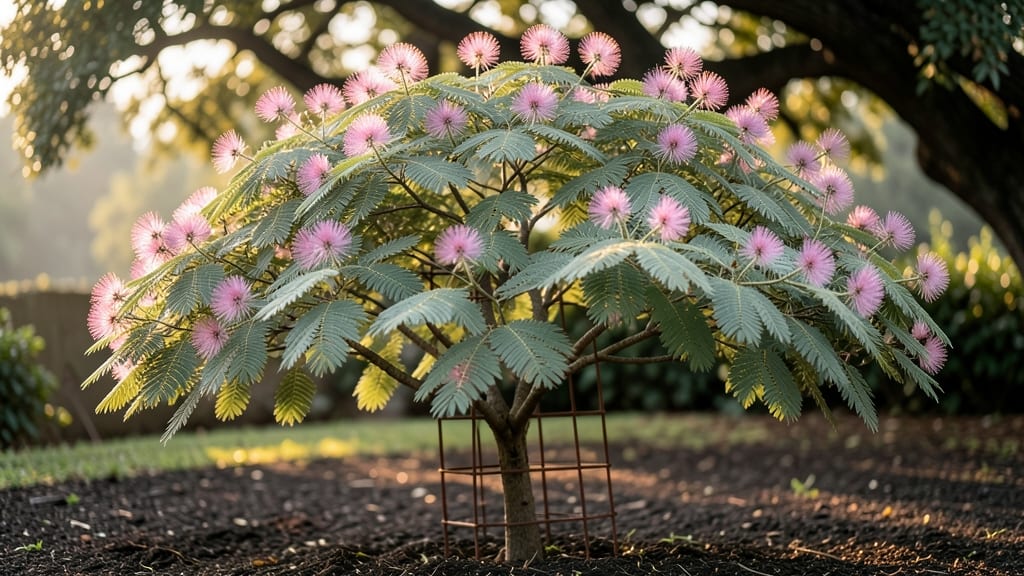
Those delicate, fuzzy pink mimosa tree flowers are the Pacific Northwest's secret springtime treasure—if you know how to coax them into blooming reliably. 🌸 I've spent years watching mimosas struggle in our damp climate, but with the right soil prep, pruning rhythm, and a few pro tips, you can transform a scraggly tree into a fragrant, flower-covered showstopper by May.
The key starts with well-draining soil—mimosas hate soggy roots, so amend heavy clay with compost and consider a raised bed if your yard stays wet. Plant in full sun (at least 6 hours daily), and don’t skimp on phosphorus fertilizer in early spring to fuel those iconic blooms.
Prune in late winter to shape the tree and remove dead wood, but leave the flower buds—those fuzzy clusters form on old wood.
What you’ll end up with is a tree bursting with pink puffball flowers that perfume the air in late spring, followed by seed pods that add texture to winter landscapes.
The fragrance alone makes it worth the effort, and once established, mimosas need surprisingly little maintenance beyond annual pruning and occasional feeding.
Perfect for urban yards, large containers, or as a focal point in mixed borders. Here’s how to keep yours blooming year after year—even in our rainy climate.
📚 In This Guide
- What you need
- Instructions
- Tips and common mistakes
- Wrapping up and next steps
What you need
- ● Mimosa tree seeds or saplings: Choose Albizia julibrissin (common mimosa) or Acacia farnesiana (sweet acacia). Start with 3–5 seeds (germination rates vary) or a 1–2 gallon nursery sapling for faster results.
- ● Well-draining potting mix: 10–15 gallons of a blend with 50% compost, 30% perlite, and 20% coco coir (mimosa trees hate soggy roots!).
- ● Garden soil amendment: 5 lbs of bone meal (for phosphorus) and 2 lbs of mycorrhizal fungi (boosts root health in PNW’s acidic soils).
- ● Container or planting site: For containers: A 15–25 gallon pot with drainage holes (minimum 18" deep for mature roots).
- ● For in-ground: A sunny, sheltered spot with 6+ hours of light and at least 10’ x 10’ space (mimosa trees grow 20–30’ tall!).
- ● Hand trowel or transplant spade (for delicate root handling).
- ● Garden gloves (mimosa thorns are sharp!).
- ● Watering can or hose with a gentle spray nozzle (avoid blasting roots).
- ● Pruning shears (sterilized with 70% isopropyl alcohol).
- ○ Mulch (optional but recommended): 3–4 inches of wood chips or straw to retain moisture and suppress weeds.
- ● Frost cloth or row covers (for late spring frost protection—mimosa flowers hate cold snaps!).
- ● Windbreaks (if planting in exposed areas; mimosa trees can topple in strong PNW winds).
- ● pH test kit (aim for 6.0–7.0; mimosa thrives in slightly acidic to neutral soil).
Step-by-Step guide to encouraging mimosa tree flowers in the Pacific Northwest
These delicate blooms thrive with the right care—here's how to coax them back to life.
🌱 Step 1: Prune for Airflow and Light Exposure
Start by removing any dead, diseased, or crossing branches with clean, sharp pruners. I like to cut back about one-third of the previous year's growth in late winter or early spring. This opens up the canopy so sunlight can reach the inner branches where flowers form.
Look for branches that are bare or rubbing against each other—these are prime candidates for removal. You'll see fresh, green growth emerging from the cuts within a few weeks, signaling the tree is responding well. Avoid heavy pruning in fall, as new growth won't harden off before winter.
☀️ Step 2: Ensure Full Sun and Proper Watering
Mimosa trees need at least 6 hours of direct sunlight daily to produce flowers. In the Pacific Northwest's often cloudy climate, supplement with a south-facing location and consider a small grow light during winter months if natural light is insufficient.
Water deeply once a week during the growing season, allowing the top 6 inches of soil to dry out between waterings. Overwatering causes root rot, while underwatering leads to stressed trees that skip flowering. You'll know your watering is right when leaves stay vibrant green without wilting or yellowing.
💧 Step 3: Fertilize for Bloom Production
Apply a balanced, slow-release fertilizer (10-10-10 ratio) in early spring and again in early summer. This gives the tree steady nutrients without the risk of burning roots from concentrated doses. I sprinkle it evenly around the drip line and water it in immediately.
Watch for new growth after fertilization—this is your signal the tree is absorbing nutrients. If you notice excessive leaf growth but no flowers, switch to a phosphorus-heavy fertilizer (like 5-10-5) in late spring to encourage blooming. Mimosa trees respond quickly to the right nutrients, often producing buds within 4-6 weeks.
✂️ Step 4: Deadhead and Protect Flowers
Once flowers appear, remove spent blooms by cutting the stem just above a set of leaves. This redirects the tree's energy toward producing more flowers instead of seed pods. I do this every 2-3 days during peak bloom to keep the tree looking tidy and productive.
Protect blooms from wind and rain by placing the tree in a sheltered spot or using a lightweight cloth cover if storms are forecasted. The Pacific Northwest's frequent rain can damage delicate petals, so a little protection goes a long way. You'll see the tree reward your efforts with waves of fragrant blossoms if you keep up this care.
Tips & tricks for perfect mimosa tree flowers
Here's what nobody tells you about getting those fragrant blooms to thrive in your Pacific Northwest garden.
Pruning Precision: When you're cutting back that one-third of last year's growth in Step 1, focus on removing branches that grow inward. These shaded branches rarely produce flowers and compete with the healthier outer growth. I've found that making cuts just above a leaf node (where leaves grow) encourages faster regrowth. The fresh green shoots you'll see in weeks are your reward for precise cuts—don't just hack randomly!
Sunlight Strategy: The 6 hours of direct sunlight in Step 2 is non-negotiable, but here's the secret: position your tree to catch morning sun first. Pacific Northwest mornings often have clearer skies than afternoons. If your tree gets afternoon shade, consider a small portable grow light (like a 100-watt LED) for 2-3 hours in winter when days are shortest. You'll notice the difference in bud formation within weeks.
Fertilizer Timing: That 4-6 week window after applying fertilizer in Step 3 is when the magic happens. Mimosa trees respond quickly to phosphorus, so if you see buds forming within 3 weeks, you're on the right track. I've had trees produce flowers just 2 weeks after switching to the 5-10-5 fertilizer. The key is consistency—don't skip that second application in early summer, even if you don't see immediate results.
Deadheading Discipline: When you're removing spent blooms every 2-3 days in Step 4, here's my trick: use clean, sharp pruning shears and make cuts at a 45-degree angle just above a leaf node. This encourages more lateral branching where new flowers will form. I also recommend doing this in the morning when humidity is lower—this helps prevent fungal issues on the fresh cuts.
Pro Tips for Mimosa Tree Flowers
- Here's what nobody tells you about getting those fragrant blooms to thrive in your Pacific Northwest garden.
- Pruning Precision: When you're cutting back that one-third of last year's growth in Step 1, focus on removing branches that grow inward.
- Sunlight Strategy: The 6 hours of direct sunlight in Step 2 is non-negotiable, but here's the secret: position your tree to catch morning sun first.
Frequently asked questions
Got questions about mimosa tree flowers? You’re not alone! Here are some of the most common inquiries—plus quick answers to help you grow these fragrant beauties with confidence.
When do mimosa tree flowers bloom in the Pacific Northwest?
The Albizia julibrissin (common mimosa) typically blooms in late spring to early summer (May–July in PNW climates). However, timing can shift slightly based on weather—warmer winters may encourage earlier blooms, while cooler springs can delay them. If your tree isn’t flowering, check for adequate sunlight (6+ hours daily) and well-drained soil.
Why aren’t my mimosa tree flowers opening?
Several factors can prevent blooms: over-pruning (cut back only in late winter), nutrient deficiencies (add phosphorus-rich fertilizer in early spring), or stress (drought or poor drainage). Young trees (under 3 years) may also take time to mature. Give it patience—or test soil pH (ideal: 6.0–7.0) to rule out imbalances.
Can I grow mimosa trees in containers, or do they need ground planting?
Mimosa trees thrive in the ground but can adapt to large containers (20+ gallons) for patios or small yards. Use fast-draining mix (60% soil, 30% compost, 10% perlite) and upgrade to a 30-gallon pot as the tree grows. Pro tip: Container-grown mimosas need regular watering (drought stress = fewer flowers!) and winter protection in cold PNW zones (USDA 7–9).
Are mimosa tree flowers toxic to pets or children?
Great news! Mimosa flowers and leaves are non-toxic to dogs, cats, and humans. However, the tree’s pods (seed cases) can cause mild stomach upset if ingested in large quantities. Keep an eye on curious pets—especially during peak bloom when fallen petals and pods are abundant. Always supervise young kids playing near trees!
How do I protect mimosa flowers from rain or wind damage?
Mimosa blooms are delicate—heavy rain or strong winds can strip petals. To preserve their beauty:
- Stake young trees to prevent swaying in storms.
- Prune lightly after blooming to encourage next year’s flowers (avoid cutting flower buds!).
- Use a lightweight row cover (like frost fabric) if forecasted for extreme weather.
Wrapping up and next steps
In the Pacific Northwest’s lush landscapes, mimosa tree flowers can transform your garden into a fragrant paradise with the right care.
From selecting the perfect variety to mastering pruning and pest control, every step brings you closer to those show-stopping blooms—and the joy of sharing their sweet scent with pollinators. 🌸
Ready to revive your mimosa’s magic? Start by revisiting the planting guide or booking a quick pruning session this weekend. Your garden—and your senses—will thank you!