
Pruning
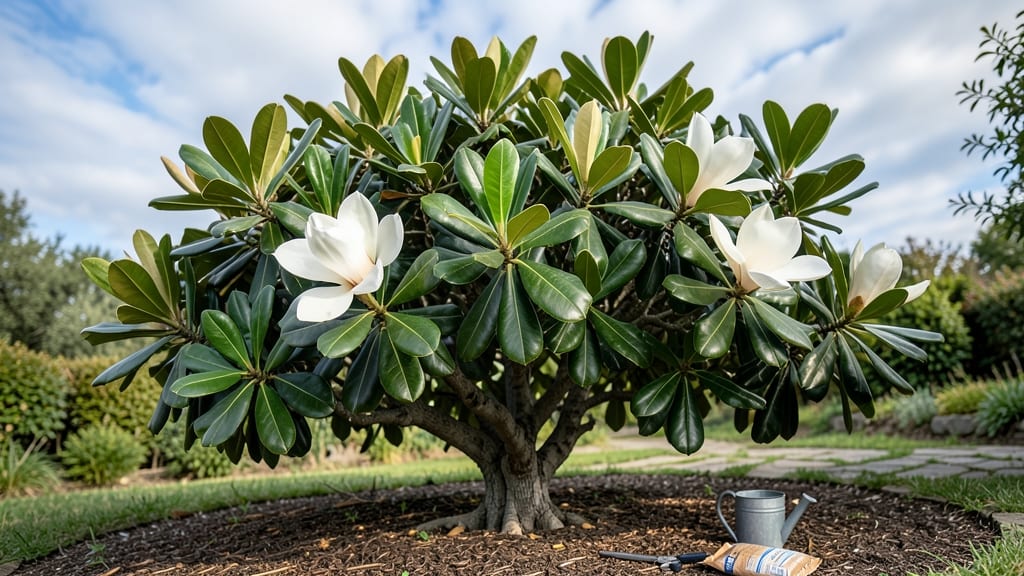
A memorial magnolia tree isn’t just a plant—it’s a living tribute that blooms with quiet strength every spring. 🌸 I’ve pruned these frost-hardy giants in Pacific Northwest gardens for years, and the right cuts transform their skeletal winter branches into a canopy of creamy-white blossoms that honor loved ones.
The timing and technique matter more than most gardeners realize, especially when you’re shaping a tree that carries emotional weight.
These trees thrive in our damp, mild winters but need strategic pruning to keep their blooms abundant and their structure dignified. You’ll work with 3-5 year-old wood—the branches that produce next year’s flowers—so timing is everything.
A single misplaced cut can rob you of months of beauty, but the right approach turns pruning into a ritual of care, not fear.
What you’ll end up with is a tree that feels like a sanctuary: its glossy leaves filtering sunlight, its fragrant blooms attracting hummingbirds, and its sturdy branches providing shade for quiet reflection.
The blooms arrive just as spring emerges, turning even the grayest PNW days into moments of peace. Pair it with dwarf rhododendrons or ferns for a layered, serene memorial space.
This method works for both young saplings and mature trees, adapting to your space whether it’s a small urban yard or a sprawling woodland edge. The key is patience—magnolias reward careful pruning with decades of blooms, each one a quiet reminder of what you’re honoring.
📚 In This Guide
- What you need
- Instructions
- Tips and common mistakes
- Wrapping up and next steps
What you need
- ● Pruning shears: Bypass pruners (sharp, 10-12 inch blades) for small branches.
- ● Loppers: 20-24 inch bypass loppers for thicker branches (½–1.5 inches in diameter).
- ● Pruning saw: Curved-tooth saw for branches 1.5+ inches thick.
- ● Gloves: Heavy-duty, cut-resistant gloves (gardening or pruning-specific).
- ● Disinfectant: 70% isopropyl alcohol or rubbing alcohol (for sterilizing tools between cuts).
- ● Rags or paper towels: For wiping tools clean.
- ● Work boots: Sturdy, ankle-supporting boots (PNW soil can be uneven!).
- ● Extension pole: For high branches (attach pruners/loppers for extra reach).
- ● Tree wound dressing: Pruning sealant (controversial but useful for large cuts in frost-prone areas).
- ● Ladder: Aluminum or fiberglass (never metal near power lines!).
- ● Safety glasses: To shield eyes from debris.
- ● Notebook & pen: For tracking cuts and post-pruning observations.
- ● Weather check: Prune on a dry, frost-free day (ideal temps: 40–60°F).
- ● Tree health: Ensure your magnolia is dormant (late winter/early spring, before buds swell).
- ● Local regulations: Check if your area requires permits for large tree modifications.
- ● Safety brief: Clear the area of pets, kids, and tripping hazards.
Step-by-Step instructions for pruning a Pacific Northwest memorial magnolia
Reviving your magnolia’s blooms starts with the right cuts—here’s my proven approach for PNW frost resilience.
✂️ Step 1: Time Your Pruning for Frost Hardiness
Prune your magnolia late winter to early spring, just as buds begin to swell but before any new growth appears. In the Pacific Northwest, aim for February to March—this timing ensures the tree recovers before spring frosts hit. I always check the buds first: they should look plump and ready to burst, not still dormant.
Never prune in fall or early winter—new growth won’t harden off before frost, and the tree could suffer winter dieback. If you missed the window, wait until after the last frost date in your area, but be prepared for fewer blooms that season.
🌿 Step 2: Remove Dead, Diseased, or Crossing Branches
Start by removing any branches that are dead, diseased, or rubbing against others. These are the first to go—they sap energy and invite pests. Use clean, sharp pruners to make cuts just outside the branch collar (the swollen area where the branch meets the trunk). This ensures the wound heals properly and doesn’t leave a stub.
Look for branches that cross or grow inward—they’ll eventually rub and create open wounds. Thin these out first, even if they look healthy. I like to step back every few cuts to visualize the tree’s shape. You’re not just pruning; you’re sculpting for airflow and future blooms.
☀️ Step 3: Thin the Canopy for Light and Airflow
Magnolias bloom on old wood, so avoid heavy pruning that removes too many branches at once. Instead, focus on thinning the canopy by 20-30% at most. Remove smaller branches that grow upward or inward, letting light reach the center of the tree. This prevents dense, shaded areas where disease lurks.
Watch for water sprouts—those fast-growing, vertical shoots that pop up everywhere. They’re a sign of stress and should be cut back to the main stem. A properly thinned magnolia will have an open, airy structure that’s easier to maintain and far more resilient to PNW rains and winds.
⏰ Step 4: Clean Up and Protect the Tree
After pruning, rake up all debris and dispose of it away from your yard to prevent disease spread. Sterilize your pruners with rubbing alcohol between cuts if the tree shows signs of infection. I also apply a thin layer of mulch around the base (but not touching the trunk) to protect roots from winter temperature swings.
Water deeply after pruning to help the tree recover, but avoid overwatering—magnolias hate soggy roots. If your tree is particularly large, consider a slow-release fertilizer in early spring to support new growth. The goal is to give it the best chance to bounce back strong for next year’s blooms.
Tips & tricks for perfect memorial magnolia pruning
Here's what nobody tells you—these small details make all the difference for your magnolia's recovery and next year's blooms.
Timing Secret: In Step 1, check for those plump buds that look ready to burst—this is your cue for perfect timing. If you're unsure, do a quick scratch test: gently scratch a bud with your fingernail. If it's green underneath, it's not ready; if it's white or yellowish, you're in the ideal February-March window. I've missed the window twice by waiting too long, and both times the tree struggled to bloom that season.
Branch Collar Technique: When making cuts in Step 2, focus on the branch collar—the swollen area where the branch meets the trunk. Cut just outside this collar, never flush with it, or you'll create an open wound that never heals properly. I learned this the hard way after seeing a magnolia develop a fungal infection from improper cuts. Use a sharp pruner to make clean cuts—dull tools crush the tissue and invite disease.
Canopy Thinning Strategy: In Step 3, aim to remove only 20-30% of the canopy at most. This might seem counterintuitive, but magnolias bloom on old wood, so you're not just pruning—you're preserving next year's flowers. I like to visualize the tree's shape by stepping back every few cuts. Remove the smallest branches first, as these are often the ones growing inward and blocking light from reaching the center.
Post-Pruning Recovery: After completing Step 4, give your tree a recovery boost by applying a thin layer of mulch around the base (but not touching the trunk). This helps regulate soil temperature and retain moisture. I also recommend watering deeply but infrequently—magnolias hate soggy roots, so let the soil dry slightly between waterings. This simple step has helped my trees recover faster after pruning.
Pro Tips for Memorial Magnolia Tree
- Here's what nobody tells you—these small details make all the difference for your magnolia's recovery and next year's blooms.
- Timing Secret: In Step 1, check for those plump buds that look ready to burst—this is your cue for perfect timing.
- Branch Collar Technique: When making cuts in Step 2, focus on the branch collar—the swollen area where the branch meets the trunk.
Frequently asked questions
about planting and caring for a memorial magnolia tree—especially in the Pacific Northwest’s frost-prone climate—can help you avoid common pitfalls. Here are answers to the most pressing questions:When is the best time to plant a memorial magnolia tree in the PNW?
Plant your magnolia in early spring (March–April) or early fall (September–October) for optimal root establishment. Avoid winter planting—frost can damage tender roots. If planting in late fall, choose a frost-resistant variety like Magnolia × soulangeana (saucer magnolia) or Magnolia stellata (star magnolia).
How do I protect my magnolia from Pacific Northwest frost?
Young trees (under 3 years old) need extra care. Mulch heavily (3–4 inches) around the base and water deeply before hard freezes to prevent root desiccation. For container-grown memorial trees, move them to a sheltered spot or wrap the pot in burlap. Mature trees usually tolerate frost well but may need light pruning of frost-damaged branches in late winter.
Can I prune a memorial magnolia tree right after planting?
No—wait 12–18 months before pruning to let the tree establish its root system. If you must shape it early, remove only dead or crossing branches (no more than 10–15%). Prune after flowering (late spring/early summer) to avoid cutting off next year’s blooms. Use sterilized, sharp pruners to prevent disease.
Why isn’t my memorial magnolia blooming?
Common causes include:
- Age: Young trees (under 5 years) may not bloom yet.
- Pruning at the wrong time: Avoid heavy pruning in late winter or early spring.
- Poor sunlight: Magnolias need 6+ hours of sun daily.
- Frost damage: Late frosts can kill flower buds. Choose late-blooming varieties (e.g., Magnolia ‘Jane’) for frost resilience.
If the issue persists, check for pests (scale, spider mites) or nutrient deficiencies (test soil pH—ideal range: 5.0–6.5).
What are good alternatives to magnolias for memorial trees?
If magnolias don’t suit your climate or space, consider:
- Cherry blossom trees (Prunus) : Fast-growing, fragrant, and frost-tolerant (e.g., ‘Kwanzan’ or ‘Yoshino’).
- Dogwood (Cornus florida) : Smaller stature, stunning spring blooms, and PNW-friendly.
- Crabapple (Malus) : Disease-resistant, compact, and long-lived (e.g., ‘Radiant’).
- Serviceberry (Amelanchier) : Edible berries, fall color, and adaptable to partial shade.
All offer symbolic beauty and low-maintenance care!
Wrapping up and next steps
A memorial magnolia tree isn’t just a plant—it’s a living tribute to love, memory, and resilience. With the right pruning techniques, especially in the Pacific Northwest’s frosty climate, you can revive its stunning blooms and honor its legacy for years to come. 🌸
Ready to give your magnolia the care it deserves? Start by marking your calendar for late winter or early spring—when the tree is dormant but dreams of blooming anew. Grab your tools, follow the steps, and watch your memorial magnolia thrive with vibrant, frost-resistant beauty!
- Next step: Schedule your first pruning session and share your progress with fellow gardening enthusiasts.
- Bonus tip: Snap a photo of your tree in full bloom—it’s a heartfelt way to celebrate your hard work!