
Trees
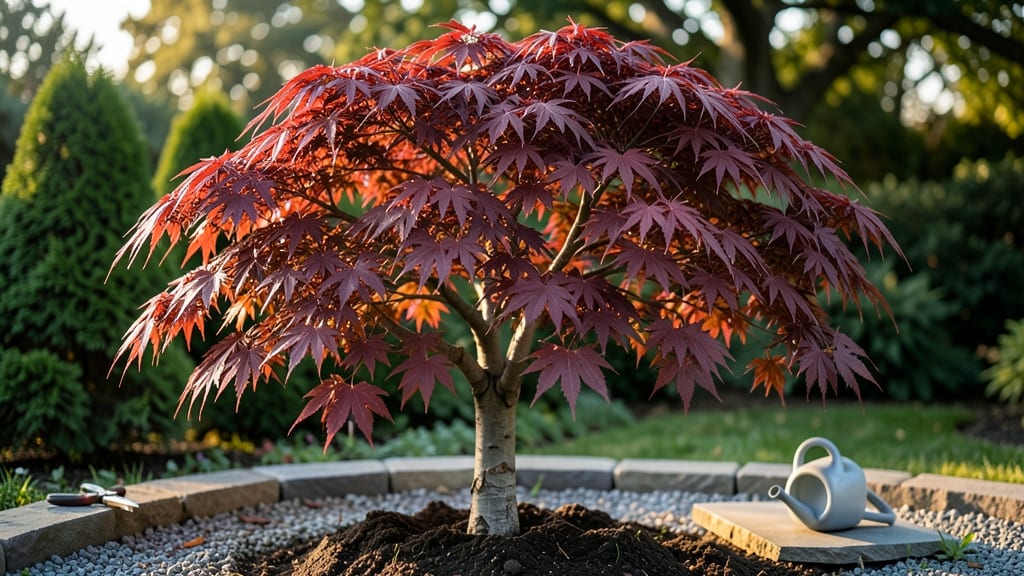
Burgundy maple leaves turn your garden into a masterpiece every fall. 🌿 These stunning trees aren’t just pretty—they’re the centerpiece that makes neighbors stop and stare, especially when their deep red foliage contrasts against golden oaks or evergreens.
I’ve used them to create bold focal points in front yards and soften the edges of perennial borders, and the results never disappoint.
The real magic happens when you pair them with the right plants. Silver-blue foliage like lamb’s ears or dusty miller makes the burgundy pop even more, while white-barked birches add a crisp contrast.
Even their winter silhouette—with peeling bark and graceful branches—holds interest. The key is spacing them where they’ll get morning sun to deepen those fall colors, while afternoon shade prevents leaf scorch in summer.
You’ll end up with a garden that feels like a living painting, especially when the first crisp mornings turn the leaves to wine. The trees stay compact enough for smaller yards but make a statement in larger spaces too.
Once planted, they reward you with minimal fuss—just an occasional prune to shape them and maybe a mulch top-up to keep roots happy.
Perfect for urban courtyards, suburban front yards, or even large containers if you’re working with limited space. The secret is treating them like the star they are—give them room to shine, and they’ll deliver drama from spring through winter. Let’s make your garden the talk of the neighborhood!
📚 In This Guide
- What you need
- Instructions
- Tips and common mistakes
- Wrapping up and next steps
What you need
- ● Fresh or dried maple leaves (preferably red maple or sugar maple for deep burgundy hues): 10–20 leaves (for small projects like wreaths or frames)
- ● 50+ leaves (for larger displays, garlands, or outdoor decor)
- ● Scissors or pruning shears (sharp, clean-cut edges for precision)
- ● Twine, wire, or fishing line (for hanging or arranging leaves)
- ● Cardstock or thick paper (11" x 14" or larger, for pressing or framing)
- ● Glue or double-sided tape (for securing leaves to surfaces)
- ● Leaf press (to preserve leaves for crafts or displays)
- ● Spray adhesive (for large-scale projects like canvases or murals)
- ● Acrylic paint & brushes (to enhance colors or add artistic touches)
- ● Camera or smartphone (for capturing the leaves’ vibrant hues)
- ● Outdoor-safe sealant (if displaying leaves outside for longevity)
Step-by-Step guide to cultivating a stunning maple tree with burgundy leaves
Here's how to grow a showstopping maple with fiery fall colors—no guesswork involved.
🌱 Step 1: Select the Right Variety and Planting Site
Choose a Japanese maple like 'Bloodgood' or 'Emperor I' for deep burgundy foliage. These varieties thrive in partial shade to full sun—morning sun with afternoon shade works best in hot climates. Avoid low-lying areas where cold air settles, as young trees are frost-sensitive.
Test your soil's drainage first. Maple roots rot quickly in soggy conditions. Dig a hole twice as wide as the root ball but only as deep—planting too deep suffocates the tree. Loosen the roots slightly if they're circling before placing in the hole.
🪴 Step 2: Plant Properly for Strong Root Development
Backfill with native soil mixed with 1 part compost to improve fertility. Water deeply to settle the soil around roots, then add a 2-inch layer of mulch (avoid wood chips—use shredded bark) to retain moisture. Keep mulch 6 inches away from the trunk to prevent rot.
Stake only if your area gets strong winds, using two stakes on opposite sides. Bury them 1/3 of their length and tie the tree loosely with soft fabric strips—never wire, which cuts into bark. Water twice weekly for the first month until new growth appears.
☀️ Step 3: Maintain Year-Round for Vibrant Fall Color
Water deeply once weekly during dry spells—maples hate surface moisture. In summer, water at the base early in the morning to reduce evaporation. Avoid overhead sprinklers, which encourage fungal diseases like powdery mildew that dull leaf color.
Fertilize lightly in early spring with a balanced 10-10-10 formula—too much nitrogen makes leaves lush but dulls their burgundy hues. Prune only to remove dead wood or crossing branches in late winter, using sterilized pruners to prevent disease spread.
⏰ Step 4: Prepare for Peak Fall Color
Stop fertilizing 8 weeks before your first frost—new growth won't harden off properly. Increase watering slightly if summer was dry, as stressed trees produce less vibrant fall colors. Watch for aphids on new growth—spray with neem oil if you see sticky residue on leaves.
This is the moment that matters: leaf color peaks 2-3 weeks before leaves fall. If your maple's burgundy fades to brown prematurely, it needs more afternoon shade—direct sun late in the season burns foliage. Enjoy your showstopper while it lasts!
Tips & tricks for perfect maple tree burgundy leaves
Real talk: The difference between a maple tree that just survives and one that bursts with fiery burgundy leaves often comes down to these small but mighty details.
Variety Matters: While 'Bloodgood' and 'Emperor I' are your best bets for deep burgundy, don't overlook 'Crimson Queen' for its compact size or 'Shishigashira' for its unique weeping habit. All three varieties thrive in similar conditions, but their growth habits differ—choose based on your space. I planted 'Bloodgood' in my front yard because it matures at a manageable 15-20 feet tall, perfect for framing my porch without overshadowing it.
Soil Secrets: That drainage test in Step 1 isn't just about avoiding soggy roots—it's about creating the perfect environment for vibrant fall color. If your soil drains poorly, consider amending with 25% perlite or coarse sand to the native soil mix. I learned this the hard way after my first maple struggled in heavy clay soil—now I always test before planting. The roots need oxygen as much as water!
Mulch Magic: The 2-inch layer of shredded bark mulch in Step 2 does more than retain moisture—it regulates soil temperature year-round. In winter, it insulates roots from freeze-thaw cycles that can damage them. Pro tip: Refresh the mulch layer every spring, but never pile it against the trunk. I use a garden rake to create a slight depression around the base to prevent rot.
Timing is Everything: That 8-week window before frost in Step 4 is your golden opportunity to maximize color. Start monitoring leaf changes in early September—if your area gets hot afternoons, provide temporary shade with a light fabric shade cloth. I've seen maples that would have been stunning burgundy turn dull brown because they got too much late-season sun. Think of it like giving your tree a spa day before its big fall debut.
Pro Tips for Maple Tree Burgundy Leaves
- Real talk: The difference between a maple tree that just survives and one that bursts with fiery burgundy leaves often comes down to these small but mighty details.
- Variety Matters: While 'Bloodgood' and 'Emperor I' are your best bets for deep burgundy, don't overlook 'Crimson Queen' for its compact size or 'Shishigashira' for its unique weeping habit.
- Soil Secrets: That drainage test in Step 1 isn't just about avoiding soggy roots—it's about creating the perfect environment for vibrant fall color.
Frequently asked questions
Got questions about those stunning maple tree burgundy leaves? You’re not alone! Here are some of the most common queries—plus straightforward answers to help you make the most of this fall spectacle.
When do maple trees typically turn burgundy?
Timing depends on your climate! In northern regions (like New England or the Midwest), burgundy hues peak in late October to early November. Warmer zones (e.g., the Southeast) may see color shift earlier—September to October. Check your USDA hardiness zone for a better estimate.
Why are my maple leaves turning brown instead of burgundy?
Burgundy leaves need cool nights and sunny days to develop their rich color. If yours are brown, they might be stressed due to:
- Drought: Water deeply 1–2 weeks before peak color.
- Pests/disease: Inspect for aphids or fungal spots.
- Poor nutrition: Test soil for low potassium/magnesium.
Give your tree a balanced fertilizer in early fall to boost vibrancy next year!
Can I extend the burgundy leaf season?
Try these tricks to prolong the show:
- Prune in late winter to improve airflow and sunlight exposure.
- Water consistently (but avoid over-saturating roots).
- Mulch with 2–3 inches of organic material (like wood chips) to regulate soil temp.
Bonus: Red maples (Acer rubrum) often hold color longer than sugar maples!
What are some burgundy-leafed maple alternatives?
If you love the look but want variety, consider these low-maintenance options:
Tree
Leaf Color
Hardiness Zone
Japanese Maple (Acer palmatum)
Deep red-purple
5–8
Swamp Maple (Acer rubrum)
Scarlet to burgundy
3–9
Tatarian Maple (Acer tataricum)
Orange-red
3–7
Pro tip: Plant in full sun to partial shade for the most intense colors!
Are burgundy maple leaves toxic to pets?
While maple leaves aren’t highly toxic, they can cause mild stomach upset if ingested in large quantities. Symptoms may include:
- Vomiting
- Diarrhea
- Lethargy
Keep pets away from fallen leaves piles or compost them separately. If you suspect poisoning, contact your vet or the ASPCA Poison Control.
Wrapping up and next steps
Watching your maple tree burst into stunning burgundy leaves is a true autumn masterpiece—one that transforms your yard into a breathtaking seasonal display. 🍁 Whether you’re admiring the natural beauty or planning to celebrate the season with friends, these vibrant leaves are a reminder of nature’s artistry at its finest.
Now that you’re equipped with the know-how to nurture, photograph, or even craft with them, why not take the next step? Host a fall gathering under your maple’s canopy, share photos of your tree’s transformation, or even plant a new maple sapling to extend the magic for years to come!