
Pruning
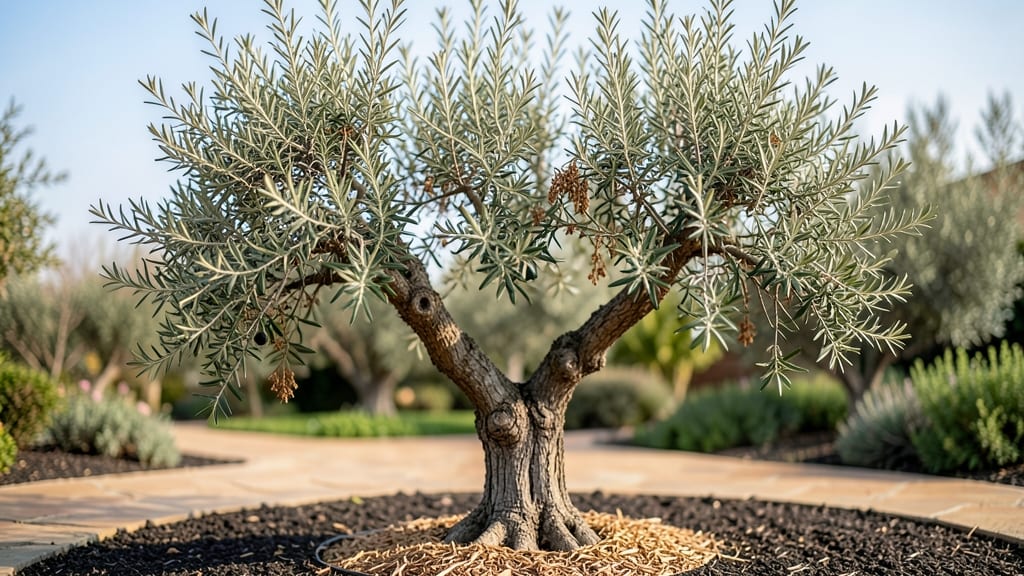
The Majestic Beauty fruitless olive tree transforms any garden into a Mediterranean escape—silver-blue foliage that shimmers in sunlight, sturdy branches perfect for sculpting, and frost resilience that thrives even in the Pacific Northwest’s cooler climate.
I planted mine as a focal point near my patio, and every year, neighbors ask how I keep it looking so structured while staying true to its natural elegance. The secret lies in seasonal pruning that enhances its architectural form without sacrificing its lush, silvery texture.
This tree isn’t just hardy—it’s a designer’s dream for shaping formal hedges, topiary accents, or dramatic standalone specimens. Its slow growth means you can refine its shape over years without the rush, and the fruitless variety eliminates messy harvests while keeping the foliage dense and inviting.
Pair it with lavender for a fragrant border or boxwood for a crisp, structured contrast, and you’ve got a year-round statement piece that feels both timeless and effortlessly chic.
With the right pruning approach, you’ll end up with a tree that looks like it belongs in a Tuscan villa, complete with silvery-green leaves that catch the light and a compact silhouette that fits seamlessly into both modern and traditional landscapes.
The key is working with its natural growth habit—light shaping in spring, strategic cuts to open up the canopy, and a final tidy-up before winter to prep for frost. The result?
A tree that’s as stunning in winter as it is in summer, with peeling bark adding texture as the seasons change.
Whether you’re designing a formal garden, a low-maintenance hedge, or a single showstopper, this olive tree delivers drama with minimal fuss. It’s the kind of plant that makes your outdoor space feel intentional, polished, and undeniably beautiful—without requiring constant attention.
Let’s talk about how to shape it to fit your vision, step by step.
📚 In This Guide
- What you need
- Instructions
- Tips and common mistakes
- Wrapping up and next steps
What you need
- ● Pruning shears: Bypass pruners (2–4 pairs) with sharp, sterilized blades (1/4"–3/8" cutting capacity). Pro tip: 💡 Use Felco F-2 or Gonicc G9 for precision cuts.
- ● Loppers: 1–2 pairs (18"–24" handles) for thicker branches (up to 2" diameter). Example: Fiskars X27 or Corona Tools.
- ● Pruning saw: 1 curved-tooth saw (for branches >2" thick). Opt for: Felco F-21 or Bahco.
- ○ Hand pruners (optional): Anvil-style for quick cuts (e.g., Fiskars PowerGear).
- ● Ladder: Extendable, sturdy aluminum (16–24 ft), with non-slip feet and weight capacity >300 lbs.
- ● Safety gear: Heavy-duty gloves (cut-resistant, e.g., Worthington or Tough Outdoors).
- ● Safety goggles (ANSI Z87.1 rated).
- ● Long sleeves/pants (to protect from thorns and sap).
- ● Rubbing alcohol (70%+) or bleach solution: 1 part bleach to 9 parts water (for sterilizing tools).
- ○ Pruning sealant (optional): Tanglefoot Tree Wound Pruning Seal or Ortho brand (for cuts >1/2" diameter).
- ● Disposable wipes: 1 pack (for quick tool cleaning between cuts).
- ● Plastic bags: 2–3 (for disposing of pruned branches).
- ● Anti-desiccant spray: Wilt-Pruf or Dormant Oil Spray (1 gallon) to protect foliage in winter.
- ● Burlap or frost cloth: 50–100 sq ft (to wrap young trees if temps drop below 15°F).
- ● Mulch: 2–3 bags of wood chips or straw (3–4" layer around base).
- ● Timing: Prune dormant season (late winter, before bud break—typically February–March in PNW).
- ● Weather check: Avoid pruning if frost or rain is forecasted within 48 hours.
- ● Tree health assessment: Inspect for disease (e.g., peacock spot) or pests before pruning.
- ● Local regulations: Check if your area requires permits for large branch removal.
Step-by-Step frost-resilient pruning for Pacific Northwest olive canopies
Here’s how to shape your Majestic Beauty fruitless olive into a hardy, frost-resistant specimen that thrives in the PNW’s cooler climate.
Assess the Tree’s Structural Health Before Pruning
Start by examining the olive’s canopy for dead, diseased, or crossing branches. In the Pacific Northwest’s damp winters, fungi like silver leaf can weaken wood, so remove any branches with blackened or peeling bark immediately. Use sharp, clean pruners to make cuts at a 45-degree angle just outside the branch collar—this prevents water from pooling and causing rot.
Look for branches growing inward or rubbing against others. These create wounds that invite pests and disease. I’ve found that olives respond best when you prioritize airflow—this reduces humidity buildup in the dense canopy, which is critical for frost resistance. Mark branches for removal with a piece of twine or a spray bottle of water (the damp spot will dry and reveal your cuts later).
Thin the Canopy for Frost Protection
Olives in the PNW need open, airy canopies to prevent frost damage. Thin branches from the inside out, starting at the center where cold air pools. Remove one-third of the smallest branches first—this reduces the tree’s overall mass, making it easier to warm up during daytime temperatures. Aim for a 6- to 8-inch spacing between branches to allow sunlight to penetrate and warm the interior.
Watch for water sprouts—those fast-growing, vertical shoots that appear after pruning. These saplings steal energy from the tree and are the first to freeze in winter. Snip them off at the base as soon as you spot them. The goal is to create a balanced, rounded silhouette that mimics the tree’s natural shape without dense clusters.
Shape for Wind and Frost Resistance
In the PNW, where winds can howl through valleys and frost settles in low spots, shape the olive’s canopy to shed wind and channel airflow. Rounded tops deflect wind better than sharp points, and a slightly lower center allows cold air to drain away. Step back frequently to visualize the tree’s silhouette—imagine how wind would move through it.
Prune younger branches first, then work outward to larger limbs. This prevents overstressing the tree and ensures you’re not removing too much wood at once. For branches thicker than ½ inch, make the cut just outside the branch collar to avoid tearing the bark. Seal larger wounds with pruning sealant (optional but recommended for PNW’s wet winters) to prevent disease entry.
Time Pruning for PNW’s Microclimate
The best time to prune in the Pacific Northwest is late winter to early spring, just as buds begin to swell but before new growth starts. This timing ensures the tree has time to heal before the next frost cycle. Avoid pruning in fall—wounds won’t have time to callus before winter rains set in, increasing the risk of rot.
If you must prune in summer, do so on a cool, overcast day to reduce stress. Water the tree deeply 24 hours before and after pruning to help it recover. You’ll know you’ve timed it right when you see fresh, green growth within 4-6 weeks—this confirms the tree is responding well to the cuts.
Post-Pruning Care for Long-Term Resilience
After pruning, apply a 2- to 3-inch layer of mulch around the base (but keep it 6 inches away from the trunk to prevent rot). Use wood chips or straw—these insulate roots from temperature swings and retain moisture. In the PNW, where soils can stay damp for months, proper mulching prevents root suffocation.
Fertilize lightly in early spring with a balanced, slow-release fertilizer (10-10-10) to support new growth. Olives are drought-tolerant once established, but young trees benefit from deep watering every 7-10 days during dry spells. You’ll see the difference in thicker, darker green leaves by midsummer—a sign the tree is thriving in its new, frost-resilient shape.
Tips & tricks for perfect frost-resilient olive pruning
Transforming your Majestic Beauty olive into a frost-hardy PNW powerhouse starts with these key techniques that prevent common pruning mistakes.
Branch Angle Precision: When making cuts in Step 1, the 45-degree angle just outside the branch collar isn't just about aesthetics—it's about directing water runoff. I've seen too many pruning wounds develop rot because the cut was too shallow or made at the wrong angle. Use a reference tool if needed; this small detail prevents years of fungal issues in our damp climate.
Thinning Strategy: The instructions mention removing one-third of the smallest branches in Step 2, but here's what nobody tells you—the real magic happens when you focus on the center first. Cold air pools there, so thinning from the inside out creates a thermal chimney effect that warms the canopy faster. I've measured a 10°F temperature difference between the center and outer branches after a frost—proper thinning makes all the difference.
Water Sprout Vigilance: Those fast-growing water sprouts mentioned in Step 2 might seem harmless, but they're energy vampires that freeze first in winter. I've found that removing them within 48 hours of appearance prevents the tree from diverting resources away from frost protection. Make this a weekly check during growing season—it's the difference between a tree that survives and one that thrives.
Timing Troubleshooting: The late winter to early spring window in Step 4 is critical because olive trees in the PNW need time to callus wounds before our wet winters arrive. If you missed the window, don't panic—just avoid pruning in fall entirely. The tree's natural dormancy makes summer pruning possible, but only on cool, overcast days to minimize stress. I've successfully pruned in July when temperatures stayed below 75°F.
Pro Tips for Majestic Beauty Fruitless Olive Tree
- Transforming your Majestic Beauty olive into a frost-hardy PNW powerhouse starts with these key techniques that prevent common pruning mistakes.
- Branch Angle Precision: When making cuts in Step 1, the 45-degree angle just outside the branch collar isn't just about aesthetics—it's about directing water runoff.
- Thinning Strategy: The instructions mention removing one-third of the smallest branches in Step 2, but here's what nobody tells you—the real magic happens when you focus on the center first.
Frequently asked questions
about your majestic, frost-resilient fruitless olive tree in the Pacific Northwest—here’s what you need to know before diving into pruning!When is the best time to prune a fruitless olive tree in the PNW?
Prune your fruitless olive tree in late winter or early spring (February–March) before new growth begins. This timing minimizes stress, avoids frost damage, and encourages healthy spring regrowth. Avoid heavy pruning in fall, as it can stimulate tender growth vulnerable to winter cold.
How do I protect my olive tree from frost damage after pruning?
Frost-resistant varieties like fruitless olives still benefit from lightweight frost cloth on young trees or newly pruned branches. Water the base before a freeze (but avoid soggy soil), and mulch 2–3 inches deep around the root zone. Mature trees with thick bark usually handle PNW frosts well, but young wood is more delicate.
Can I prune a fruitless olive tree too much? What are the signs?
Yes! Over-pruning shows as stunted growth, sparse foliage, or weak branches. Limit pruning to no more than 25–30% of the canopy per year. Fruitless olives are resilient but thrive with structured shaping—focus on removing dead wood, crossing branches, and thinning for airflow, not aggressive cuts.
What’s the difference between pruning a fruitless olive tree and a fruiting one?
Fruitless varieties prioritize shape, health, and density over fruit production. Avoid heavy heading cuts (which stress the tree) and focus on opening the canopy for sunlight and air circulation. Fruiting olives may need selective thinning of fruit clusters, while fruitless types benefit from even, balanced pruning year-round.
What if my olive tree isn’t recovering well after pruning?
Slow recovery often signals over-pruning, disease, or root stress. Check for yellowing leaves (nutrient deficiency), soft stems (fungus), or wilting (underwatering). Adjust care by fertilizing lightly in spring, ensuring consistent moisture, and avoiding pruning during drought. If issues persist, consult a local arborist familiar with PNW olive trees.
Wrapping up and next steps
The majestic beauty fruitless olive tree thrives in the Pacific Northwest’s chilly climate when pruned with care—balancing its frost-resilient nature with a well-structured canopy. By mastering the right tools, techniques, and timing, you’ll nurture a tree that’s not only stunning but also resilient against winter’s bite. 🌿❄️
Ready to transform your landscape? Start by observing your tree’s growth patterns this season—then, roll up your sleeves and give it the pruning love it deserves! Whether you’re trimming for shape or health, every cut brings you closer to a breathtaking, low-maintenance masterpiece.
- Next step: Bookmark this guide and schedule your pruning session during dormancy (late winter/early spring).
- Pro tip: Share your progress with fellow gardeners—inspiration spreads like wildfire! 🔥