
Pruning
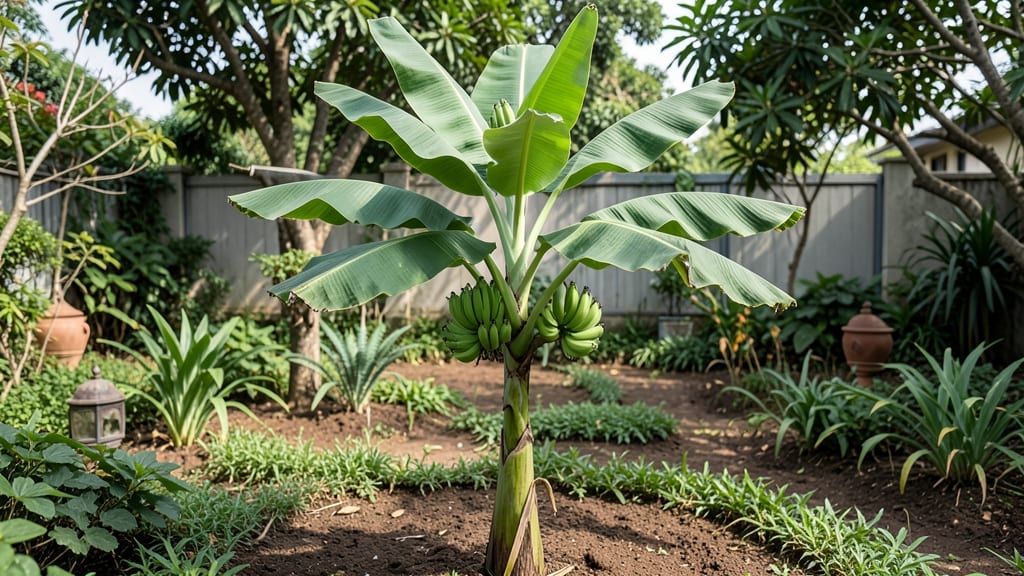
Growing a kitchen banana tree indoors means tropical vibes without the heat. 🌿 I’ve kept mine thriving in my Pacific Northwest living room for years—no greenhouse needed. The trick is mimicking its natural habitat: bright, indirect light, warm temperatures, and a little extra humidity.
Most people struggle with pruning, but it’s actually simple once you know the signs. When the oldest leaves turn yellow and crispy, that’s your cue to trim them back to the base. This keeps the plant healthy and encourages new growth, plus it makes harvesting easier when the time comes.
By winter, you’ll have a sturdy, leafy plant that produces edible fruit if it’s a culinary variety. The bananas may be small, but they’re sweet and perfect for smoothies or baking. Plus, the large leaves add instant tropical drama to any room.
Works for both ornamental and fruit-bearing varieties, and the same principles apply whether you’re starting from a nursery plant or a tiny offset. Let’s get your banana tree looking its best year-round.
📚 In This Guide
- What you need
- Instructions
- Tips and common mistakes
- Wrapping up and next steps
What you need
- ● Pruning shears: Bypass pruners (sharp, 6–8" blades) for clean cuts—1 pair.
- ● Loppers: Heavy-duty (20–24" handles) for thicker branches—1 pair.
- ● Hand saw: Pruning saw with fine teeth (8–10" blade) for stubborn stems—1.
- ● Disinfectant: 70% isopropyl alcohol or bleach solution (1:9 ratio) to sterilize tools—small bottle.
- ● Gloves: Heavy-duty gardening gloves (cut-resistant) for protection—1 pair.
- ○ Pruning sealant: Optional but helpful for large cuts (e.g., tree wound paint)—small tub.
- ● Trash bags: Heavy-duty for debris (13-gallon size)—2–3 bags.
- ● Ladder or step stool: Sturdy, 6–8 ft tall—1 (if tree exceeds 6 ft).
- ● Extension pole: For high branches (10–12 ft reach).
- ● Marking twine: To flag branches for removal.
- ● Compost bin: For repurposing pruned material.
- ● Safety goggles: To shield eyes from debris.
- ● Check the kitchen banana tree’s (Musa acuminata) growth stage—prune after harvest or in early spring (March–April for PNW).
- ● Verify the tree is healthy (no pests/disease) before pruning.
- ● Have a clear workspace—remove obstacles and lay down tarps if needed.
How to prune your kitchen banana tree for year-round growth in the Pacific Northwest
Here's my battle-tested method for keeping your banana tree lush, productive, and thriving through PNW's wet winters.
✂️ Step 1: Time Your First Prune for Late Winter
Wait until mid-February to early March when your banana tree shows new growth buds along the trunk. This is the perfect window—early enough to encourage spring growth but late enough to avoid winter dieback. Look for swollen nodes where leaves will emerge; these are your pruning guides.
Use clean, sharp pruners to make cuts just above these buds at a 45-degree angle. The angled cut helps water run off instead of pooling. I like to make my cuts about ¼ inch above the bud—this prevents the stem from rotting while giving the new shoot room to grow.
Here's the thing—don't remove more than ⅓ of the plant's foliage in one session. Your banana tree stores energy in its trunk, and aggressive pruning stresses it. If you see yellowing leaves at the base, that's a sign to hold off until spring truly arrives.
☀️ Step 2: Summer Pruning for Airflow and Fruit Production
Once your banana tree flowers appear in summer, focus on selective pruning to improve airflow and fruit development. Remove any dead or diseased leaves first—these attract pests and spread rot. Cut back to healthy green tissue, making sure your pruners are sanitized with rubbing alcohol between cuts.
For flowering stalks, I leave the first two flowers intact but trim off any additional flower clusters beyond that. This redirects the plant's energy into producing larger, more flavorful bananas instead of dozens of small ones. Watch for brown leaf tips—this often signals overwatering in PNW's humid summers, so adjust your watering schedule.
Real talk: If your banana tree grows taller than 10 feet, consider supporting it with a stake or trellis. Without support, the heavy fruit can snap the stem during PNW's windy seasons. I use bamboo stakes tied with soft twine to avoid damaging the bark.
🌿 Step 3: Fall Cleanup to Prepare for Winter
By October or November, your banana tree will naturally slow its growth. This is your cue for a final light prune. Remove any yellow or brown leaves that have formed over the summer, cutting back to the nearest healthy node. These dead leaves can harbor fungal spores that overwinter and attack your plant.
Pay special attention to the base of the trunk. If you see puffy, white fungal growth (likely powdery mildew), treat it immediately with neem oil. The PNW's damp winters create perfect conditions for fungal diseases, so prevention is key. I apply a thin layer of mulch around the base to protect the roots from temperature fluctuations.
Don't prune back into the trunk itself—this creates entry points for pests. Instead, focus on shaping the plant while maintaining its natural structure. Your goal is to create an open, airy canopy that allows sunlight to reach all parts of the plant.
⏰ Step 4: Winter Maintenance for Next Year's Growth
During the winter months, your banana tree will enter dormancy. This is when I perform my lightest pruning of the year. Simply remove any completely dead branches or leaves that haven't fallen naturally. The tree's energy is focused on root development and storing nutrients for spring growth.
Check your tree monthly for new growth shoots emerging from the base. These are your indicators that the plant is preparing for spring. If you see any, leave them alone—they'll help build a stronger plant structure. I also monitor for leaf spot diseases during this time and treat any signs immediately.
This is the moment that matters: If your banana tree shows signs of stress like excessive leaf drop or blackened stems, it might need a winter greenhouse or cold frame to protect it from PNW's occasional frosts. A simple plastic cover supported by stakes works wonders for extending your growing season.
Tips & tricks for perfect year-round banana tree pruning
A few simple tricks will help you keep your kitchen banana tree thriving through PNW's challenging seasons.
Pruning Angle Matters: When making your cuts in Step 1, that 45-degree angle isn't just for looks—it's about water runoff. The angled cut prevents water from pooling at the cut site, which could lead to rot. I've seen too many pruning mistakes where water just collects and causes problems. Use a ruler or protractor if you're not confident in eyeballing that angle—precision pays off in healthier growth.
Seasonal Pruning Insight: The instructions mention removing no more than ⅓ of foliage in winter, but here's what nobody tells you—this rule applies to all seasons. In summer, when you're doing selective pruning, keep that same ⅓ guideline in mind. Your banana tree needs its leaves to photosynthesize and produce energy, especially when it's flowering and fruiting. Think of it as giving your tree a haircut rather than a shave.
Fungal Watch: That puffy white growth mentioned in Step 3 is powdery mildew, and it's more common in PNW's damp climate than you might think. I've found that applying neem oil not just treats the problem but also prevents it from coming back. Keep a spray bottle handy and treat any signs immediately—don't wait until it spreads. The key is catching it early when the white powder is just starting to appear on the leaves.
Support System: If your tree reaches that 10-foot mark, don't wait until it's too late to add support. I've seen banana trees snap under the weight of fruit during PNW's windy seasons. Set up your bamboo stakes or trellis system right when you notice the tree getting top-heavy. Use soft twine or even old tights to tie the tree—whatever won't damage the bark. The goal is to provide support without restricting growth.
Pro Tips for Kitchen Banana Tree
- A few simple tricks will help you keep your kitchen banana tree thriving through PNW's challenging seasons.
- Pruning Angle Matters: When making your cuts in Step 1, that 45-degree angle isn't just for looks—it's about water runoff.
- Seasonal Pruning Insight: The instructions mention removing no more than ⅓ of foliage in winter, but here's what nobody tells you—this rule applies to all seasons.
Frequently asked questions
Got questions about keeping your kitchen banana tree thriving in the Pacific Northwest’s unique climate?
Here are answers to the most common queries—from pruning timing to troubleshooting—so you can enjoy lush foliage and sweet harvests year-round.
When is the best time to prune my kitchen banana tree in the PNW?
Prune your kitchen banana tree after harvest (late summer/early fall) to encourage regrowth before winter. In milder PNW zones (8-10), you can also do light pruning in early spring to remove dead fronds. Avoid heavy pruning in winter—cold snaps can stress the plant. Pro tip: Wait until at least 3-4 new leaves unfurl before pruning to ensure the plant has energy reserves.
How do I protect my kitchen banana tree from PNW winters?
Kitchen banana trees (Musa acuminata) are tropical and need protection below 25°F. In colder PNW zones (7 or lower), grow them in containers and move them indoors (or to a greenhouse) before frost. If planted in the ground, wrap the trunk in burlap and mulch heavily around the base. Pro tip: Use a frost cloth for extra insulation—just remove it during the day to avoid moisture buildup.
What’s the right way to prune a kitchen banana tree without killing it?
Use a sterilized pruning saw or sharp knife to cut fronds at the base, about 1-2 inches above the pseudostem. Never prune more than one-third of the fronds at once—this prevents shock. Seal larger cuts with pruning sealant to avoid disease. Warning: Avoid pruning the central growing point (the "heart"), as this kills the plant.
Will my kitchen banana tree produce fruit in the Pacific Northwest?
Yes, but success depends on your zone and care. In warmer PNW areas (9-10), you’ll get fruit in 1-2 years. Colder zones (7-8) may need container growing + winter protection. Key factors: Full sun (6+ hours), rich soil, and consistent watering. If it flowers but doesn’t fruit, it may need pollination—hand-pollinate with a small brush if needed!
What should I do if my kitchen banana tree’s leaves turn yellow or brown?
Yellowing leaves often signal overwatering or nutrient deficiency. Brown tips? Likely underwatering or fluoride buildup (common in PNW tap water). Check drainage—banana trees hate soggy roots. Feed with a balanced fertilizer (10-10-10) every 2-3 months in growing season. Quick fix: Flush soil with rainwater to reduce salt buildup.
Can I grow a kitchen banana tree from seed or just buy a potted plant?
You can grow from seed, but it’s slow (3+ years to fruit) and less reliable for PNW climates. Starting with a potted plant (1-2 years old) is easier—just ensure it’s disease-free and acclimated to outdoor conditions. Pro tip: If growing from seed, soak it in warm water for 24 hours to speed up germination.
Wrapping up and next steps
Growing a thriving kitchen banana tree in the Pacific Northwest is absolutely doable with the right care—and pruning is your secret weapon! 🌱 By following this year-round blueprint, you’ll keep your plant healthy, productive, and ready to reward you with delicious, homegrown bananas for seasons to come.
Whether you’re a pruning pro or just starting out, every trim brings you closer to that sweet, tropical harvest.
Now that you’re armed with the know-how, roll up your sleeves and get pruning! 🌟 Start with the basics, then fine-tune as you learn what works best for your unique climate.
Before you know it, you’ll be enjoying fresh bananas straight from your very own Pacific Northwest oasis—one careful cut at a time.