
Pruning
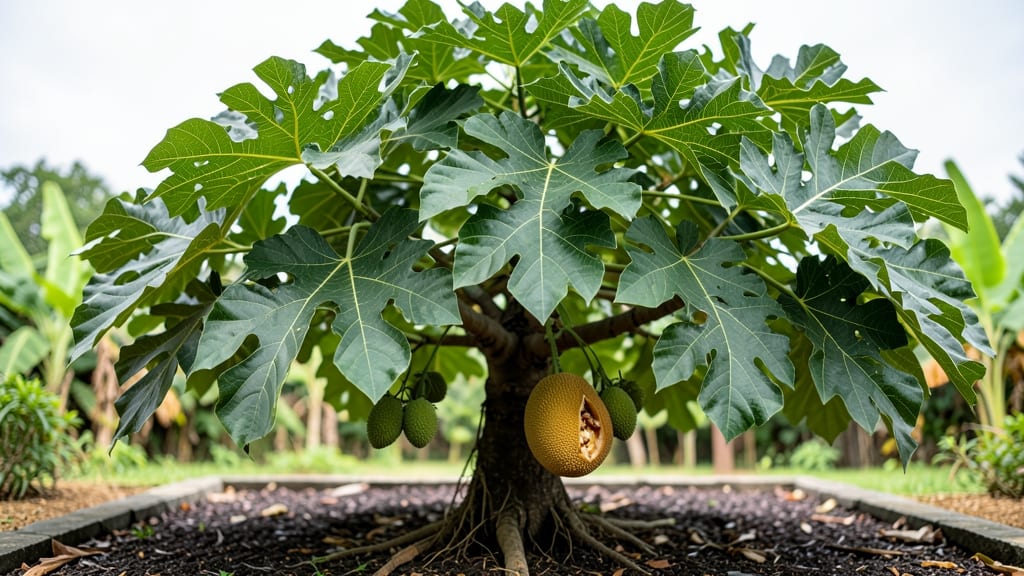
Growing jackfruit on a tree in the Pacific Northwest means mastering frost-resistant pruning—because this tropical giant actually thrives in our cool summers with the right care. 🌿 I learned the hard way that skipping winter prep turns your $100 sapling into a sad, leggy shrub by spring.
The secret isn't just cutting back—it's timing cuts to protect tender growth while encouraging that signature broad canopy.
You'll need sharp pruning shears, a 5-gallon watering can, and a clear calendar marked for late February and early September. Most people over-prune in spring, which stresses the tree when it's already pushing new leaves.
Instead, focus on removing dead wood in winter and shaping in early fall—this keeps the tree compact enough to handle our chilly nights while still soaking up summer sun.
What you end up with is a tree that produces those massive, spiky fruit within 5-7 years—not the 10+ years you'd expect from tropical climates.
The key is that Pacific Northwest jackfruits develop a thicker bark and deeper root system when pruned this way, making them surprisingly resilient to our 20-degree nights. You'll spot healthy growth in the glossy new leaves and the way branches grow outward rather than inward.
Works for both container-grown trees (in large pots) and in-ground plantings, though container trees need extra winter protection. Here's how to keep yours thriving through our unique climate—no tropical greenhouse required.
📚 In This Guide
- What you need
- Instructions
- Tips and common mistakes
- Wrapping up and next steps
What you need
- ● Pruning shears: Bypass pruners (for small branches, ¼"–¾" thick). Pro tip: 💡 Sharpen blades before use to avoid tearing bark!
- ○ Loppers: 1 pair (for branches ¾"–2" thick). Optional: Ratcheting loppers for extra leverage.
- ● Pruning saw: 1 curved-tooth saw (for branches 2"+ thick). Spec: 10–12" blade for jackfruit’s dense wood.
- ● Gloves: Heavy-duty, cut-resistant (e.g., Mechanix or pruning-specific). Why? Jackfruit thorns are no joke! 😬
- ● Disinfectant: 70% isopropyl alcohol or pruning sealant (to prevent disease spread).
- ○ Extension pole: 6–10 ft (for high branches). Optional: Telescoping pole for extra reach.
- ● Ladder: Sturdy, non-slip (8–12 ft tall). Safety first: 🔥 Use a helper or ladder stabilizers!
- ● Trash bags: 2–3 heavy-duty (for debris). Bonus: Wet bags to weigh down pruned branches.
- ● Rake: 1 long-handled (for clearing fallen leaves/debris).
- ● Frost cloth: 1–2 rolls (30–50 denier, 10’x10’). Use: Wrap young trees or vulnerable branches during late frosts (below 28°F).
- ● Anti-desiccant spray: 1 bottle (e.g., Wilt-Pruf). When? Apply after pruning in dry PNW winters to retain moisture.
- ● Mulch: 5–10 bags (straw or wood chips). Layer: 2–3" around the base after pruning to insulate roots.
- ● Know your tree’s age: Mature jackfruit trees (5+ years) need less aggressive pruning than young saplings.
- ● Timing: Prune in late winter/early spring (Feb–March in PNW) to avoid frost damage. Exception: Light shaping can be done in summer.
- ● Weather check: Wait for a dry day (wet branches = higher disease risk).
- ● Safety brief: Turn off sprinklers, clear the area of pets/kids, and wear closed-toe shoes!
Step-by-step guide for pruning jackfruit trees in cold climates
Here's how to keep your jackfruit thriving in the Pacific Northwest's chilly winters.
✂️ Step 1: Time Your Pruning for Frost Protection
Prune your jackfruit tree late winter to early spring, just as new growth begins but before hard frosts return. In the PNW, this means February to March when temperatures consistently stay above 40°F at night. Pruning too early exposes fresh cuts to winter cold, while waiting too long risks damaging new buds.
Watch for the first signs of swollen buds on branches—this is your cue. If you prune too early, the tree won't heal cuts before winter sets in. If you wait too late, you'll cut off potential growth. I always mark the last frost date on my calendar and prune 2-3 weeks after that date to be safe.
✂️ Step 2: Remove Dead, Damaged, or Weak Branches First
Start by cutting out any branches that are dead, broken, or crossing—these compete with healthy growth and create entry points for disease. Look for branches with no green bark, dry leaves, or those rubbing against others. Use sharp pruning shears to make clean cuts at a 45-degree angle, about ¼ inch above a healthy bud.
I always work from the bottom up, removing the easiest targets first. This gives me a clear view of the tree's structure. If a branch is thicker than 2 inches, use a pruning saw instead of shears. Cut just outside the branch collar—the swollen area where the branch meets the trunk—to prevent damage to the tree's healing tissues.
☀️ Step 3: Thin the Canopy for Better Airflow and Sunlight
Jackfruit trees need good airflow to prevent fungal diseases, especially in damp PNW climates. Thin the canopy by removing 20-30% of the interior branches, focusing on those that crowd the center. Aim to create an open, vase-like shape that lets sunlight reach all parts of the tree.
Look for branches growing inward or downward—they block light and trap moisture. Cut these back to a lateral branch or bud. You'll see the difference immediately: the tree's structure becomes more balanced, and sunlight can penetrate to the lower branches. This also makes future pruning easier and reduces the risk of frost damage in winter.
🌿 Step 4: Shape for Frost Resistance and Fruit Production
To protect your jackfruit from frost, shape the tree so it has a strong central leader and well-spaced branches. Remove any branches growing directly upward that could become weak and break under snow or ice. Instead, encourage outward growth by cutting back competing vertical shoots to a side bud.
For fruit production, focus on younger branches—they bear the best fruit. Older wood produces smaller, less flavorful jackfruits. If your tree is mature, prune back some of the oldest branches to stimulate new growth. Watch for fruit buds, which appear as small, rounded swellings on the branches. These are your priority—avoid cutting them off.
⏰ Step 5: Clean Up and Protect After Pruning
After pruning, sterilize your tools with rubbing alcohol to prevent spreading disease. Remove all cut branches and debris from the area—this reduces hiding spots for pests and fungal spores. If you're in a very cold PNW zone, consider wrapping the trunk with burlap or tree wrap to protect it from winter sunburn.
Water the tree deeply after pruning to help it recover. You'll notice new growth within 4-6 weeks if the timing was right. Keep an eye out for sap bleeding from cuts—this is normal and will stop once the tree seals the wounds. If you see excessive oozing or signs of disease, apply a fungicide labeled for fruit trees.
Tips & tricks for perfect jackfruit tree pruning in cold climates
Real talk: Pruning jackfruit in the PNW isn't rocket science, but these little details make all the difference between a tree that thrives and one that struggles.
Timing Secret: That February-March window is tighter than it seems. I learned this the hard way after pruning too early one year—my cuts didn't heal before the next frost hit. Check your local frost calendar and add those 2-3 weeks buffer. If you're in the western PNW where winters are milder, you might get away with pruning slightly earlier, but don't push it past early March. The swollen buds are your best indicator—wait until you see at least 20% of branches showing signs of new growth.
Tool Preparation: Sterilizing your tools isn't just about disease prevention—it's about giving your tree the best possible start. I keep a small bottle of rubbing alcohol in my tool shed and wipe down shears and saws before AND after each cut. For larger jobs, I use a 10% bleach solution (1 part bleach to 9 parts water) to soak tools for 5 minutes between trees. This might seem excessive, but fungal diseases like anthracnose can turn a healthy tree into a sad one in weeks.
Branch Selection Strategy: When thinning the canopy in Step 3, focus on creating what arborists call "light penetration zones." I visualize drawing an imaginary cone from the top of the tree down to the ground—any branches that block this cone need to go. For mature trees, prioritize removing branches that are growing at angles less than 45 degrees from vertical, as these are most likely to break under snow load. Remember, you're aiming for that open vase shape, not a dense Christmas tree look.
Post-Pruning Recovery: The 4-6 week recovery period is your tree's chance to heal properly. During this time, I increase watering slightly (about 20% more than normal) to help with wound sealing. You'll know you're doing it right when you see new growth at the pruning cuts—this means the tree is actively healing. If you notice excessive sap bleeding (more than a few drips), it's a sign the cuts are too large—next time, make smaller cuts closer to the branch collar.
Pro Tips for Jackfruit On Tree
- Real talk: Pruning jackfruit in the PNW isn't rocket science, but these little details make all the difference between a tree that thrives and one that struggles.
- Timing Secret: That February-March window is tighter than it seems.
- Tool Preparation: Sterilizing your tools isn't just about disease prevention—it's about giving your tree the best possible start.
Frequently asked questions
When is the best time to prune a jackfruit tree in PNW climates?
The ideal time is late winter or early spring (February–March), just before new growth begins. Avoid pruning during frost season (November–January) to prevent cold damage to exposed branches. If you must prune in summer, do it early morning to reduce stress on the tree.
How do I protect my jackfruit tree from frost in the PNW?
Jackfruit trees are moderately frost-tolerant but can suffer damage below 28°F (-2°C). Use frost cloth or row covers for young trees, and mulch heavily around the base. Mature trees benefit from drip irrigation at night to add humidity. Prune damaged branches in early spring once frost risk passes.
How much can I prune a jackfruit tree without harming it?
You can safely remove up to 25–30% of the tree’s foliage in one session, but avoid over-pruning. Focus on dead, diseased, or crossing branches first. For structural shaping, limit cuts to 15–20% annually. Jackfruit trees respond well to light, strategic pruning rather than heavy shearing.
Will pruning reduce my jackfruit harvest?
Not if done correctly! Pruning improves airflow and sunlight penetration, which can increase fruit production over time. However, avoid heavy pruning in fruit-bearing years—prioritize light maintenance to balance growth and yield. Young trees (under 5 years) benefit most from shaping prunes.
What should I do if my jackfruit tree isn’t recovering after pruning?
If you notice yellowing leaves, slow regrowth, or oozing cuts, you may have over-pruned or stressed the tree. Reduce watering temporarily and apply a balanced fertilizer (like 10-10-10). If branches die back, prune them just above a healthy bud. For severe issues, consult a local arborist familiar with tropical/subtropical trees.
Wrapping up and next steps
Pruning your jackfruit tree in the Pacific Northwest isn’t just about shaping—it’s about strengthening your tree for frost, pests, and future harvests! 🌿 With the right tools, timing, and techniques, you’ll encourage healthier growth, bigger fruit, and a tree that thrives even when temperatures dip.
Whether you’re a seasoned gardener or a curious beginner, every snip is a step toward a bountiful, resilient jackfruit tree.
Ready to roll up your sleeves? Start by reviewing your pruning checklist—then grab those shears and get growing! Your future jackfruit feasts (or smoothie bowls) will thank you. 🍴✨