
Flowers
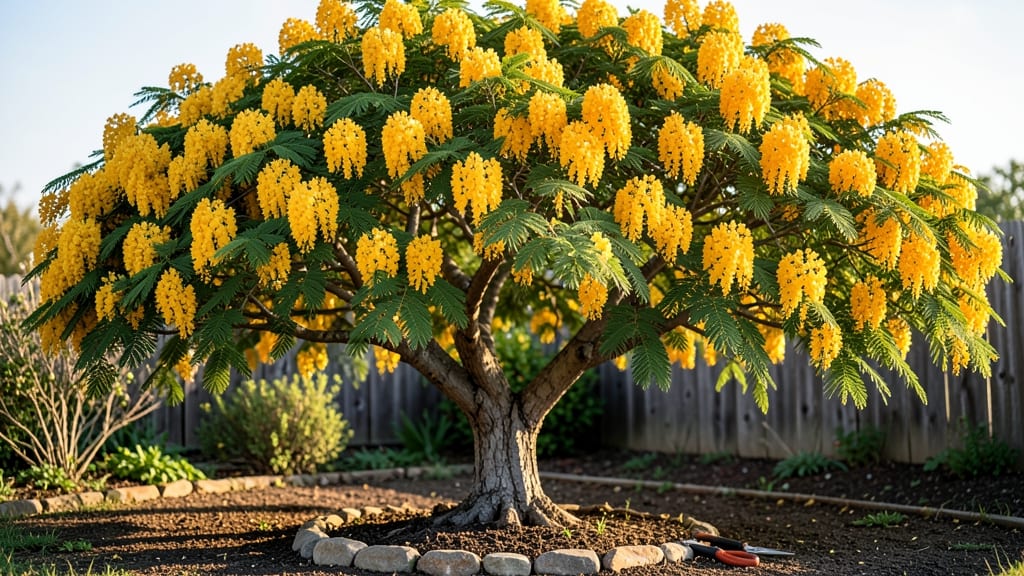
Your Pacific Northwest garden could soon burst with jacaranda tree yellow flowers—those cascading canopies of sunshine that turn heads every spring. 🌿 I’ve grown them here for years, and the secret to those vibrant blooms isn’t just luck; it’s about matching their tropical roots to our cooler climate with the right care.
Most people assume jacarandas need heat to thrive, but with a few adjustments, they’ll reward you with bold yellow blooms that outshine even the blue varieties.
The key starts with well-draining soil—think sandy loam mixed with compost—and a spot that gets at least 6 hours of sun daily, though they tolerate partial shade in hot afternoons. Water deeply once a week (more in summer), but avoid soggy roots, which is where many gardeners go wrong.
Prune lightly after flowering to shape the tree and encourage next year’s blooms, but never cut into old wood—jacarandas bloom only on new growth.
By summer’s end, you’ll have a tree dripping with sun-kissed yellow flowers, their fragrance drawing hummingbirds and bees to your yard. The foliage stays lush even in our damp winters, and with proper care, they’ll live for decades—imagine that canopy of gold against your PNW skies.
The hardest part? Waiting for spring to see those blooms again.
They’re not fussy, but they do need winter protection—mulch heavily and consider a windbreak if you’re in a chilly microclimate. Pests are rare, but watch for scale insects; a strong spray of water usually clears them.
Once established, these trees are nearly indestructible, making them a low-maintenance way to add drama to any landscape.
📚 In This Guide
- What you need
- Instructions
- Tips and common mistakes
- Wrapping up and next steps
What you need
- ● Jacaranda Tree: 1 jacaranda mimosifolia seedling (or 1-2 mature cuttings for propagation)
- ○ Optional: Pre-germinated seeds (for faster growth)
- ● Soil & Amendments: 5+ gallons of well-draining potting mix (or garden soil amended with compost)
- ● 1 cup perlite or coarse sand (to improve drainage)
- ○ Optional: Slow-release fertilizer (10-10-10 NPK ratio)
- ● Planting Supplies: 1 gallon-sized container (for seedlings) or large nursery pot (15+ gallons for mature cuttings)
- ● 1 trowel or shovel (for transplanting)
- ● 1 roll landscape fabric (to suppress weeds)
- ● Watering & Care: Watering can or hose with gentle spray nozzle
- ● Mulch (2-3 inches of wood chips or straw)
- ○ Optional: Drip irrigation kit (for consistent moisture)
- ● 🌡️ Climate Check: Ensure your zone is USDA 9-11 (Pacific Northwest may require microclimate protection like a greenhouse or container growing)
- ● ☀️ Sunlight: Commit to a full-sun spot (6+ hours of direct light daily)
- ● 💡 Patience: Jacarandas grow slowly—expect 1-2 feet of growth per year!
- ○ Optional but Helpful: Soil pH tester (ideal range: 6.0-7.5)
- ● Pruning shears (for shaping as it matures)
Step-by-Step instructions for reviving jacaranda trees with yellow flowers
Here's how to nurse your jacaranda back to its vibrant, flowering glory—especially in cooler Pacific Northwest skies.
🌱 Step 1: Assess the Tree's Health and Prune Strategically
Start by examining the tree for signs of stress. Jacarandas often show yellowing leaves when they're not getting enough sunlight or nutrients. Look for thin, sparse canopies or branches with no buds—these are your clues. I always prune in late winter or early spring, just as new growth begins to appear. This timing gives the tree time to heal before the growing season kicks in.
Use clean, sharp pruning shears to remove any dead, diseased, or crossing branches first. Cut just outside the branch collar where it meets the trunk or larger branch. For thicker branches, make a clean cut at a slight angle to prevent water from pooling. You'll know you're on the right track when you see fresh, green growth emerging from the pruned areas within a few weeks.
💧 Step 2: Amend the Soil and Water Deeply
Jacarandas thrive in well-draining soil with a slightly acidic to neutral pH. If your tree's soil feels compacted or waterlogged, it’s time to improve it. Work in 2-3 inches of compost or well-rotted manure into the top 12 inches of soil around the tree’s drip line. This adds organic matter and encourages root growth. I like to mix in a handful of slow-release fertilizer (like 10-10-10) to give the tree a steady nutrient boost.
Water deeply once a week, especially during the first growing season after pruning. Aim for 1-2 gallons of water per inch of trunk diameter, applied slowly to encourage deep root penetration. You’ll know the soil is moist enough when it feels damp 6 inches below the surface. Avoid overwatering—jacarandas hate soggy roots, which can lead to root rot and more yellowing leaves.
☀️ Step 3: Provide Supplemental Light and Protection
Jacarandas are sun-lovers and need at least 6-8 hours of direct sunlight daily to produce those stunning purple blooms. If your tree is in a spot with partial shade, consider thinning nearby branches or removing obstructions to improve light exposure. In the Pacific Northwest, where summers are cooler, you might notice slower growth or fewer flowers. If that’s the case, a reflective surface like a white wall or mirror behind the tree can help bounce extra light onto the canopy.
If your tree is still struggling, consider using a grow light for a few hours a day during the growing season. Position it 4-6 feet away from the tree to avoid burning the leaves. Watch for new leaves emerging with a richer green color—this is your sign that the tree is responding well to the extra light.
✂️ Step 4: Encourage Flowering with Proper Care
Jacarandas flower best when they’re healthy and well-fed. After the first growing season, apply a balanced fertilizer (like 12-12-12) in early spring, just as the buds begin to swell. Follow the package instructions for application rates, but I usually halve the recommended dose to avoid over-fertilizing. You’ll see the difference in 2-3 weeks when new growth appears and the tree starts to fill out.
To promote more flowers, prune lightly again in late spring after the blooms have faded. Remove any weak or spindly growth to redirect the tree’s energy toward producing more buds. Jacarandas are heavy feeders, so don’t skip the fertilizer in subsequent years. With consistent care, you’ll start seeing those iconic purple blooms return in 2-3 seasons, even in cooler climates.
Tips & tricks for reviving jacaranda trees with yellow flowers
Here's what nobody tells you about bringing your jacaranda back from the brink—especially when those vibrant purple blooms seem like a distant memory.
Pruning Precision: When you're removing branches in Step 1, focus on creating an open canopy that allows sunlight to reach the inner branches. Thin out crowded areas by cutting back to the nearest outward-facing bud—this encourages new growth in the right direction. I've seen trees go from sparse to lush just by opening up that canopy. Remember, you're not just pruning for shape; you're creating an environment where sunlight can do its magic.
Soil Science: In Step 2, don't just add compost—think about the texture. Jacarandas hate soggy roots, so if your soil feels heavy, mix in some perlite or coarse sand along with that 2-3 inches of compost. This improves drainage while still providing nutrients. I've had the best results when the soil around the drip line feels like a well-draining potting mix. And when you're checking moisture at 6 inches deep, use your finger—it's the most reliable way to gauge soil moisture without guessing.
Light Strategy: For that critical 6-8 hours of sunlight in Step 3, consider the time of year. In the Pacific Northwest, summer sun is strong but shorter in duration. If your tree isn't getting enough light, try moving it to a sunnier spot or using those reflective surfaces to maximize what sunlight you do get. I've used white plastic sheeting on fences behind trees to double the effective light exposure. And when using grow lights, start with just 2-3 hours a day—too much light can stress the tree.
Fertilizer Timing: The 2-3 week window mentioned in Step 4 for seeing results after fertilizing is a great benchmark, but don't expect miracles overnight. I've found that consistent care—applying that 12-12-12 fertilizer every spring—makes the biggest difference over time. And here's a pro move: if you notice new growth but no flowers after a year, it might be time to switch to a bloom-specific fertilizer like 10-30-20 in early spring. This gives the tree the phosphorus boost it needs for flowering.
Pro Tips for Jacaranda Tree Yellow Flowers
- Here's what nobody tells you about bringing your jacaranda back from the brink—especially when those vibrant purple blooms seem like a distant memory.
- Pruning Precision: When you're removing branches in Step 1, focus on creating an open canopy that allows sunlight to reach the inner branches.
- Soil Science: In Step 2, don't just add compost—think about the texture.
Frequently asked questions
Got questions about growing or caring for a jacaranda tree with yellow flowers? You’re not alone! Here are some of the most common queries—and their answers—to help you cultivate a stunning, vibrant canopy in your Pacific Northwest garden.
Why isn’t my jacaranda tree producing yellow flowers?
Jacarandas are famous for their purple blooms, but yellow-flowered varieties (like Jacaranda mimosifolia ‘Golden Glow’) need specific conditions: full sun (6+ hours daily), well-draining soil, and patience—it can take 3–5 years to flower. If it’s not blooming, check for:
- Temperature: Jacarandas thrive in USDA zones 9–11. In cooler PNW climates, grow in containers and overwinter indoors.
- Pruning: Over-pruning can stress the tree. Light pruning after flowering encourages new growth.
- Watering: Drought stress delays blooms. Water deeply but infrequently (let soil dry between waterings).
Can jacaranda trees survive the Pacific Northwest’s rainy/wet winters?
Native to tropical climates, jacarandas hate soggy roots. In the PNW:
- Grow in containers: Move pots to a sheltered, sunny spot (like a garage or patio) during winter rains.
- Raise beds: If planted in-ground, mound soil to improve drainage or plant on a sloped hill.
- Use a rain cover: A clear plastic tent (like a greenhouse) can protect leaves from prolonged wetness.
What are some yellow-flowering alternatives to jacaranda for PNW gardens?
If jacarandas prove too finicky, these yellow-blooming trees thrive in cooler climates:
- Forsythia (Forsythia × intermedia): Early spring blooms, hardy to zone 4.
- Goldenrain Tree (Koelreuteria paniculata): Zone 5–8, drought-tolerant, and produces papery seed pods.
- Japanese Tree Lilac (Syringa reticulata): Fragrant yellow-white blooms, zone 3–8.
- Golden Chain Tree (Laburnum × watereri): Zone 5–7, but toxic—keep away from pets/kids.
Are jacaranda trees invasive or harmful to the Pacific Northwest ecosystem?
Jacarandas are not invasive in the PNW but can become aggressive in frost-free zones (like Southern California). However:
- No major ecological threats: They don’t outcompete native plants like some invasives (e.g., English ivy).
- Watch for: Fast growth can shade out ground covers. Mulch heavily to protect soil.
- Beneficial for pollinators: Yellow varieties attract bees and butterflies—great for biodiversity!
How do I encourage more yellow flowers on my jacaranda?
Boost blooms with these pro tips:
- Maximize sunlight: Place in the sunniest spot possible (even in winter, if indoors).
- Avoid over-fertilizing: Too much nitrogen = leafy growth, fewer flowers. Use a bloom-specific fertilizer (e.g., 5-10-10) in early spring.
- Simulate drought: Reduce watering slightly in late summer to stress the tree just enough to trigger flowering hormones.
- Heat it up: Jacarandas bloom best in warmth. If in a pot, move it near a south-facing wall or use a heat mat in winter.
Wrapping up and next steps
Reviving your jacaranda tree’s stunning yellow flowers in the Pacific Northwest is totally doable with the right care! 🌸 From pruning at the perfect time to ensuring proper sunlight and soil, these steps will help your tree thrive and reward you with vibrant blooms.
Don’t wait—your tree’s next floral masterpiece is just a season away!
Ready to take action? Start with a soil test and a gentle pruning session this spring—your jacaranda will thank you with a canopy full of color! 🌿