
Pruning
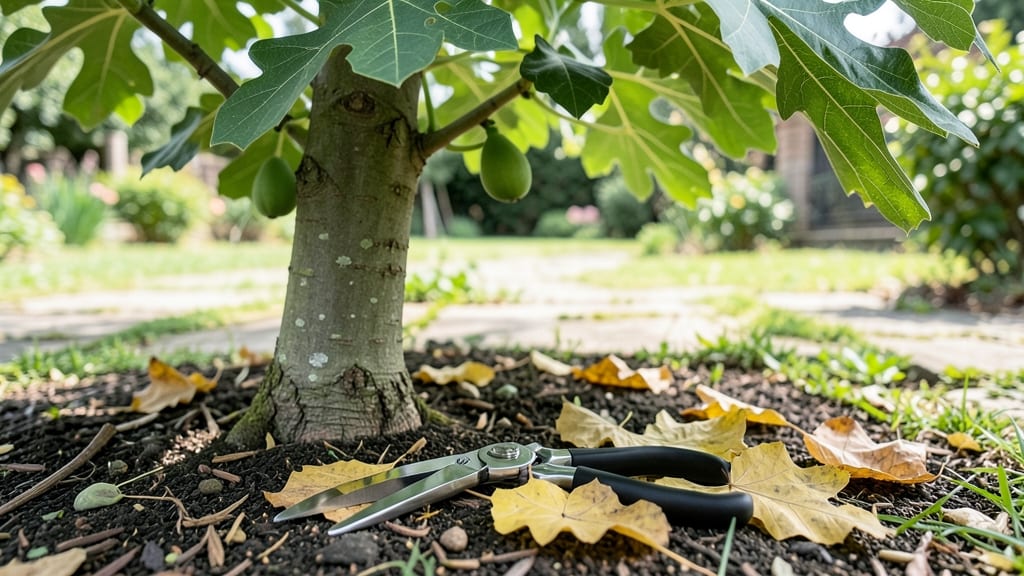
Trimming a fig tree in the fall isn’t just about shaping branches—it’s about setting up next year’s harvest and keeping the tree strong through winter.
I’ve learned the hard way that cutting too late or too aggressively can leave your tree vulnerable to frost damage, so timing and technique matter more than you’d think. The key is working before the first hard freeze, when the tree’s natural defenses are still active but growth has slowed.
You’ll need just a few basic tools: sharp pruning shears for smaller branches, loppers for thicker limbs, and rubbing alcohol to sterilize cuts. I always sanitize my tools between cuts to prevent spreading disease—figs are surprisingly susceptible to fungal issues if you’re not careful.
The goal is to open up the canopy for airflow while removing dead or crossing branches that could harbor pests over winter.
What you’ll end up with is a tree that looks tidier but more importantly, grows stronger. Figs respond well to late-season pruning because they bloom on new wood, so cutting back now encourages fresh, vigorous growth in spring.
You’ll notice fewer broken branches after storms, better sunlight penetration, and—if you’re lucky—a bumper crop of those sweet, honey-like figs next summer.
Here’s the thing—figs are forgiving, but they don’t like being rushed. If you’re in a colder climate (zones 7 and below), wait until after the first frost but before the ground freezes.
In warmer areas, you’ve got a little more flexibility, but never prune after the first hard freeze—trust me, your tree will thank you in spring.
📚 In This Guide
- What you need
- Instructions
- Tips and common mistakes
- Wrapping up and next steps
What you need
- ● Pruning shears (bypass or anvil type) – Choose sharp, clean shears (4-6" blades) for clean cuts on smaller branches.
- ● Loppers (long-handled) – For thicker branches (½"–1½" diameter). Opt for bypass-style to avoid crushing.
- ● Pruning saw (folding or bow saw) – For branches thicker than 1½". Look for a fine-tooth blade for smooth cuts.
- ● Gloves (cut-resistant) – Protect your hands from thorns and rough bark (leather or heavy-duty work gloves work well).
- ● Disinfectant (70% isopropyl alcohol or pruning sealant) – Clean tools between cuts to prevent disease spread.
- ● Ladder or step stool – If your tree is taller than 6 feet, use a stable, non-slip ladder (or a helper!).
- ● Trash bags or bucket – Collect pruned branches for disposal or composting.
- ● Hand pruners with a ratchet mechanism – Reduces hand strain for extended trimming.
- ○ Pruning sealant (optional) – Apply to large cuts (>½") to prevent moisture loss (though figs often heal well without it).
- ● Marking twine or flags – Label branches to remove if needed (e.g., diseased or crossing growth).
- ● Safety glasses – Protect your eyes from debris, especially when sawing thick branches.
Step-by-Step guide for late-season fig tree pruning
Here’s how I simplify fall pruning to keep your fig tree healthy through winter.
Assess the Tree’s Condition and Identify Problem Areas
Start by examining your fig tree from all sides, looking for branches that have produced fruit this season. These branches often carry the year’s energy and may need attention. Look for dead, diseased, or crossing branches—these are the first candidates for removal. I always prune these out first because they’re either no longer productive or could harbor pests over winter.
Next, check for any branches growing inward or rubbing against each other. These will compete for sunlight and can create wounds where infections might take hold. Use your hands to gently feel for weak or brittle wood—this is a sign the branch may not survive another season. Mark these areas with a small piece of twine or a flagging tape if you’re unsure, so you don’t miss them during the actual cut.
Sterilize Tools and Make Clean Cuts
Before you make any cuts, sterilize your pruning shears or saw with rubbing alcohol or a 10% bleach solution. This prevents spreading disease from one branch to another. I always do this step first because it’s easy to forget in the excitement of shaping the tree. Use sharp tools—dull blades tear wood, creating larger wounds that heal poorly.
When you’re ready to cut, make your first slice about ¼ inch above a bud or branch collar. The bud should be facing the direction you want the branch to grow. Angle the cut slightly downward to help water run off and prevent rot. Avoid leaving stubs, as they can trap moisture and invite fungal growth. If you’re removing a larger branch, make a second cut about 1-2 feet out from the trunk to avoid tearing the bark.
Thin Out Overcrowded Branches for Better Airflow
Focus on thinning the canopy to improve airflow and sunlight penetration. Remove branches that grow straight up or downward, as these often create dense clusters that trap moisture. I aim to open up the center of the tree by 20-30%—this reduces the risk of fungal diseases like powdery mildew, which thrive in damp, shaded conditions.
Pay special attention to the lower branches. If they’re shading the ground too much, they can make the base of the tree too wet, which encourages root rot. You don’t need to remove every lower branch, but thinning them out helps the tree focus its energy on stronger, healthier growth. Step back every few cuts to visualize the tree’s shape—this helps you avoid over-pruning.
Shape the Tree for Winter Resilience
Now’s the time to refine the tree’s shape, but avoid heavy pruning. Figs are sensitive to extreme cuts in late fall, so focus on light shaping rather than dramatic restructuring. Remove any suckers or water sprouts—these are fast-growing, weak branches that drain the tree’s energy. I like to keep the tree’s natural form while ensuring it has an open center for airflow.
If your fig tree has any branches that were damaged by frost or storms earlier in the year, prune them back to healthy wood. Look for branches that have died back to the main trunk or larger limbs—these should be cut flush with the trunk or branch collar. Avoid cutting into the trunk itself, as this can create large wounds that take years to heal.
Tips & tricks for late-season fig tree pruning
Late-season pruning sets the stage for a healthier fig tree next spring—these are the details that make all the difference.
Branch Health Check: In Step 1, when you're assessing branches for removal, I learned this the hard way: never prune branches that still have green leaves unless they're clearly diseased. Figs can produce fruit on new growth even in late fall, and removing healthy leafy branches reduces the tree's ability to store energy for winter. Focus instead on branches that are completely bare or show signs of stress.
Cutting Technique: The exact placement of your cuts in Step 2 matters more than you might think. That ¼-inch above the bud isn't just a suggestion—it's critical for proper healing. I've seen too many trees develop cankers from cuts made too close to the bud. Use a sharp knife or pruners to make this precise cut, and always angle it downward to shed water. For larger branches, the second cut should be made just outside the branch collar, not inside it.
Airflow Strategy: When thinning in Step 3, aim to create a dome shape rather than a flat top. This opens up the center by about 20-30% while maintaining the tree's natural form. I visualize removing every other branch that's growing straight up—these vertical branches create dense clusters where moisture gets trapped. Remember, your goal is to improve airflow without creating large wounds that could invite disease.
Winter Prep Insight: In Step 4, the key to winter resilience is balance. While you're removing suckers and water sprouts, leave at least one strong branch at each major junction to maintain the tree's structure. I've seen fig trees completely stripped of their framework in winter, which makes them vulnerable to wind damage. Think of this as giving your tree a light haircut rather than a buzz cut—just enough to improve its shape and health without compromising its strength.
Pro Tips for Trim A Fig Tree In The Fall
- Late-season pruning sets the stage for a healthier fig tree next spring—these are the details that make all the difference.
- Branch Health Check: In Step 1, when you're assessing branches for removal, I learned this the hard way: never prune branches that still have green leaves unless they're clearly diseased.
- Cutting Technique: The exact placement of your cuts in Step 2 matters more than you might think.
Frequently asked questions
Got questions about trimming your fig tree in fall?
You’re not alone! Here are answers to the most common concerns—from timing to tools and troubleshooting—to help you prune with confidence.
When is the exact best time to trim a fig tree in fall?
Trim your fig tree after the first hard frost (when leaves have dropped) but before winter dormancy sets in (typically late October to early November in most climates). This timing minimizes stress on the tree and reduces disease risk. Avoid pruning too early—figs need time to heal before cold snaps hit!
Can I trim a fig tree in late fall if I missed the window?
Yes, but with caution! If you miss the ideal window, prune early spring (just before buds swell) instead. Avoid heavy cuts in deep winter, as cold weather slows healing. Light shaping (removing dead wood) is fine, but major pruning should wait until spring to prevent frost damage or pest entry points.
Do I need special tools to trim a fig tree?
Not necessarily! Basic tools like bypass pruners (for small branches), loppers (for thicker limbs), and a sharp pruning saw (for large branches) work well. Sterilize tools with rubbing alcohol between cuts to prevent disease spread. A glove (fig sap can irritate skin) and a ladder (if needed) round out your kit.
What if my fig tree has no leaves—should I still prune?
Leafless trees make it easier to spot dead, diseased, or crossing branches. Focus on removing:
- Dead/dying wood (snaps easily or looks blackened).
- Suckers (shoots at the base—these drain energy).
- Water sprouts (vertical, fast-growing shoots).
Will trimming my fig tree in fall reduce next year’s fruit?
Not if done correctly! Proper fall pruning boosts fruit production by:
- Encouraging stronger growth (removing weak branches).
- Improving air circulation (reducing fungal risks).
- Directing energy to remaining branches (bigger, healthier fruit).
What should I do if my fig tree bleeds sap after pruning?
Bleeding (sap oozing) is normal but can attract pests. To manage it:
- Wipe cuts with a 1:10 water-to-vinegar solution to deter insects.
- Avoid pruning during active sap flow (early spring is worse—fall is safer!).
- Seal large cuts (1”+) with pruning sealant (optional but helpful in humid climates).
Wrapping up and next steps
Trimming your fig tree in the fall isn’t just about shaping—it’s about setting it up for a strong, productive winter and a bountiful harvest next season. By removing dead wood, thinning dense growth, and encouraging airflow, you’re giving your tree the best chance to thrive.
Now that you’ve got the know-how, grab those pruners and get to work! 🌿✂️
Ready for more? Next, explore seasonal care tips to keep your fig tree happy year-round—or share your trimming triumphs with fellow gardeners! 🌟