
Pruning
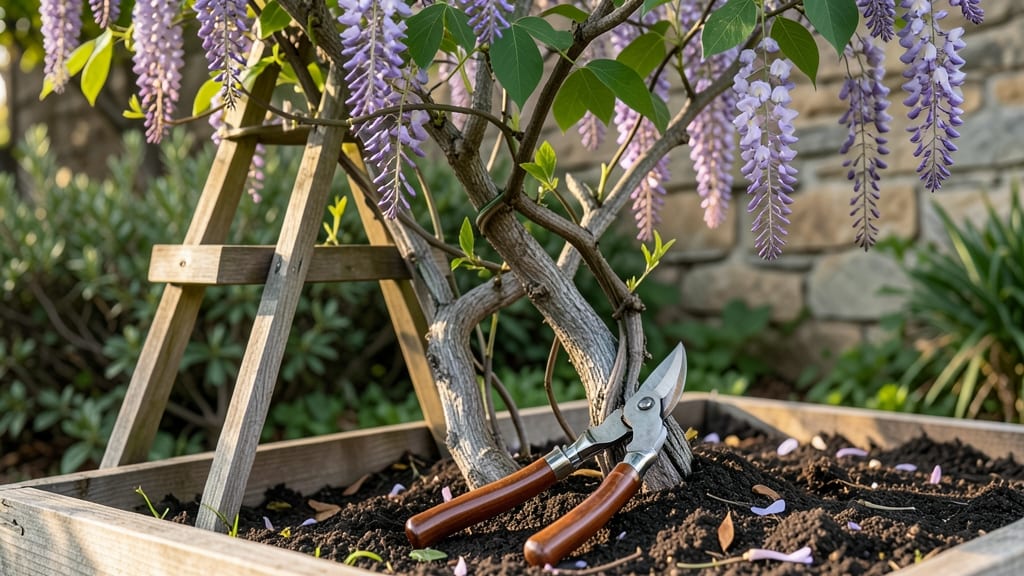
Training a wisteria tree isn’t just about pruning—it’s about creating a living tapestry that blooms from spring into summer. 🌿 I’ve wrestled with these vines for years, and the difference between a tangled mess and a showstopping display comes down to three things: the right support, strategic cuts, and patience.
Most gardeners give up after the first year because they don’t realize wisteria rewards long-term commitment with fragrant, cascading blooms that last for decades.
The secret starts with your support structure: a sturdy arbor, trellis, or even a strong fence will keep those heavy vines from snapping under their own weight.
You’ll also need sharp pruners, gloves (those thorns are no joke), and a clear plan for shaping—because wisteria grows fast, and without direction, it’ll smother everything in sight.
My first attempt looked like a wild vine jungle, but after refining my approach, I now have a vine that climbs gracefully and blooms like crazy every year.
By the end of your first season, you’ll have a vine that’s well-anchored, properly spaced, and primed for next year’s growth. The blooms won’t be as dramatic yet, but the foundation will be set for those jaw-dropping purple cascades by year three.
The key is balancing pruning with encouragement—cutting back too much stunts growth, but letting it run wild means losing those prized flowers.
This method works for both young vines and established ones, though older trees need a gentler touch. Whether you’re starting fresh or reviving a wayward wisteria, the principles stay the same: support, shape, and patience. Let’s get those vines under control—and turn them into the star of your garden.
📚 In This Guide
- What you need
- Instructions
- Tips and common mistakes
- Wrapping up and next steps
What you need
- ● Wisteria vine or sapling: Choose a healthy, disease-free plant (preferably Wisteria sinensis or Wisteria floribunda).
- ● Support structure: Arbor, trellis, or pergola (minimum 8–10 feet tall for mature vines).
- ● Twine or soft garden ties (10–15 yards, biodegradable preferred).
- ● Pruning tools: Sharp bypass pruners (for cuts <½ inch thick).
- ● Loppers (for thicker stems, 2–3 inches thick).
- ● Hand saw (for stubborn branches, 4–6 inches thick).
- ● Gloves: Heavy-duty gardening gloves (to protect from thorns and sap).
- ● Disinfectant: 70% rubbing alcohol or pruning sealant (to prevent disease).
- ● Fertilizer: Slow-release balanced 10-10-10 or phosphorus-rich fertilizer (for blooms).
- ● Mulch: Wood chips or straw (2–3 inches deep) to retain moisture.
- ● Plant markers: Labels to track pruning cuts (if training multiple vines).
- ● Pole or stake: Temporary support for young vines (1–2 feet tall).
Step-by-Step instructions for training a wisteria tree
Here’s my foolproof method for guiding wisteria’s natural growth into a stunning, manageable display.
🌿 Step 1: Identify the Strongest Shoots Early
Wisteria grows aggressively, so start training in early spring when new shoots emerge. Look for the thickest, healthiest stems—these will become your main leaders. I always pick 3-4 primary shoots spaced evenly around the trunk or support structure. These will form the backbone of your trained plant.
Use your fingers to gently bend each selected shoot upward along your chosen path (trellis, arbor, or trunk). The first few weeks are critical—wisteria wood hardens quickly, making later adjustments difficult. If a shoot resists, don’t force it; instead, secure it loosely with soft plant ties (like cotton strips) to guide its growth direction.
☀️ Step 2: Prune for Structure and Airflow
Once the main shoots reach 6-8 feet tall, it’s time to shape the framework. In late winter or early spring, cut back one-third of the previous year’s growth on each leader. This encourages bushier growth and prevents the plant from becoming top-heavy. Always prune just above a bud facing outward—this ensures new growth will fan out rather than crowd inward.
Remove any weak, crossing, or inward-growing branches completely. Wisteria thrives on sunlight, so prune to maintain good airflow between branches. You’ll know you’ve done it right when the center of the plant looks open and airy—this prevents fungal diseases that love damp, shaded conditions.
✂️ Step 3: Summer Maintenance to Control Vigor
During the growing season, pinch back new shoots to 6-8 inches in June and July. This might seem counterintuitive—after all, you want blooms!—but it forces energy into flowering wood rather than long, leggy growth. I pinch with my fingers (no need for shears) just above a leaf node where new buds will form.
Watch for suckers at the base of the plant—these are vigorous shoots that drain energy from your trained leaders. Remove them immediately with clean pruners. If you see long, bare stems with no leaves or buds, they’re likely dead wood and should be pruned back to live growth. This keeps your wisteria focused on producing those show-stopping spring blooms.
🪴 Step 4: Winter Pruning for Next Year’s Blooms
After the leaves fall, late winter is the time for your most aggressive pruning. Cut back last year’s flowering stems by half, but leave 3-5 buds on each branch. This might sound drastic, but it’s what triggers the heaviest bloom the following spring. I always prune on a dry day when the plant is dormant—this minimizes stress and reduces the risk of disease.
Shape the plant by thinning out old, woody stems that no longer produce flowers. Aim for a balanced, open structure with room for new growth. If your wisteria is climbing a trellis, trim any branches that grow away from the support—this keeps the plant contained and makes future training easier. You’ll know you’ve pruned correctly when the framework looks strong and airy, ready to burst into bloom.
Tips & tricks for perfect wisteria training
Took me years to master these tricks—here's how to avoid the most common mistakes and get that show-stopping wisteria display.
Timing is Everything: In Step 1, don't wait until shoots are too thick to bend. The first 2-3 weeks after emergence are when wisteria wood is most flexible. I've seen gardeners struggle because they waited until shoots were pencil-thick—by then, you're fighting the plant's natural rigidity. Bend gently but firmly, and check your ties weekly to ensure they're not digging into the stems as they grow.
Pruning Precision: When you reach Step 2 and cut back one-third of last year's growth, focus on making clean cuts just above outward-facing buds. I learned this the hard way—cutting too close to a bud can damage it, while leaving too much stem creates weak growth. Use sharp pruners and make cuts at a 45-degree angle to prevent water from pooling on the wound. This technique ensures your plant develops strong, outward-growing branches that will support those heavy flower clusters.
Summer Pinching Strategy: The June-July pinching in Step 3 might feel counterintuitive, but trust me—this is where you control the plant's energy. When you pinch back new shoots to 6-8 inches, you're forcing the plant to put energy into developing flower buds rather than long, unsupported growth. I always do this on a dry morning when the plant is fully hydrated, which makes the pinching easier and reduces stress on the plant. This simple step makes all the difference in your spring bloom quantity.
Winter Pruning Secrets: During the aggressive late winter pruning in Step 4, don't be afraid to make bold cuts. The key is leaving those 3-5 buds on each branch—these will become next year's flowering stems. I find it helpful to visualize the plant's framework: you're creating an open, airy structure that allows sunlight to reach all parts. This open structure isn't just about looks—it's crucial for preventing fungal diseases that thrive in dense, shaded foliage. Think of it as creating a skeleton that will support your wisteria's future glory.
Pro Tips for Train A Wisteria Tree
- Took me years to master these tricks—here's how to avoid the most common mistakes and get that show-stopping wisteria display.
- Timing is Everything: In Step 1, don't wait until shoots are too thick to bend.
- Pruning Precision: When you reach Step 2 and cut back one-third of last year's growth, focus on making clean cuts just above outward-facing buds.
Frequently asked questions
Got questions about training your wisteria to climb beautifully? Here are answers to the most common ones—so you can enjoy those fragrant blooms without the stress!
How long does it take for wisteria to start blooming after training?
Wisteria typically takes 2–3 years to produce flowers after planting, but training it to climb can speed up the process by encouraging stronger growth. Focus on pruning in late winter/early spring to maximize blooms sooner. Patience pays off—those cascading flowers are worth the wait!
Can I train wisteria indoors or in a container?
Wisteria thrives outdoors with plenty of sunlight and space to climb. While you can grow it in a large container (15+ gallons), it’s challenging indoors due to its aggressive growth and need for strong support. If container-grown, prune aggressively to control size and ensure proper drainage.
What should I do if my wisteria won’t climb or grows too wild?
If your wisteria is uncooperative, check these fixes:
Weak growth? Use a strong trellis or arbor and tie vines gently with soft twine.
Too leggy? Prune back 1/3 of the previous year’s growth in late winter to encourage bushier, climbing-friendly branches.
No flowers? Ensure it gets full sun (6+ hours/day) and fertilize lightly in early spring.
With patience, it’ll cooperate!Is there a less aggressive alternative to wisteria for climbing?
If wisteria’s vigor feels overwhelming, try these lower-maintenance climbers:
- Clematis – Blooms prolifically with less pruning.
- Jasmine – Fragrant but slower-growing.
- Honeysuckle – Hardy and attracts pollinators.
When is the best time to prune wisteria for training?
Prune wisteria twice a year for best results:
- Late winter/early spring (before buds swell) – Shape the plant and remove dead wood.
- Right after flowering – Trim back 1/3 of the current year’s growth to encourage more blooms next year.
Wrapping up and next steps
Training a wisteria tree is all about patience, consistency, and a little creativity—just like nurturing any prized plant! 🌿 With the right tools, techniques, and seasonal care, you’ll guide its growth to create a stunning, well-behaved climbing masterpiece.
Remember, every prune and redirect is a step toward longer blooms and healthier vines.
Ready to see your hard work pay off? Start by observing your tree’s progress and adjusting your approach as it grows. Next, plan a seasonal maintenance schedule to keep it thriving year-round. Happy training—your future floral canopy awaits! 🌸