
Planting
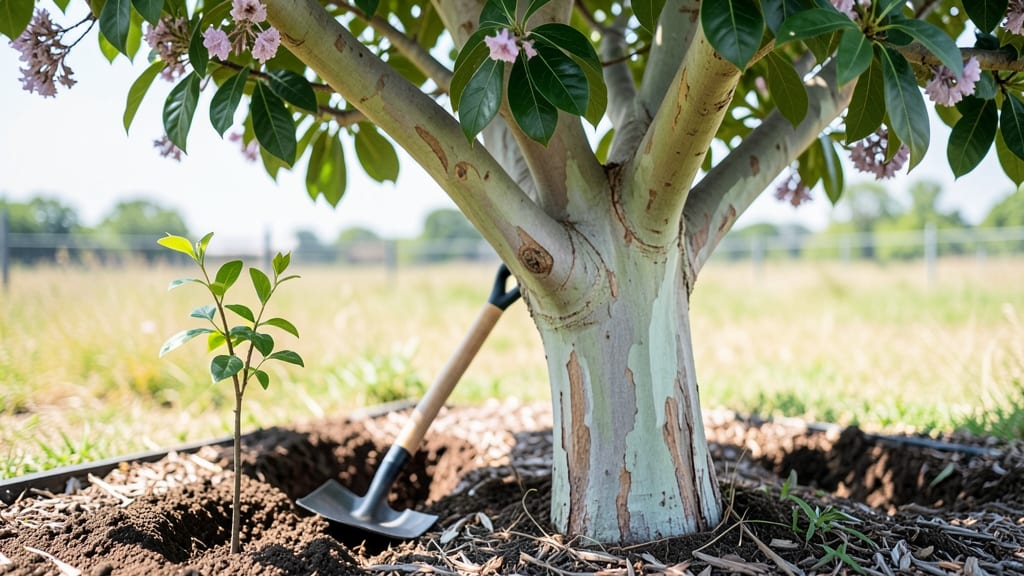
Planting a crepe myrtle is how you get that showstopping tree with lavender blooms that last all summer—and yes, the bark in winter is just as stunning.
I’ve planted mine in full sun, and within two years, it became the star of my backyard with almost no effort after the initial setup. The key is getting the soil right and spacing it properly from the start, or you’ll end up with a leggy mess fighting for sunlight.
You’ll need well-draining soil, a hole twice as wide as the root ball, and a sunny spot that gets at least 6 hours of direct light daily—crepe myrtles will rebel if you skimp on sun.
For zones 7-9, spring or fall planting works best, while zones 6 and below wait until after the last frost. The right spacing (15-20 feet apart for single-trunk varieties) prevents future pruning headaches, and a mulch ring keeps roots cool and moist without smothering them.
After planting, water deeply once a week for the first month to help roots establish, then taper off—these trees hate soggy feet. Within a season, you’ll see new growth shooting up, and by next summer, those football-sized blooms will be drawing neighbors to your yard.
The best part? Minimal pruning keeps them looking tidy without sacrificing next year’s flowers.
Works in urban yards, rural landscapes, or as a focal point in any sunny garden. Once established, crepe myrtles thrive with almost no fuss—just remember to avoid heavy pruning in late summer, or you’ll lose next year’s blooms. Let’s get that tree in the ground!
📚 In This Guide
- What you need
- Instructions
- Tips and common mistakes
- Wrapping up and next steps
What you need
- ● Crepe myrtle tree: Choose a healthy 1- to 3-gallon container-grown plant (or a bare-root sapling if planting in early spring). Pro tip: Look for vibrant green leaves and sturdy stems!
- ● Shovel or trowel: A round-point shovel (for digging) or a hand trowel (for smaller holes).
- ● Garden hose or watering can: With a gentle spray nozzle (crepe myrtles hate soggy roots!).
- ● Mulch: 2–3 inches of organic mulch (pine straw, shredded bark, or compost). Skip the rock mulch—it traps heat and can harm roots!
- ○ Slow-release fertilizer (optional but helpful): A balanced, granular fertilizer (10-10-10 or 8-3-9) to give your tree a nutrient boost.
- ● Staking supplies (if needed): 1–2 wooden or bamboo stakes (4–6 feet tall).
- ● Soft tree tie or garden twine (avoid wire—it can cut into bark!).
- ● Sunlight: A full-sun location (6+ hours of direct sunlight daily). Crepe myrtles thrive in sun—no shade allowed!
- ● Soil: Well-draining soil (amend heavy clay with compost or sand if needed).
- ● Space: Plant at least 3–5 feet away from sidewalks or structures (they grow 15–25 feet tall!).
- ● Water source: Easy access for the first 2–3 weeks (deep watering is key!).
- ● Plant tags or labels (to track varieties).
- ● Pruning shears (for shaping after planting).
- ● A tree guard (to protect young trunks from critters).
Step-by-Step instructions for planting a crepe myrtle tree
Here's how to get your crepe myrtle thriving from day one—no guesswork involved.
🌱 Step 1: Choose the Perfect Spot and Dig the Hole
Crepe myrtles demand full sun, so pick a location that gets at least 6-8 hours of direct sunlight daily. Avoid spots where other trees or buildings will cast shade later in the day. The hole should be twice as wide as the root ball and just as deep—this gives roots room to spread without crowding.
Loosen the soil at the bottom of the hole with your shovel. Crepe myrtles hate compacted roots, so breaking up the soil here prevents future stress. If your soil drains poorly, mix in a few inches of sandy loam or compost to improve drainage. You’ll know you’ve done it right when the soil crumbles easily between your fingers.
🪴 Step 2: Remove the Tree from Its Container and Prepare the Roots
Gently squeeze the sides of the container to loosen the root ball, then tip the tree out. If roots are circling tightly (a common issue with container-grown trees), use your fingers to tease them outward. This prevents girdling, which can strangle the tree as it grows. Hold the tree by its trunk—never the branches—to avoid damaging the bark.
Place the tree in the hole so the top of the root ball sits 1-2 inches above ground level. Crepe myrtles are prone to rot if planted too deep. Use a level to ensure the tree stands upright. If it’s tilting, adjust the soil beneath one side until it’s perfectly straight—this small step saves headaches later.
💧 Step 3: Backfill and Water Thoroughly
Fill the hole halfway with native soil, then water deeply to settle it. This removes air pockets and ensures the roots make immediate contact with moisture. After the water drains, add more soil up to the root ball’s original level. Press gently but firmly around the base—you’re not compacting, just eliminating gaps.
Water again until the soil is saturated 12 inches deep. You’ll know it’s enough when water pools on the surface and drains slowly. Mulch the area with 2-3 inches of organic mulch (like shredded bark), keeping it 6 inches away from the trunk to prevent rot. This helps retain moisture and regulates soil temperature.
☀️ Step 4: Stake and Support (If Needed)
Young crepe myrtles rarely need staking, but if your tree is top-heavy or in a windy area, use two stakes placed 6 inches from the trunk on opposite sides. Tie the trunk loosely with soft tree ties—tight enough to hold but loose enough to allow growth. Check ties monthly and loosen them as the tree thickens.
Prune any broken branches now, but avoid heavy pruning for the first year. Crepe myrtles bloom on new wood, so removing too much can delay flowering. Instead, focus on shaping the tree lightly to encourage a strong structure. You’ll see new growth within 4-6 weeks, signaling the tree has taken root.
⏰ Step 5: Maintain Through the First Year
Water deeply once a week during the first growing season, aiming for 1-1.5 inches of water per week. Let the top 2 inches of soil dry out between waterings to prevent root rot. Overwatering is the biggest mistake new growers make—crepe myrtles are drought-tolerant once established.
Fertilize lightly in early spring with a balanced, slow-release fertilizer (10-10-10). Avoid high-nitrogen blends, which encourage leafy growth at the expense of flowers. You’ll notice the first blooms in 2-3 years, but proper care now ensures a showstopping display for decades.
Tips & tricks for planting a thriving crepe myrtle tree
Here's what I've learned after planting dozens of these sun-lovers—small details that make all the difference between a struggling sapling and a showstopping tree.
Location is Everything: That 6-8 hours of sunlight isn't just about warmth—it's about consistent light exposure. I once planted one in what I thought was full sun, only to realize a neighboring oak cast afternoon shade. Scout your spot at different times of day, especially in late afternoon when shadows stretch longest. Morning sun is great, but afternoon sun is critical for crepe myrtles to develop their signature blooms.
Root Ball Prep: When teasing those circling roots in Step 2, don't just pull them outward—make small vertical cuts with your fingers to break the root ring. This mimics natural root growth patterns and prevents the tree from growing in a circular pattern around the root ball. I learned this the hard way after seeing a crepe myrtle grow in a perfect circle for three years before finally breaking free.
Watering Wisdom: The 12-inch saturation test in Step 3 is crucial, but here's the secret: use a soil probe or long screwdriver to check moisture depth after watering. If it comes out dry, you need to water longer. I use a simple trowel to make a small hole—if water hasn't reached 12 inches, keep pouring. The goal is to encourage deep root growth, not just surface moisture.
Mulch Matters: That 2-3 inches of organic mulch isn't just decoration—it's insulation. Keep it 6 inches from the trunk to prevent rot, but extend it out to the drip line of the tree's canopy (even if it's just a few branches). This creates a cooler microclimate that helps roots stay moist longer. I've seen trees in hot climates thrive with this extra protection during summer heatwaves.
Pro Tips for Plant A Crepe Myrtle Tree
- Here's what I've learned after planting dozens of these sun-lovers—small details that make all the difference between a struggling sapling and a showstopping tree.
- Location is Everything: That 6-8 hours of sunlight isn't just about warmth—it's about consistent light exposure.
- Root Ball Prep: When teasing those circling roots in Step 2, don't just pull them outward—make small vertical cuts with your fingers to break the root ring.
Frequently asked questions
Got questions about planting your crepe myrtle?
You’re not alone! Here are answers to the most common ones to help you grow a thriving, stunning tree.
When is the best time to plant a crepe myrtle?
Plant your crepe myrtle in early spring or fall—when temperatures are mild (50–70°F). Avoid extreme heat or cold, as it stresses young roots. If you must plant in summer, do it early and water deeply to prevent shock.
Can I plant a crepe myrtle in a small yard or container?
Crepe myrtles thrive in full sun and space, so they’re best in yards with at least 6–10 feet of clearance (depending on the variety). Dwarf varieties (like ‘Arapaho’ or ‘Tonto’) can work in smaller spaces or large containers (15+ gallons), but expect slower growth.
How often should I water a newly planted crepe myrtle?
Water deeply 2–3 times per week for the first year, keeping soil moist (1–2 inches deep). After that, water once a week (or more in droughts) to encourage deep root growth. Mulch helps retain moisture—just keep it 3 inches away from the trunk to avoid rot.
What pests or diseases should I watch for?
Common issues include:
- Powdery mildew (white fungal coating): Prune for airflow and spray with neem oil.
- Scale insects (sticky residue): Blast off with water or use horticultural oil.
- Leaf spot (brown spots): Remove infected leaves and improve drainage.
What if my crepe myrtle isn’t blooming?
Lack of flowers often means too much shade, over-fertilizing (especially with nitrogen), or pruning at the wrong time. Ensure it gets 6+ hours of sun, prune after blooming, and use a balanced fertilizer (10-10-10) in early spring. Patience helps—some varieties take 2–3 years to bloom!
Wrapping up and next steps
Planting a crepe myrtle is a rewarding way to add year-round beauty and charm to your landscape! 🌸 With the right location, soil prep, and care, your tree will thrive and bloom spectacularly.
Now that you’re equipped with the know-how, take the next step—mark your calendar, gather your tools, and get ready to enjoy the stunning results of your hard work.
Remember, patience is key: these trees grow slowly but reward you with vibrant flowers, graceful bark, and lush foliage for decades. Happy planting! 🌳✨