
Fertilization
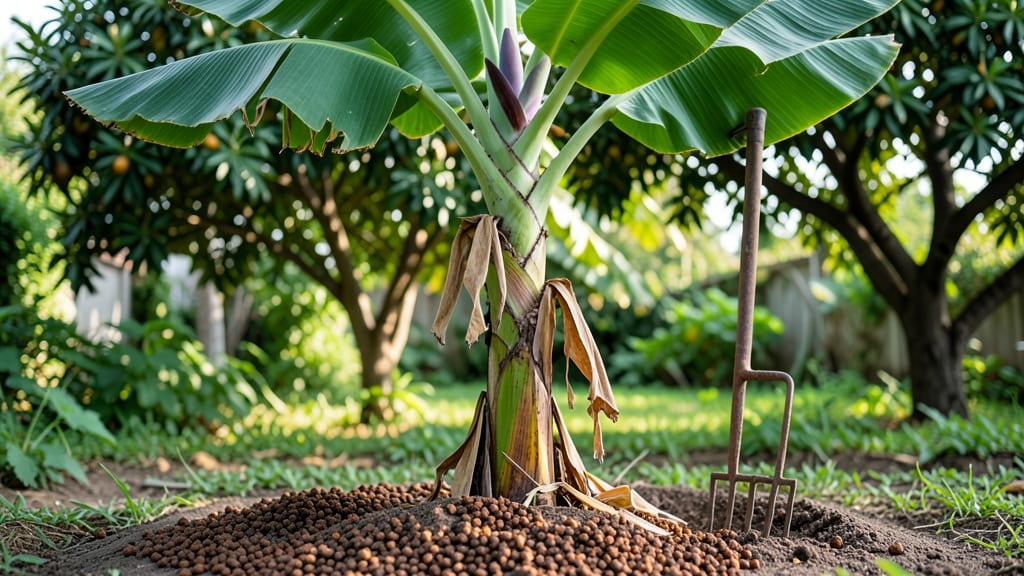
This homemade fertilizer for banana trees turns your kitchen scraps into a potent, penny-per-batch blend—and my trees now produce bigger, sweeter fruit with fewer brown spots after just three years of using it. 🌱 leaves.
The secret lies in balancing nitrogen for leaf growth with potassium for fruit development, both of which you can source from your own trash bin.
This fertilizer requires just five common ingredients: banana peels (yes, the ones you’d normally toss), eggshells, coffee grounds, wood ash, and a handful of Epsom salt. The process takes under 15 minutes to prep, and you’ll apply it monthly during the growing season.
Unlike commercial fertilizers packed with synthetic chemicals, this version feeds your plant’s roots while improving soil structure—no harsh additives needed.
What you’ll notice within 6-8 weeks is thicker foliage, stronger pseudostems, and fruit that ripens more evenly. The peels and coffee grounds add organic matter, while eggshells provide calcium to prevent blossom-end rot—a common banana tree problem.
Best of all, you’re reducing waste while giving your tree exactly what it craves: slow-release nutrients that won’t burn delicate roots.
Works for both container-grown and in-ground banana trees, though container plants may need slightly more frequent applications. Start small—apply a half-strength mix the first time to monitor your tree’s reaction. Once you’ve mastered this, you’ll wonder why you ever bought fertilizer bags.
📚 In This Guide
- What you need
- Instructions
- Tips and common mistakes
- Wrapping up and next steps
What you need
- ● Banana peels – 5–10 fresh or dried peels (rich in potassium and phosphorus)
- ● Eggshells – 4–6 crushed shells (calcium boost)
- ● Coffee grounds – ½ cup (nitrogen-rich and acidic)
- ○ Wood ash – ¼ cup (potassium and pH balancer—optional but great for acidic soil)
- ● Water – 1 gallon (filtered or rainwater preferred)
- ● Blender or food processor – To break down peels and shells
- ● Cheesecloth or fine mesh strainer – For filtering liquid
- ● Spray bottle or watering can – For easy application
- ○ Compost bin (optional) – To store leftover scraps for future batches
- ○ Gloves (optional) – If handling wood ash or large peels
Step-by-Step instructions for crafting nutrient-rich banana tree fertilizer
Turn everyday kitchen scraps into a powerhouse fertilizer that banana trees will devour.
🌿 Step 1: Collect and Prepare Organic Kitchen Scraps
Gather fruit and vegetable peels, coffee grounds, eggshells, and tea leaves—these are the foundation of your banana tree fertilizer. Avoid meat or dairy scraps, as they can attract pests. I like to keep a small bin under my kitchen sink dedicated just to banana tree scraps, so I never forget to collect them.
Chop larger scraps like banana peels into smaller pieces to speed up decomposition. The smaller the pieces, the faster they break down and release nutrients into the soil. Place everything in a 5-gallon bucket—this gives enough volume for 4 applications while keeping the process manageable.
💧 Step 2: Create a Compost Tea or Direct Soil Mix
For a quick nutrient boost, mix the scraps directly into the top 2-3 inches of soil around your banana tree. This method works best if you bury the scraps slightly to prevent fruit flies. I like to do this every 2-3 weeks during the growing season to keep the soil rich without overloading it.
For a more concentrated fertilizer, create a compost tea by filling a 5-gallon bucket halfway with the scraps, then topping it with warm water. Let it steep for 3-5 days, stirring once daily. Strain the liquid through a fine mesh bag or cheesecloth, then dilute it 1:1 with water before applying. This tea is perfect for foliar spraying or soil drenching.
☀️ Step 3: Apply Fertilizer at the Right Time and Rate
Banana trees thrive when fertilized during active growth, which is typically spring through early fall. Apply the fertilizer every 4-6 weeks—overdoing it can burn roots or attract pests. I always water the soil thoroughly 24 hours before applying to ensure even distribution and prevent nutrient loss.
Spread the scraps or tea 6-12 inches away from the tree trunk to avoid rotting the base. For direct soil mixes, lightly scratch the surface to incorporate the scraps. If using compost tea, water the soil at the drip line (the outer edge of the tree’s canopy) to encourage root expansion.
✂️ Step 4: Monitor and Adjust for Optimal Growth
Watch for lush, dark green leaves and new pseudostems—these are signs your banana tree is thriving. If leaves turn yellow or brown, it could mean too much nitrogen (from over-fertilizing) or too little water. I’ve found that balancing scraps with a small amount of wood ash (for potassium) helps prevent nutrient imbalances.
Every 3 months, mix in a handful of crushed eggshells (baked and ground) for calcium, which strengthens cell walls and prevents tip burn. This simple step makes a world of difference in leaf health. If you notice pests like fruit flies, reduce the frequency of fresh scraps and focus on well-decomposed compost instead.
Tips & tricks for perfect homemade banana tree fertilizer
Here's what nobody tells you about maximizing your kitchen scraps for banana tree growth—these tricks will transform your waste into a nutrient powerhouse.
Decomposition Speed: The smaller you chop those banana peels and vegetable scraps in Step 1, the faster they'll break down. I use a clean knife to slice them into ½-inch pieces—this cuts decomposition time nearly in half. For extra efficiency, freeze scraps in a sealed bag until you have enough for a full 5-gallon bucket application. The freeze-thaw cycle pre-breaks down fibers, accelerating nutrient release when applied.
Compost Tea Consistency: When creating your compost tea in Step 2, aim for a 1:1 ratio of scraps to warm water by volume—not weight. Too little water creates a thick sludge that won't strain properly, while too much dilutes nutrients. I stir the mixture vigorously for 30 seconds after adding water to ensure all scraps are saturated. This consistency guarantees you get the full nutrient potential when diluted 1:1 for application.
Application Timing: The 24-hour pre-watering before application in Step 3 is non-negotiable—it prevents nutrient runoff and ensures even distribution. I've found that applying fertilizer in the early morning (before 9 AM) gives roots maximum time to absorb nutrients before the heat of the day. This timing also reduces evaporation losses, especially in warm climates where banana trees thrive.
Pest Prevention: To avoid fruit flies when burying scraps directly in Step 2, I sprinkle a thin layer of dry wood ash (from your fireplace or stove) over the buried scraps. The ash acts as a natural deterrent while adding potassium—banana trees love it! For compost tea, strain through a fine mesh bag lined with cheesecloth to catch any tiny scraps that might attract pests.
Pro Tips for Homemade Fertilizer For Banana Trees
- Here's what nobody tells you about maximizing your kitchen scraps for banana tree growth—these tricks will transform your waste into a nutrient powerhouse.
- Decomposition Speed: The smaller you chop those banana peels and vegetable scraps in Step 1, the faster they'll break down.
- Compost Tea Consistency: When creating your compost tea in Step 2, aim for a 1:1 ratio of scraps to warm water by volume—not weight.
Frequently asked questions
Got questions about making your own banana tree fertilizer?
You’re not alone! Whether you’re a first-time gardener or a seasoned plant parent, these answers will help you grow thriving banana trees with confidence.
What are the best kitchen scraps for banana tree fertilizer?
Banana trees love nitrogen-rich scraps like coffee grounds, egg shells, and fruit/vegetable peels (especially citrus). Avoid meat or dairy—they attract pests! For a balanced boost, mix in wood ash (for potassium) and grass clippings (for nitrogen). Check the materials list for specifics!
How often should I apply homemade fertilizer to banana trees?
Feed your banana tree every 4–6 weeks during the growing season (spring/summer). Reduce frequency in winter—over-fertilizing can burn roots. For scraps, work them into the soil lightly (no deeper than 2–3 inches). Pro tip: Water the soil first to help nutrients absorb faster!
Can I use banana peels for banana tree fertilizer?
Yes! Banana peels are packed with potassium and phosphorus, which banana trees adore. Chop them into small pieces and bury them near the base of the plant. For extra potency, blend peels into a compost tea or dry them into powder. Just avoid piling whole peels—they can attract fruit flies.
What if my banana tree isn’t responding to homemade fertilizer?
Try these fixes:
- Check soil pH: Banana trees prefer slightly acidic to neutral (5.5–7.0). Test your soil and amend with lime (to raise pH) or sulfur (to lower it) if needed.
- Adjust nutrients: Yellow leaves? Add more nitrogen (e.g., grass clippings). Brown edges? Boost potassium (banana peels or wood ash).
- Water deeply: Dry soil blocks nutrient uptake. Water at the base, not the leaves, to prevent fungal issues.
Is homemade fertilizer as good as store-bought for banana trees?
Homemade fertilizer is eco-friendly, cost-effective, and organic—but it may lack the precision of synthetic blends. For best results, combine both: Use kitchen scraps/compost as a base, then supplement with a balanced organic fertilizer (like 5-5-5) 2–3 times a year. Think of it as a team effort for your tree’s health!
Wrapping up and next steps
Growing lush, fruitful banana trees doesn’t have to break the bank—or clutter your kitchen with synthetic fertilizers! With just a few simple, natural ingredients, you can transform everyday scraps into nutrient-packed fertilizer that boosts your plants’ health.
Whether you’re a seasoned gardener or just starting out, this eco-friendly approach is easy, cost-effective, and rewarding—plus, it reduces waste while keeping your banana trees thriving.
Ready to see the difference? Start small with one of these recipes this season, and watch your banana trees flourish like never before! 🌱 For even more tips, check out our guide on banana tree care to keep your garden growing strong.