
Pruning
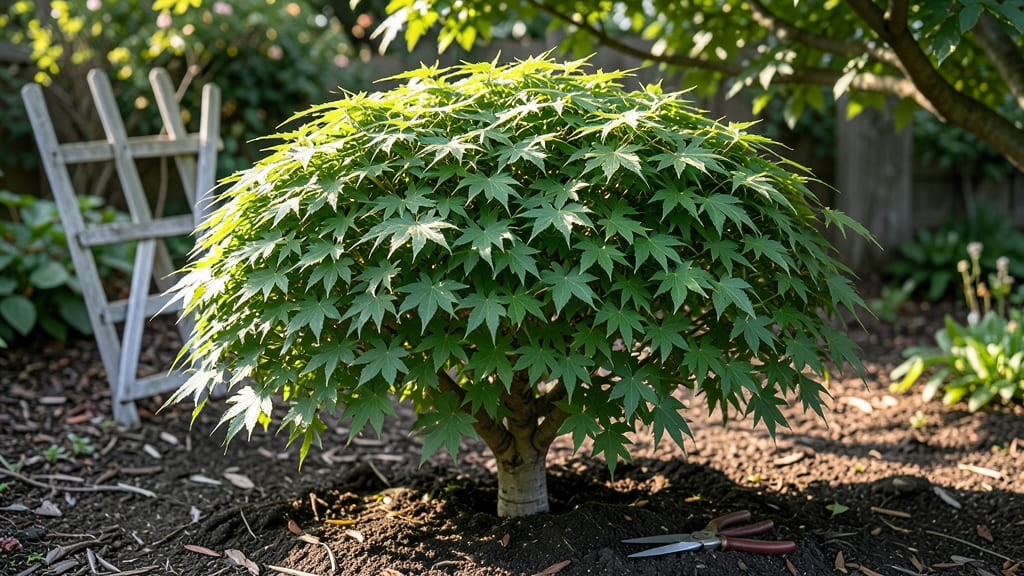
The Emerald Lustre Maple Tree thrives with strategic pruning that keeps its compact shape and vibrant foliage intact—especially in the Pacific Northwest’s frosty winters.
I learned the hard way that cutting too late in the season can invite disease, but timing it right in late winter or early spring transforms this tree into a lush, frost-resistant centerpiece.
This maple’s secret weapon is its ability to bounce back from pruning, even in cooler climates. You’ll need sharp pruners, a ladder for higher branches, and a clear day to avoid sap splatter.
The goal is to remove dead wood first, then shape the canopy to encourage air circulation—this prevents fungal issues that plague many maples in damp Pacific Northwest winters.
What you’ll end up with is a tree that stays 3-5 feet tall with glossy, deep-green leaves that turn brilliant red in fall. The foliage stays dense year-round, and the pruning actually makes it more resilient against wind and snow.
Start with just 10-15 minutes of shaping, and you’ll see the difference within a single growing season.
Works equally well in containers or garden beds, making it perfect for urban yards or small landscapes. The key is patience—this tree rewards careful, gradual pruning over time. Let’s get your Emerald Lustre looking its best for years to come.
📚 In This Guide
- What you need
- Instructions
- Tips and common mistakes
- Wrapping up and next steps
What you need
- ● Bypass Pruners: Sharp, high-quality (Felco F-2 or similar) for cuts under ½ inch in diameter.
- ● Loppers: Heavy-duty (18–24" reach, e.g., Corona or Fiskars) for branches ½–2 inches thick.
- ● Pruning Saw: Curved-tooth saw (e.g., Bahco or Felco) for branches 2+ inches thick.
- ● Extension Pole: 6–10 ft (with pruning head) for high branches.
- ● Disposable Gloves: Heavy-duty (nitrile-coated for grip) to protect hands from sap and splinters.
- ○ Sealing Wound Pruning Paint: (Optional but recommended for PNW frost zones) to prevent disease entry (e.g., Tanglefoot Tree Wound Pruning Seal).
- ● Disinfectant: 70% isopropyl alcohol or bleach solution (1:10 ratio) to sterilize tools between cuts.
- ● Tarps or Drop Cloths: To collect debris and protect landscaping.
- ● Safety Gear: Goggles, long sleeves, and non-slip boots.
- ● Ladder: Sturdy, extension ladder (20–24 ft) if branches are >10 ft high.
- ● String Trimmer: For clearing underbrush post-pruning.
- ● Camera: To document the tree’s structure before/after for reference.
Step-by-Step guide to pruning Emerald Lustre Maple trees
Here's how I transform Pacific Northwest canopies into sturdy, frost-resistant masterpieces.
Time Your Pruning for Optimal Healing
Prune your Emerald Lustre maple in late winter or early spring, just as buds begin to swell but before new growth starts. This timing ensures the tree has time to seal cuts before summer heat arrives. Avoid pruning in fall—new growth won't harden off before frost, leaving branches vulnerable to winter damage.
In the Pacific Northwest, aim for February through March when temperatures average 40-50°F. Warmer days help the tree heal faster, while cooler nights prevent stress. If you must prune later, wait until after the last frost date in your area—check your local USDA zone for exact timing.
Never prune during drought or extreme heat. The tree directs energy toward survival, not healing cuts. Look for bright green buds on branches as your signal that it's time to start.
Gather Your Tools and Sanitize Everything
Use sharp, clean pruning tools to make precise cuts that heal properly. A bypass pruner works for branches up to ½ inch thick, while a pruning saw handles larger limbs. I always keep a small bottle of 70% isopropyl alcohol and rubbing alcohol wipes on hand to sanitize tools between cuts.
Diseases like verticillium wilt can lurk in maple trees, so sterilizing prevents spreading pathogens. Wipe down blades after each cut, especially if you're working with multiple trees. For larger branches, use a hand saw with a fine-tooth blade—coarse teeth tear wood fibers, slowing healing.
Wear gloves and long sleeves to protect against sap burns. Emerald Lustre maples produce a milky sap that can irritate skin. Keep a small first-aid kit nearby for any minor scrapes or sap exposure.
Remove Dead, Diseased, or Crossing Branches First
Start by identifying dead branches—they'll be dry, brittle, and snap easily when bent. Remove these first to improve air circulation and reduce disease risk. Next, look for diseased branches with discolored leaves, fungal growth, or oozing sap. Cut these out 6 inches below the affected area to ensure the disease doesn’t spread.
Remove crossing or rubbing branches next. These create weak points where bark gets damaged, inviting pests and disease. Look for branches growing toward each other—they’ll have smooth, worn spots where they’ve been rubbing. Make your cut just outside the branch collar (the swollen area where the branch meets the trunk).
If a branch is too large to cut in one go, make a three-cut technique: Start with an undercut on the underside of the branch, then make a top cut about 6 inches out from the trunk, and finally remove the stub. This prevents tearing the bark and ensures a clean wound.
Thin the Canopy for Light and Airflow
Thin the canopy by removing up to 25% of the smallest branches to improve light penetration and airflow. Focus on branches growing inward or downward—these create dense areas that trap moisture and encourage disease. Aim for an open, vase-like shape that allows sunlight to reach the lower branches.
Use the "one-third rule" for branch removal: Never remove more than one-third of the canopy’s live branches in a single pruning session. This prevents stress and ensures the tree can recover. Look for water sprouts (fast-growing, vertical shoots) and remove them entirely—they drain energy from the tree.
Step back frequently to assess the canopy’s balance. In Emerald Lustre maples, the goal is a natural, symmetrical shape that maintains the tree’s signature reddish-purple foliage and compact growth habit. Avoid over-thinning—you want to preserve the tree’s dense, lush appearance.
Seal Larger Cuts and Monitor Healing
For cuts larger than 2 inches in diameter, use a pruning sealant to protect the wound from pests and disease. Apply it immediately after cutting while the wood is still fresh. I prefer tree wound pruning paste because it’s easy to apply and dries quickly. Avoid thick, globby sealants—they can trap moisture and promote rot.
Monitor the tree’s healing over the next 2-3 months. Healthy cuts will seal over with callus tissue (a smooth, raised layer of wood). If you see oozing sap, discoloration, or fungal growth, apply a second coat of sealant and keep the area dry. In the Pacific Northwest’s damp climate, preventing moisture buildup is key to successful healing.
Water the tree deeply after pruning to help it recover. Focus on the root zone and avoid wetting the cuts. If the tree looks stressed (yellowing leaves, wilting), give it a balanced fertilizer in early spring to support new growth. With proper care, your Emerald Lustre maple will bounce back stronger than ever.
Tips & tricks for pruning Emerald Lustre Maple trees
Transforming your Pacific Northwest Emerald Lustre maple into a resilient, frost-hardy beauty requires attention to detail. These insights will help you avoid common pitfalls and achieve professional results.
Timing is Everything: The February through March window is critical for healing, but don't rely solely on the calendar. Check for bright green buds—this visual cue confirms your tree is ready. In colder microclimates, you might need to delay until after the last frost date, which can vary by 1-2 weeks even within the same region. I've seen trees in coastal areas ready by late February while inland areas needed to wait until mid-March.
Tool Selection Matters: While bypass pruners handle most branches up to ½ inch thick, don't overlook the importance of proper saws for larger limbs. I recommend a bow saw with 10-12 teeth per inch for cleaner cuts that heal faster. The fine-tooth blade mentioned in Step 2 prevents wood fibers from tearing, which is especially important for Emerald Lustre's dense wood structure. Always keep a backup pair of clean tools—you'll thank yourself when you're not scrambling for a replacement mid-pruning.
Branch Identification Tricks: When assessing branches in Step 3, use the "scratch test" for dead wood: Scratch the bark with your fingernail. If it's green underneath, it's alive. For diseased branches, look for cankers (sunken, dead areas) or sap oozing—these are clear signs to cut 6 inches below the affected area. Remember that crossing branches often show worn bark where they've been rubbing against each other for years.
Canopy Balance Secret: When thinning in Step 4, aim to create a shape where sunlight can reach the innermost branches. I find it helpful to visualize the tree's natural growth pattern—Emerald Lustre maples typically grow in a rounded, compact form. Start by removing branches that grow straight up (water sprouts) and those that cross the main trunk. The one-third rule is your safety net, but don't be afraid to remove slightly more if you're addressing structural issues or disease.
Pro Tips for Emerald Lustre Maple Tree
- Transforming your Pacific Northwest Emerald Lustre maple into a resilient, frost-hardy beauty requires attention to detail.
- Timing is Everything: The February through March window is critical for healing, but don't rely solely on the calendar.
- Tool Selection Matters: While bypass pruners handle most branches up to ½ inch thick, don't overlook the importance of proper saws for larger limbs.
Frequently asked questions
Got questions about keeping your Emerald Lustre Maple thriving in the Pacific Northwest’s frosty climate? Here are some of the most common queries—plus quick answers to keep your tree healthy and stunning year-round.
When is the best time to prune my Emerald Lustre Maple?
The ideal window is late winter to early spring (February–March), just before buds swell but before new growth starts. This timing minimizes stress and disease risk. Avoid pruning in fall—it can stimulate tender growth that won’t survive PNW frosts. Pro tip: If you must prune later, wait until after the last hard frost (typically April in most of the PNW).
How do I protect it from frost damage?
The Emerald Lustre Maple is frost-resistant, but young trees or newly pruned branches can still suffer. To safeguard:
- Apply a light layer of anti-desiccant spray (like Wilt-Pruf) in late fall to prevent winter burn.
- Avoid pruning heavily in late summer/fall—wait until dormancy.
- Mulch the base with 3–4 inches of organic mulch (wood chips or straw) to insulate roots.
If frost damage occurs, prune out dead branches in early spring to encourage new growth.
Can I prune for shape year-round, or should I wait?
You can do light maintenance pruning (removing dead/diseased branches) anytime, but major structural pruning should wait for dormancy. Summer pruning can stress the tree and invite pests. If you must shape it in summer, do so early (June–July) and avoid removing more than 25% of the canopy at once.
What if my tree’s leaves turn yellow or brown?
Yellowing leaves often signal overwatering, nutrient deficiency, or fungal issues. Check these fixes:
- Watering: Emerald Lustres prefer well-draining soil—water deeply 1–2x/week (less in winter).
- Nutrients: Test soil pH (ideal: 6.0–7.0) and amend with iron or manganese if needed.
- Fungus: Prune affected branches 12 inches below discoloration and sterilize tools with rubbing alcohol.
If symptoms persist, consult a PNW-certified arborist—they can diagnose issues like verticillium wilt.
Are there alternatives to Emerald Lustre for PNW climates?
If you love the compact, glossy foliage but want options, consider:
- Dwarf Japanese Maple (‘Bloodgood’) – Cold-hardy, vibrant red-purple leaves.
- Amur Maple – Tougher than Emerald Lustre, handles wet soil well.
- Katsura Tree – Fragrant foliage, drought-tolerant, but larger at maturity.
For urban spaces, the Emerald Gaiety Maple is another great PNW pick—similar care, slightly faster growth.
Wrapping up and next steps
The Emerald Lustre Maple is a stunning addition to any Pacific Northwest landscape, and with the right pruning techniques, you can ensure it thrives year after year. 🌿 By following this frost-resistant canopy blueprint—focusing on timing, tools, and proper cuts—you’ll promote vibrant growth, prevent disease, and keep your tree healthy for decades.
Now that you’re equipped with the know-how, grab those pruners and get started! For extra peace of mind, consider consulting a local arborist to tailor the approach to your tree’s unique needs.