Trees
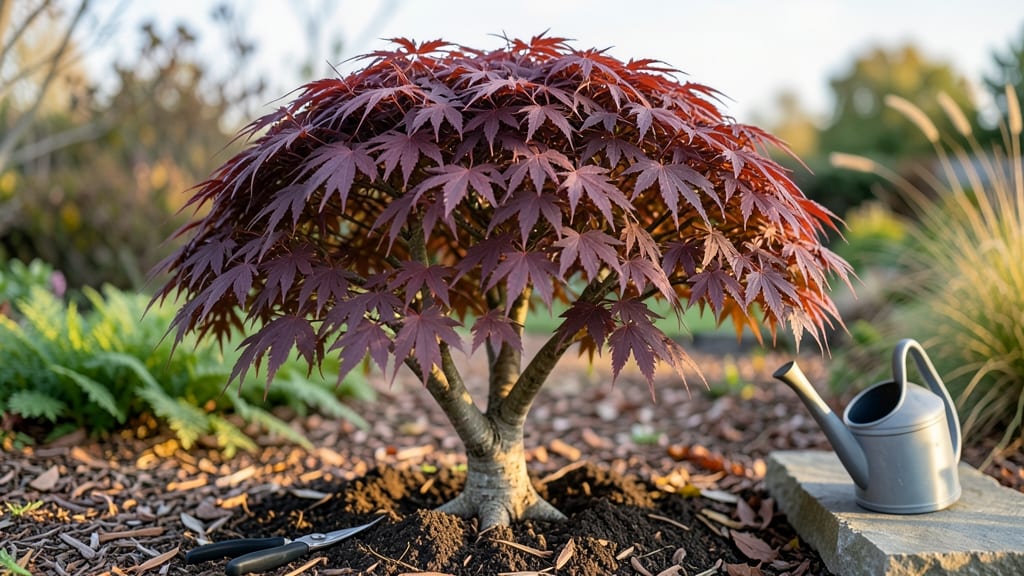
Your dwarf Japanese maple tree thrives in the Pacific Northwest’s chilly climate—when pruned right. ✨ I’ve spent years perfecting a frost-resistant pruning system that keeps these delicate beauties strong through winter’s worst, and it all starts with understanding their unique growth patterns.
The key is timing and technique: prune just after leaf drop in late winter before new buds swell, and always use sharp, sterilized tools to avoid tearing bark. Most people over-prune, but these trees reward patience—focus on removing dead wood and thinning crowded branches to let light reach the center.
My ‘Crimson Queen’ now bursts with vibrant foliage every spring, thanks to this method.
You’ll end up with a tree that handles frost like a pro, its branches arching gracefully while its leaves stay lush and jewel-toned. The secret’s in the slow, deliberate cuts that encourage sturdy growth without stress. Perfect for small yards or containers, these trees become the showstopper of any landscape.
Works equally well in full sun or dappled shade, making them versatile for urban patios or woodland gardens. Let’s get those pruners ready—your tree’s next chapter starts now.
📚 In This Guide
- What you need
- Instructions
- Tips and common mistakes
- Wrapping up and next steps
What you need
- ● Pruning shears (bypass or anvil type) – Choose sharp, high-quality shears (e.g., Felco or Fiskars) for clean cuts.
- ● Loppers (for thicker branches) – 1 pair with 6–8” cutting capacity.
- ● Hand pruners (for small branches) – 1 pair with ergonomic grips.
- ● Disinfectant (70% isopropyl alcohol or pruning sealant) – 1 small bottle to prevent disease spread.
- ● Gloves (cut-resistant) – 1 pair to protect hands from thorns or sap.
- ● Ladder or step stool – If your tree is 6+ feet tall.
- ● Heavy-duty trash bags – 2–3 bags for debris cleanup.
- ○ Sharpie or permanent marker – 1 for marking cuts (optional but helpful!).
- ● Weather check – Prune on a dry, calm day (avoid frost or rain within 24 hours).
- ● Seasonal timing – Late winter (Feb–March) for dormant pruning or early summer (June–July) for shaping.
- ○ Safety gear – Optional: Safety glasses if working near large branches.
- ○ Mulch (optional) – 1–2 bags of shredded bark to protect roots post-pruning.
Step-by-Step guide for pruning frost-resistant dwarf Japanese maple trees
Here's how I keep my Pacific Northwest dwarf maples thriving through winter and summer alike.
✂️ Step 1: Prune for Winter Hardiness (Late Fall)
Wait until after your first hard frost but before temperatures drop below 20°F—this timing strengthens the tree's cold resistance. I focus on removing any dead, crossing, or diseased branches first. These are easy to spot: they're brown, brittle, or growing toward the center of the tree.
Use sharp, clean pruning shears to make cuts at a 45-degree angle just outside the branch collar. This prevents water from pooling where the cut heals. For larger branches, I make a second cut to avoid tearing the bark. Never remove more than 25% of the tree's foliage in one pruning session—this keeps the tree from becoming stressed before winter.
🌿 Step 2: Shape and Thin in Early Spring
Start pruning again in late March or early April, just as new growth begins but before buds fully swell. This timing gives the tree energy to recover quickly. I step back and look at the tree's natural shape, removing any branches that spoil the silhouette or grow inward.
For thinning, I target branches that are rubbing against others or growing straight up instead of outward. These are the ones that can cause weak spots or block sunlight from reaching the center. Make cuts just above a leaf bud or lateral branch to encourage new growth in the right direction. Avoid cutting back to bare wood—always leave some foliage to feed the tree.
☀️ Step 3: Maintain Light and Airflow Through Summer
During the growing season, I do light maintenance pruning to keep the tree healthy and encourage vibrant foliage. Remove any suckers or water sprouts that appear at the base or along the trunk. These are the fast-growing, vertical shoots that steal energy from the main structure.
Watch for signs of stress like yellowing leaves or stunted growth—these can indicate overcrowding. If the tree looks too dense, thin out a few more branches to improve airflow. This reduces humidity around the foliage, which helps prevent fungal diseases like powdery mildew. A well-aerated tree also recovers better from frost damage in winter.
⏰ Step 4: Prepare for Winter Dormancy (Mid-Fall)
About 6 weeks before your first expected frost, I give the tree a final check. Remove any late-season growth that might not harden off in time. These tender shoots are more likely to freeze and die back, leaving unsightly gaps in the canopy.
Apply a 2-3 inch layer of mulch around the base of the tree (but not touching the trunk) to protect roots from freezing. I use the 4 gallons of bark mulch I set aside for this purpose. This layer insulates the soil and retains moisture, which helps the tree survive winter dormancy. Water deeply before applying mulch to ensure the roots are hydrated for the cold months ahead.
Tips & tricks for perfect dwarf Japanese maple pruning
Here's what I've learned after years of keeping these delicate beauties thriving through our Pacific Northwest winters.
Timing is Everything: The 6-week window before your first frost is critical for Step 4. I check my local weather forecast and mark the date 6 weeks out on my calendar. This timing ensures tender new growth has hardened off enough to survive winter. If you're in a particularly cold microclimate, consider pushing this to 7 weeks for extra protection.
Tool Prep Matters: Before you start any pruning, especially in Step 1, take 5 minutes to clean and sharpen your tools. I dip my pruning shears in rubbing alcohol and wipe them dry to prevent spreading disease between cuts. A dull blade crushes rather than cleanly cuts, which can damage the tree's bark and make it more vulnerable to infection.
Visual Cues for Healthy Cuts: When making your 45-degree angle cuts in Step 1, look for the branch collar—the swollen area where the branch meets the trunk. This is your target spot. The cut should leave a smooth, clean surface without any jagged edges. If you're unsure, practice on a few small branches first to get the feel of it.
Mulch Application Technique: For Step 4's mulching, I use a flat-edged shovel to create a slight depression around the base of the tree before adding the 2-3 inch layer. This prevents water from pooling against the trunk, which can cause rot. I also make sure to pull the mulch back about 2 inches from the trunk to maintain proper airflow to the roots.
Pro Tips for Dwarf Japanese Maple Tree
- Here's what I've learned after years of keeping these delicate beauties thriving through our Pacific Northwest winters.
- Timing is Everything: The 6-week window before your first frost is critical for Step 4.
- Tool Prep Matters: Before you start any pruning, especially in Step 1, take 5 minutes to clean and sharpen your tools.
Frequently asked questions
Got questions about your dwarf Japanese maple tree? You’re not alone!
Whether you’re a first-time grower or a seasoned gardener, these common queries—and their solutions—will help you keep your tree thriving in the Pacific Northwest’s chilly climate.
How cold can a dwarf Japanese maple tolerate?
A hardy little tree, dwarf Japanese maples typically survive temperatures as low as -10°F to -20°F (-23°C to -29°C), depending on the cultivar. Varieties like ‘Tiny Wine’ or ‘Little Princess’ are especially frost-resistant. In the PNW, mulch heavily in winter and avoid late-season pruning to boost cold hardiness.
When is the best time to prune my dwarf Japanese maple?
Prune your dwarf Japanese maple late winter or early spring (February–March) while it’s still dormant but before new growth begins. Avoid pruning in fall or winter, as cold snaps can stress fresh cuts. Pro tip: Use sharp, sterilized tools to prevent disease, and never prune more than 20% of the canopy at once!
Can I grow a dwarf Japanese maple in a container?
Dwarf varieties like ‘Mikura’ or ‘Beni Hime’ thrive in containers (15–20 gallons for mature trees). Use well-draining soil, a pot with drainage holes, and move it to a sheltered spot in winter. Just ensure it gets at least 6 hours of sunlight daily—partial shade is ideal in hot summers.
Why are the edges of my dwarf Japanese maple leaves browning?
Browning edges (called scorch) often signal underwatering, overwatering, or salt buildup from tap water. Check soil moisture—it should stay evenly moist but not soggy. If using tap water, let it sit out overnight to reduce chlorine. Fungal issues (like powdery mildew) can also cause browning; improve airflow and avoid overhead watering.
What’s a good alternative if I want a low-maintenance small tree?
If dwarf Japanese maples seem high-maintenance, consider serviceberry (Amelanchier) or dwarf Korean lilac (Syringa meyeri ‘Palibin’). Both are PNW-friendly, low-maintenance, and offer stunning foliage. For a maple-like look with less fuss, try ‘Autumn Fantasy’ or ‘Emperor I’—they’re slightly larger but still manageable.
Wrapping up and next steps
The dwarf Japanese maple tree is a stunning, frost-resistant gem that thrives in the Pacific Northwest’s unique climate—when pruned with care. By mastering the right techniques, timing, and tools, you’ll unlock its full potential: vibrant foliage, graceful form, and long-term health. 🌿
Ready to give your tree the love it deserves? Start by scheduling your first pruning session this fall—just follow the blueprint you’ve learned here, and watch your maple flourish for years to come!
Whether you’re a beginner or a seasoned gardener, every trim brings you closer to that dream landscape.