
Pruning
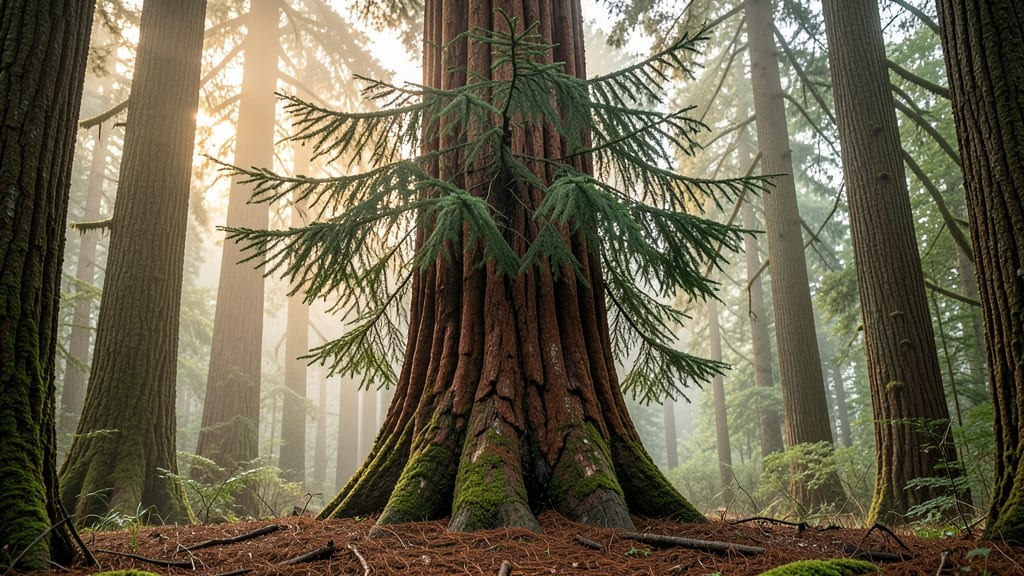
Pruning your eastern redwood tree isn’t just about shaping—it’s about preserving that iconic Pacific Northwest resilience against frost and wind. I’ve learned the hard way that aggressive cuts weaken these giants, so we’ll focus on strategic trimming that keeps their majestic, layered canopy intact while encouraging healthy growth.
The key is timing: late winter or early spring, when the tree’s energy is just waking up but before new shoots demand too much.
You’ll need just a few tools: sharp loppers for branches up to 2 inches thick, a pruning saw for thicker limbs, and some rubbing alcohol to sterilize cuts between trims. Start by removing dead or diseased branches first—they’re the easiest to spot and the most critical to remove.
Then, thin out the canopy by cutting back branches that cross or rub against each other, always making cuts just outside the branch collar where the branch meets the trunk. This prevents unsightly stubs and reduces the risk of infection.
What you’ll end up with is a tree that looks effortlessly balanced, with sunlight reaching the lower branches and air circulating to prevent fungal issues. The best part? Your redwood will reward you with faster new growth in spring and a stronger structure to handle those brutal PNW winters.
Just avoid over-pruning—these trees grow slowly, and too many cuts can stress them out for years. Think of it as a long-term investment in their longevity.
This method works for both young saplings and mature redwoods, though older trees may need a more gradual approach. If you’re unsure about a cut, take a step back and imagine how the tree will fill in over time.
Patience is the real secret here—redwoods thrive when you work with their natural growth patterns, not against them.
📚 In This Guide
- What you need
- Instructions
- Tips and common mistakes
- Wrapping up and next steps
What you need
- ● Pruning shears (bypass or anvil type): Sharp, disinfected blades (10-12" for small branches).
- ● Loppers: 16-24" with bypass blades for thicker branches (1-2" diameter).
- ● Pruning saw: Curved-tooth saw for branches 2"+ in diameter (avoid rust—stainless steel preferred).
- ● Extension pole saw: 6-10' telescopic pole with sharp, replaceable blades for high branches.
- ● Work gloves: Heavy-duty, cut-resistant (e.g., Mechanix or leather).
- ● Safety glasses: ANSI-rated for debris protection.
- ● Ladder or lift: Sturdy, extension ladder (24-32') or hydraulic lift for tall trees (never stand on the tree itself!).
- ● Disinfectant: 70% isopropyl alcohol or bleach solution (1:9 ratio) to sterilize tools.
- ○ Pruning sealant: Tree wound paint (optional but helpful for large cuts >2" diameter).
- ● Heavy-duty trash bags: 30-50 gallon for debris removal.
- ● Weather check: Prune on a dry, overcast day (avoid frost or extreme heat).
- ● Tree health assessment: Inspect for disease, pests, or deadwood before cutting.
- ● Permits (if required): Check local regulations for large tree removal/modification (common in PNW cities).
- ○ Optional: Chainsaw (for experienced users) with sharp chain and safety gear (helmet, chaps).
- ● Rope or harness system for high-risk branches (if climbing).
- ● Marking spray (paint or chalk) to outline cuts before pruning.
Step-by-Step guide for pruning eastern redwood trees in the Pacific Northwest
Here's how I maintain a healthy, frost-resistant canopy without stressing the tree.
✂️ Step 1: Assess the Canopy for Frost Damage and Structural Weaknesses
Start by examining the tree in early spring, just as new growth begins. Look for dead branches—these will be brittle and snap easily when bent. Healthy branches bend slightly without breaking. In frost-prone areas, you'll often find winterburn on the tips of branches, which appear brown and crispy.
Use a pair of sharp pruning shears to test a few branches. If they crumble, they're dead and should be removed. Mark these branches with flagging tape so you can identify them from a distance. Focus on removing only what's necessary—over-pruning weakens the tree's ability to handle cold snaps.
✂️ Step 2: Remove Dead, Diseased, or Crossing Branches
Begin by cutting out any branches that are dead, diseased, or rubbing against others. Use clean, sharp pruning tools to make cuts just outside the branch collar—the swollen area where the branch meets the trunk. This ensures the tree can seal the wound properly and prevents decay.
For larger branches, use three-step pruning: first undercut the branch about a foot from the trunk, then make a second cut slightly above the first, and finally remove the branch by cutting just outside the collar. Never leave stubs—these invite pests and disease. Work on a dry day when the tree isn't stressed by heat or drought.
✂️ Step 3: Thin the Canopy for Better Air Circulation and Light Penetration
Thinning the canopy improves airflow, which helps prevent frost pockets from forming in dense foliage. Aim to remove about 10-20% of the total canopy in a single season—never more, as this stresses the tree. Focus on branches that are growing inward or downward, as these create weak spots and block sunlight from reaching the lower branches.
Make your cuts just above a lateral branch or bud that faces outward. This encourages new growth in the right direction. Step back frequently to visualize the tree's shape—you want an open, airy structure that allows sunlight to reach all parts of the canopy. Avoid "lion-tailing," where you cut back all branches to the same length, as this creates an unnatural look and weakens the tree.
✂️ Step 4: Prune for Frost Resistance and Structural Integrity
In the Pacific Northwest, where frost can linger in low-lying areas, prune to create an open center that allows cold air to drain away. Remove any branches that grow too close to the ground, as these can trap frost and damage the tree. Also, look for branches that are growing at sharp angles—these are more likely to split in heavy snow or ice.
If you notice any signs of canker disease—sunken, discolored areas on the bark—remove the affected branches immediately, then sterilize your tools with rubbing alcohol. Healthy bark should be smooth and slightly textured, not cracked or oozing sap. After pruning, apply a thin layer of wound dressing only if the cut is larger than 4 inches in diameter, as this helps protect the tree from pests and disease.
⏰ Step 5: Schedule Pruning for Optimal Tree Health
The best time to prune an eastern redwood is in late winter or early spring, just before new growth begins. This allows the tree to heal quickly and prepares it for the growing season. Avoid pruning in late summer or fall, as this can stimulate new growth that won't harden off before winter, making the tree more vulnerable to frost damage.
If you must prune in summer, do so in early to mid-July and keep it minimal—only remove dead or diseased branches. Water the tree deeply after pruning to reduce stress, especially if you've made large cuts. Mulch around the base with 2-3 inches of organic mulch, keeping it away from the trunk to prevent rot. This helps the tree retain moisture and stay resilient against frost.
Tips & tricks for perfect eastern redwood tree pruning
Pruning redwoods right can mean the difference between a thriving giant and a frost-vulnerable weakling. Here's what I've learned after years of working with these Pacific Northwest sentinels.
Branch Health Test: In Step 1, when testing branches for dead wood, pay attention to the color of the inner wood—not just the bark. Healthy wood should be light green or white, while dead wood turns brown or black. This inner check is especially important for redwoods, which can hide dead centers beneath live bark. A pocket knife works perfectly for this quick test.
Tool Sharpness Matters: For Step 2's three-step pruning method, your tools need to be sharper than you think. Dull blades crush rather than cut cleanly, which tears the bark and invites disease. I carry a small file in my tool belt to sharpen pruners between cuts—this prevents the "sawing" motion that creates jagged wounds. Remember, redwood bark is tougher than it looks.
Canopy Visualization: When thinning in Step 3, step back every 5-10 cuts to visualize the tree's silhouette. Hold your arm straight out and close one eye to create a "monocular vision" effect that helps you judge proportions. The goal is a balanced, vase-like shape that lets sunlight reach all branches. In redwoods, this prevents the lower branches from becoming weak and frost-prone.
Seasonal Timing Nuance: While late winter/early spring is ideal (Step 5), I've found that redwoods in the Pacific Northwest's wetter coastal areas can actually handle pruning in early spring (March) better than inland areas. Coastal redwoods recover faster from spring pruning due to higher humidity, while inland trees need that extra week to prepare for summer drought conditions.
Pro Tips for Eastern Redwood Tree
- Pruning redwoods right can mean the difference between a thriving giant and a frost-vulnerable weakling.
- Branch Health Test: In Step 1, when testing branches for dead wood, pay attention to the color of the inner wood—not just the bark.
- Tool Sharpness Matters: For Step 2's three-step pruning method, your tools need to be sharper than you think.
Frequently asked questions
Got questions about pruning your eastern redwood tree? You’re not alone—these giants of the Pacific Northwest need careful attention, especially in frost-prone climates. Here are answers to the most common queries to keep your tree thriving!
When is the best time to prune an eastern redwood tree?
The ideal window is late winter to early spring (February–March), just before new growth starts. Avoid pruning in fall or winter—cold snaps can stress the tree, and late-spring cuts may encourage weak, frost-sensitive growth. Pro tip: If you must prune in summer, do it early (June) and avoid heavy cuts to prevent sunburn on exposed wood.
How do I protect my eastern redwood from frost after pruning?
Eastern redwoods are frost-resistant, but newly pruned branches are vulnerable. Water deeply 2–3 days before a frost, and mulch the base with 3–4 inches of wood chips to insulate roots. If heavy ice is forecast, wrap large cuts with tree wound dressing (or even burlap) to shield them. Tip: Prune on mild, dry days to minimize stress.
Can I prune an eastern redwood tree myself, or should I hire a professional?
Small, low branches? DIY is fine with the right tools (bypass pruners, loppers, or a pole saw). But for large branches (3+ inches thick) or canopy thinning, hire an ISA-certified arborist. They’ll know how to make proper cuts to avoid compression wood or disease entry points. Warning: Never top the tree—it weakens the structure and invites pests.
What should I do if my eastern redwood’s branches die after pruning?
Dead branches (brown, brittle, or peeling bark) are normal after pruning, but excessive dieback signals stress. Check for:
- Over-pruning: Never remove >25% of the canopy in one season.
- Fungal infection: Look for white, powdery growth—treat with copper fungicide.
- Root damage: If the tree wilts or drops needles, it may need deep watering and root aeration.
If 50%+ of the canopy dies, consult an arborist—your tree may need rejuvenation pruning or disease treatment.
Are there alternatives to pruning if my eastern redwood is too large to manage?
If your tree is mature (50+ feet tall) or in a high-risk area (near power lines, roofs), consider:
- Selective thinning: Remove only dead or hazardous branches to reduce weight.
- Cabling/bracing: Install support cables to stabilize weak limbs.
- Professional monitoring: Schedule annual inspections to catch issues early.
For landscaping conflicts, consult an arborist about structured pruning to guide growth away from structures. Remember: Eastern redwoods are long-lived—patience and precision pay off!
Wrapping up and next steps
The eastern redwood tree is a majestic giant that thrives with proper care—especially in the Pacific Northwest’s frosty climate. By mastering pruning techniques, you’ll ensure a healthy, resilient canopy that stands strong for decades. Whether you’re trimming for shape, safety, or vitality, remember: patience and precision are key!
Ready to give your redwood the love it deserves? Grab your tools, check the weather, and schedule your next pruning session—your tree will thank you with lush, frost-resistant growth! 🌲✨