
Pruning
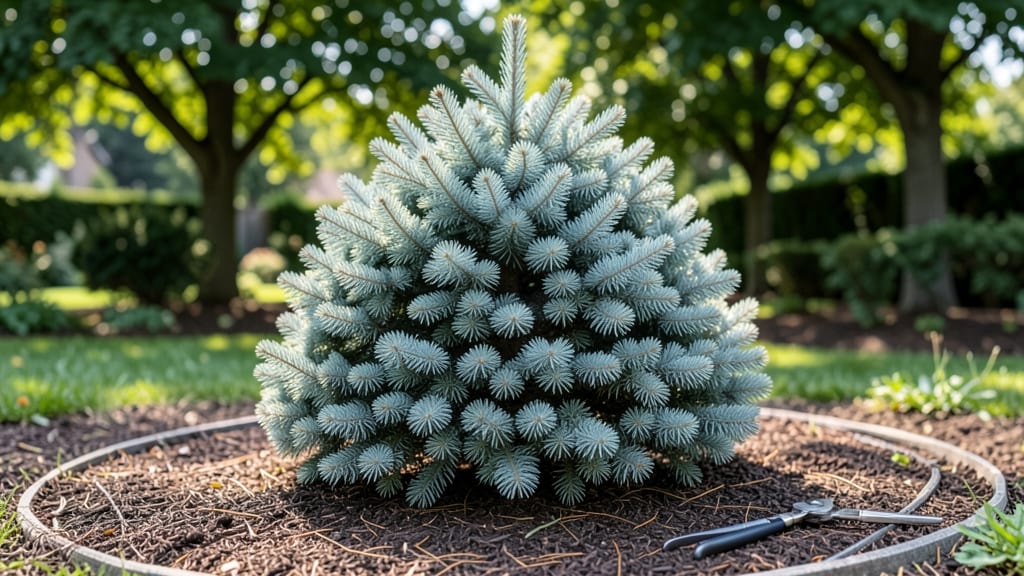
A dwarf globe blue spruce tree transforms any Pacific Northwest garden into a winter wonderland. 🌿 Its frosty blue needles and perfectly rounded shape create instant focal points, whether nestled in a rock garden or anchoring a modern minimalist design.
The key to keeping it looking its best? Pruning that respects its natural form while encouraging dense growth.
This little powerhouse thrives in zones 3-7, making it perfect for PNW climates where frost is inevitable. The pruning approach is simple: just remove dead branches in late winter and shape lightly to maintain its globe shape. No heavy-handed cuts needed—this tree rewards gentle care with year-round color and structure.
Pair it with silver foliage plants like lamb’s ear or dusty miller to make the blue pop even more dramatically. In cottage gardens, tuck it beside lavender or ornamental grasses for a whimsical yet structured look. The result? A low-maintenance evergreen that stays stunning through all four seasons.
Whether you’re designing a new garden or refreshing an old one, this spruce delivers elegance without the fuss. The best part? It stays compact enough for small spaces but bold enough to anchor larger designs. Ready to make it the star of your outdoor space?
📚 In This Guide
- What you need
- Instructions
- Tips and common mistakes
- Wrapping up and next steps
What you need
- ● Pruning shears: Bypass pruners (sharp, clean, and sterilized to prevent disease). Recommended: Felco F-2 or similar (5–8" blade length).
- ○ Hand pruners: For smaller branches (3/8"–1" thick). Optional: Anvil pruners for thick, woody growth (but bypass is preferred!).
- ● Loppers: For branches up to 2" thick (if your tree has any stubborn growth).
- ● Disinfectant: 70% isopropyl alcohol or a commercial pruning sealant (like Tanglefoot Pruning Seal).
- ● Gloves: Heavy-duty gardening gloves (nitrile-coated for grip and protection).
- ● Pruning saw: Only if needed for branches thicker than 2" (folding pruning saw with a fine-tooth blade).
- ● Bucket or tray: For collecting clippings (or a compost bin nearby).
- ● Pruning paint: For sealing large cuts (e.g., Tree Seal Tape).
- ● Knee pad or stool: For comfort (especially if your tree is tall or you’re working on the ground).
- ● Magnifying glass: For spotting pests or disease up close.
- ● Spray bottle with water: To dampen dusty branches before pruning.
- ● Camera or sketchbook: To document your tree’s shape before/after pruning!
- ● Weather check: Prune on a dry, overcast day (avoid midday sun or rain). Ideal temps: 50–70°F (10–21°C).
- ● Safety first: Wear closed-toe shoes and avoid loose clothing. Check for power lines if your tree is near them!
- ● Tree health assessment: Inspect for disease, pests, or dead branches before cutting. Pro tip: Tap branches—hollow sounds = dead wood!
- ● Plan your cuts: Sketch a rough outline of your desired shape (dwarf globes thrive on light, natural pruning—avoid over-trimming!).
Step-by-step guide to pruning dwarf globe blue spruce trees
Here's how to keep your Pacific Northwest beauty thriving with minimal effort.
✂️ Step 1: Time Your Pruning for Frost Resistance
Prune your dwarf globe blue spruce late winter to early spring, just as new growth begins—February through March works best in the Pacific Northwest. This timing ensures you don't expose fresh cuts to harsh winter winds or early spring frosts, which can damage tender new growth. I always wait until after the last hard frost date in my area (usually mid-March) before touching the shears.
If you must prune in summer, do it early morning when temperatures are cool to reduce stress on the tree. Avoid pruning in late summer or fall—this encourages tender growth that won't survive winter, leaving your tree vulnerable to frost damage. You'll know it's the right time when you see pale green buds forming at the tips of branches.
🌿 Step 2: Assess and Shape for Natural Form
Start by examining the tree's overall shape—dwarf globe blue spruces naturally grow in a perfect globe, so your goal is to enhance, not alter, this form. Use sharp, clean pruning shears to remove only dead, diseased, or crossing branches first. These are easy to spot—they'll be brown, brittle, or growing inward toward the center of the tree.
Next, lightly trim any overgrown branches that disrupt the globe shape. Cut just above a healthy bud or branch collar (the swollen area where the branch meets the trunk). Never leave a stub—this invites decay. For a 4-foot-tall tree, you'll likely only need to remove a few inches from the longest branches to restore balance.
☀️ Step 3: Maintain Airflow and Frost Protection
Thin out dense inner growth to improve airflow—this prevents fungal diseases like needle blight and ensures even frost distribution during winter. Focus on branches that are crowded or growing too close together. Cut these back to the branch collar, making the cut at a 45-degree angle just above the collar to prevent water from pooling.
After pruning, step back and inspect—your tree should still look full and lush, not skeletal. If you've removed too much, the tree may struggle to recover. A good rule of thumb: never remove more than 10-15% of the tree's foliage in a single pruning session. For a dwarf globe, that’s usually just a few branches—not a drastic overhaul.
💧 Step 4: Post-Pruning Care for Recovery
Water the tree deeply after pruning to help it recover—1 gallon per foot of tree height is a good guideline. This encourages root growth and compensates for the temporary stress of pruning. Avoid overwatering, though—soggy soil can suffocate roots and invite rot, especially in the damp Pacific Northwest climate.
Apply a light layer of mulch (about 2 inches deep) around the base, keeping it 3 inches away from the trunk to prevent moisture buildup. This protects roots from temperature fluctuations and retains soil moisture. In the weeks following pruning, monitor for new growth—healthy branches will sprout bright green needles within 4-6 weeks.
⏰ Step 5: Schedule Regular Maintenance
Dwarf globe blue spruces need minimal pruning—just a light trim every 2-3 years maintains their shape. However, remove any dead or diseased branches as soon as you spot them to prevent spread. These branches will be yellow, brown, or covered in pests—don’t wait for them to become a bigger problem.
In the Pacific Northwest’s cool, wet climate, your tree may also benefit from occasional shaping in late summer to correct any uneven growth caused by uneven sunlight. But avoid heavy pruning—this hardy tree thrives on gentle care. With the right approach, your dwarf globe blue spruce will stay compact, vibrant, and frost-resistant for decades.
Tips & tricks for perfect dwarf globe blue spruce pruning
Here's what I've learned after keeping these stunning trees thriving for years in the Pacific Northwest.
Timing is Everything: The February through March window is non-negotiable for winter-hardy pruning. I check my local frost calendar every year—mid-March is my absolute cutoff. If you miss this window, summer pruning becomes your only option, but it requires early morning timing and creates more stress for the tree. The pale green buds signal readiness perfectly, so use them as your natural alarm clock.
Tool Precision Matters: Your pruning shears need to be sharper than a chef's knife. Dull blades crush branches instead of making clean cuts, which creates larger wounds that heal poorly. I clean and sharpen my shears before each pruning session and store them properly to maintain their edge. For larger branches, a bypass pruner works better than anvil-style shears—they make cleaner cuts that heal faster.
Branch Collar Awareness: This is where most people go wrong. Always cut just above the branch collar (that swollen area where the branch meets the trunk), never leaving a stub. I mark the collar with a white pencil before cutting to ensure precision. Proper cuts at the collar prevent decay and encourage better healing. For dwarf globes, you'll rarely need to cut more than a few inches from any branch—think subtle shaping, not radical transformation.
Post-Pruning Recovery Boost: That 1 gallon per foot of height watering is crucial, but timing matters too. Water immediately after pruning when the tree is most stressed, then again in 3-4 days. I also add a slow-release fertilizer at this time to give roots a nutrient boost. The mulch layer should stay consistent—2 inches deep, 3 inches from the trunk—this protects against our region's notorious temperature swings.
Pro Tips for Dwarf Globe Blue Spruce Tree
- Here's what I've learned after keeping these stunning trees thriving for years in the Pacific Northwest.
- Timing is Everything: The February through March window is non-negotiable for winter-hardy pruning.
- Tool Precision Matters: Your pruning shears need to be sharper than a chef's knife.
Frequently asked questions
When is the best time to prune my dwarf globe blue spruce?
The ideal time is late winter or early spring (February–March in the PNW), just before new growth begins. Avoid pruning in fall or winter, as cold stress can harm the tree. If you spot dead branches anytime, trim them immediately to prevent disease.
Can I shape my dwarf globe blue spruce into a perfect ball?
Yes! This tree’s slow growth and dense branching make it perfect for shaping. Use sharp, sterilized shears to trim back overgrown branches in early spring. Aim for a 1-inch cut above a healthy bud to encourage fullness. Pro tip: Limit shaping to 10–20% of the foliage per year to avoid stress.
How cold-hardy is the dwarf globe blue spruce in the Pacific Northwest?
This variety thrives in USDA Zones 3–7, making it exceptionally frost-resistant for the PNW. It handles sub-zero temps and coastal winds well, but avoid heavy mulch near the trunk in winter—keep it 2–3 inches away to prevent rot.
What if my dwarf globe blue spruce isn’t growing as expected?
Check for these common issues:
- Poor drainage: Ensure the pot or soil has well-draining mix (sandy loam works best).
- Overwatering: Let the top 1–2 inches of soil dry between waterings.
- Nutrient deficiency: Apply a balanced fertilizer (10-10-10) in early spring if growth stalls.
- Pests: Inspect for spider mites or aphids—spray with neem oil if needed.
If problems persist, consider root-bound checks (for potted trees) or fungal tests.
Are there alternatives to dwarf globe blue spruce for small spaces?
Yes! Try these low-maintenance, frost-resistant options for the PNW:
Tree
Height
Key Feature
Dwarf Alberta spruce
3–5 ft
Narrower shape, great for vertical spaces.
Mugo pine
2–4 ft
Drought-tolerant, soft texture.
Boxwood ‘Green Velvet’
2–3 ft
Evergreen, shears well for hedges.
All three handle Zone 5–7 climates and require minimal pruning.
Wrapping up and next steps
The Dwarf Globe Blue Spruce is a stunning, low-maintenance addition to any Pacific Northwest landscape—especially when pruned with care to enhance its natural beauty and frost resilience. 🌲 With the right tools, timing, and techniques, you’ll keep this evergreen thriving for years while showcasing its signature blue-green hue and compact charm.
Ready to elevate your yard? Start small: Grab your pruners, schedule your first trim in early spring, and watch your spruce become the standout star of your outdoor space! 🌟