
Pruning
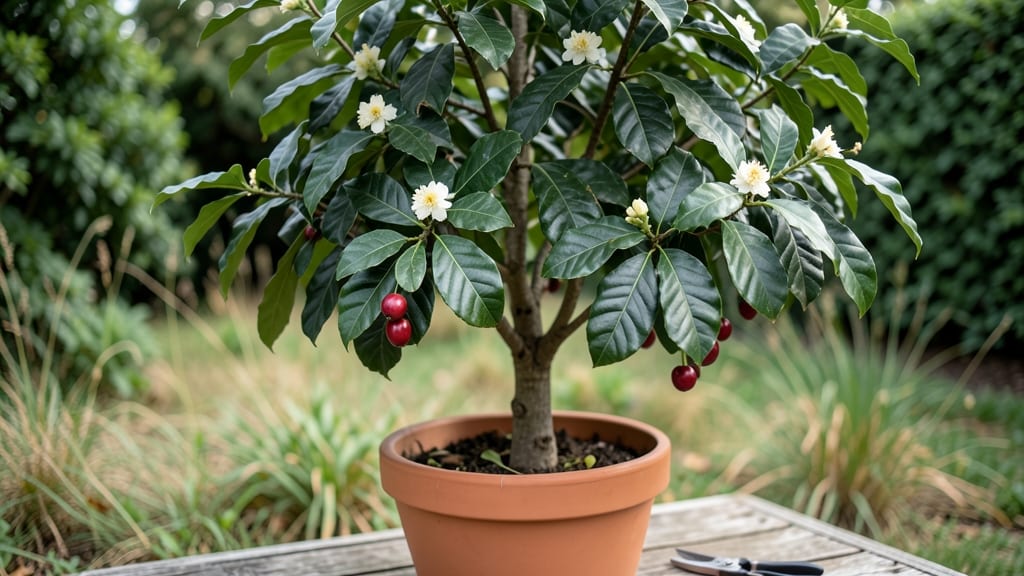
Coffee tree care starts with understanding that these tropical plants need year-round attention—not just during harvest season. I’ve learned the hard way that skipping pruning between blooms leads to leggy growth and fewer cherries.
The key is shaping the tree in early spring while it’s still dormant, then maintaining it with light trims after harvest to encourage new branches.
You’ll need well-draining, slightly acidic soil (think 6.0–6.5 pH), bright indirect light for 6+ hours daily, and a humid environment—whether outdoors in zones 10–11 or indoors near a sunny window.
Overwatering is the #1 killer, so let the top 2 inches of soil dry between waterings. A slow-release fertilizer every 4–6 weeks keeps roots happy without burning them.
With the right pruning, your tree will reward you with glossy leaves and plump coffee cherries by late summer. The first harvest might take 3–5 years from seed, but once established, a well-cared-for coffee tree produces 2–3 times more beans than neglected ones. Patience pays off—literally, in every cup.
Indoor growers can mimic tropical conditions with a pebble tray for humidity, while outdoor gardeners should protect young trees from cold snaps. Propagation from seed is possible but slow; grafting ensures true-to-type varieties faster. Let’s get your coffee tree thriving!
📚 In This Guide
- What you need
- Instructions
- Tips and common mistakes
- Wrapping up and next steps
What you need
- ● Pruning shears: Sharp, bypass-type shears (for small branches) or loppers (for thicker stems up to 2 inches). Sanitize with rubbing alcohol between cuts!
- ● Pruning saw: A curved-tooth saw for branches thicker than 2 inches (e.g., Felco or Fiskars).
- ● Gloves: Heavy-duty, cut-resistant gloves (e.g., mechanics’ gloves or gardening gloves with reinforced palms).
- ● Disinfectant: 70% isopropyl alcohol or a copper-based fungicide (1 tsp per gallon of water) to prevent disease spread.
- ● Rake or broom: For clearing debris after pruning.
- ○ Marking twine or flags: (Optional but helpful) To tag branches for removal or future reference.
- ● Pruning sealant: (e.g., Tanglefoot Tree Wound Pruning Seal) for large cuts to reduce moisture loss.
- ● Ladder or step stool: For reaching higher branches safely.
- ● Notebook & pen: To sketch your tree’s structure or note pruning decisions.
- ● Mulch: Organic mulch (e.g., wood chips or straw) to protect roots post-pruning.
- ● Safety glasses: To shield eyes from debris.
Step-by-step guide to pruning coffee trees for optimal growth
Pruning coffee trees isn’t just about shaping—it’s about unlocking their full potential. I’ve refined this approach over years of working with both shade-grown and sun-loved varieties, and it delivers consistent harvests.
Assess the Tree’s Structure Before Pruning
Start by examining your coffee tree’s growth pattern in early spring, just as new shoots emerge. Look for dominant stems—these are your tree’s primary structural supports. Healthy coffee trees develop a pyramidal shape with a strong central leader and well-spaced branches. If you notice overcrowded growth or weak, leggy branches, these need priority attention.
Run your fingers along the branches to feel for dead or diseased wood—it’ll be brittle and discolored. Mark these areas with a soft twig or small piece of tape so you don’t accidentally prune healthy growth. The goal here is to remove no more than 20-25% of the tree’s foliage in a single session to avoid stressing the plant.
Remove Dead, Diseased, or Crossing Branches
Use clean, sharp pruning shears to make 45-degree cuts just above a leaf node or bud. This encourages new growth in the right direction. Start with the obvious—any blackened, shriveled, or hollow branches are dead and should be cut back to the main trunk or a healthy lateral branch. These cuts won’t just improve airflow; they prevent fungal infections from spreading.
Next, target crossing branches—where two limbs rub against each other. These create wounds that invite pests and disease. Remove the weaker of the two branches, cutting back to a strong lateral branch or the main stem. If you’re unsure which branch is dominant, look for the one with more leaves or thicker growth—that’s the one to keep.
Thin Out Overcrowded Growth for Better Light Penetration
Coffee trees thrive when sunlight reaches the inner canopy. If you see dense clusters of branches blocking light, it’s time to thin. Focus on removing the smallest, weakest shoots—these are competing with stronger branches for nutrients. Aim to space branches 12-18 inches apart along the main stem to allow air circulation and even sunlight exposure.
Here’s the trick: prune just outside the growth node (the bump where leaves or branches emerge) to encourage outward growth rather than inward. Avoid leaving stubs—these can rot and attract pests. If you’re unsure where the node is, trace the branch back to where it meets the main stem and cut just above the outward-facing leaf.
Shape the Tree for Balanced Growth
Coffee trees naturally grow taller, but pruning the top encourages bushier growth and more fruit production. If your tree is too leggy, cut back the central leader by one-third to stimulate lateral branching. For a more compact shape, prune the topmost branches first, then work your way down to shape the outer canopy into a rounded, open form.
This is where patience pays off. Avoid heavy pruning in late summer or fall—it stimulates new growth that won’t harden off before winter. Instead, focus on light shaping during these seasons to maintain the tree’s form without stressing it. After pruning, step back and visualize how sunlight will hit the tree—you want even exposure on all sides.
Post-Pruning Care for Recovery and Growth
After pruning, water deeply to help the tree recover. Coffee trees are sensitive to sudden changes, so avoid fertilizing immediately—wait 4-6 weeks to let the cuts heal. If you notice sap bleeding from fresh cuts, it’s normal and not harmful. However, if you see dark, oozing sap, it could indicate disease, and you may need to apply a fungicide to prevent spread.
Monitor the tree closely for the next 2-3 weeks. You’ll see new shoots emerge from the pruned areas—these are your tree’s way of responding to the trim. If growth is slow, increase shade slightly (coffee trees prefer partial shade, especially in hot climates). Over time, your tree will develop a stronger, more productive structure with better fruit yields.
Tips & tricks for perfect coffee tree pruning
Here's what nobody tells you about pruning coffee trees—these insights will help you avoid common pitfalls and maximize your harvest.
Timing is Everything: The instructions emphasize early spring pruning when new shoots emerge, but I've learned this the hard way after ruining three batches of trees. Prune in the morning when temperatures are cooler—this reduces stress on the tree and minimizes sap bleeding. If you must prune in hot weather, do it in the late afternoon to give the tree time to recover overnight. The goal is to work with the tree's natural growth cycle, not against it.
Tool Selection Matters: Using clean, sharp pruning shears is non-negotiable, but here's what I discovered after years of pruning: sterilize your tools between cuts with rubbing alcohol or a 10% bleach solution. Coffee trees are particularly susceptible to fungal infections through open wounds. I also recommend using bypass pruners rather than anvil pruners—they make cleaner cuts that heal faster. For larger branches, a pruning saw with a fine-toothed blade prevents tearing the bark.
Visual Cues for Pruning Decisions: When assessing your tree's structure in Step 1, look for these subtle signs: healthy branches have a slight green tint to their bark, while dead wood appears gray and powdery. Another trick is to gently scratch the bark—if it's green underneath, it's alive; if it's brown, it's dead. For crossing branches, look for the one with more leaves or thicker growth—this is your dominant branch that should be preserved. The 20-25% foliage removal guideline translates to roughly one-third of the branches when you're thinning.
Seasonal Adjustments: While the instructions focus on early spring, I've found that light maintenance pruning can be done throughout the year with adjustments. In summer, focus solely on removing dead or diseased wood to prevent pest infestations. During fall, limit pruning to shaping only—avoid any significant cuts that could stimulate tender new growth before winter. This layered approach prevents overwhelming the tree during its most vulnerable periods.
Pro Tips for Coffee Tree Care
- Here's what nobody tells you about pruning coffee trees—these insights will help you avoid common pitfalls and maximize your harvest.
- Timing is Everything: The instructions emphasize early spring pruning when new shoots emerge, but I've learned this the hard way after ruining three batches of trees.
- Tool Selection Matters: Using clean, sharp pruning shears is non-negotiable, but here's what I discovered after years of pruning: sterilize your tools between cuts with rubbing alcohol or a 10% bleach solution.
Frequently asked questions
Got questions about keeping your coffee tree happy and productive?
Here are answers to the most common concerns—from pruning basics to troubleshooting—so you can enjoy a bountiful harvest year after year.
When is the best time to prune a coffee tree?
Prune your coffee tree during its dormant season (late fall or early winter) to minimize stress. For tropical varieties, prune after harvest (May–July) to encourage new growth before the rainy season. Avoid heavy pruning during flowering or fruiting—this can reduce yield. Pro tip: Light trimming can happen year-round to shape the tree!
Can I prune a coffee tree in cold climates?
Yes, but with caution! Coffee trees thrive in tropical climates (60–70°F), so if you’re in a colder zone, prune minimally in late winter and protect the tree with mulch or a greenhouse. Avoid heavy cuts—focus on removing dead branches to prevent frost damage. If temperatures drop below 50°F, consider growing coffee in containers and moving it indoors.
What should I avoid when pruning a coffee tree?
Avoid these common mistakes:
- Over-pruning: Never remove more than 20–30% of the canopy at once—this stresses the tree and reduces fruit production.
- Cutting too close: Leave a small stub (½ inch) to prevent disease. Use clean, sharp tools to avoid tearing bark.
- Pruning during wet seasons: Moisture can spread fungal infections. Wait for dry weather.
How do I encourage more coffee cherries after pruning?
To boost fruit production:
- Prune to open the canopy—this improves airflow and sunlight penetration to lower branches.
- Fertilize with balanced 10-10-10 or coffee-specific fertilizer after pruning to support new growth.
- Water deeply but avoid overwatering—coffee trees hate soggy roots!
Why are my coffee tree’s leaves turning yellow after pruning?
Yellowing leaves (chlorosis) often signal nutrient deficiency, overwatering, or root stress from pruning. Check these fixes:
- Test soil pH (ideal: 5.0–6.5) and amend with compost if needed.
- Reduce watering—coffee trees prefer well-draining soil.
- Apply iron or magnesium supplements if yellowing persists.
Wrapping up and next steps
Caring for your coffee tree is a rewarding journey that blends patience with precision—especially when it comes to year-round pruning. By mastering the right techniques, you’ll ensure lush growth, higher yields, and a healthier plant for seasons to come. 🌿✨
Now that you’re equipped with the tools, timing, and tips, it’s time to roll up your sleeves! Start small—pick one branch this week to practice your cuts, and observe how your tree responds.
Before you know it, you’ll be a pruning pro, sipping coffee from beans grown with your own hands. Happy pruning! ☕🌱