
Neem Oil
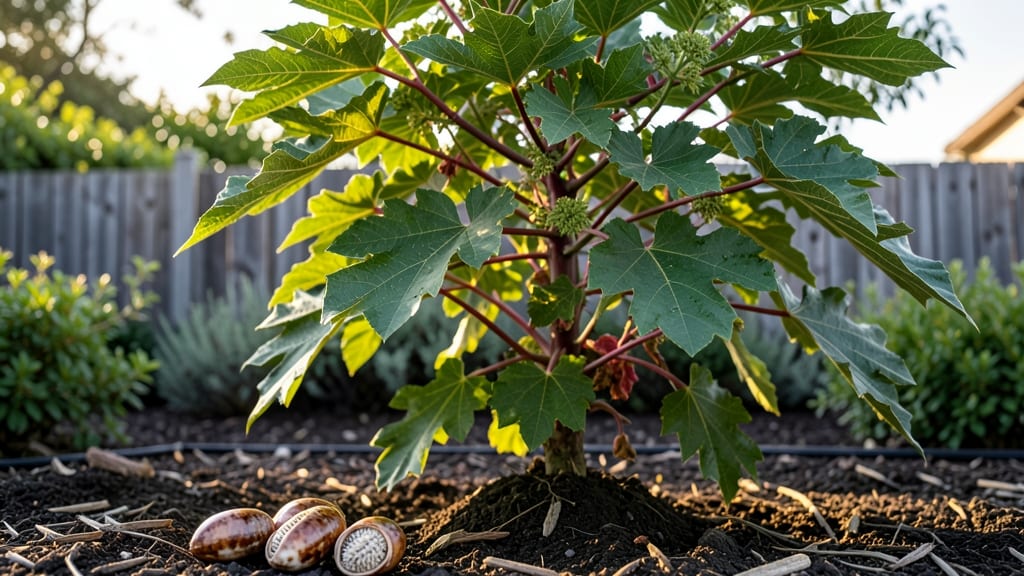
Growing castor oil tree seeds fast is all about breaking their tough outer shell with the right prep—something I learned after watching mine sit stubbornly dry for weeks. 🌱 The key isn’t just water or heat, but a little mechanical help to crack that stubborn seed coat.
Once you do, those first leaves unfurl in just days, proving patience pays off when you know the tricks.
You’ll need well-draining soil mix, a warm spot (70-80°F), and a small container with drainage holes—no fancy equipment required. The seeds themselves are surprisingly large, so plant them just ½-inch deep and keep the soil consistently moist (not soggy).
Most gardeners overlook the pre-soaking step, but soaking overnight softens the shell and speeds up germination by 3-5 days.
Within a week, you’ll see those first bright green seedlings reaching for light, their leaves growing larger every day. These aren’t just fast-growing plants—they’re hardy, too, thriving in zones 8-11 but easily grown indoors in cooler climates.
The castor oil tree’s versatility means you could end up with an ornamental specimen, a source of industrial castor oil, or even medicinal leaves.
Here’s where it gets interesting—these seedlings grow 2-3 feet in their first year, so plan for repotting early. The real magic happens when you watch those first leaves turn into towering plants with striking red seed pods. Ready to start your own?
📚 In This Guide
- What you need
- Instructions
- Tips and common mistakes
- Wrapping up and next steps
What you need
- ● Fresh castor oil tree seeds (Ricinus communis): 5–10 seeds (ensure they’re plump and firm for best results).
- ● Biodegradable seedling pots or trays: 3–4 inches deep, with drainage holes (5–10 pots, depending on seed quantity).
- ● High-quality potting mix: Well-draining, sterile mix (e.g., 60% peat moss, 30% perlite, 10% vermiculite). ~2–3 gallons total.
- ● Spray bottle with water: Fine mist setting for gentle hydration.
- ● Plastic wrap or humidity dome: To retain moisture during germination.
- ● Grow lights or sunny windowsill: 6–8 hours of warmth (70–80°F) daily.
- ○ Seedling heat mat: Maintains consistent warmth (optional but speeds up germination).
- ● Fertilizer (balanced, 10-10-10): Diluted to half-strength for seedlings.
- ● Pruning shears: For trimming leggy seedlings later.
- ● Notebook & marker: To track germination dates and progress.
- ● Gloves: Castor oil seeds contain ricin—handle with care!
Step-by-step instructions for germinating castor oil tree seeds
Here’s how to break through the tough outer shell and get those seeds sprouting within days.
🌱 Step 1: Soften the Seed Coat for Faster Germination
Castor oil tree seeds have a thick, waxy outer layer that slows water absorption—soaking them first is non-negotiable. Place 4 seeds in a small bowl and cover them completely with lukewarm water (around 85°F). Let them soak for 24-48 hours, changing the water every 12 hours to prevent bacterial buildup. You’ll know they’re ready when the outer shell starts to crack or soften noticeably.
I like to swirl the bowl gently a few times a day to keep the water moving—this ensures even hydration. If you see mold forming (fuzzy white or black spots), rinse the seeds immediately and start fresh. The goal is to weaken the seed coat without inviting rot.
💧 Step 2: Prepare the Germination Medium
Fill a shallow tray or small pot with a mix of 50% perlite and 50% peat moss—this lightweight combo drains excess moisture while retaining enough humidity to encourage sprouting. Moisten the mix until it feels like a damp sponge, but avoid puddles. Press the seeds ½ inch deep into the surface, spacing them 2 inches apart to prevent crowding later.
Here’s the thing—castor oil tree seeds are sensitive to overwatering at this stage. The medium should stay consistently moist but never soggy. A good test is to press your finger ½ inch deep into the mix: if it feels damp but not wet, you’re golden. Cover the tray with clear plastic wrap or a humidity dome to trap warmth and moisture, then place it in a spot with indirect light (like a bright windowsill without direct sun).
☀️ Step 3: Provide Warmth and Monitor Daily
Germination speed hinges on warmth—aim for a consistent 75-85°F environment. If your home runs cooler, place the tray on top of a refrigerator or use a seedling heat mat set to 80°F. You should see tiny sprouts breaking through the soil in 5-10 days, though some stubborn seeds may take up to 2 weeks. Don’t be tempted to peek under the plastic too often; every time you lift it, you risk drying out the seeds.
Once the first sprouts appear, remove the plastic immediately to prevent damping-off (a fungal disease that causes seedlings to collapse). Keep the medium moist but not wet, and move the tray to a spot with bright, indirect light. Direct sunlight at this stage can scorch the delicate seedlings, so a grow light 6 inches above works better than a sunny windowsill.
✂️ Step 4: Transplant Seedlings to Individual Pots
When seedlings reach 2-3 inches tall and develop their first true leaves (not the initial seed leaves), it’s time to transplant. Gently remove each seedling, being careful not to damage the roots—castor oil trees have a taproot that grows deep, so handle them like fragile glass. Plant them in 4-inch pots filled with a mix of 60% potting soil and 40% perlite, burying them just deep enough to cover the roots but leaving the top set of leaves above soil level.
Water lightly after transplanting to settle the soil, then reduce watering to every 3-4 days until new growth appears. Real talk: Overwatering now is the fastest way to lose seedlings. Let the top inch of soil dry out between waterings, and you’ll see strong, healthy growth within a week.
Tips & tricks for perfect castor oil tree seed germination
Here's what I learned after struggling with stubborn seeds - these tricks cut germination time by nearly half.
Soaking Strategy: The 24-48 hour soak is your best friend, but don't let the water get stagnant. I've found that adding a tiny pinch of hydrogen peroxide (3%) to the soaking water helps prevent bacterial growth while keeping the water fresh. Just use 1 teaspoon per quart of water—it's a game-changer for avoiding mold. The seeds will absorb water more evenly when you gently swirl them every 4-6 hours, breaking surface tension that might trap air bubbles against their tough shells.
Medium Mixing Tip: When preparing your 50/50 perlite and peat moss mix, don't just eyeball it—use a kitchen scale for precision. Perlite should weigh exactly the same as peat moss by volume. I've seen people use too much peat moss, which can compact and suffocate roots. After mixing, lightly fluff the medium with a fork to create tiny air pockets—this improves oxygen flow to developing roots during those critical first days.
Warmth Hack: If you don't have a seedling heat mat, try this: Place your germination tray on top of a small appliance like a microwave or toaster oven (turned off) with the door slightly open. The residual heat will maintain that crucial 75-85°F range without risking overheating. Monitor with your hand—if it feels warm but not hot to the touch, you're in the perfect zone. I've successfully germinated seeds this way even in 60°F rooms.
Transplant Timing: Waiting for 2-3 inches isn't just about height—look for the first true leaves that resemble tiny adult leaves, not the initial seed leaves which are usually round and simple. These true leaves indicate the seedling has established its photosynthetic system. When transplanting, use a pencil or chopstick to gently loosen the soil around the taproot before removing—this prevents root breakage that can stall growth for weeks.
Pro Tips for Castor Oil Tree Seeds
- Here's what I learned after struggling with stubborn seeds - these tricks cut germination time by nearly half.
- Soaking Strategy: The 24-48 hour soak is your best friend, but don't let the water get stagnant.
- Medium Mixing Tip: When preparing your 50/50 perlite and peat moss mix, don't just eyeball it—use a kitchen scale for precision.
Frequently asked questions
Got questions about growing castor oil tree seeds? You’re not alone—these seeds can be tricky but rewarding! Here are answers to the most common queries to help you succeed.
How long does it take for castor oil tree seeds to germinate?
Germination usually takes 7–14 days under ideal conditions (warmth, moisture, and indirect light). Some seeds may sprout faster (3–5 days), while others take up to 3 weeks. Patience is key—don’t give up if you don’t see immediate results!
Can I plant castor oil tree seeds in cold weather?
Nope! Castor oil tree seeds hate the cold. They thrive in temperatures above 70°F (21°C). If your climate is chilly, start seeds indoors near a sunny window or use a heat mat. Outdoor planting should wait until spring when soil is warm.
What’s the best soil mix for castor oil tree seeds?
Use a light, well-draining mix like cactus or seed-starting soil blended with perlite or sand. Avoid heavy clay soil—it can suffocate seeds. A 50/50 mix of potting soil and coarse sand works wonders for faster germination.
Why aren’t my castor oil tree seeds sprouting?
Common culprits include:
- Cold soil (seeds need warmth to activate).
- Too much moisture (rot risk—keep soil damp, not soggy).
- Old or damaged seeds (test viability by soaking in water—sinkers are good, floaters may be dead).
- No light (seeds need indirect sunlight or a grow light).
Can I grow castor oil trees from store-bought castor oil?
Nope! Store-bought castor oil is refined and processed, stripping away the seed’s viability. You’ll need raw, organic castor oil seeds (available online or from specialty nurseries) to grow your own tree. Look for plump, dark seeds—avoid shriveled or cracked ones.
Wrapping up and next steps
Growing castor oil tree seeds can be a rewarding experience with the right techniques! By following these germination secrets—like soaking seeds, maintaining warmth, and providing consistent moisture—you’ll unlock fast and healthy sprouting.
Whether you’re a gardener or just curious about this versatile plant, your efforts will soon pay off with lush, thriving seedlings.
Ready to dive in? Start with just a few seeds today—your future castor oil tree awaits! 🌱