Planting
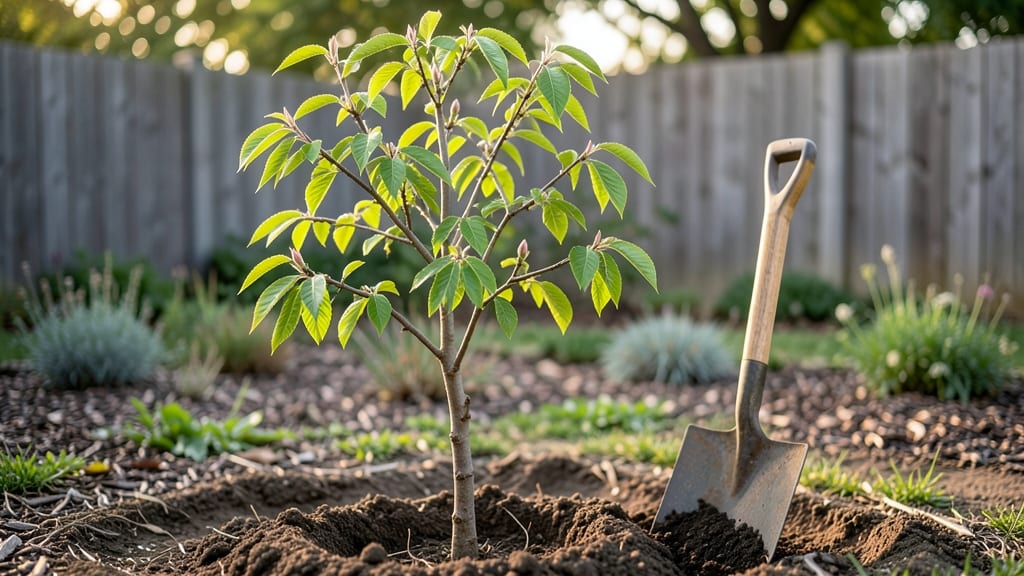
The best way to plant a peach tree starts with a sunny spot and well-draining soil—two things that make all the difference between a thriving orchard and a struggling sapling. 🌞 I learned this the hard way after my first tree drowned in heavy clay, but now I plant with confidence.
The key is timing: late winter or early spring lets roots establish before summer heat, while fall planting works in mild climates if done 6-8 weeks before frost.
You’ll need a hole twice as wide as the root ball but only as deep, plus a mix of compost to boost fertility and a handful of bone meal for phosphorus. Space dwarf varieties 12-15 feet apart, standard trees 20-25 feet—crowding invites disease and steals sunlight.
Dig a small mound in the center of the hole to elevate the root flare slightly, which prevents rot and encourages strong growth from the start.
After planting, water deeply to settle the soil and remove any air pockets around roots. Mulch with 2-3 inches of wood chips (keep it 6 inches from the trunk) to retain moisture and block weeds.
In the first year, your tree won’t produce fruit, but you’ll see steady growth if you keep soil consistently moist—not soggy—and protect it from late frosts with frost cloth when buds swell in spring.
This method works for both container-grown trees and bare-root saplings, and the same principles apply whether you’re planting a single tree or a small orchard. The payoff? Juicy, homegrown peaches in just 2-3 years with minimal fuss. Let’s get that tree in the ground right.
📚 In This Guide
- What you need
- Instructions
- Tips and common mistakes
- Wrapping up and next steps
What you need
- ● Peach Tree: 1–2 bare-root or container-grown saplings (5–6 ft tall for best fruit production; choose disease-resistant varieties like Elberta or Redhaven).
- ● Shovel: 1 medium-sized digging shovel (for planting holes).
- ● Garden Gloves: 1 pair (to protect hands from thorns and soil).
- ● Pruning Shears: 1 pair (for trimming dead branches or shaping the tree).
- ● Mulch: 2–3 bags of organic mulch (e.g., wood chips or straw; avoid fresh sawdust).
- ● Fertilizer: 1 bag of balanced, slow-release fertilizer (10-10-10 or similar; follow package instructions).
- ● Watering Can or Hose: 1 (with a gentle spray nozzle for new roots).
- ○ Soil Amendment (Optional): 1 bag of compost or well-rotted manure (to improve soil drainage).
- ● Sunlight: A spot with 6–8+ hours of full sun daily (peach trees are sun-hungry!).
- ● Well-Draining Soil: Test your soil’s pH (ideal range: 6.0–7.0; amend if needed).
- ● Spacious Yard: Minimum 15–20 feet between trees (or other structures) for airflow and growth.
- ● Water Source: Easy access to water for the first 2–3 weeks (deep watering is key!).
- ● Frost-Free Zone: Plant in USDA Zones 5–9 (peach trees hate frost!).
- ● 🔥 Timing Matters: Plant in late winter or early spring (before buds swell) for best root establishment.
- ● 🌡️ Soil Test Kit: Grab one from your local extension office to check for nutrient deficiencies.
- ● ✨ Thorn Protection: Wear long sleeves and eyewear—peach tree thorns are not playful!
Step-by-step guide for planting a thriving peach tree
Here's how I plant peach trees for strong roots and bountiful fruit—tested over multiple seasons.
🌱 Step 1: Choose the Perfect Planting Spot
Peach trees need full sun—at least 6-8 hours daily—and well-draining soil. I always pick a spot with southern exposure and shelter from strong winds, which can stress young trees. Avoid low areas where water pools, as peach roots rot easily in soggy soil.
Dig a hole twice as wide as the tree's root ball but only as deep as the roots themselves. The top of the root ball should sit 2 inches above ground level—this prevents water from sitting on the roots. If your soil is heavy clay, mix in 2-3 inches of compost to improve drainage before planting.
🪴 Step 2: Prepare the Tree and Plant Carefully
Remove the tree from its container and gently loosen the roots if they're circling tightly. This encourages outward root growth instead of a tangled mass. Place the tree in the hole so the graft union (the raised bump near the base) sits 2-3 inches above soil level—this prevents future soil buildup from smothering the graft.
Backfill the hole with the native soil you removed, tamping it lightly around the roots to eliminate air pockets. Water deeply to settle the soil, then add a 3-inch layer of mulch (wood chips or straw) around the base, keeping it 6 inches away from the trunk. Mulch retains moisture and regulates soil temperature—just don’t let it touch the trunk.
☀️ Step 3: Water and Protect for Strong Establishment
Water the tree deeply every 3-5 days for the first month, then taper to once a week once new growth appears. You’ll know it’s getting enough water when the soil feels damp 3 inches down—stick your finger in to check. Overwatering is worse than underwatering for peach trees.
Install a tree collar guard (a metal or plastic ring) to protect the trunk from rodents and voles, which gnaw on young bark. If planting in late spring or summer, give the tree a shade cloth for the first week to reduce stress from direct sun. Watch for new leaves—that’s your sign the tree is settling in.
✂️ Step 4: Prune and Fertilize for Long-Term Growth
After planting, trim any broken or crossing branches with clean, sharp pruners, cutting at a 45-degree angle just above an outward-facing bud. This encourages a strong structure. Avoid heavy pruning in the first year—just shape the tree lightly to remove dead wood and improve airflow.
Apply a balanced fertilizer (10-10-10) 3 months after planting, following package instructions. Peach trees are heavy feeders, but too much nitrogen early on leads to weak wood. I like to fertilize again in early spring before buds swell, using half the recommended dose to avoid burning roots.
Tips & tricks for perfect peach tree planting
These little details make all the difference between a struggling tree and one that thrives for decades.
Soil Depth Secret: That 2-inch elevation for the root ball isn't just about drainage—it creates a natural barrier against soil compaction. I've seen trees planted too deep struggle with poor air circulation, so always double-check your hole depth before planting. The roots need room to breathe, not be smothered.
Root Loosening Technique: When you remove the tree from its container, don't just pull it out—gently work your fingers through the root ball to untangle any circling roots. I use a small garden fork to carefully separate roots if they're tightly bound. This simple step prevents girdling, which can strangle your tree's growth for years.
Mulch Placement Matters: The 3-inch layer of mulch should form a donut shape around the tree, never touching the trunk. I've seen too many gardeners pile mulch right against the bark, which causes rot. Keep that 6-inch gap—it's crucial for preventing moisture buildup that invites pests and disease.
Watering Wisdom: Those first 30 days are critical—watering every 3-5 days means checking the soil moisture before you water. Stick your finger 3 inches down; if it feels dry, water deeply. Overwatering is the silent killer of young peach trees, so let the soil dry slightly between waterings once you see new leaves appear.
Pro Tips for Best Way To Plant A Peach Tree
- These little details make all the difference between a struggling tree and one that thrives for decades.
- Soil Depth Secret: That 2-inch elevation for the root ball isn't just about drainage—it creates a natural barrier against soil compaction.
- Root Loosening Technique: When you remove the tree from its container, don't just pull it out—gently work your fingers through the root ball to untangle any circling roots.
Frequently asked questions
Got questions about planting your peach tree? You’re not alone! Here are some of the most common concerns—plus expert answers to help you grow a thriving orchard.
When is the best time to plant a peach tree?
Peach trees thrive when planted in early spring (just as buds swell) or late fall (6–8 weeks before frost). Avoid extreme heat or freezing temperatures—root systems need time to establish without stress. If you’re in a mild climate, late winter works too!
Can I plant a peach tree in winter?
Yes, but with caution! Bare-root trees can be planted in dormant winter months (Dec–Feb in cold zones), but avoid frozen or waterlogged soil. Container-grown trees can go in year-round, but winter planting requires extra mulch (4–6 inches) to insulate roots. Spring is still ideal for most growers.
How deep should I plant the root ball?
The top of the root ball should sit 1–2 inches above soil level—never deeper. Peach trees need good drainage, and burying the graft union (visible bump near the base) can cause weak growth. Use a level reference (like a board) to check depth before backfilling.
Why did my peach tree’s leaves turn yellow after planting?
Yellowing leaves often signal root shock, overwatering, or nutrient stress. Check soil moisture (it should stay damp but not soggy) and avoid fertilizing for 4–6 weeks post-planting. If yellowing persists, test soil pH (ideal: 6.0–6.5) or inspect for pests like aphids.
Can I grow a peach tree in a container?
Dwarf varieties (like ‘Bonanza’ or ‘Redhaven’) thrive in 15–20 gallon pots with drainage holes. Use well-draining soil, repot every 2–3 years, and move containers to full sun (6+ hours daily). Just know: container trees may bear smaller fruit and need winter protection in cold zones.
What if my peach tree doesn’t bloom the first year?
Don’t worry—young trees (under 3 years) often focus on root growth first. Provide balanced fertilizer (10-10-10) in early spring, prune to encourage airflow, and ensure full sun. Patience pays off: most peach trees bloom by year 2 or 3!
Wrapping up and next steps
Planting a peach tree is a rewarding journey that combines patience, care, and a little know-how.
By choosing the right variety, preparing the soil, and following proven techniques—whether in spring, fall, or even winter—you’ll set the stage for a thriving fruit tree. Remember, the key is consistency in watering, mulching, and protection from pests.
Now that you’re armed with the best way to plant a peach tree, why not take the next step? Mark your calendar, gather your tools, and dig in! 🌱 Your future harvest of juicy peaches is waiting—let’s make it happen!