
Trees
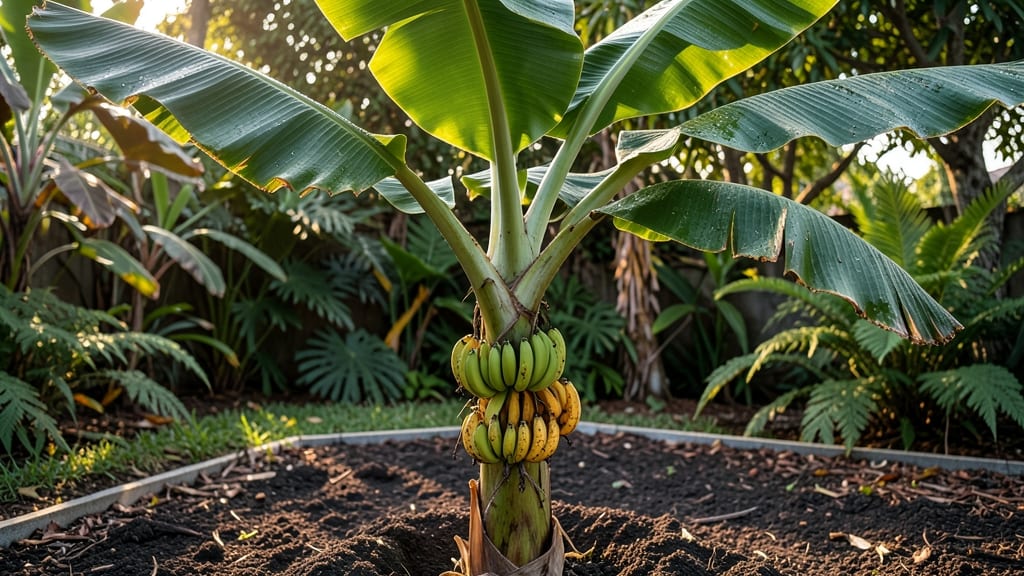
Growing a banana tree with bananas in your yard feels like stealing sunshine from the tropics. 🌿 I planted mine last spring, and within a year, I was holding my first homegrown banana—sweet, creamy, and impossible to resist.
The secret isn’t just warmth; it’s mimicking the rainforest’s rhythm of moisture and shade.
You’ll need a spot that gets 6-8 hours of sunlight daily, rich, well-draining soil, and a way to protect young plants from frost. In colder zones, grow it in containers and move it indoors during winter.
Water deeply when the top 2 inches of soil dry out, but avoid soggy roots—they’re the #1 killer of banana trees.
By year two, you’ll see those iconic banana leaves unfurling, followed by clusters of tiny hands. Each harvest feels like a victory, especially when neighbors ask where you bought them. The key is patience—bananas take time, but the payoff is worth every drop of water and hour of sunlight.
Whether you’re in Florida or a container in California, this guide covers the basics to turn your backyard into a mini tropical paradise. Let’s get those bananas growing!
📚 In This Guide
- What you need
- Instructions
- Tips and common mistakes
- Wrapping up and next steps
What you need
- ● Banana plant (Musa spp.) – Choose a dwarf Cavendish (hardier for home gardens) or Lady Finger (smaller, ornamental). Buy a 1-2 year old sapling (6–12 inches tall) from a nursery.
- ○ Well-draining soil mix – 50% topsoil, 30% compost, 20% perlite or coarse sand (pH 5.5–7.0). Optional: Add worm castings for extra nutrients.
- ● Large container or in-ground plot – Minimum 20-gallon pot (for containers) or 6x6 ft hole (for ground planting) with drainage holes.
- ● Organic mulch – 3–4 inches of straw or wood chips to retain moisture and regulate temperature.
- ● Garden trowel or shovel – For planting and soil prep.
- ● Watering can or hose with adjustable nozzle – Banana trees love consistent moisture (1–2 inches per week).
- ○ Fertilizer – Balanced 10-10-10 or citrus-specific fertilizer (apply every 4–6 weeks during growing season). Optional: Banana tree-specific fertilizer for faster fruit production.
- ● Support stake or trellis – 6–8 ft tall bamboo or metal stake to secure the plant as it grows (pseudostems can reach 10+ ft).
- ● Pruning shears – For trimming dead leaves or spent flower stalks (post-harvest).
- ● Warm climate (USDA Zones 10–12) – Or grow in a large container and bring indoors during frost (below 32°F).
- ● Full sun exposure – 6+ hours of direct sunlight daily (partial shade in hotter zones).
- ● Patience! – Banana trees take 9–18 months to produce fruit from planting.
Step-by-step instructions for growing a banana tree with bananas
Here's how to turn that tropical dream into a fruiting reality.
🌱 Step 1: Select and Plant Your Banana Tree
Start with a dwarf banana plant (Musa acuminata or Musa balbisiana varieties) from a reputable nursery. These stay compact enough for backyard growing. Plant in spring after the last frost when soil temperatures reach at least 60°F—banana roots won't develop below that.
Choose a location with full sun exposure (6-8 hours daily). Dig a hole twice as wide as the root ball but only as deep. Mix the removed soil with 3-4 inches of compost to improve drainage—bananas hate soggy roots. Place the plant so the crown sits 1-2 inches above soil level; this prevents rot when water pools around the base.
💧 Step 2: Water Deeply and Maintain Tropical Conditions
Water immediately after planting, then 1-2 times weekly until established. You'll know it's time when the top 2-3 inches of soil feel dry. Bananas need consistent moisture but will rot in waterlogged soil. Mulch with 3-4 inches of straw or wood chips to retain moisture and protect roots from temperature swings.
Here's the thing—bananas love warmth. If your climate dips below 50°F, cover the plant with frost cloth or move it to a sheltered spot. In colder zones, grow in large containers so you can winter them indoors near a sunny window. The leaves will yellow when stressed, but the plant often recovers if roots stay protected.
☀️ Step 3: Fertilize and Encourage Fruit Production
Feed your banana tree every 4-6 weeks during growing season with a balanced 10-10-10 fertilizer (follow package rates). The goal is lush foliage, which supports fruit development. You'll notice new leaves emerging every 2-3 weeks—that's your signal the plant is thriving.
When the plant reaches 3-4 feet tall, it's ready for fruit. Remove the oldest outer leaves to redirect energy to flowering. In tropical climates, bananas flower naturally; in cooler areas, you may need to simulate this by cutting back water slightly for 2-3 weeks. Watch for a pseudostem (the thick trunk) to split—this is where the flower will emerge.
🍌 Step 4: Protect and Harvest Your Bananas
Once the flower appears, cover it with a paper bag to protect it from wind and pests. Banana flowers are delicate, and even a light breeze can damage them. Hand-pollinate by gently shaking the flower cluster daily for 1-2 weeks—this encourages fruit set. You'll see tiny bananas forming within 4-6 weeks.
Harvest when the bananas turn fully yellow with faint brown speckles. They won't ripen further once picked. Cut the bunch with a sharp knife, leaving 1-2 inches of stem attached. Store in a cool, dark place (like a cardboard box) to ripen over 3-5 days. Real talk: Your first harvest might be small, but each subsequent year, the plant will produce more.
Tips & tricks for perfect tropical banana harvest
Growing bananas at home takes patience, but these insights will help you avoid common pitfalls and boost your chances of success.
Location Matters: That 6-8 hours of full sun is non-negotiable—bananas are tropical plants that need intense sunlight to produce fruit. If your yard doesn't get that much sun, consider growing in containers and moving them to follow the sun throughout the day. I've seen plants in partial shade produce leaves but never fruit, so don't skimp on sunlight.
Soil Prep Secret: The 3-4 inches of compost you mix into the planting hole isn't just about drainage—it's about creating the right microbial environment. Banana roots thrive in slightly acidic, well-draining soil. If your native soil is heavy clay, consider amending with perlite or sand to improve aeration. The crown sitting 1-2 inches above soil level prevents rot, but make sure your hole isn't so deep it smothers the roots.
Watering Wisdom: Those 1-2 weekly waterings should be deep—aim for 1-2 inches of water each time. The top 2-3 inches dry test is crucial because bananas hate both drought and soggy roots. I've learned this the hard way: Overwatering causes the pseudostem to rot from the inside out, while underwatering causes the leaves to yellow and curl. A moisture meter is worth the investment if you're unsure.
Fertilizer Timing: The 4-6 week feeding schedule with 10-10-10 fertilizer is perfect for building strong foliage, but don't stop there. When you see those new leaves emerging every 2-3 weeks, that's your plant telling you it's ready for more. In late summer, switch to a high-potassium fertilizer (like 0-10-10) to support fruit development. The key is consistency—bananas respond well to regular feeding during the growing season.
Pro Tips for Banana Tree With Bananas
- Growing bananas at home takes patience, but these insights will help you avoid common pitfalls and boost your chances of success.
- Location Matters: That 6-8 hours of full sun is non-negotiable—bananas are tropical plants that need intense sunlight to produce fruit.
- Soil Prep Secret: The 3-4 inches of compost you mix into the planting hole isn't just about drainage—it's about creating the right microbial environment.
Frequently asked questions
Got questions about growing your own banana tree with bananas?
Here are some of the most common queries—plus quick, practical answers to help you cultivate a thriving tropical harvest at home!
How long does it take for a banana tree to produce bananas?
A banana tree typically takes 9–18 months to bear fruit after planting, depending on the variety and growing conditions. Dwarf varieties (like ‘Lady Finger’) may fruit faster (6–12 months), while larger types can take longer. Patience is key—healthy trees reward you with bunches!
Can banana trees survive cold weather?
Most banana trees thrive in USDA Zones 10–12 (temperatures above 40°F/4°C). If you live in colder climates, opt for Musa acuminata hybrids or grow potted trees you can bring indoors during frost. Hardy varieties like ‘Ice Cream’ or ‘Red Dacca’ tolerate brief cold snaps better but still need protection.
Why aren’t my banana tree’s flowers turning into bananas?
If your tree blooms but no bananas form, check these common issues:
- Pollination: Banana trees are often self-pollinating, but hand-pollinating with a brush can help.
- Pests/disease: Look for aphids, borers, or fungal spots (like sigatoka leaf spot). Treat early!
- Nutrients: Yellow leaves? Boost potassium and phosphorus with a balanced fertilizer.
- Age: Young trees (under 2 years) may focus on growth instead of fruiting.
Can I grow a banana tree in a pot?
Potted banana trees are perfect for small spaces or colder climates. Use a 15–25 gallon container with drainage holes, fill it with well-draining soil (mix potting soil with compost), and place it in full sun. Dwarf varieties like ‘Dwarf Cavendish’ are ideal for containers—just rotate the pot occasionally for even growth!
Are homegrown bananas better than store-bought?
Yes—and no! Homegrown bananas are fresher, riper, and often more flavorful since they’re picked at peak sweetness. However, store-bought bananas are bred for durability and shipping. The biggest perk? No artificial ripening—your bananas ripen naturally, packed with more antioxidants and nutrients. Plus, they’re way more fun to harvest!
Pro Tip:
Want bigger bananas? Prune suckers (offshoots) to redirect energy to the main stem. And if your tree’s leaves turn brown, it might need more water (but avoid soggy soil—root rot is a foe!).
Wrapping up and next steps
Growing a banana tree with bananas in your backyard isn’t just a dream—it’s a rewarding tropical adventure! With the right care, patience, and a dash of sunshine, you’ll soon be enjoying fresh, homegrown fruit straight from your own garden. 🌱✨
Now that you’re armed with the knowledge to nurture your banana tree, why not take the next step? Start by planting your own today, or share your newfound expertise with fellow gardening enthusiasts. Your backyard oasis—and delicious harvest—awaits!