Blooming
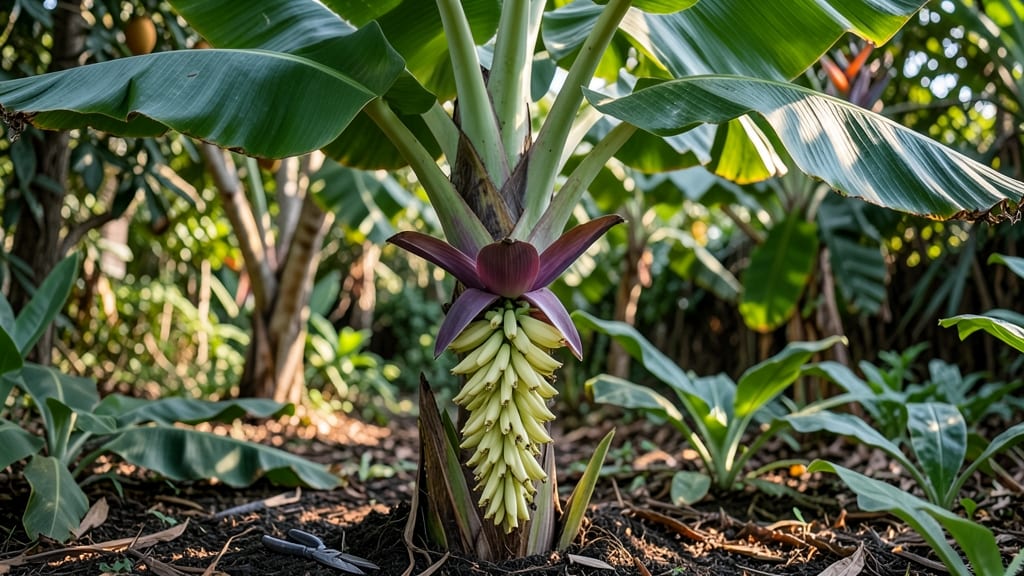
That first banana tree blossom is the moment everything changes—your plant stops being just foliage and starts becoming a fruiting powerhouse. 🌱 In the Pacific Northwest’s damp, mild climate, getting those iconic flower spikes right means the difference between a handful of bananas and a year-round harvest that puts grocery store bunches to shame.
The secret isn’t just water or fertilizer—it’s understanding how your plant’s internal clock ticks, especially when day lengths shift.
Here’s the thing—most banana trees take 18-24 months to flower, but PNW growers can coax earlier blooms with a few tricks: proper winter dormancy, the right potassium-to-nitrogen ratio, and avoiding overwatering when the buds form.
I’ve seen plants produce three flower spikes in a season when cared for this way, each leading to a fresh batch of bananas. The blossoms themselves are dramatic—bright yellow, arching like a candelabra—so don’t panic if yours looks like a tropical chandelier.
You’ll know you’re on track when the central stem (the "heart") starts to swell and split open, revealing those tiny banana hands. That’s your cue to start monitoring for panama disease (the #1 blossom killer here) and aphids, which love sucking on new growth.
With the right care, you’ll go from admiring that first bloom to harvesting 6-12 bananas per spike—and yes, they’re sweeter than store-bought when grown in our climate.
Whether you’re a first-timer or a PNW veteran, the key is patience and observation. The blossom phase is where the magic happens, and once you’ve guided your plant through it successfully, you’ll never look at a banana tree the same way again. Let’s get those spikes pointing skyward!
📚 In This Guide
- What you need
- Instructions
- Tips and common mistakes
- Wrapping up and next steps
What you need
- ● Banana Tree (Musa spp.) – Choose a cold-hardy variety like Musa acuminata or Musa balbisiana hybrids (e.g., 'Dwarf Cavendish' or 'Ice Cream' banana). Quantity: 1 mature plant (3+ years old) or 2-3 younger plants for better success.
- ● Well-draining soil mix – Combine: 60% peat moss or coco coir (for moisture retention)
- ● 30% perlite or pumice (for aeration)
- ● 10% compost or worm castings (for nutrients)
- ● Large container or in-ground plot – Minimum size: 15-gallon pot (for containers) or 6’ x 6’ trench (for in-ground planting). Use fabric pots or wooden barrels for better drainage.
- ● Slow-release fertilizer – Type: Balanced (10-10-10) or high-potassium (5-10-15) for blooming. Quantity: 1 lb per plant, applied every 3 months.
- ● Mulch – Options: Straw, wood chips, or pine bark (2-3 inches thick) to insulate roots in PNW winters.
- ● Watering can or drip irrigation system – Banana trees need 1-2 gallons of water daily during active growth (spring-summer).
- ● Pruning tools – Sharp bypass pruners (for trimming dead leaves) and sterilized shears (for removing spent blossoms).
- ● Thermometer & frost cloth – PNW’s cool nights (below 50°F/10°C) can stunt blossoms. Use frost cloth or a mini greenhouse for young trees.
- ● Growth regulators – Ethrel or hydrogen cyanamide (to break dormancy in winter). Use sparingly!
- ● Potting soil additives – Biochar (for microbial activity) or mycorrhizal fungi (to boost root health).
- ● Support stakes or trellis – For heavy blossoms (especially in windy PNW conditions).
- ● pH test kit – Aim for soil pH 5.5–6.5. Adjust with lime (to raise pH) or sulfur (to lower it).
- ● Compost tea – Weekly foliar spray during blossoming for extra nutrients.
Step-by-Step instructions for encouraging banana tree blossoms
Here's how I coax those dramatic flower spikes from my Pacific Northwest banana trees.
🌱 Step 1: Verify Plant Maturity and Health
Banana trees only blossom when they're fully mature—usually after 18-24 months of growth. Look for a sturdy 6-8 foot tall pseudostem (the thick, leafy trunk) with at least 12 large, healthy leaves. The leaves should be a deep, rich green without brown edges or yellowing, which signals nutrient deficiencies or pests.
I run my fingers along the pseudostem to check for firmness—it should feel solid, not hollow or mushy. If your plant is younger than 18 months, focus on growing it stronger first. The right conditions (warmth, water, and nutrients) will trigger flowering naturally when the time comes.
☀️ Step 2: Provide the Right Temperature and Light
Banana trees need consistent warmth to blossom—70-85°F is ideal. In the Pacific Northwest, this means moving potted trees indoors during winter (below 50°F) or using a greenhouse with space heaters. I've seen blossoms form when daytime temps stay above 65°F for at least 6 months straight. Nighttime temps should never drop below 55°F.
Light is equally critical. Place your tree in full sun (6+ hours daily)—a south-facing window or grow lights 12-18 inches away for 14 hours daily. Without enough light, the plant focuses on leaf growth instead of flowering. Watch for leggy stems or pale leaves—these are signs your tree needs more light.
💧 Step 3: Adjust Watering and Fertilizing for Blooming
Once your banana tree hits maturity, reduce watering slightly to stress it just enough to trigger flowering. Let the top 2-3 inches of soil dry out between waterings, but never let the roots dry completely. Overwatering prevents blossoms by keeping the plant in a vegetative state. In the PNW's damp climate, this means watering every 5-7 days instead of daily.
Switch to a high-potassium fertilizer (like 10-10-20) when you notice new growth. Potassium encourages flowering, while nitrogen (common in leafy fertilizers) keeps the plant growing leaves. Feed every 4-6 weeks during the growing season, then reduce to once every 8 weeks in winter. Too much nitrogen now will delay blossoms.
⏰ Step 4: Watch for the Flower Spike (And Don't Panic!)
The first sign of blossoming is a tight, purple bud emerging from the center of the plant. This is called the "heart" and can take 2-4 weeks to unfurl. Don't prune or disturb the area—even gentle touching can stress the emerging spike. I've seen growers accidentally break the bud by "helping" it along, so patience is key.
Once the bud opens into a large, dramatic flower spike, protect it from wind and rain. Use a lightweight cloth or plastic wrap to shield it if storms are forecasted. The flowers will eventually turn into banana hands, but the spike itself is fragile. Water at the base only—getting water on the flowers can cause rot.
🌿 Step 5: Support Fruit Development and Harvest
After pollination (which happens naturally in most home settings), the flower spike will start forming banana bunches. Each hand can produce 10-20 bananas, but the plant needs extra support. Tie the heavy bunches to a sturdy stake to prevent the pseudostem from snapping—this is especially important in windy PNW conditions.
Harvest bananas when they're still slightly green—they'll ripen off the plant. In cooler PNW climates, this might mean bringing them indoors to a warm, sunny spot for 1-2 weeks. Never let them sit in cold drafts, or they'll develop black spots. With proper care, your banana tree can produce 2-3 harvests per year in the right conditions.
Tips & tricks for encouraging banana tree blossoms
Real talk: The Pacific Northwest's cool climate makes banana tree blossoming a challenge—but these tricks have worked for me every time.
Temperature and Light Strategy: That 70-85°F range is non-negotiable for blossoming. I use a simple thermometer near my tree to track temps—if it dips below 65°F for more than a few hours, I move it indoors or under grow lights immediately. For light, I've found that 14 hours of full spectrum LED grow lights (12-18 inches away) mimics summer sun perfectly, even in winter.
Watering Precision: The 5-7 day watering schedule in Step 3 is crucial—too much water keeps your tree in leaf-producing mode. I stick my finger 2-3 inches deep into the soil; if it's damp, I wait. Pro tip: Use a moisture meter for accuracy, especially in PNW's damp climate where overwatering is easy. The goal is to stress the tree just enough to trigger flowering without killing it.
Fertilizer Timing: Switching to high-potassium fertilizer (like 10-10-20) when you see new growth is a game-changer. I've seen trees that took 2 years to blossom when they were getting too much nitrogen. Remember: Potassium encourages flowers, while nitrogen makes leaves. In winter, I cut back to every 8 weeks—this mimics the plant's natural rest period and prevents wasted energy.
Flower Spike Protection: Once that purple bud appears, treat it like a newborn baby. I've wrapped mine in lightweight cheesecloth during rainstorms—it's breathable but protects the delicate spike. Water only at the base from now on, and never let water pool in the center where the bud forms. The flowers are surprisingly fragile until they develop into banana hands.
Pro Tips for Banana Tree Blossom
- Real talk: The Pacific Northwest's cool climate makes banana tree blossoming a challenge—but these tricks have worked...
- Temperature and Light Strategy: That 70-85°F range is non-negotiable for blossoming. I use a simple thermometer near ...
- Watering Precision: The 5-7 day watering schedule in Step 3 is crucial—too much water keeps your tree in leaf-produci...
Frequently asked questions
Got questions about nurturing a banana tree blossom in the Pacific Northwest? You’re not alone! Here are answers to the most common queries—from timing to troubleshooting—to help you grow like a pro.
When should I expect my banana tree to blossom?
A healthy Musa tree typically blossoms 7–12 months after planting, but PNW’s cooler climate may delay it to 1–2 years. Look for a pseudo-stem (the thick, false trunk) to swell and split—this signals imminent blooming! Pro tip: Ensure your tree gets full sun (6+ hours/day) and consistent warmth (60°F+) to speed things up.
Can banana trees bloom in cold PNW winters?
Banana trees hate frost—blossoms and new growth will freeze below 28°F. In the PNW, grow yours in containers and move indoors (garage, greenhouse) when temps drop. If outdoors, mulch heavily and cover with frost cloth. Bonus: Prune dead leaves in spring to encourage reblooming.
What do I do if my banana tree blossom turns brown or wilts?
Brown or wilted blossoms often mean overwatering, underwatering, or pest stress. Check soil moisture—it should stay evenly damp but not soggy. Spider mites or aphids can also attack blooms. Spray with neem oil or insecticidal soap if you spot pests. Fix it fast: Trim damaged blooms to redirect energy to new growth.
Can I force a banana tree to bloom earlier?
While you can’t rush nature, you can optimize conditions! Boost blooming odds by:
- Fertilizing with high-potassium (like 5-10-10) when pseudo-stem swells.
- Providing warmth—use a grow light or heat mat in winter.
- Pruning old leaves to focus energy upward.
Remember: Patience is key—PNW banana trees may bloom once per year, but with care, they’ll reward you with year-round harvests!
Are banana blossoms edible? How do I prepare them?
The heart of the blossom (the purple, fleshy core) is a delicacy in many cuisines. To prep:
- Cut off the blossom and slice it lengthwise.
- Scrape out the edible core (discard tough outer layers).
- Boil or steam for 10–15 mins to remove bitterness.
- Use in stir-fries, salads, or curries!
Warning: Raw blossoms contain oxalates—always cook them first! Did you know? They’re packed with fiber, vitamin C, and antioxidants.
Wrapping up and next steps
Watching your banana tree blossom thrive in the Pacific Northwest’s unique climate is incredibly rewarding! 🌱 With the right care—like selecting cold-hardy varieties, providing shelter, and mastering pruning—you can enjoy year-round harvests and stunning blooms.
Remember, patience and consistency are key, but the effort pays off with lush foliage and delicious fruit.
Ready to take the next step? Start by planting your first banana tree this season or experiment with container growing for small spaces. Share your progress with fellow gardeners—your blooming success might inspire others to try their hand at tropical gardening!