
Pruning
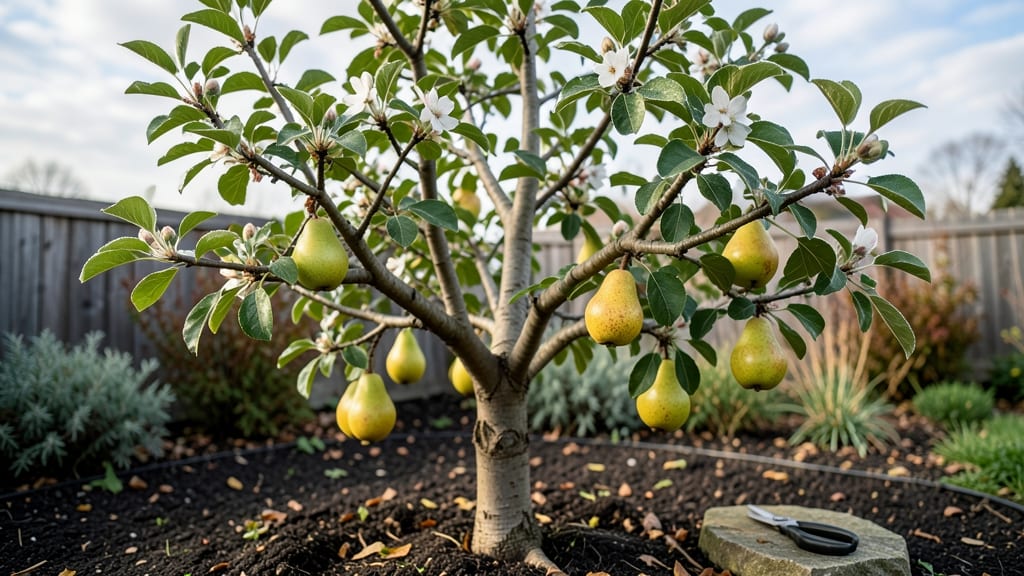
Dwarf Asian pear trees pack the same sweet, crisp fruit into tiny spaces—my 20-foot patio now yields enough pears for pies and snacking. 🌿 The key is choosing the right variety like 'Seiki' or 'Kinchaku,' which stay under 10 feet tall while producing juicy, honey-scented fruit.
These trees thrive in containers or small yards, making them perfect for urban gardeners or those with limited space.
Planting them in well-draining soil with afternoon shade prevents sunburn, and their shallow roots mean you can grow them in large pots or raised beds. Water deeply once a week during dry spells, and feed with a balanced fertilizer in early spring.
The real magic happens when you prune in late winter—thinning branches lets sunlight reach the fruit, ensuring bigger, sweeter harvests.
By summer, you'll see clusters of small, green pears turning golden—each one packed with floral notes and a satisfying crunch. The trees bloom beautifully in spring, attracting pollinators while keeping your space lush and productive.
With proper care, these dwarf varieties can live for decades, rewarding you with fruit year after year.
Whether you're growing in a container or in-ground, these trees adapt well to different climates, though they prefer USDA zones 5-8. For beginners, start with one tree and a sunny spot—you'll be harvesting in just 3-5 years. The secret? Patience and a little pruning love. Let’s get those pears growing!
📚 In This Guide
- What you need
- Instructions
- Tips and common mistakes
- Wrapping up and next steps
What you need
- ● Dwarf Asian pear tree sapling: Choose a Pyrus pyrifolia or hybrid variety (e.g., 'Twentieth Century,' 'Hosui,' or 'Korean Giant'). Look for a 1-2 year old tree from a reputable nursery.
- ● 5-gallon container or raised bed: If planting in a pot, use a wide, deep container (at least 18" diameter and 24" deep) with drainage holes. For in-ground, ensure the bed has well-draining soil.
- ● High-quality potting mix: A blend of 60% organic matter (compost/peat), 30% perlite, and 10% sand works best for containers.
- ● Slow-release fertilizer: A balanced 10-10-10 or 8-3-9 formula (organic options like fish emulsion or worm castings are great too!).
- ● Pruning tools: Bypass pruners (for 1/4"–1/2" branches)
- ● Loppers (for thicker branches up to 1")
- ● Sharp pruning saw (for larger limbs)
- ● Disinfectant (70% isopropyl alcohol or bleach solution): To clean tools and prevent disease.
- ● Mulch: Wood chips or straw to retain moisture and regulate soil temperature.
- ● Tree ties or soft pruning straps: To support young branches during pruning or wind.
- ● Drip irrigation system: For consistent watering, especially in containers.
- ● Pollination aid (if growing a single tree): A small handheld paintbrush to manually transfer pollen between flowers.
- ● Fruit thinning shears: For precise removal of excess fruit to improve size and quality.
Step-by-step instructions for planting and caring for dwarf Asian pear trees
Here's how I've successfully grown these compact fruit trees in tight spaces—no yard needed.
🌱 Step 1: Choose the Perfect Planting Spot
Dwarf Asian pear trees thrive with 6-8 hours of sunlight daily, so pick a location that gets morning sun and afternoon shade if summers run hot. A south-facing wall or patio works perfectly. I always test the spot for 4-6 hours of direct sun first—watch for shadows cast by buildings or trees between 10 AM and 4 PM.
For containers, use a pot at least 18-24 inches wide and deep with drainage holes. The roots need room to establish before the tree starts producing fruit. I like to place a layer of 3-4 inches of gravel at the bottom first—this prevents waterlogging while still allowing roots to spread.
🪴 Step 2: Prepare the Soil or Potting Mix
Asian pears prefer well-draining, slightly acidic soil with a pH between 6.0-6.5. If planting in ground soil, mix in 2-3 inches of compost and a handful of slow-release fertilizer (10-10-10 works well) into the top 12 inches of soil. This gives roots a nutrient boost right from the start.
For container growing, use a blend of 60% potting mix, 20% perlite, and 20% compost. Fill the pot halfway, then place the tree's root ball in the center. The top of the root ball should sit 1 inch below the pot's rim—this prevents soil from spilling out when you water. Tap the pot gently to settle the mix around the roots.
💧 Step 3: Plant and Water Thoroughly
Remove the tree from its nursery container and gently loosen the roots if they're circling. Place it in the prepared hole or pot, ensuring the graft union (the bump near the base) sits 2-3 inches above soil level. This prevents it from being buried, which can cause disease.
Backfill with soil, pressing lightly to remove air pockets. Water immediately with 1-2 gallons of water to settle the soil and encourage root contact. You'll know it's right when water drains freely from the bottom—no puddling. Mulch with 2-3 inches of organic mulch (like wood chips) to retain moisture and regulate soil temperature.
☀️ Step 4: Maintain Light, Water, and Fertilizer
Keep your dwarf Asian pear in consistent light—if leaves start yellowing between veins, it's getting too much sun. Move it to a slightly shadier spot. For containers, rotate the pot a quarter turn weekly so the tree grows evenly toward the light. You'll notice new growth on all sides within 4-6 weeks if it's happy.
Water when the top 2 inches of soil feel dry. Dwarf trees need less water than full-size varieties, but drought stress shows up as wilted leaves or fruit drop. In containers, watering every 3-5 days usually works, but check the soil first. Fertilize every 4-6 weeks during growing season with a balanced fertilizer to keep fruit production strong.
✂️ Step 5: Prune for Shape and Fruit Production
Prune in late winter or early spring before new growth starts. Remove any dead, crossing, or inward-growing branches first—these compete for energy. I always cut back to an outward-facing bud to encourage an open canopy. For dwarf trees, aim to keep the height under 6-8 feet to maintain manageable size.
Thin fruit clusters when they're 1-2 inches wide to leave 6-8 inches between fruits. This ensures larger, higher-quality pears. You'll see fewer but bigger fruits, and the tree won't get overburdened. Prune again after harvest to remove any suckers (shoots growing from the base) and shape the tree for next year's growth.
Tips & tricks for perfect Asian pear fruit tree growth
These practical insights will help you avoid common pitfalls and maximize your dwarf Asian pear's potential in limited spaces.
Sunlight Strategy: The 6-8 hours of sunlight rule is non-negotiable, but here's the trick: use a light meter app to track actual sunlight hours in your spot. I've found balconies with morning sun and afternoon shade often get only 4-5 hours of direct sun—move your tree to a sunnier location if you notice leaves curling or yellowing between veins. South-facing walls capture the most consistent light, but east-facing spots work too if you rotate the pot weekly to follow the sun's arc.
Container Size Matters: That 18-24 inch pot recommendation isn't just about roots—it's about stability. I've seen dwarf trees topple in smaller containers when fruit loads heavy branches. For extra security, place a heavy decorative stone near the base or anchor the pot with stakes. Also, upgrade to a 24-inch pot after 2-3 years when roots fill the space—this gives your tree room to establish before fruiting.
Watering Wisdom: The "top 2 inches dry" rule works, but here's how to apply it: stick your finger in the soil at the 2-inch mark. If it feels like a damp sponge, wait another day. I've learned the hard way that container-grown trees dry out faster than in-ground plants—check soil moisture daily during heatwaves. The 3-5 day watering guideline assumes average temperatures; in summer, you might need to water every 2-3 days, especially in shallow containers.
Pruning Precision: When thinning those 1-2 inch fruit clusters, aim for 6-8 inches between fruits—but don't just count spaces. Look for fruits that are already larger than others and remove those first. The goal is even-sized pears, not just spacing. I also recommend keeping a small notebook to track which branches produce the best fruit each year, so you can give them priority pruning in future seasons.
Pro Tips for Asian Pear Fruit Tree
- These practical insights will help you avoid common pitfalls and maximize your dwarf Asian pear's potential in limited spaces.
- Sunlight Strategy: The 6-8 hours of sunlight rule is non-negotiable, but here's the trick: use a light meter app to track actual sunlight hours in your spot.
- Container Size Matters: That 18-24 inch pot recommendation isn't just about roots—it's about stability.
Frequently asked questions
Got questions about growing your own Asian pear fruit tree in small spaces? We’ve got answers!
Whether you’re curious about timing, care, or troubleshooting, here’s what you need to know to keep your dwarf tree thriving—and fruiting.
How long does it take for a dwarf Asian pear tree to bear fruit?
A dwarf Asian pear tree typically starts producing fruit within 3–5 years of planting, depending on the variety and growing conditions. Patience is key—focus on proper pruning, sunlight (6+ hours/day), and soil health to speed up fruiting. Some early-bearing varieties like ‘Seiki’ may surprise you sooner!
Can dwarf Asian pear trees handle cold winters?
Most dwarf Asian pear varieties are moderately cold-hardy, tolerating temperatures down to 10–15°F (-12 to -9°C). However, young trees or late blooms may need protection (like burlap wraps) in harsh climates. Choose ‘Korean Giant’ or ‘Hosui’ for better resilience. Mulch heavily in fall to insulate roots!
Do I need two trees for pollination?
Yes! Asian pear trees are self-unfruitful, meaning you’ll need at least two compatible varieties planted nearby (within 50 feet) for cross-pollination. Check labels for “pollinator-friendly” pairs like ‘Shinseiki’ + ‘Niitaka’. Bonus: Planting a mix adds variety to your harvest!
Why aren’t my Asian pear tree leaves turning green?
Yellow or pale leaves often signal nutrient deficiencies (like iron or nitrogen) or overwatering. Test your soil and amend with compost or a balanced fertilizer (10-10-10). If leaves curl, check for aphids or spider mites—spray with neem oil or insecticidal soap. Dwarf trees need well-draining soil to avoid root rot!
Can I grow Asian pears in containers?
Dwarf varieties like ‘Hosui’ thrive in 15–20 gallon pots with drainage holes. Use a high-quality potting mix and repot every 2–3 years. Place containers in full sun and water deeply when the top inch of soil dries. Just remember: container-grown trees may need winter protection in freezing climates.
Wrapping up and next steps
Growing a dwarf Asian pear fruit tree in small spaces is not just possible—it’s rewarding! With the right pruning techniques, you’ll enjoy juicy, sweet pears while keeping your tree compact and healthy.
Whether you’re a beginner or a seasoned gardener, these secrets will help you maximize your harvest without sacrificing space.
Ready to transform your backyard or balcony into a pear-producing paradise? Start by selecting the perfect dwarf variety, then roll up your sleeves—your first harvest could be just a few years away! 🌱🍐