Trees
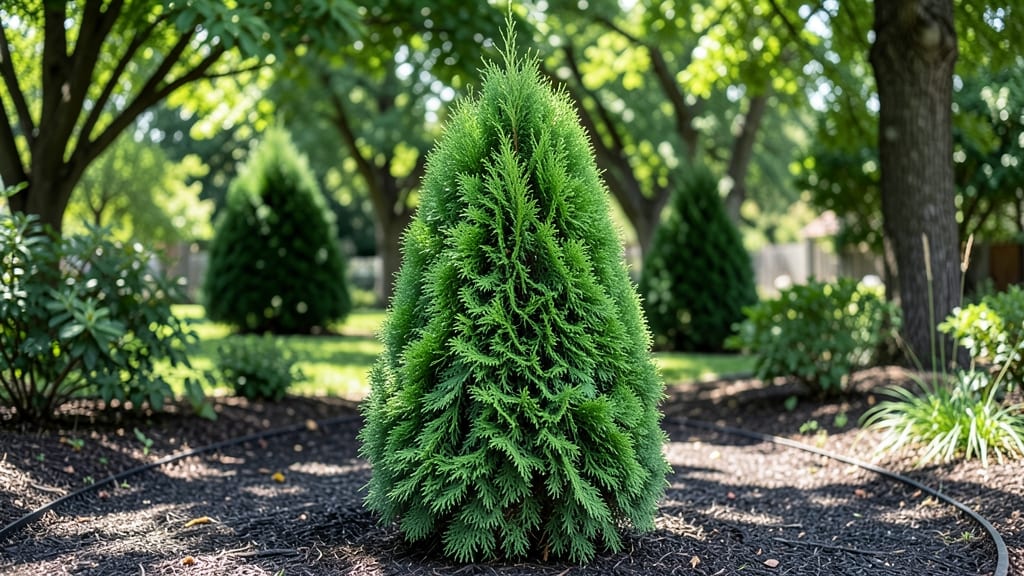
Emerald Green arborvitae trees are the Pacific Northwest's unsung heroes—tough as nails in winter yet soft enough to touch. 🌿 I've watched mine stand firm through 10-degree nights while neighbors' tender shrubs wilt, their vibrant green needles holding up like a soldier's salute.
This isn't just a tree; it's a low-maintenance evergreen that thrives where others fail, perfect for hedges, privacy screens, or that empty corner begging for structure.
The secret to their resilience starts with the right spot: full sun to partial shade, well-draining soil, and 6-12 feet of space to grow without crowding. They handle everything from dry summers to wet winters—no fuss, no drama.
Plant them in early fall or spring, and they'll reward you with year-round color and that signature arborvitae scent that smells like a forest after rain. Even the soil doesn't need to be perfect, just not soggy.
By year three, you'll have a dense, upright shrub that birds adore and neighbors envy. Prune lightly in late winter to shape it, and watch how it fills in gaps like a living green wall.
The best part? They rarely get sick—disease-resistant and deer-resistant too. That means fewer headaches and more time enjoying your frost-proof landscape centerpiece.
Whether you're lining a driveway or filling a foundation planting, these trees deliver instant curb appeal with minimal effort. Let's get yours growing strong—your future self (and the birds) will thank you.
📚 In This Guide
- What you need
- Instructions
- Tips and common mistakes
- Wrapping up and next steps
What you need
- ● Emerald Green Arborvitae Trees – 1-5 plants (depending on desired spacing; 3-5 ft apart for hedges, 6-8 ft for privacy screens). Choose 1-2 ft tall nursery-grown trees for faster establishment.
- ● High-quality soil amendment – 2-3 bags of compost or peat moss (to improve drainage and fertility).
- ● Organic mulch – 2-3 cubic feet of pine bark nuggets or cedar chips (for moisture retention and weed suppression).
- ○ Slow-release fertilizer – 1 bag of balanced 10-10-10 or conifer-specific fertilizer (optional but recommended for the first year).
- ● Shovel or spade – For digging planting holes (1.5x wider and as deep as the root ball).
- ● Garden trowel – For loosening soil and backfilling.
- ● Wheelbarrow – To mix soil amendments and transport materials.
- ● Garden hose or watering can – With a soaker hose attachment (for deep watering).
- ● Pruning shears – Bypass pruners (for shaping and cleanup).
- ● Measuring tape – To ensure proper spacing between plants.
- ● Gloves & knee pads – For comfort during planting.
- ● Sunlight – Full sun (6+ hours/day) to partial shade (3-6 hours). Emerald Green Arborvitae thrives in bright light!
- ● Well-draining soil – Tolerates clay but benefits from amended soil. Test pH (ideal: 6.0-7.0).
- ● Frost-hardy zone – USDA Zones 5-8 (perfect for the Pacific Northwest!).
- ○ Wind protection – Optional burlap windbreaks for young trees in exposed areas.
- ● Water source – Access to consistent watering (especially in the first year).
Step-by-step instructions for planting and cultivating Emerald Green arborvitae in the Pacific Northwest
Here's how to establish these hardy evergreens for long-term resilience against frost and wind.
🌱 Step 1: Select the Optimal Planting Site and Prepare the Soil
Emerald Green arborvitae thrive in partial shade to full sun with 6-8 hours of light daily, but in the Pacific Northwest's cooler climate, morning sun and afternoon shade protects against afternoon drying winds. Choose a location with well-draining soil—these trees despise soggy roots. If your soil is heavy clay, amend with 2-3 inches of compost mixed into the top 12 inches of soil to improve aeration.
Dig a hole twice as wide as the root ball but only as deep—planting too deep suffocates the roots. Loosen the sides of the hole with a garden fork to encourage root spread. Here's the thing—Pacific Northwest frost resistance starts with proper root establishment, so avoid compacted soil at all costs.
🪴 Step 2: Plant and Stake for Stability
Remove the tree from its container and gently loosen the root ball if it appears root-bound. Place the arborvitae in the hole so the top of the root ball sits level with the surrounding soil—never bury the trunk deeper than it was in the nursery pot. Backfill with the native soil, tamping lightly as you go to eliminate air pockets.
Water deeply to settle the soil, then add a 2-3 inch layer of mulch (like pine bark or wood chips) around the base, keeping it 3-4 inches away from the trunk to prevent rot. Stake only if needed—these trees have strong root systems, but in exposed sites, a single 4-foot stake with soft ties prevents wind damage. I always use fabric plant ties to avoid girdling the trunk as it grows.
☀️ Step 3: Establish a Watering Routine for First-Year Resilience
Water deeply once a week during the first growing season, providing 1-2 gallons per tree to encourage deep root growth. The goal is consistent moisture—let the top 2 inches of soil dry out between waterings, but never allow the root zone to become bone-dry. In the Pacific Northwest's cooler summers, this usually means watering every 5-7 days, but adjust based on rainfall.
Watch for needle browning at the tips—this is your signal the tree is thirsty. If you see this, increase watering frequency slightly. Here's what I've learned: Emerald Green arborvitae are drought-tolerant once established, but their first year is critical for root development. Mulch helps retain moisture and insulates roots against winter frost.
✂️ Step 4: Prune for Shape and Frost Protection
Prune in late winter or early spring before new growth begins, removing any dead, broken, or crossing branches with clean cuts just outside the branch collar. Avoid heavy pruning—these trees respond best to light shaping to maintain their natural pyramid form. I like to use bypass pruners for precision cuts, as they leave a smoother wound that heals faster.
In exposed sites, consider winter wrapping for young trees—wrap the trunk with burlap or tree guard to protect against Pacific Northwest frost cracks, which can split bark in extreme cold. Real talk: Emerald Green arborvitae are cold-hardy, but young specimens benefit from this extra protection until their bark thickens.
⏰ Step 5: Monitor for Pests and Adjust Care Seasonally
Check for arborvitae webworms or bagworms in late summer—look for silken bags or frass (insect droppings) on the branches. If you spot them, handpick or spray with neem oil for organic control. These pests are rare but can defoliate trees if left unchecked. I inspect mine every 2 weeks during peak growing season.
In fall, apply a 2-3 inch layer of mulch to insulate roots against winter frost. Reduce watering as temperatures drop—water only when the soil is frozen or dry to prevent root rot. Here's the moment that matters: By their third year, these trees will be self-sufficient, but the first two years set the stage for their lifelong resilience.
Tips & tricks for Pacific Northwest arborvitae success
Here's what nobody tells you about getting these evergreens thriving in our famously wet climate.
Site Selection Nuance: While the instructions mention partial shade to full sun, I've found that in the Pacific Northwest's coastal areas, morning sun with afternoon shade is ideal. The afternoon sun can dry out needles faster than you'd expect, especially in exposed sites. If you're planting near a windbreak, position the tree so its dominant side faces the shelter—this helps maintain that signature Emerald Green color year-round.
Root Ball Preparation: The instructions emphasize loosening root-bound trees, but I've learned to take this a step further. After removing the tree from its container, soak the entire root ball in water for 10-15 minutes before planting. This helps rehydrate any roots that might have dried out during shipping or storage. In our region's heavy soils, this pre-soaking can make the difference between a struggling transplant and one that establishes quickly.
Pacific Northwest Watering Reality: That "deeply once a week" guideline works for ideal conditions, but our climate demands adjustments. In summer, I water every 4-5 days instead of 5-7—especially in exposed sites where wind accelerates moisture loss. The key is to water slowly and deeply each time, allowing the soil to absorb moisture rather than running off. For container-grown trees, I've found they need watering every 3-4 days regardless of season because their root systems can't access moisture beyond the pot.
Mulch Mastery: The 2-3 inch mulch layer is perfect, but I've discovered a trick that works especially well here: combine pine bark mulch with a 1-inch layer of leaf mold at the base. The leaf mold adds beneficial microbes while the pine bark retains moisture. Just be sure to keep it 3-4 inches away from the trunk to prevent rot—a lesson I learned the hard way after losing a young specimen to trunk rot.
Pro Tips for Arborvitae Trees Emerald Green
- Here's what nobody tells you about getting these evergreens thriving in our famously wet climate.
- Site Selection Nuance: While the instructions mention partial shade to full sun, I've found that in the Pacific North...
- Root Ball Preparation: The instructions emphasize loosening root-bound trees, but I've learned to take this a step fu...
Frequently asked questions
Got questions about growing Emerald Green Arborvitae trees in the Pacific Northwest? You’re not alone!
Here are answers to the most common concerns—from planting to winter prep—so you can keep your evergreen thriving year-round.
How fast do Emerald Green Arborvitae trees grow?
These trees grow at a moderate rate—about 12 to 24 inches per year. With proper care, they’ll reach their mature height of 12 to 15 feet in 10 to 15 years. Patience pays off for that classic emerald-green pyramid shape!
Are Emerald Green Arborvitae truly frost-resistant?
They’re hardy in USDA zones 5 through 8, making them perfect for the Pacific Northwest’s chilly winters. Just mulch the base in late fall to protect roots from freezing temps. Bonus: Their dense foliage sheds snow easily, reducing winter damage.
How often should I water a newly planted Emerald Green Arborvitae?
Water deeply 2 to 3 times per week for the first year to help roots establish. After that, 1 inch of water per week (from rain or irrigation) is ideal. Overwatering can harm them, so check soil moisture—it should stay evenly moist but not soggy.
What pests or diseases should I watch for with Emerald Green Arborvitae?
Keep an eye out for bagworms, spider mites, and fungal issues like canker disease. Preventative care helps: Prune for airflow, avoid overhead watering, and inspect foliage monthly. If pests strike, use neem oil or insecticidal soap for a natural fix.
Can I plant Emerald Green Arborvitae near my house or fence?
Yes! They’re great for hedges, privacy screens, or foundation plantings—just keep them 3 to 5 feet away from structures to avoid root competition. Their narrow, upright growth makes them ideal for tight spaces. Pro tip: Space multiple trees 3 to 4 feet apart for a lush, uniform look.
When is the best time to prune Emerald Green Arborvitae?
Prune late winter or early spring (before new growth starts) to shape the tree and encourage fullness. Avoid heavy pruning in fall—it can stress the tree before winter. Use clean, sharp shears and trim just above a leaf bud for a natural look.
Wrapping up and next steps
Growing Arborvitae Trees Emerald Green in the Pacific Northwest is a rewarding journey—these stunning evergreens thrive with the right care, offering year-round beauty and resilience against frost. Whether you’re a seasoned gardener or just starting, their vibrant emerald-green foliage and adaptability make them a perfect addition to any landscape. 🌲✨
Now that you’re armed with the essentials—from soil prep to pruning—take the next step: plant your Emerald Green Arborvitae and watch your outdoor space transform! Start small, stay consistent, and enjoy the lush, low-maintenance greenery that will bring life to your garden for decades.