
Pruning
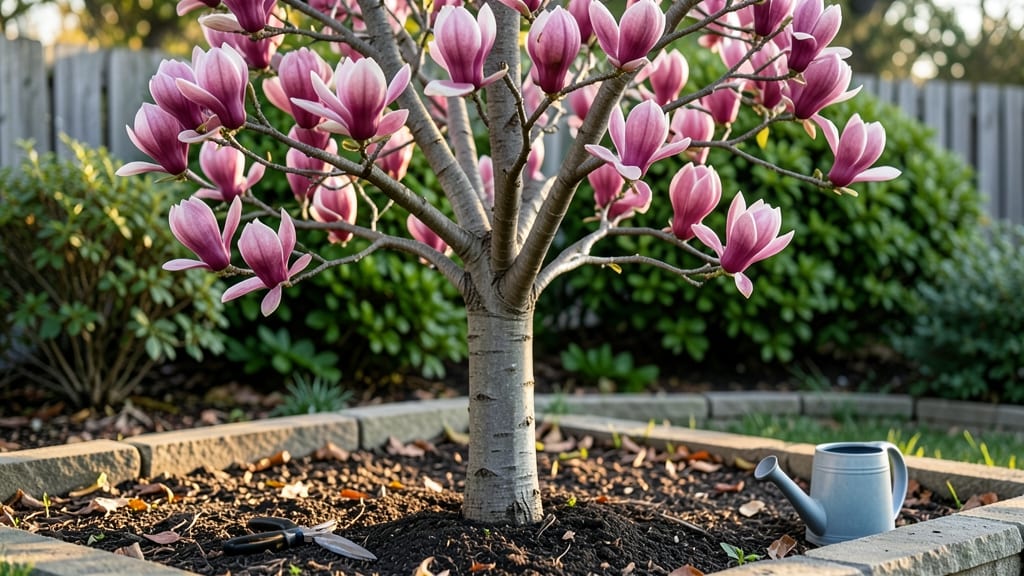
Pruning your Anne magnolia tree in late winter isn’t just about shaping—it’s about preparing this Pacific Northwest beauty to outlast frost while keeping those stunning pink blooms coming back year after year.
I’ve learned the hard way that cutting too late or too aggressively can leave your tree vulnerable to winter dieback, but the right approach turns pruning into a foolproof way to strengthen its structure before spring.
The key is timing: wait until dormancy, but before new growth starts, and you’ll avoid stressing the tree just as it’s waking up.
This magnolia thrives in the PNW’s mild winters, but it still needs a little help to handle the occasional frost. Start by removing any dead, crossing, or weak branches first—these are the easy fixes that make all the difference.
Then, focus on thinning out the canopy to improve airflow, which prevents fungal issues and helps the tree recover faster after winter. Think of it like giving your magnolia a spa day: less clutter means more energy for those showstopping blooms.
Most pruning can be done with just a pair of sharp bypass pruners, but larger branches might need a pruning saw for clean cuts.
What you’ll end up with is a tree that looks like it belongs in a botanical garden, not just your backyard—vibrant pink blooms in spring, glossy dark green leaves all summer, and a sturdy framework that holds up through storms. The best part?
You’ll notice new growth within weeks, and by next winter, your pruning skills will be second nature. The secret is patience: magnolias respond best to gradual shaping over time, so don’t rush it. Even a small adjustment now means fewer surprises later.
This method works for any Magnolia × soulangeana variety in zones 4-9, but the Anne in particular loves the PNW’s climate. If you’re in a colder microclimate, hold off until late February to avoid late frosts.
And if your tree is young, skip heavy pruning entirely—just focus on removing dead wood. The goal is to set it up for decades of blooms, not just a quick fix. Ready to give your magnolia the care it deserves?
📚 In This Guide
- What you need
- Instructions
- Tips and common mistakes
- Wrapping up and next steps
What you need
- ● Pruning shears: Bypass pruners with sharp, bypass blades (for cuts up to ½ inch in diameter). Example: Felco F-2 or Corona Classic.
- ● Loppers: 1 pair with ratcheting or bypass blades (for branches ½ to 1½ inches thick). Example: Fiskars X27.
- ● Pruning saw: 1 curved-tooth saw (for branches 1½+ inches thick). Example: Bahco Ergonomic.
- ● Disinfectant: 70% isopropyl alcohol or rubbing alcohol (to sterilize tools between cuts and prevent disease).
- ● Gloves: 1 pair of cut-resistant, heavy-duty gardening gloves (thorns on Anne Magnolias are sharp!).
- ● Safety glasses: 1 pair (to protect against debris).
- ● Rope or tarp: 1 50-foot coil of nylon rope or a 6x8 ft tarp (to lower large branches safely).
- ● Marking twine or flags: Colored twine or stakes (to tag branches for removal or shaping).
- ● Pruning sealant: Tree wound dressing (like Tanglefoot Tree Wound Pruning Seal) for large cuts (controversial but useful in wet PNW climates).
- ● Ladder: A stable, extendable ladder (if your tree is over 10 feet tall).
- ● Work vest: With tool pockets to keep everything organized.
- ● Notebook & pen: To sketch your pruning plan or track progress.
- ● Extension cord & string lights: For late-winter evening work (PNW’s shorter daylight hours!).
Step-by-Step guide to pruning your Anne magnolia tree for Pacific Northwest resilience
Late-winter shaping keeps your magnolia strong through PNW frosts. Here's how to do it right.
Identify and Remove Dead or Damaged Branches
Start by inspecting your Anne magnolia for any branches that are completely brown, brittle, or showing no signs of life. These are your first targets—dead wood doesn't recover and can harbor pests. Use clean, sharp pruning shears to make your cuts just outside the branch collar, the swollen area where the branch meets the trunk or another branch. This ensures the tree can seal the wound properly and prevents decay.
If you're unsure whether a branch is dead, scratch the bark with your fingernail. Living wood will have a greenish layer underneath, while dead wood will reveal dry, brown tissue. I always work from the bottom up, removing larger dead branches first to avoid overloading smaller branches with weight. Think of this as giving your tree a clean slate before new growth begins.
Thin Out Crowded or Crossing Branches
Next, focus on thinning the canopy to improve airflow and sunlight penetration. Look for branches that are growing toward the center of the tree or crossing over others—they compete for resources and create weak points where storms or heavy snow can cause damage. When thinning, remove no more than 25% of the tree's foliage in one season to avoid shocking the magnolia.
Make your cuts at the branch collar, and always cut back to a lateral branch or bud that's growing outward. This encourages the tree to fill in any gaps naturally. I like to step back every few cuts to visualize the shape—I'm aiming for an open, vase-like structure that lets light reach the lower branches. This is especially important in the Pacific Northwest, where wet conditions can lead to fungal issues if the center stays too shaded.
Shape and Control Growth Direction
Now it's time to refine the tree's overall shape while keeping in mind that Anne magnolias are naturally upright and vase-shaped. Focus on maintaining a balanced silhouette by selectively pruning branches that are growing too upright or outward. Cut back these branches by about one-third to encourage a more natural, rounded form. Avoid heavy pruning of young trees—magnolias are sensitive to aggressive cuts.
Pay special attention to water sprouts, those fast-growing, vertical shoots that often appear after heavy pruning or injury. These saplings divert energy from the main structure, so remove them at their base. I like to do this in stages—first removing the most obvious offenders, then revisiting the tree in early spring to address any new growth. This gradual approach reduces stress on the tree and gives you better control over its development.
Clean Up and Protect the Tree
After pruning, gather all the debris and dispose of it properly—don't leave cuttings on the ground, as they can harbor diseases. Sterilize your pruning tools with rubbing alcohol or a 10% bleach solution to prevent spreading pathogens between cuts. This is a critical step, especially in the Pacific Northwest's damp climate, where fungal spores can quickly infect fresh wounds.
Finally, apply a thin layer of tree wound dressing only if the cuts are larger than ½ inch in diameter. For smaller cuts, let the tree seal naturally—dressings can actually trap moisture and slow healing. Water the base of the tree deeply after pruning to help it recover. I've found that mulching around the root zone with 2-3 inches of organic mulch (like shredded bark) helps retain moisture and insulates roots during late-winter frosts.
Tips & tricks for pruning your Anne magnolia tree
Late-winter pruning transforms your magnolia into a resilient PNW powerhouse—here’s how to avoid common pitfalls and maximize results.
Branch Collar Precision: When removing branches in Step 1, take an extra moment to locate the branch collar—the swollen ridge where the branch meets the trunk. Cutting just outside this area (about ¼ inch) prevents unsightly stubs and helps the tree heal faster. I’ve seen too many pruning jobs leave ugly wounds because the cut was made too close to the trunk. Think of it as giving your tree a clean surgical cut rather than a jagged tear.
Visualizing the Canopy: Before making any cuts in Step 2, step back and study your tree’s shape from multiple angles. Imagine how sunlight will filter through after pruning—this is especially critical in the Pacific Northwest’s damp climate. Aim for an open vase shape that allows air to circulate, reducing the risk of fungal diseases like powdery mildew. I like to sketch a rough outline on paper first to visualize the final structure before touching my pruners.
Water Sprout Strategy: Those fast-growing vertical shoots (water sprouts) mentioned in Step 3 can be sneaky—they often appear after heavy pruning. Instead of removing every single one at once, prioritize the largest offenders first, then revisit in early spring. This staged approach prevents shocking the tree while still controlling aggressive growth. I’ve found that removing water sprouts at their base (not mid-stem) gives the cleanest results and directs energy to the tree’s main structure.
Tool Sterilization: The 10% bleach solution mentioned in Step 4 is non-negotiable in the PNW’s humid climate. I keep a small spray bottle of diluted bleach (1 part bleach to 9 parts water) handy between cuts to prevent spreading fungal spores. For an even cleaner approach, use rubbing alcohol on a cloth—it’s just as effective and less harsh on your tools. Remember, your pruners are like scalpels: they need to be sterile to prevent infection.
Pro Tips for Anne Magnolia Tree
- Late-winter pruning transforms your magnolia into a resilient PNW powerhouse—here’s how to avoid common pitfalls and maximize results.
- Branch Collar Precision: When removing branches in Step 1, take an extra moment to locate the branch collar—the swollen ridge where the branch meets the trunk.
- Visualizing the Canopy: Before making any cuts in Step 2, step back and study your tree’s shape from multiple angles.
Frequently asked questions
Got questions about pruning your Magnolia grandiflora ‘Anne’ in the Pacific Northwest? You’re not alone!
Here are answers to the most common concerns—from timing to frost survival and beyond.
When is the absolute best time to prune my Anne Magnolia?
The golden window is late winter (February–early March) in the PNW—after the worst frost has passed but before buds swell. This timing balances frost protection and growth stimulation. Pro tip: Avoid pruning in fall or early spring when frost risks linger. If you miss late winter, wait until early summer, but expect slower recovery.
How do I protect my Anne Magnolia from PNW frost after pruning?
Pruning opens wounds, making trees vulnerable to freeze damage. After trimming, apply a dormant oil spray (like horticultural oil) to seal cuts, and mulch the base with 3–4 inches of organic mulch (wood chips or straw). For young trees, wrap the trunk with tree wrap or burlap to shield against radiant frost.
Can I prune my Anne Magnolia in summer? What’s the catch?
Yes, but summer pruning (June–August) is riskier. It can stress the tree, reduce next year’s blooms, and invite pests. If you must prune then, do it after flowering (late June) and limit cuts to no more than 25% of the canopy. Always sterilize tools with 70% isopropyl alcohol to prevent disease.
My Anne Magnolia’s branches died after pruning—what went wrong?
Dead branches often signal over-pruning, disease, or frost damage. Check for:
- Thinning cuts: Did you remove too many branches at once? Stick to 10–15% of the canopy per year.
- Improper cuts: Avoid leaving stubs—cut just outside the branch collar.
- Fungal signs: Blackened edges or oozing sap? Prune in dry, sunny conditions and treat with copper fungicide.
Are there frost-hardy alternatives to Anne Magnolia for the PNW?
If you love magnolias but want even more frost resilience, consider:
- ‘Elizabeth’ Magnolia: Zones 5–9; blooms earlier than Anne.
- Korean Magnolia (M. kobus): Zones 4–8; cold-hardy and fragrant.
- Saucer Magnolia (M. × soulangeana): Zones 4–9; sturdy and prolific.
Wrapping up and next steps
The Anne magnolia tree thrives in the Pacific Northwest’s chilly climate when pruned with care—especially in late winter!
By sharpening your shears, timing cuts just before new growth, and avoiding heavy shaping, you’ll encourage vibrant blooms and sturdy frost resistance. 🌸 With the right techniques, your magnolia will reward you with years of stunning spring flowers and lush foliage.
Ready to transform your tree? Grab your tools and schedule that pruning session—your Anne magnolia will thank you with show-stopping beauty! For extra confidence, revisit the FAQs or consult a local arborist before you start.