Planting
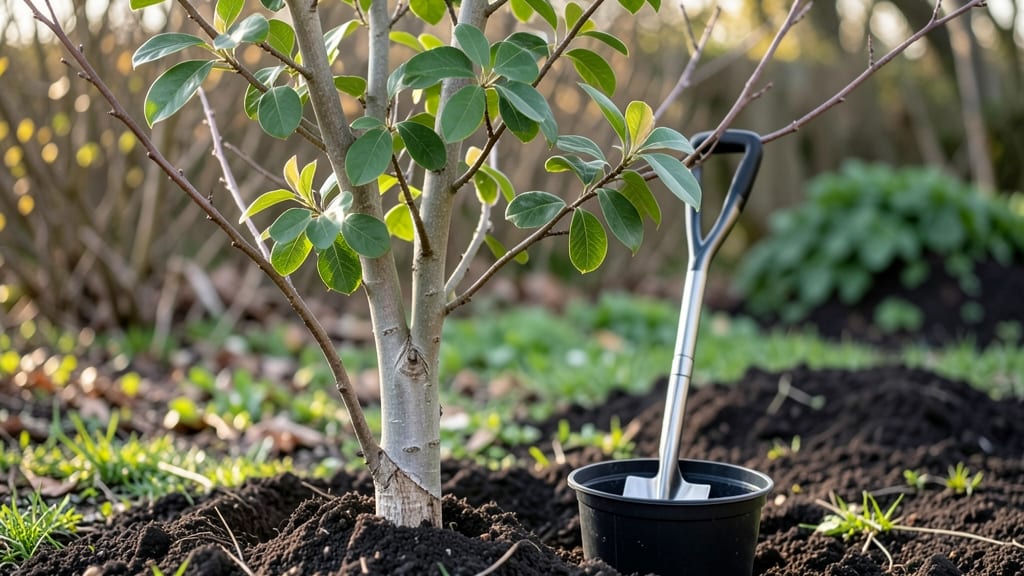
The best place to plant persimmon trees starts with full sun and well-draining soil—these trees thrive where they can soak up at least 6-8 hours of sunlight daily and won’t sit in soggy ground.
I learned this the hard way when my first persimmon struggled in heavy clay, its roots drowning instead of spreading. The right spot means fewer pests, better fruit set, and trees that live for decades.
Persimmon trees love USDA Zones 5-9, but they’re frost-sensitive when young—plant in a sheltered location if your winters dip below 10°F. The soil should be slightly acidic to neutral (pH 6.0-7.0), rich in organic matter, and free of compaction.
A raised bed or mounded soil helps if your yard drains poorly, giving roots room to breathe and grow strong.
You’ll know you’ve picked the perfect spot when the tree’s first leaves unfurl bright green and glossy, not yellow or wilted. Within a few years, you’ll be harvesting sweet, orange fruit that rivals any grocery store—no chemicals, no fuss, just pure sunshine and patience.
Here’s how to assess your site before digging.
Spacing matters too: give mature trees 40-50 feet apart to prevent root competition and improve airflow. If space is tight, dwarf varieties like ‘Meader’ work well in smaller yards, though they’ll produce fewer fruits. Now, let’s check your yard’s sunlight and soil—this is where the magic begins.
📚 In This Guide
- What you need
- Instructions
- Tips and common mistakes
- Wrapping up and next steps
What you need
- ● Persimmon tree: Choose a healthy sapling (either Diospyros virginiana for American persimmons or Diospyros kaki for Asian varieties). Select a 1-3 gallon container-grown or bare-root tree from a reputable nursery.
- ● Shovel or trowel: A garden shovel (18-24") for digging or a hand trowel (6-8") for smaller holes.
- ● Garden fork or transplant spade: Helps loosen soil and prevent root damage.
- ● Compost or well-aged manure: 5-10 lbs to enrich the planting hole.
- ○ Mulch (optional but recommended): 2-4 inches of organic mulch (e.g., wood chips, straw, or pine bark) to retain moisture and suppress weeds.
- ● Watering can or hose with a gentle spray nozzle: For thorough watering after planting.
- ● Pruning shears: Bypass pruners (6-8") for trimming damaged branches.
- ○ Soil test kit (optional but helpful): To check pH (persimmons prefer 6.0-7.0).
- ● Location: Full sun (at least 6-8 hours of direct sunlight daily).
- ● Soil: Well-draining, slightly acidic to neutral (pH 6.0-7.0). Amend heavy clay with sand or compost.
- ● Spacing: Tree Size Spacing Dwarf varieties 15-20 feet apart Standard varieties 30-40 feet apart
- ● Climate: Persimmons thrive in USDA Hardiness Zones 4-9. Avoid frost-prone areas if planting in early spring.
- ● 🌡️ Plant in early spring or fall to avoid extreme heat or cold, giving roots time to establish.
- ● ✨ Avoid planting near large trees that compete for water and nutrients.
- ● 🔥 Water deeply after planting to eliminate air pockets and encourage root growth.
How to choose the perfect location for persimmon trees
Here's everything you need to know for thriving persimmon trees.
Select a Sunny Site for Optimal Growth
Persimmon trees demand full sun exposure—at least 6-8 hours of direct sunlight daily. I've found the best locations are south-facing or southwest-facing spots where the afternoon sun can fully penetrate the canopy. Avoid areas where buildings or mature trees cast long shadows for most of the day.
Look for places where the sun reaches the ground year-round, even in winter. Young trees need this sunlight to develop strong structural roots and branches. If your yard has partial shade, choose the sunniest corner available—persimmons simply won't fruit well in low-light conditions.
Test and Prepare Well-Draining Soil
Persimmon trees despise soggy roots, so well-draining soil is non-negotiable. Before planting, dig a hole and fill it with water—if it doesn't drain within 30-60 minutes, amend the soil with 2-3 inches of compost and 1-2 inches of coarse sand mixed into the top 12 inches of soil.
Ideal soil pH for persimmons ranges between 6.0 and 7.0. Test your soil with a home kit or send a sample to your local extension office. If your soil is too acidic (below 6.0), add dolomitic lime according to package instructions. The goal is loose, fertile soil that allows excess water to drain away quickly.
Choose the Right Microclimate for Your Variety
Persimmon trees have specific temperature preferences based on their type. American persimmons thrive in USDA Zones 4-9 and can handle 20°F winters, while Asian persimmons prefer Zones 7-10 and struggle below 15°F. Check your zone and select a tree variety suited to your climate.
For colder regions, plant near a south-facing wall to create a microclimate that traps heat. In hotter climates, provide afternoon shade during peak summer months to prevent leaf scorch. Persimmons also appreciate wind protection—plant near a fence or natural windbreak to reduce stress on young trees.
Space Trees Properly for Future Growth
Persimmon trees grow 20-40 feet tall with a 15-25 foot spread, depending on the variety. Plant at least 25 feet apart from other trees or structures to allow proper airflow and sunlight penetration. Crowding leads to poor fruit production and increased disease risk.
When planting multiple trees, consider spacing them 30-40 feet apart for optimal pollination. Some persimmon varieties are self-pollinating, but cross-pollination often improves fruit set. Avoid planting near walnut trees—their roots release juglone, a chemical toxic to persimmons.
Plan for Long-Term Sunlight Access
Persimmon trees grow slowly but steadily, so plan for their mature size now. Remove any nearby vegetation that could compete for sunlight or nutrients. Prune surrounding trees or shrubs to ensure your persimmon receives unobstructed sunlight as it matures.
Consider the tree's eventual height when choosing a location—ensure overhead power lines or rooflines won't become an issue. If planting near a house, leave 10-15 feet of clearance to prevent foundation issues from spreading roots. This foresight will save you from costly relocations later.
Tips & tricks for perfect persimmon tree placement
Finding the ideal spot for your persimmon tree means balancing sunlight, soil, and long-term growth potential. These insights will help you avoid common pitfalls and set your tree up for success.
Sunlight Strategy: While the instructions emphasize 6-8 hours of direct sunlight, I've found that morning sun paired with afternoon shade in hot climates can actually improve fruit quality. In regions with intense afternoon sun (like the Southwest), consider planting on the east side of structures to capture morning light while avoiding the harshest afternoon rays. The key is maintaining that 6-8 hour minimum—just be flexible about the timing.
Soil Preparation Insight: The 30-60 minute drainage test is crucial, but I recommend going one step further: after amending with compost and sand, create a raised mound about 12 inches high where you'll plant. This elevation prevents water pooling even if your soil drains perfectly. For clay-heavy soils, mix in perlite instead of sand for better long-term drainage without compacting.
Microclimate Mastery: When creating heat-trapping microclimates in cold zones, don't just rely on south-facing walls—consider planting near dark-colored surfaces like asphalt or dark mulch beds. These absorb and radiate heat, creating an additional 5-10°F buffer during frosts. For wind protection, evergreen trees make better windbreaks than deciduous ones since they provide year-round shelter.
Pro Tips for Where To Plant Persimmon Trees
- Finding the ideal spot for your persimmon tree means balancing sunlight, soil, and long-term growth potential. These ...
- Sunlight Strategy: While the instructions emphasize 6-8 hours of direct sunlight, I've found that morning sun paired ...
- Soil Preparation Insight: The 30-60 minute drainage test is crucial, but I recommend going one step further: after am...
Frequently asked questions
Got questions about planting persimmon trees?
Here are some of the most common ones—plus straightforward answers to help you grow a thriving tree!
What’s the best climate for planting persimmon trees?
Persimmons thrive in USDA hardiness zones 5–9, where they enjoy warm summers and mild winters. They’re sensitive to frost, so avoid areas with harsh, prolonged cold snaps. If you live in a cooler zone, plant in a sheltered spot or choose cold-hardy varieties like Diospyros virginiana (American persimmon).
When is the best time to plant persimmon trees?
Plant in early spring or fall when the soil is workable but not frozen. Avoid extreme heat or drought—young trees need time to establish roots. If planting in containers, do it in spring to give the tree a full growing season to adapt. Pro tip: Water deeply after planting to reduce transplant shock!
Can I plant a persimmon tree in a container or small yard?
Persimmons need space to grow—most varieties reach 20–40 feet tall! While they can start in large containers (15+ gallons), they’re best suited for backyard planting with full sun and room to spread. Dwarf varieties like Fuyu are compact but still require at least 10 feet of space. Containers work short-term but limit long-term growth.
Why isn’t my persimmon tree bearing fruit?
Common reasons include young age (trees take 3–5 years to fruit), poor pollination (some varieties are self-pollinating, but others need cross-pollination), or improper care (like over-pruning or nutrient deficiencies). Ensure your tree gets full sun, well-draining soil, and regular watering. If it’s still struggling, check for pests or disease.
What’s the easiest persimmon variety for beginners?
Start with ‘Fuyu’ or ‘Hachiya’—both are beginner-friendly! Fuyu is non-astringent (edible firm) and cold-hardy, while Hachiya is sweeter but must soften before eating. For American persimmons, try ‘Meader’, a reliable, low-maintenance option. All three tolerate a range of soils and are disease-resistant.
Wrapping up and next steps
Planting a persimmon tree is a rewarding journey that starts with choosing the perfect sunny spot and well-draining soil. Whether you’re growing Diospyros virginiana (American persimmon) or Diospyros kaki (Asian persimmon), the right location ensures healthy growth, delicious fruit, and stunning fall foliage. 🌳
Now that you’re armed with the knowledge, take the next step: mark your garden, gather your tools, and get ready to watch your persimmon tree thrive! Happy planting—your future harvest will be worth every effort.