Pruning
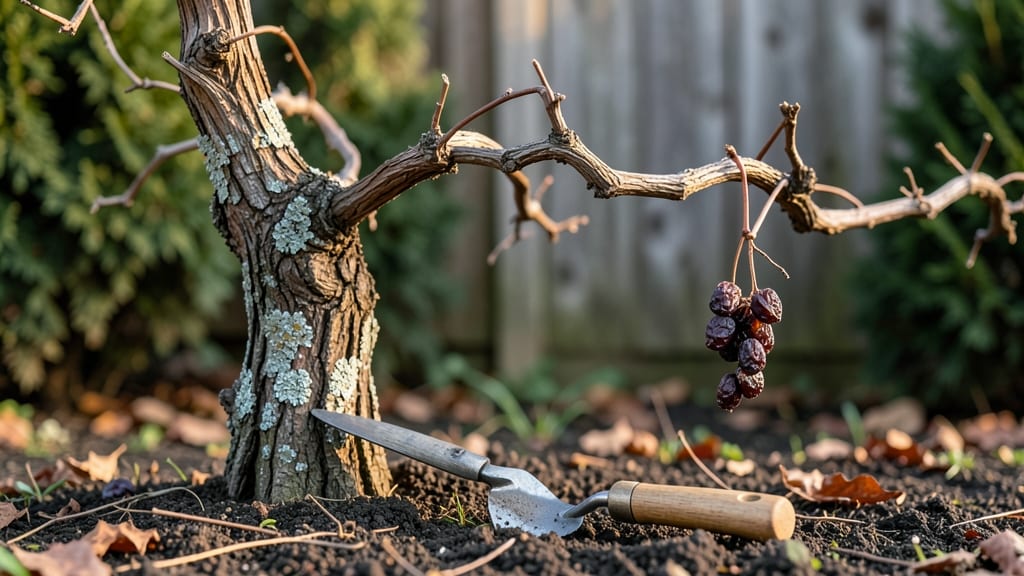
Grape trees can fool you into thinking they're dead when they're just sleeping—until you learn the difference between dormancy and true death. 🌱 I've seen vines that looked hopeless in winter burst back to life with just a little patience, while others needed a more serious wake-up call.
The key is knowing what to look for: no new buds in spring, brittle bark, or roots that crumble when tested.
Start by checking the bark for signs of life. Scratch a small section—if green layers appear beneath, the tree might still be alive. Then examine the branches: healthy ones should bend slightly without snapping.
For roots, dig a shallow trench to check for moisture and firmness; mushy or hollow roots are a bad sign. Remember, grape trees can survive harsh winters, so don't rush to judgment.
If you confirm the tree is truly dead, removing it is cleaner than trying to revive it. But if there's even a hint of life, prune back dead wood and give it one more season.
I've seen grape trees bounce back after being written off—sometimes it just takes time. The worst mistake? Giving up too soon.
Season matters too. Test in early spring when buds should be swelling, not in winter when everything looks dormant. A little detective work now saves you from replacing a tree that might've had a second chance. Grab your pruners and let's figure this out together.
📚 In This Guide
- What you need
- Instructions
- Tips and common mistakes
- Wrapping up and next steps
What you need
- ● Pruning shears or lopers: Sharp, bypass-style shears (for clean cuts) or loppers (for thicker branches). Quantity: 1 pair.
- ● Gloves: Heavy-duty, cut-resistant gloves (thorns are no joke!). Quantity: 1 pair.
- ● Disinfectant (70% isopropyl alcohol or bleach solution): To sterilize tools between cuts and prevent disease spread. Quantity: Small spray bottle or wipe.
- ● Notebook & pen: For recording observations (e.g., dead branches, bud health). Quantity: 1.
- ● Water source (hose or bucket): To rinse tools and inspect branches closely.
- ● Trowel or small shovel: For digging near the base to check roots (if needed). Quantity: 1.
- ○ Magnifying glass (optional but helpful): To inspect buds, bark, and small signs of life.
- ● Pruning sealant: A wound dressing (like tree paint) to protect large cuts from pests/disease. Quantity: Small jar.
- ● Camera or smartphone: To document the vine’s condition before/after pruning.
- ● Soil moisture meter: If you suspect root issues (e.g., drought stress).
- ● Fertilizer (balanced or grapevine-specific): For reviving struggling vines. Quantity: Follow package instructions.
How to diagnose a grape tree's vitality and attempt revival
Here's how to tell if your grapevine has truly died—and what to do next.
🌿 Step 1: Check for Any Signs of Life
Start by examining the trunk and main branches for green buds or leaf scars. Even a single dormant bud can mean the tree isn't completely dead. Scrape a small area of bark with your fingernail—if you see green tissue underneath, the tree is still alive but struggling. I've seen grapevines that look dead in winter only to burst back to life in spring.
Next, look for new shoots or suckers at the base of the trunk. These are a clear sign the tree is still alive. If you see any movement at all, even just a tiny sprout, don't give up—your grapevine might just need a little help to recover.
🌱 Step 2: Test the Tree's Root System
Dig carefully around the base of the tree, about 6-12 inches deep, to check for live roots. Healthy roots should be white or light brown and firm to the touch. If you find any roots that are still alive, the tree might be able to recover with proper care.
If the roots are dark, mushy, or smell foul, that's a sign of rot or disease. In this case, the tree is likely dead, and you'll need to remove it to prevent the issue from spreading to other plants. I've seen grapevines that looked dead above ground but had healthy roots—so always check before making a final call.
💧 Step 3: Assess Environmental Conditions
If the tree shows no signs of life, consider whether environmental factors might have contributed to its decline. Grapevines need well-draining soil, full sun, and consistent moisture. If the soil around your tree is waterlogged or compacted, that could have killed it.
Check the soil pH—grapevines prefer a range of 6.0-7.0. If the soil is too acidic or alkaline, it can stress the tree to the point of death. Amending the soil with compost or lime (depending on the pH) might help future plantings, even if this tree is gone.
✂️ Step 4: Prune and Monitor for Revival
If you're unsure whether the tree is dead, give it one last chance by pruning back any dead or diseased branches. Use clean, sharp pruners to make cuts just above a bud or lateral branch. This can encourage new growth if the tree is still alive.
After pruning, water the tree deeply and apply a balanced fertilizer to give it a boost. Keep an eye on it over the next few weeks—if you see any new growth, you've saved it. If not, it's time to remove the tree and start fresh.
🪴 Step 5: Decide Whether to Remove or Replace
If the tree is confirmed dead, dig it out carefully to avoid damaging nearby roots. Check the roots one last time—if they're completely black and mushy, the tree is gone for good. Remove all debris to prevent disease from spreading to other plants.
Before replanting, improve the soil with compost and choose a location with better drainage and sunlight. Grapevines are resilient, and with the right conditions, a new tree can thrive where the old one failed.
Tips & tricks for diagnosing a grape tree's vitality
Real talk: Even experienced gardeners can misjudge a grapevine's condition. Here's how to avoid common mistakes when checking for life.
Bud Inspection: When checking for green buds in Step 1, focus on the union point where branches meet the trunk—this is where grapevines often hide dormant buds. Use a magnifying glass if needed; some buds are smaller than a pencil eraser. I once missed a tiny bud cluster and assumed a vine was dead—it came back stronger than ever the next spring.
Root Testing: In Step 2, don't just look at the surface roots. Dig deeper at the 6-12 inch mark where the main root system lives. Healthy roots should snap when bent (not squish like overripe fruit). If you find any white or light brown roots at this depth, your tree might still have a fighting chance—just give it the right care.
Seasonal Considerations: Timing matters! For deciduous grapevines, check for signs of life in late winter or early spring when buds should be swelling. In warmer climates, you might see new growth year-round. I've seen vines that appeared dead in summer but had healthy roots—always check at the right time of year.
Pruning Technique: When pruning in Step 4, make your cuts at a 45-degree angle just above a bud or lateral branch. This creates a natural water runoff and prevents disease from entering the wound. I use sterilized pruners and clean the blades with rubbing alcohol between cuts to avoid spreading any potential infections.
Pro Tips for When Is A Grape Tree Dead
- Real talk: Even experienced gardeners can misjudge a grapevine's condition.
- Bud Inspection: When checking for green buds in Step 1, focus on the union point where branches meet the trunk—this is where grapevines often hide dormant buds.
- Root Testing: In Step 2, don't just look at the surface roots.
Frequently asked questions
Got questions about grape tree health? You’re not alone! Here are answers to common concerns about recognizing a dead grape tree—and what to do next.
How can I tell if my grapevine is just dormant or truly dead?
A grapevine may look dead in winter, but it’s usually dormant. Look for green buds in early spring or flexible canes—if they snap like dry sticks, it’s likely dead. Also, scratch the bark: if it’s moist and green underneath, the vine is alive.
What are the most obvious signs a grape tree is dead?
Watch for no new growth after spring, blackened or mushy canes, and peeling bark revealing rot. If the trunk is hollow or crumbles easily, it’s a clear sign of death. Fungal growth (like powdery mildew) on dead wood also confirms the worst.
How long can a grape tree survive without leaves before it’s considered dead?
Grapevines can lose leaves for weeks due to stress (like drought or pests) and recover. But if it’s leaf-free for an entire growing season or shows no signs of regrowth by early summer, it’s likely dead. Act fast—some vines can revive with proper care!
Can a dead grape tree come back to life, or should I replace it?
Reviving a dead grapevine is rare, but not impossible. Try pruning to healthy wood, fertilizing with compost, and ensuring proper water/drainage. If the roots are still alive (test by digging), new shoots may sprout. If not, it’s time to remove and replace—grafting a new vine onto old roots can work if done early.
What should I do with a dead grape tree’s wood?
Don’t toss it! Use dead grapevine wood for firewood (it burns well), trellises, or even art projects. If the tree was diseased, burn it or dispose of it in yard waste—never compost infected wood to avoid spreading pathogens.
Still unsure? Snap a photo of your grapevine’s symptoms and compare it to healthy examples—sometimes a second opinion helps!
Wrapping up and next steps
Determining whether your grape tree is truly dead or just struggling can feel overwhelming—but with the right knowledge, you can turn things around! 🌱 Remember: Look for signs like no new growth, persistent disease, or irreversible damage to confirm a tree’s fate.
If there’s hope, act fast with pruning, soil care, or even replanting. Even if the worst happens, every gardener learns and grows (literally!) from experience.
Now that you’re armed with insights, take action! Check your grape tree today, and if it’s still breathing, give it the care it deserves. Need a refresher? Revisit our pruning tips or consult a local expert—your vineyard’s future starts with one small step. 🍇✨