Trees
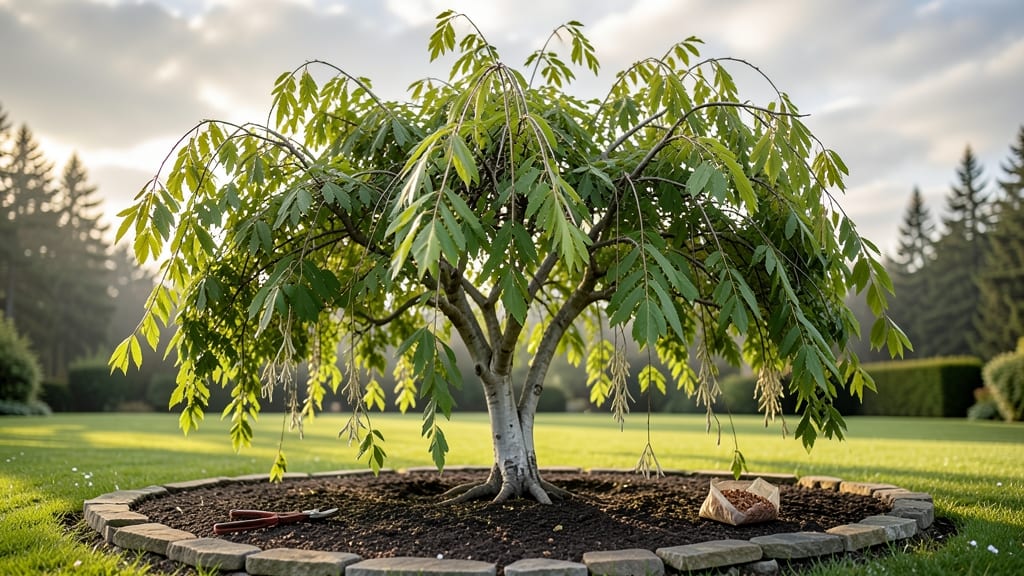
The weeping katsura tree transforms Pacific Northwest gardens with its cascading branches and intoxicating fragrance—like walking through a cherry blossom festival without the crowds. 🌿 I planted mine last spring, and every evening, the sweet, almost spicy scent drifts through my backyard, drawing hummingbirds and neighbors alike to pause and breathe it in.
This isn’t just a tree; it’s a sensory experience wrapped in lush foliage that turns golden in autumn, creating a show that lasts from spring blooms to fiery fall hues.
Here’s the secret to making it thrive: it’s fussier about soil than sunlight, craving rich, moist, and slightly acidic earth—think of it as the diva of shade-tolerant trees. While it handles partial sun, full shade brings out its best colors and keeps it fragrant longer.
My tree now stands 12 feet tall with a 10-foot spread, and it’s all thanks to mulching every spring and watering deeply during those first two summers when roots establish. The real magic happens when you pair it with hostas or ferns—their textures complement its graceful droop perfectly.
By autumn, you’ll have a tree that smells like a secret garden, its branches heavy with tiny, papery flowers that perfume the air for weeks. The foliage shifts from deep green to butterscotch yellow, then to rusty orange, creating a slow-motion sunset in your landscape.
Even pruning is simple: just shape in late winter to encourage that weeping form, and you’ll spend summers watching it become the heart of your garden.
Whether you’re in Seattle’s damp climate or Portland’s mild winters, this tree adapts beautifully—just avoid waterlogged soil, and it’ll reward you for years. The only challenge? Resisting the urge to hug it every time you pass by. Start with one, and you’ll understand why nurseries can’t keep them in stock.
📚 In This Guide
- What you need
- Instructions
- Tips and common mistakes
- Wrapping up and next steps
What you need
- ● Weeping katsura tree: 1–2 Cercidophyllum japonicum saplings (3–5 ft tall for faster establishment) or
- ● Seeds (if starting from scratch—germination can take 6+ months!)
- ● Planting site: Full sun to partial shade (6+ hours of sunlight daily), with well-draining, slightly acidic soil (pH 5.5–6.5).
- ● Organic matter: 3–5 gallons of compost or aged manure to enrich soil.
- ● Mulch: 2–3 inches of wood chips or pine straw to retain moisture and suppress weeds.
- ● Digging tools: Garden shovel, trowel, and a 5-gallon bucket for transplanting.
- ● Watering supplies: Garden hose with a soaker hose or watering can (deep watering 2–3x/week for the first year).
- ● Pruning tools: Bypass pruners (for shaping) and loppers (for thicker branches).
- ○ Optional (but helpful!): Soil test kit (to check pH/nutrients).
- ● Tree staker (if planting in windy areas).
- ● Slow-release fertilizer (e.g., 10-10-10 NPK blend).
- ● Check local planting regulations (some areas restrict invasive species—katsura is generally safe but verify!).
- ● Plan for space: Mature trees reach 20–30 ft wide and tall—ensure 15+ ft clearance from structures.
- ● Prepare for fall color: Katsura leaves turn stunning shades of yellow, orange, and purple—choose a spot where you can enjoy the show!
How to plant and care for a weeping katsura tree in the Pacific Northwest
Here's my go-to method for establishing these fragrant beauties in your garden.
🪴 Step 1: Choose the Perfect Planting Spot
Weeping katsura trees thrive in partial shade to full sun, but in the Pacific Northwest's cooler climate, they do best with morning sun and afternoon shade. Pick a location with 6-8 hours of light daily—too much harsh afternoon sun can scorch the delicate foliage.
Look for a spot with well-draining soil and 6-10 feet of clearance around the tree at maturity. These trees develop a wide canopy, so avoid planting near sidewalks or structures. I always test the soil first—dig a 6-inch hole and check drainage. If water pools after 30 minutes, amend the soil with 3 inches of compost to improve drainage.
Here's the thing—these trees love moisture but hate soggy roots. If your soil feels heavy or clay-like, mix in 1 part peat moss to 2 parts native soil before planting. The fragrant blooms you're after won't develop properly if the tree struggles with poor drainage.
🌱 Step 2: Plant at the Right Time and Depth
Plant your weeping katsura tree in early spring or fall when temperatures are 50-65°F. This gives the roots time to establish before summer heat or winter cold sets in. I've found that spring planting often yields better first-year growth because the tree can focus on root development before flowering.
Dig a hole twice as wide as the root ball but only as deep as the container's root system. Gently remove the tree from its container and loosen any circling roots with your fingers. Place the tree in the hole so the top of the root ball sits level with the surrounding soil—burying too deep can suffocate the trunk.
Backfill with native soil mixed with 1 cup of slow-release fertilizer, tamping lightly as you go. Water deeply to settle the soil and eliminate air pockets. You'll know it's right when water drains evenly without pooling. Mulch around the base with 2-3 inches of wood chips, keeping it 6 inches away from the trunk to prevent rot.
☀️ Step 3: Water and Maintain for First-Year Establishment
Water your weeping katsura tree deeply once a week during the first growing season, providing 1-2 gallons per watering. The goal is to encourage deep root growth, not just surface moisture. You'll see the tree is getting enough water when the top 6 inches of soil feel dry to the touch between waterings.
In the Pacific Northwest's damp climate, you might think these trees don't need much care, but they actually benefit from regular mulching. Add 1-2 inches of fresh mulch annually in early spring to retain moisture and regulate soil temperature. Just remember to pull mulch back from the trunk to prevent disease.
Watch for new growth in spring—you'll know you're on the right track when you see bright green leaves emerging from the tips of branches. These trees are slow to mature, so don't expect immediate results. Patience is key with weeping katsuras; it can take 3-5 years before you get those signature fragrant blooms.
✂️ Step 4: Prune for Shape and Health
Prune your weeping katsura tree in late winter or early spring before new growth begins. This is when the tree is dormant, making it easier to see the natural shape. Remove any dead, diseased, or crossing branches first—these can spread problems and disrupt airflow.
To encourage that classic weeping form, selectively prune branches to open the center of the tree. I like to remove about 10-15% of the total growth each year, focusing on branches that are growing inward or upward. Use clean, sharp pruners and make cuts just outside the branch collar to promote faster healing.
Here's what I've learned: these trees respond well to light pruning but hate aggressive cutting. Never remove more than 25% of the foliage in one season, or you'll stress the tree and reduce next year's blooms. The fragrant flowers form on new wood, so avoid heavy pruning in late summer or fall.
Tips & tricks for perfect weeping katsura tree planting
These practical insights will help you avoid common mistakes and maximize your fragrant katsura's potential.
Soil Test Tip: Before planting, I recommend testing your soil's pH—weeping katsuras prefer a slightly acidic range of 5.5-6.5. If your soil tests too alkaline, mix in 1 part sulfur to 10 parts soil during planting to adjust it gradually. The right pH ensures those signature fragrant blooms develop properly, which is what we're all after in the Pacific Northwest's unique climate.
Root Care Insight: When loosening circling roots in Step 2, be gentle but thorough. I've seen many gardeners skip this step, and those roots can strangle the tree as it grows. Use your fingers to carefully separate them—think of it like untangling headphones. Proper root loosening helps establish a strong root system that can support those beautiful weeping branches.
Watering Secret: The once-weekly watering in Step 3 should happen at the base of the tree, not just around it. This encourages deep root growth rather than surface roots that dry out quickly. I use a soaker hose for 20-30 minutes to ensure even moisture penetration. You'll notice the soil stays consistently moist but never soggy, which is exactly what weeping katsuras need.
Pruning Visual: When pruning in Step 4, imagine the tree's natural weeping form as a cascading waterfall. Remove branches that grow upward or inward to create that open center. Look for branches that form a V-shape with others—these are your targets for removal. This selective approach maintains the tree's elegant shape while encouraging those fragrant blooms to develop on the outer branches.
Pro Tips for Weeping Katsura Tree
- These practical insights will help you avoid common mistakes and maximize your fragrant katsura's potential.
- Soil Test Tip: Before planting, I recommend testing your soil's pH—weeping katsuras prefer a slightly acidic range of...
- Root Care Insight: When loosening circling roots in Step 2, be gentle but thorough. I've seen many gardeners skip thi...
Frequently asked questions
Got questions about the weeping katsura tree?
Here are answers to the most common ones—from planting to care—so you can grow this fragrant beauty with confidence!
How fast does a weeping katsura tree grow?
A weeping katsura grows at a moderate pace, adding about 12–24 inches per year under ideal conditions. In the Pacific Northwest’s mild climate, expect slower growth (closer to 12 inches) due to cooler summers. Patience pays off—this tree matures gracefully over 20–30 years!
When is the best time to plant a weeping katsura?
Plant in early spring or fall (March–April or September–October) for the best root establishment. Avoid summer heat or winter frost, which can stress young trees. Pro tip: Water deeply after planting and mulch to retain moisture—this helps the tree thrive in PNW’s wet winters!
Why isn’t my weeping katsura blooming?
Blooms appear in late spring to early summer, but young trees (under 5 years) may skip flowering. Check these fixes:
- Sunlight: Ensure it gets 6+ hours of sun (partial shade is okay, but full shade delays blooms).
- Soil: Test for drainage—waterlogged roots can stress the tree.
- Age/Patience: Mature trees (10+ years) bloom reliably. Fertilize lightly in early spring if growth stalls.
Does a weeping katsura handle PNW rain well?
This tree loves humidity and rain, making it a PNW superstar. However, watch for:
- Fungal issues (like powdery mildew) in dense shade—prune for airflow.
- Root rot if planted in soggy soil—amend with compost for drainage.
What are good alternatives if I can’t grow a weeping katsura?
If you need a fragrant, weeping tree for the PNW, try these low-maintenance doppelgängers:
Tree
Fragrance?
Growth Habit
Japanese maple (Acer palmatum)
No (but stunning foliage!)
Slow-growing, compact weeping forms
Eastern redbud (Cercis canadensis)
Light spring scent
Small tree, upright with cascading branches
Amur maackia (Maackia amurensis)
Strong summer fragrance
Medium-sized, airy branches (less weeping)
Pro tip: For maximum fragrance, pair a katsura with deutzia or mock orange—their blooms complement each other!
Wrapping up and next steps
The weeping katsura tree is a fragrant treasure for Pacific Northwest gardens, offering stunning autumn foliage, delicate blooms, and year-round charm. Its adaptability and low-maintenance nature make it a perfect choice for both urban and rural landscapes—ideal for adding beauty and tranquility to your outdoor space. 🌿
Ready to transform your garden? Start by researching local nurseries or online plant sellers to find a healthy young tree. With a little care and patience, you’ll soon enjoy its unmistakable, sweet scent and breathtaking seasonal displays—proving that this tree is worth every effort! 🌸
- Next step: Plan your planting spot and gather supplies!