
Pruning
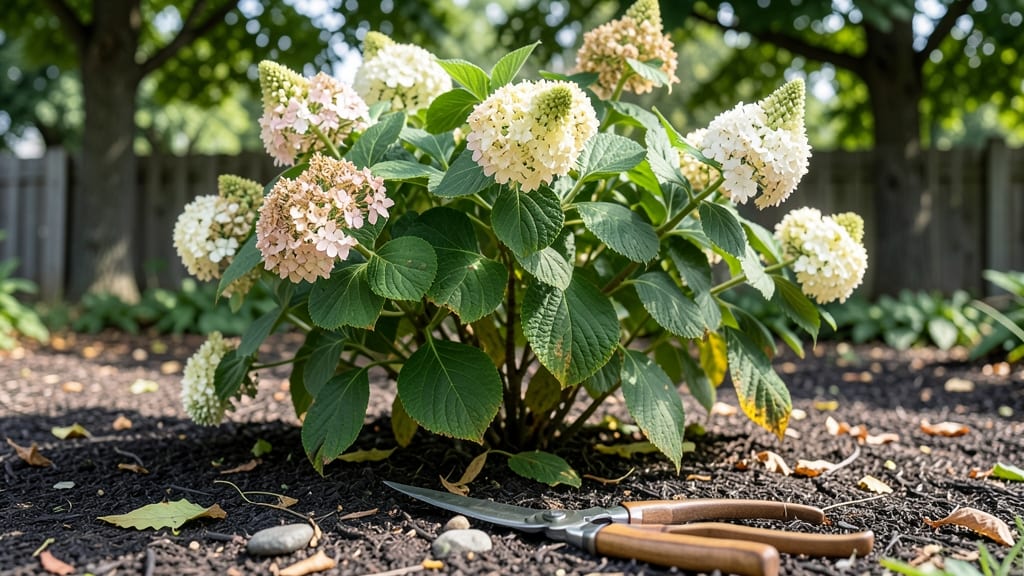
Trimming hydrangea trees isn't just about cutting back—it's the secret to those jaw-dropping blooms you've always wanted. I learned this the hard way after my first overzealous pruning session left my oakleaf hydrangea looking like a sad, tangled mess.
The right cuts at the right time make all the difference, and once you master it, your plant will reward you with vibrant blooms from spring to fall.
Here's the thing—different hydrangea types need different approaches. Oakleaf and bigleaf varieties bloom on old wood, so you prune lightly in late winter, while panicle types thrive with a harder cut in early spring.
Most people mess up by pruning at the wrong time or using dull shears, which tears instead of cuts cleanly. I'll show you exactly what to do, when, and why it matters for each type.
You'll end up with a hydrangea tree that looks like it belongs in a botanical garden, not your backyard. The branches will have perfect shape, the blooms will be fuller, and the plant will stay healthier for years.
Plus, you'll avoid the heartbreak of sparse flowers or dead wood that ruins the look. Ready to transform your hydrangea from "meh" to "wow"?
This works for hydrangea trees in containers, along fences, or as standalone statement plants. The same principles apply whether you're dealing with a 3-foot shrub or a 10-foot tree—just adjust the scale. Let's get those shears sharp and those branches looking intentional!
📚 In This Guide
- What you need
- Instructions
- Tips and common mistakes
- Wrapping up and next steps
What you need
- ● Pruning shears: Sharp, bypass-style shears (4–6 inches) for clean cuts on small branches.
- ● Loppers: Heavy-duty, bypass or anvil-style loppers (8–10 inches) for thicker branches (½–1½ inches).
- ● Pruning saw: A curved-tooth handsaw for branches thicker than 1½ inches.
- ● Gloves: Sturdy, gardening gloves (nitrile-coated for grip and protection).
- ● Disinfectant: Rubbing alcohol (70%+) or a pruning sealant to sterilize tools between cuts.
- ○ Extension pole: Optional but helpful for high branches (attachable to loppers or shears).
- ● Bucket or bag: A large, lidded bucket or heavy-duty trash bag for pruning debris.
- ● Ladder: A stable, 3-section ladder (if your tree is over 6 feet tall).
- ● Hand pruners with a magnifying lens: For precision on tiny branches.
- ● Tree tie or zip tie: To support weak branches post-pruning.
- ● Garden twine: For securing larger branches temporarily.
- ● Spray bottle with water: To keep tools cool and dust-free.
- ● Notebook & pen: To jot down notes on cuts or growth patterns.
Step-by-step guide to trimming hydrangea trees for year-round blooms
Here’s how I keep my hydrangeas lush and blooming—no guesswork, just proven timing and technique.
✂️ Step 1: Identify Your Hydrangea Type and Bloom Time
First, figure out if your hydrangea is a spring bloomer (like Hydrangea paniculata) or a summer bloomer (like Hydrangea macrophylla). Spring bloomers produce buds on old wood, while summer bloomers form buds on new growth. I always check the flower clusters—if they bloom in late spring/early summer, they’re old-wood types.
This matters because pruning at the wrong time can mean no flowers. Summer bloomers can handle aggressive cuts in late winter, but spring bloomers need gentle shaping after they finish blooming. If you’re unsure, wait until after the first flush of flowers to prune—you can’t go wrong then.
⏰ Step 2: Time Your Pruning for Maximum Blooms
For spring bloomers, prune right after they finish flowering—usually late summer to early fall. This gives the plant time to set next year’s buds on old wood. I wait until the blooms start fading and new growth slows down. For summer bloomers, prune in late winter to early spring before new shoots emerge.
Never prune in fall for spring bloomers—you’ll cut off next year’s flowers. And avoid pruning in extreme heat or cold. Early morning is ideal—cooler temps mean less stress on the plant. If you’re unsure, mark your calendar now: spring bloomers get their haircut in fall, summer bloomers in winter.
🌿 Step 3: Prune for Shape and Airflow
Start by removing dead, diseased, or crossing branches—these compete for energy and block airflow. Cut back to the main stem or a healthy outward-facing bud. Use clean, sharp pruners to avoid tearing the bark. I like to step back every few cuts to check the shape—hydrangeas look best with a natural, open structure.
For spring bloomers, trim back only the oldest stems by about one-third to encourage new growth. For summer bloomers, you can be bolder—cut stems back to 4-6 inches from the ground. The goal is to keep the center open so sunlight reaches all parts of the plant. If you see thick, woody stems, thin them out to rejuvenate the plant.
✂️ Step 4: Finish with Light Cleanup and Aftercare
After shaping, make one final pass to remove any small, weak growth or suckers at the base. These drain energy from the main plant. Wipe your pruners with rubbing alcohol between cuts to prevent spreading disease. Once done, water deeply to help the plant recover—hydrangeas love moisture, especially after pruning.
Apply a balanced fertilizer (like 10-10-10) in early spring to support new growth. Mulch around the base with 2-3 inches of organic mulch to retain moisture and regulate soil temperature. Avoid over-fertilizing—hydrangeas prefer slightly acidic soil, so a soil test can help if blooms fade to green.
Tips & tricks for perfect hydrangea trimming
These simple strategies will help you avoid common mistakes and keep your hydrangeas thriving all year.
Type Matters: The difference between spring and summer bloomers is everything. I’ve learned the hard way—pruning a spring bloomer in winter means no flowers next year. Always check your plant’s bloom time first. If you’re unsure, wait until after the first flush of flowers to prune, and you can’t go wrong. This simple step saves hours of frustration later.
Timing Secret: Late summer to early fall is prime time for spring bloomers, while late winter to early spring works for summer bloomers. I mark these dates on my calendar each year to avoid missing the window. Extreme heat or cold can stress your plant, so early morning is ideal. If you’re pruning in summer, do it on a cool, cloudy day to minimize shock.
Pruning Precision: When shaping your hydrangea, always cut back to a healthy outward-facing bud. This encourages new growth in the right direction. For spring bloomers, trim only the oldest stems by about one-third—never more. Summer bloomers can handle bolder cuts back to 4-6 inches. I step back every few cuts to check the shape, ensuring the center stays open for sunlight.
Aftercare Wins: After pruning, water deeply to help your hydrangea recover. Apply a balanced fertilizer like 10-10-10 in early spring to support new growth, and mulch with 2-3 inches of organic material to retain moisture. I’ve seen plants struggle when skipped—this step makes all the difference.
Pro Tips for Trimming Hydrangea Tree
- These simple strategies will help you avoid common mistakes and keep your hydrangeas thriving all year.
- Type Matters: The difference between spring and summer bloomers is everything.
- Timing Secret: Late summer to early fall is prime time for spring bloomers, while late winter to early spring works for summer bloomers.
Frequently asked questions
Got questions about trimming your hydrangea trees? You’re not alone!
Here are some of the most common queries—and their straightforward answers—to help you keep those blooms looking their best.
When is the best time to trim hydrangea trees?
The ideal timing depends on your hydrangea type. For bigleaf and oakleaf varieties, prune right after flowering (late summer to early fall). Panicle hydrangeas can handle pruning in late winter or early spring. Always avoid heavy pruning in late fall—it removes next year’s flower buds!
Can I trim my hydrangea tree in winter?
Yes, but with caution! Only prune panicle hydrangeas in winter (late February to early March). For other types, winter pruning risks damaging dormant buds. If you must trim, wait until after the last frost and avoid cutting back more than 1/3 of the plant at once.
What if I cut my hydrangea too much? Will it die?
Over-pruning can stress your hydrangea, but it won’t kill it. If you’ve trimmed too aggressively, focus on new growth next season. Avoid cutting back to bare wood—always leave at least 3–4 healthy buds per stem. Water deeply and fertilize lightly to help recovery.
Do I need special tools to trim hydrangea trees?
Not necessarily! Basic hand pruners work for small branches, but for thicker stems, use bypass pruners or a pruning saw. Disinfect tools with rubbing alcohol between cuts to prevent disease. A ladder or pole pruner may help if your hydrangea is tall or bushy.
What if my hydrangea isn’t blooming after trimming?
Lack of blooms often means you pruned at the wrong time or cut back too much. For bigleaf hydrangeas, avoid heavy pruning—focus on shaping. If blooms are sparse, check for over-fertilization (too much nitrogen) or underwatering. Deadheading spent flowers can encourage new growth!
Still stumped? Drop your hydrangea trimming dilemmas in the comments—we’re happy to help!
Wrapping up and next steps
Trimming your hydrangea tree doesn’t have to be intimidating—it’s all about timing, technique, and a little patience! 🌿 Whether you’re pruning for shape, health, or those stunning blooms, the key is to work with the plant’s natural rhythm and avoid overdoing it.
With the right tools, a sharp eye, and seasonal care, your hydrangea will reward you with lush foliage and vibrant flowers year after year.
Now that you’re armed with the know-how, grab those shears and get pruning! 🌸 Start small, observe how your tree responds, and soon you’ll be a hydrangea-trimming pro. Happy gardening!