
Pruning
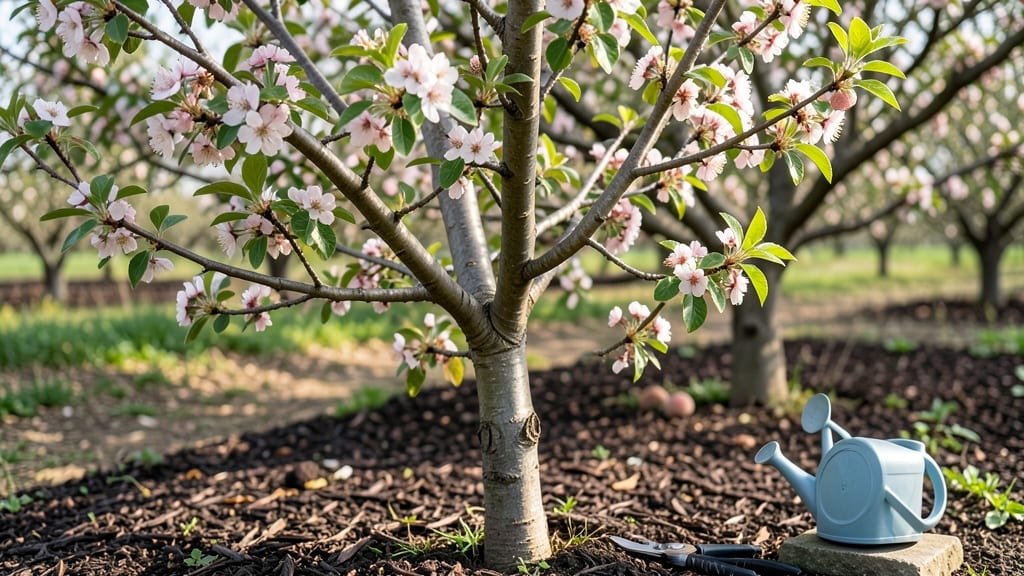
Late-winter peach tree pruning is the secret weapon for next year’s harvest—when you cut now, you’re shaping the branches that will hold this summer’s fruit. 🌱 I’ve pruned my peach tree for five years, and the difference between a light trim and a strategic cut is the difference between a few dozen peaches and a tree heavy enough to bend the branches.
The key is timing: wait until the tree is dormant but before buds swell, usually in February or early March in most climates.
You’ll need sharp pruners, a ladder (for taller trees), and a clear day to see the structure. Start by removing dead, crossing, or diseased branches first—they’re the easy wins. Then focus on thinning out crowded branches to improve airflow, which cuts down on fungal diseases.
My rule of thumb? Aim for an open center with sunlight reaching the inner branches. This isn’t about hacking back growth—it’s about sculpting the tree’s future.
By the time summer rolls around, you’ll see the payoff: stronger limbs, more sunlight reaching the fruit, and peaches that ripen evenly instead of hiding in the shade. The tree will also produce fewer but larger, sweeter peaches—no more bitter, undersized fruit from overcrowded branches.
Think of it as an investment in next year’s harvest, where every cut now means more flavor and fewer pests later.
Works for both young trees and established ones, though younger trees need more aggressive shaping. If you’re in a colder zone, wait until after the last frost before pruning—peach trees are frost-sensitive, and new cuts can invite disease if the weather turns cold again.
Here’s how to do it right the first time.
📚 In This Guide
- What you need
- Instructions
- Tips and common mistakes
- Wrapping up and next steps
What you need
- ● Pruning shears: Sharp, bypass-style shears (5–8" blades) for clean cuts on small branches. Dull blades crush wood—ouch!
- ● Loppers: 1 pair (8–12" blades) for thicker branches (½–1.5" diameter). Look for ratcheting or bypass designs.
- ● Pruning saw: 1 handheld saw (10–12" blade) for branches too thick for loppers (Curved blades work best.
- ● Rubbing alcohol (70%+) or bleach solution: 1 bottle or spray bottle (1:9 bleach-water ratio) to sterilize tools between cuts. Prevents disease spread!
- ● Gloves: 1 pair of cut-resistant gardening gloves (e.g., leather or heavy-duty fabric). Thorns are no joke!
- ● Ladder or step stool: 1 sturdy option (4–6 ft tall) to reach higher branches safely. Never stand on the tree!
- ● Disposable bags or bucket: 1 for collecting pruned branches. Keep your workspace tidy!
- ● Pruning sealant: 1 small tube (e.g., tree wound paint) for cuts larger than ½". Controversial but can help large wounds heal faster.
- ● Marking twine or flags: 1 roll of twine + small flags to tag branches for removal. Useful for complex pruning plans.
- ● Safety glasses: 1 pair to protect eyes from debris. Better safe than sorry!
- ● Notebook & pencil: 1 to sketch your tree’s structure before/after pruning. Great for tracking progress!
- ● ✅ Knowledge of peach tree basics: Familiarize yourself with central leader vs. open-center shapes and peach tree growth habits. Watch a few YouTube tutorials if you’re unsure!
- ● ✅ Weather check: Prune on a dry, calm day with temps between 40–60°F (4–15°C). Avoid windy or rainy conditions.
- ● ✅ Tree health assessment: Inspect your tree for diseased or dead branches before starting. Prune out anything suspicious first!
How to prune a peach tree for maximum fruit production
Late-winter shaping sets the stage for a bountiful harvest—here’s how to do it right.
✂️ Step 1: Remove Dead, Diseased, or Crossing Branches
Start by inspecting your tree for any branches that are completely dead (no green under the bark when scraped), diseased (black spots, oozing sap), or crossing at sharp angles. These are your first targets—they compete with healthy growth and invite pests. Use sharp pruners to make clean cuts just outside the branch collar, where the branch meets the trunk. Avoid leaving stubs, as they slow healing and attract decay.
Here’s the thing—peach trees are prone to silver leaf disease, so if you spot any branches with silvery sheen or curled leaves, remove them immediately and sterilize your tools with rubbing alcohol. I always prune these out first because they spread fast. Watch for new growth emerging from the branch collar after cutting—this is your signal the tree is responding well to the removal.
✂️ Step 2: Thin Out Overcrowded Areas for Better Airflow
Peach trees thrive when sunlight and air circulate freely through the canopy. Look for clusters of branches growing too close together—these create shaded, humid spots that breed fungal diseases. Your goal is to open up the center of the tree by removing one-third of the oldest, thickest branches in each cluster. Prioritize branches that are rubbing against others or growing inward.
I like to step back every few cuts to visualize the tree’s shape. You want a balanced, vase-like form with a strong central leader (main trunk). If a branch is too large to cut cleanly with pruners, use a handsaw and make the cut flush with the trunk. The tree will seal the wound over time, but the cleaner the cut, the faster it heals.
☀️ Step 3: Encourage Fruit Production with Strategic Cuts
Peaches form fruit on one-year-old wood, so you’ll want to prune back some of last year’s growth to stimulate new, vigorous shoots. Focus on cutting back last year’s fruit-bearing branches by about one-third—this encourages the tree to produce more flowering wood for next season. Avoid heavy pruning on young trees (under 5 years old), as they need all their energy to establish roots and trunk strength.
Look for branches that produced fruit last year but are now woody and overgrown. Cut these back to a strong outward-facing bud or lateral branch. This ensures the new growth will angle outward, improving sunlight exposure for future fruit. Real talk: If you see a branch growing straight up from a horizontal branch, cut it back—it’s competing with the main structure and won’t bear well.
⏰ Step 4: Clean Up and Protect the Tree
After pruning, rake up and dispose of all debris from the tree and surrounding area—this removes hiding spots for pests and disease spores. Sterilize your pruners with a 10% bleach solution (1 part bleach to 9 parts water) to prevent spreading pathogens. If you’re dealing with a heavily infected tree, consider sealing larger wounds with pruning sealant, though many experts argue fresh cuts don’t need it if done properly.
Finally, give your tree a deep watering to help it recover from the stress of pruning. The roots will need moisture to support new growth, especially if you’ve made significant cuts. Wait until late winter, just before buds swell, to prune—this timing ensures the tree has time to heal before spring’s growth surge.
Tips & tricks for perfect peach tree pruning
A few strategic cuts now will transform your tree's productivity next season—here's how to avoid common mistakes while maximizing fruit potential.
Tool Prep is Everything: Before you begin, sharpen your pruners and clean them with rubbing alcohol—this prevents spreading diseases like silver leaf between cuts. I always test my tools by making a clean cut through a small twig first. Dull blades tear bark and create jagged wounds that heal poorly, inviting infections. Confession: I skipped this step for years and wondered why my peach tree never fully recovered from pruning.
Visualize the Final Shape: Step back every 5-10 minutes to check your progress against the ideal vase-like form. You're aiming for a strong central leader with branches spaced evenly around it. Look for the "golden triangle" rule—branches should form a triangle shape when viewed from above, with each branch angled outward. This creates maximum sunlight exposure for fruit development. I learned this the hard way after pruning a branch that ended up shading half my tree!
Bud Selection Matters: When cutting back branches in Step 3, always leave a strong, outward-facing bud just above your cut. This ensures new growth will angle outward rather than inward. Look for buds that are plump and slightly pointed—they're more likely to produce fruit. Avoid cutting back to a stub or a weak, inward-facing bud, as this creates crowded growth patterns that reduce fruit quality.
Seasonal Timing Secret: The late-winter timing mentioned in Step 4 is critical—you want to prune just before buds begin to swell (usually 2-4 weeks before last frost). This gives the tree time to heal before spring's growth surge. If you prune too early, the tree may produce weak, late-season growth. If you wait too long, you risk damaging emerging buds. I mark my calendar each year to avoid this window entirely.
Pro Tips for The Peach Tree
- A few strategic cuts now will transform your tree's productivity next season—here's how to avoid common mistakes while maximizing fruit potential.
- Tool Prep is Everything: Before you begin, sharpen your pruners and clean them with rubbing alcohol—this prevents spreading diseases like silver leaf between cuts.
- Visualize the Final Shape: Step back every 5-10 minutes to check your progress against the ideal vase-like form.
Frequently asked questions
Got questions about pruning your peach tree for a bountiful harvest? Here are some common concerns—and expert answers—to help you get it right!
When is the exact best time to prune a peach tree in late winter?
Prune your peach tree in late winter (just before buds swell but before new growth starts)—typically between February and early March in most U.S. growing zones (3–9). Avoid pruning in fall or during extreme cold, as it can stress the tree and invite disease. Pro tip: Check your local frost dates for precision!
How much can I cut off my peach tree without hurting it?
Remove 20–30% of the tree’s total canopy in one session, focusing on dead, diseased, or crossing branches first. Over-pruning (beyond 30%) can stunt growth or reduce fruit production. For young trees, limit cuts to 1–2 feet per year to encourage strong structure.
Why are my peach tree’s branches bleeding sap after pruning? Is this normal?
Yes! Peach trees (and other stone fruits) often "bleed" clear or yellowish sap after pruning—it’s normal and harmless. The tree seals cuts within a few weeks. To minimize mess, prune on a dry day and avoid heavy cuts during warm spells, which can worsen sap flow.
Should I sterilize my pruning tools between cuts?
Absolutely!
Disinfect tools with 70% rubbing alcohol or a 10% bleach solution (1 part bleach to 9 parts water) between cuts to prevent spreading bacterial canker or fungal diseases. Peach trees are especially vulnerable—don’t skip this step!
Can I prune a peach tree in containers or small yards?
Yes, but adjust your approach. Dwarf or semi-dwarf varieties (like ‘Bonanza’ or ‘Redhaven’) thrive in containers or tight spaces. Prune aggressively to open the center and improve airflow, and avoid overcrowding roots. If space is ultra-limited, consider espalier training to grow the tree flat against a fence!
Will pruning now affect this year’s peach harvest?
No—late-winter pruning sets up next year’s fruit, not this season’s. However, if you prune too late (after buds break), you may reduce current-year yields. Focus on structure and health, and your tree will reward you with more (and bigger!) peaches in summer 2025.
Wrapping up and next steps
Pruning your peach tree in late winter isn’t just about shaping—it’s an investment in next year’s harvest! 🌱 By following the right techniques, you’ll encourage stronger growth, better airflow, and sweeter fruit. Remember, patience and precision are key, so take your time and trust the process.
Ready to give your peach tree the care it deserves? Grab your pruners and get started—your future fruit will thank you! For extra confidence, watch a quick tutorial or consult a local gardening expert before diving in.