
Blooming
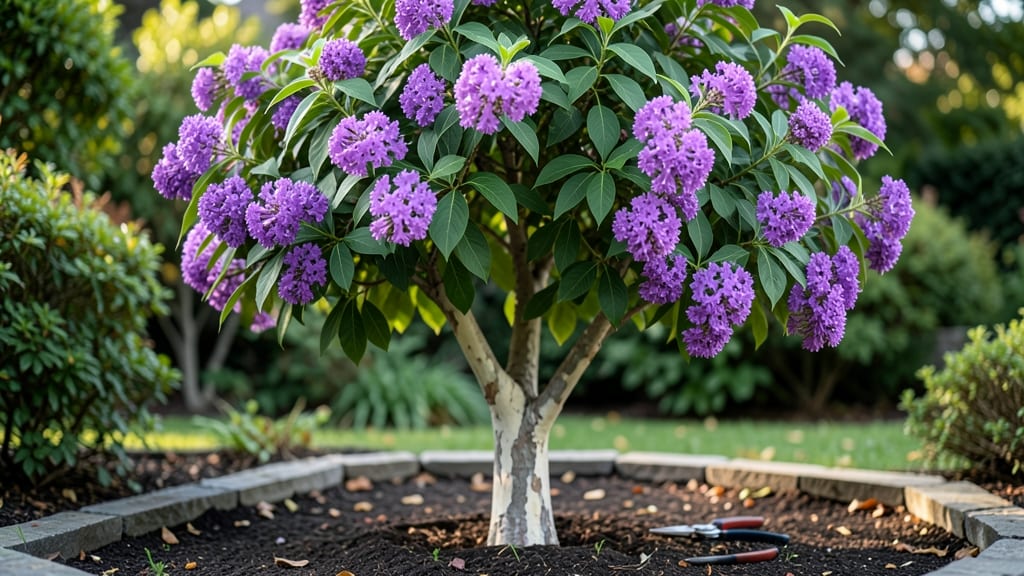
The springtime purple flowering tree’s first blush of lavender magic turns a yard into a postcard—my redbud’s delicate clusters still make neighbors stop and stare. 🌸 ask which tree it is—every single year.
The secret isn’t just picking the right species, though. It’s knowing when to prune, how much sun each variety craves, and the little tricks that keep those blooms coming back bigger every season.
Most gardeners overlook the redbud’s early spring bloom, but it’s the first major color show in my zone 6 garden. Wisteria’s purple cascades need a sturdy trellis, while lilacs thrive in full sun with minimal fuss.
The key is matching the tree to your space: dwarf varieties for small yards, weeping forms for dramatic focal points. All of them reward patience with years of effortless beauty—once you get the planting right.
You’ll end up with a canopy that feels like a living painting: soft purple against fresh green leaves, bees buzzing through the branches, and that unmistakable springtime fragrance. The best part?
These trees handle summer heat and fall color changes with grace, so the investment pays off all year. Let’s pick the perfect one for your garden and get it thriving.
Whether you’re working with a sunny border or a shady corner, these trees adapt beautifully. Just watch for late frosts—some varieties need a little extra protection—and you’ll have blooms that steal the show every spring. Ready to transform your landscape?
📚 In This Guide
- What you need
- Instructions
- Tips and common mistakes
- Wrapping up and next steps
What you need
- ● Purple flowering tree: Choose a 1- to 3-gallon container-grown sapling (e.g., Cercis canadensis 'Royal White', Prunus 'Kanzan', or Lagerstroemia).
- ● High-quality potting soil: 50 lbs of well-draining, organic-rich soil (or a mix of topsoil + compost for in-ground planting).
- ● Organic fertilizer: Slow-release 10-10-10 or a balanced bloom booster (e.g., Miracle-Gro Shake 'n Feed).
- ● Mulch: 2-3 inches of wood chips or shredded bark to retain moisture.
- ● Garden tools: Trowel, pruning shears, and a shovel (or a 6-inch hole digger for smaller pots).
- ● Watering can or hose: With a gentle spray nozzle for post-planting care.
- ● Gloves & knee pads: For comfort during planting.
- ○ Optional but helpful: Tree stakes + ties (for young, top-heavy trees).
- ● Drip irrigation system (to automate watering).
- ● Soil pH test kit (ideal range: 6.0–7.0 for most purple bloomers).
Step-by-step guide to planting and caring for a purple flowering tree
Here's how to give your yard a stunning purple springtime show—without the guesswork.
🪴 Step 1: Choose the Right Spot and Prepare the Soil
Purple flowering trees like clethra or lilac thrive in partial shade to full sun, but most varieties bloom best with at least 4-6 hours of morning sunlight. Avoid deep shade spots—they'll grow leggy and produce fewer flowers. Test your location by observing how sunlight moves across the yard in spring.
Dig a hole twice as wide as the tree's root ball but only as deep as the container it came in. Loosen the soil at the bottom of the hole with your hands or a trowel—this prevents root circling. If your soil drains poorly (check by digging a small test hole elsewhere and filling it with water), mix in 2 inches of compost to improve texture and fertility.
🌱 Step 2: Plant at the Right Time and Depth
Plant your purple flowering tree in early spring, just as buds begin to swell but before leaves emerge. This timing gives roots time to establish before summer heat. Handle the root ball gently—if it's root-bound, use your fingers to tease apart the edges before placing it in the hole.
Position the tree so the top of the root ball sits 1-2 inches above ground level. This prevents water from pooling around the trunk. Backfill with native soil (not amended soil) and tamp lightly with your hands to remove air pockets. Water deeply right after planting—1-2 gallons—to settle the soil and eliminate gaps.
☀️ Step 3: Water and Mulch for Strong Growth
Keep the soil evenly moist for the first 6-8 weeks after planting. Water deeply 2-3 times per week until new growth appears—you'll know it's enough when water drains through to 6 inches deep. Overwatering causes rot, so check moisture by sticking your finger 2 inches into the soil; if it's dry, water again.
Spread 2-3 inches of mulch (like wood chips) over the root zone, keeping it 6 inches away from the trunk to prevent rot. Mulch conserves moisture and regulates soil temperature, which is especially helpful during hot springs. Replenish mulch annually as it breaks down—this keeps roots cool and reduces weeds.
✂️ Step 4: Prune for Health and Better Blooms
Prune your tree right after flowering (late spring) to remove dead, crossing, or weak branches. Use clean, sharp pruners to make cuts at a 45-degree angle just above a bud or branch collar. Avoid heavy pruning—never remove more than 25% of the canopy in one season, or you'll sacrifice next year's blooms.
Watch for suckers (shoots growing from the base) and remove them promptly—they drain energy from flowering. If your tree develops leggy growth (long, weak stems), it needs more light. Move it to a sunnier spot or thin nearby branches to improve airflow and sunlight penetration.
Tips & tricks for perfect purple flowering tree planting
Real talk: The difference between a thriving purple flowering tree and one that struggles often comes down to these small details that most gardeners overlook.
Sunlight Strategy: Those 4-6 hours of morning sunlight are non-negotiable for vibrant blooms, but here's what nobody tells you—late afternoon sun can actually scorch delicate leaves. I've seen trees planted facing west wither by summer. If your yard only gets afternoon sun, consider planting near a northern-facing wall that provides reflected light instead of direct exposure.
Soil Prep Secret: Before digging that hole twice as wide as the root ball, test your soil's drainage by filling a small test hole with water. If it takes more than 30 minutes to drain completely, you're dealing with clay soil. In this case, mix that 2 inches of compost with a handful of perlite or coarse sand to create better drainage channels for roots.
Watering Wisdom: The 6-8 weeks of even moisture is critical, but timing matters just as much. Water in the early morning so leaves have all day to dry, preventing fungal diseases. I've lost count of how many trees I've seen develop root rot from evening watering—don't make that mistake. And when you're checking moisture at 2 inches deep, press your finger in firmly; surface soil can feel dry while roots stay saturated.
Pruning Precision: That 25% canopy rule is strict, but here's how to actually measure it: After flowering, count the total number of main branches, then remove only 1 in 4 branches that are either crossing or showing signs of disease. I learned this the hard way after accidentally pruning too much and getting sparse blooms the next season. Always prune just above a bud facing outward to encourage fuller growth.
Pro Tips for Springtime Purple Flowering Tree
- Real talk: The difference between a thriving purple flowering tree and one that struggles often comes down to these small details that most gardeners overlook.
- Sunlight Strategy: Those 4-6 hours of morning sunlight are non-negotiable for vibrant blooms, but here's what nobody tells you—late afternoon sun can actually scorch delicate leaves.
- Soil Prep Secret: Before digging that hole twice as wide as the root ball, test your soil's drainage by filling a small test hole with water.
Frequently asked questions
about springtime purple flowering trees—because every gardener deserves clarity! Here are answers to the most common questions to help you pick, plant, and enjoy your vibrant blooms.What’s the best purple flowering tree for small yards?
For compact spaces, consider the Japanese Tree Lilac (Syringa reticulata) or Dwarf Korean Lilac (Syringa meyeri 'Palibin'). Both thrive in small gardens, offer stunning purple blooms, and stay under 10 feet tall. Just ensure they get full sun and well-drained soil!
When is the ideal time to plant a purple flowering tree?
Plant in early spring (March-April) or fall (September-October) for the best root establishment. Avoid extreme heat or frost—young trees need time to acclimate. If planting in containers, do it in spring to kickstart growth!
How much water does a newly planted purple flowering tree need?
Water deeply 2-3 times per week for the first month, then taper to once a week (unless drought strikes). Mulch around the base to retain moisture. Overwatering can suffocate roots, so check soil moisture—it should be damp but not soggy!
Why aren’t my purple flowers blooming this spring?
Common culprits include pruning at the wrong time (never cut after mid-summer!), poor soil nutrients (add compost or fertilizer), or insufficient sunlight. If your tree is young, be patient—some varieties bloom best after 3-5 years!
Are there non-toxic purple flowering trees for pets?
Yes! The Crabapple (Malus spp.) and Serviceberry (Amelanchier) offer purple blooms and are pet-safe. Avoid Oleander or Lantana, which can be toxic. Always double-check with your vet if you’re unsure!
Still curious? Drop your question in the comments—we’re happy to help your purple paradise thrive!
Wrapping up and next steps
Transforming your space with a springtime purple flowering tree isn’t just about adding beauty—it’s about creating a lasting legacy of color and joy.
Whether you’re drawn to the delicate blooms of a Japanese cherry or the bold charm of a purple smoke tree, these trees promise year-round inspiration with minimal effort. 🌸
Ready to take the next step? Start by researching the best variety for your climate and soil, then reach out to local nurseries or trusted online sellers.
With a little planning, you’ll soon be the envy of the neighborhood as your vibrant canopy becomes the heart of your outdoor haven! 🌿