
Pruning
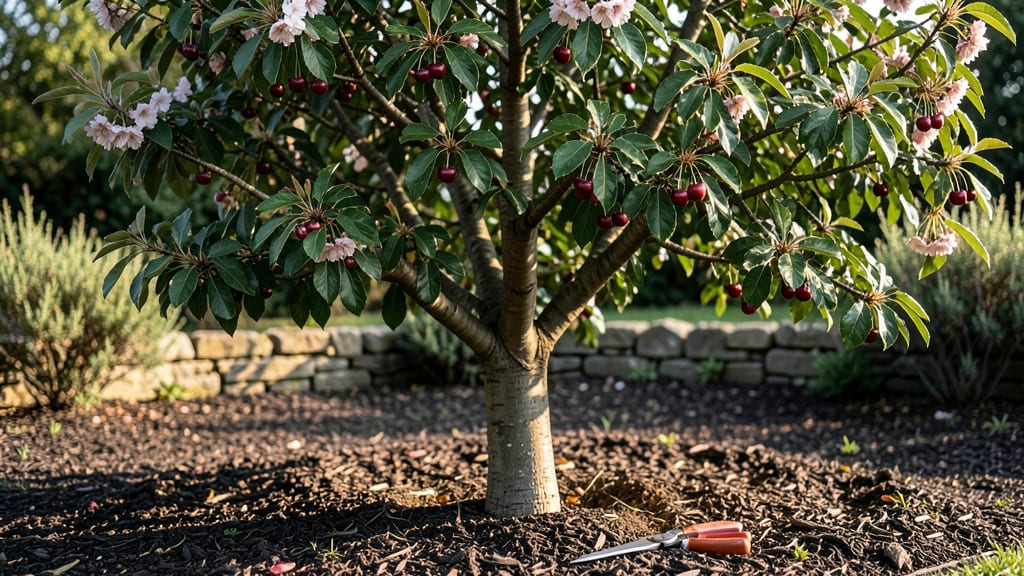
The Royal Lee cherry tree thrives in Pacific Northwest winters—its frost-resistant branches hold the secret to bountiful harvests year after year. I planted mine in a sheltered corner where late frosts linger, and now it produces sweet, dark-red cherries even after snowfall.
The key isn’t just the variety; it’s knowing exactly when to prune to protect those delicate blossoms while shaping the tree for maximum fruit.
This tree demands three critical pruning windows—late winter, early spring, and post-harvest—each serving a different purpose. You’ll need sharp bypass pruners, a ladder for higher branches, and a clear day to avoid spreading disease.
The payoff? A sturdy framework that resists storm damage and produces fruit for decades. My tree, now 8 years old, still bears more cherries than I can eat.
By late February, you’ll start shaping the tree’s structure, removing dead wood and thinning crowded branches. Then, in early spring, a light trim encourages airflow—critical for preventing fungal diseases like brown rot. After harvest, focus on cleaning up fallen fruit and any branches that crossed paths.
The result? A tree that looks as good as it tastes, with fewer pests and stronger growth each season.
This method works for both container-grown Royal Lees and in-ground plantings, though mature trees need more space. Pacific Northwest gardeners swear by it, but even those in slightly warmer zones can adapt the timing.
The real magic happens when you combine pruning with proper watering—deep soaks in summer and mulch to protect roots in winter. Let’s get your tree ready for next year’s harvest.
📚 In This Guide
- What you need
- Instructions
- Tips and common mistakes
- Wrapping up and next steps
What you need
- ● Pruning shears: Bypass pruners (sharp, clean, and sterilized with rubbing alcohol or bleach between cuts) – 1 pair
- ● Loppers: For thicker branches (1.5"–2" diameter) – 1 pair
- ● Hand saw: Pruning saw with a fine-tooth blade for larger branches (2"–4" diameter) – 1
- ○ Extension pole: For hard-to-reach branches (optional but helpful for mature trees) – 1
- ● Garden gloves: Heavy-duty, cut-resistant gloves – 1 pair
- ● Disinfectant: 1-part bleach to 9 parts water (for sterilizing tools) – small spray bottle
- ○ Pruning sealant: (Optional) Tree wound sealant for large cuts – small tube
- ● Trash bags or bucket: For collecting pruned branches – 1–2
- ● Ladder: Sturdy, extendable ladder (if needed for tall trees) – 1
- ● Weather check: Prune on a dry, calm day (avoid frost or rain within 24 hours)
- ● Tree health assessment: Inspect for pests/diseases (e.g., X-disease in cherries) before pruning
- ○ Safety gear: Safety glasses (optional but recommended for debris)
- ○ Map or sketch: (Optional) Lightly mark branches to remove for clarity
How to prune a Royal Lee cherry tree for Pacific Northwest frost resilience
Here's the pruning schedule I've refined over years in the Pacific Northwest—keeping your Royal Lee cherry productive and frost-hardy.
✂️ Step 1: Late Winter Cleanup (Before Bud Break)
Start your pruning in late winter—specifically between mid-February and early March—when the tree is still dormant but just before buds begin to swell. This timing ensures you remove dead wood while leaving healthy buds intact for spring growth. I always prune on a dry day to reduce the risk of disease spread through open wounds.
Remove any dead, diseased, or crossing branches first. Cut back to a healthy outward-facing bud or lateral branch using clean, sharp pruners. The goal here is to open the center of the tree to improve airflow, which helps prevent fungal issues that thrive in the Pacific Northwest's damp winters. You'll know you're pruning correctly when the tree's structure looks balanced and sunlight can reach the inner branches.
✂️ Step 2: Light Summer Thinning (June-July)
After the tree finishes flowering in late spring, wait until June or early July to do your second pruning. This is when you focus on thinning out excess fruit and shaping the tree. Royal Lee cherries are self-pollinating, but too many fruits can stress the tree, especially in the Pacific Northwest's cooler summers.
Remove about one-third of the fruit clusters, targeting smaller or weaker-looking branches. This encourages larger, higher-quality cherries to develop. Also, trim any suckers (shoots growing from the base) and water sprouts (vertical shoots growing from the trunk or branches). Cut these back to the point where they emerge from the main branch or trunk. You'll see a noticeable improvement in fruit size and tree health by late summer.
✂️ Step 3: Post-Harvest Maintenance (August-September)
Once you've harvested your cherries in late July or August, it's time for a final pruning to prepare the tree for winter. Focus on removing any remaining damaged or diseased branches and lightly shaping the tree to maintain its form. This is also the time to prune any branches that are rubbing against each other, as these can create wounds that invite pests and diseases.
Reduce the length of any overly vigorous shoots that grew during the summer by about one-third. This helps the tree redirect its energy toward root development and frost resistance. Avoid heavy pruning now—you want the tree to harden off gradually as temperatures drop. By late September, your tree should look tidy and well-prepared for the Pacific Northwest's winter chill.
⏰ Step 4: Winter Protection (November-December)
In the Pacific Northwest's colder months, your Royal Lee cherry tree will benefit from a final check before winter sets in. If you're in a particularly cold microclimate, consider wrapping the trunk with tree wrap or burlap to protect it from frost cracks. Prune any remaining dead or weak branches that may have appeared over the winter.
This is also the time to mulch around the base of the tree with 3-4 inches of organic mulch, like wood chips or straw. Keep the mulch 6 inches away from the trunk to prevent rot. The mulch helps insulate the roots and retain moisture, which is crucial for the tree's resilience during the frost-prone winter months. By December, your tree should be well-protected and ready to rebound in spring.
Tips & tricks for pruning Royal Lee cherry trees
Real talk: Pruning a Royal Lee cherry tree isn't just about cutting branches—it's about setting your tree up for success in the Pacific Northwest's unpredictable climate. Here's what I've learned after years of trial and error.
Timing is Everything: The late winter window between mid-February and early March is critical because it lets you remove dead wood while preserving the tree's energy reserves for spring growth. I've seen trees struggle when pruned too early—they're still vulnerable to late frosts. If you miss this window, wait until the tree is fully dormant but before buds begin to swell, which is your best indicator. Confession: I skipped this once and ended up with more dead branches than I started with.
Tool Prep Matters: Your pruners make all the difference. Clean them thoroughly with rubbing alcohol before and after each use to prevent disease spread, especially important in the Pacific Northwest's damp climate. I also recommend sharpening your blades regularly—dull tools tear bark instead of making clean cuts, which invites infections. For larger branches, use loppers or a pruning saw, and always make cuts at a slight angle just outside the branch collar to promote proper healing.
Visual Cues for Proper Pruning: When you're removing one-third of fruit clusters in Step 2, look for clusters that are smaller or have fewer cherries—they're the ones to remove first. Healthy clusters will have plump, firm cherries with vibrant color. Also, pay attention to branch angles: aim to keep an open vase shape that allows sunlight to reach all parts of the tree. This isn't just about aesthetics—it's about preventing fungal diseases that thrive in the shade and dampness of our region.
Winter Protection Secrets: For the mulch layer in Step 4, I've found that a combination of wood chips and straw works best—wood chips provide long-term insulation while straw adds extra moisture retention. The key is to keep that mulch 6 inches away from the trunk to prevent rot. I also recommend adding a layer of tree wrap around the trunk in particularly cold microclimates, which has saved my trees from frost cracks in several winters. Don't forget to remove any dead branches that might have appeared over winter before applying fresh mulch.
Pro Tips for Royal Lee Cherry Tree
- Real talk: Pruning a Royal Lee cherry tree isn't just about cutting branches—it's about setting your tree up for success in the Pacific Northwest's unpredictable climate.
- Timing is Everything: The late winter window between mid-February and early March is critical because it lets you remove dead wood while preserving the tree's energy reserves for spring growth.
- Tool Prep Matters: Your pruners make all the difference.
Frequently asked questions
Got questions about pruning your Royal Lee cherry tree in the Pacific Northwest? You’re not alone! Here are answers to the most common queries to keep your tree thriving—even through frost.
When is the best time to prune a Royal Lee cherry tree in the PNW?
The ideal time is late winter to early spring (February–March), before buds swell. Avoid pruning in fall or winter, as late cuts can encourage frost damage or fungal infections. For light shaping, summer pruning is fine, but never prune after mid-July—it weakens next year’s fruit production.
How do I protect my Royal Lee cherry tree from frost damage?
Royal Lee cherries are frost-resistant, but young trees or late frosts can still cause issues. Prune in dry weather to avoid wet wood, and avoid heavy cuts in winter. If frost threatens, cover vulnerable branches with frost cloth or a lightweight blanket. Water deeply before a freeze to help roots insulate the tree.
Can I prune a Royal Lee cherry tree in fall?
No—fall pruning is not recommended for Royal Lee cherries. It opens wounds that Agrobacterium (a bacterial infection) can exploit, and new growth may not harden off before winter. If you must prune, wait until late winter when the tree is dormant but frost risks have passed.
What if my Royal Lee cherry tree isn’t fruiting after pruning?
Lack of fruit often stems from over-pruning or cutting back too aggressively. Aim to remove only dead, diseased, or crossing branches—never more than 25% of the canopy in one season. Thin out crowded branches to improve airflow, and fertilize lightly in early spring with balanced 10-10-10 if soil is poor.
Are there alternatives to Royal Lee cherries for frost-prone areas?
Yes! If your microclimate gets extreme cold (<10°F), consider these PNW-friendly alternatives:
- Montmorency cherry (hardier, tart, great for pies)
- Stella cherry (self-pollinating, sweet, disease-resistant)
- Sour cherry hybrids (e.g., ‘Meteor’ or ‘Evans’)
Wrapping up and next steps
The Royal Lee cherry tree is a resilient gem for Pacific Northwest gardens, thriving even in frost-prone climates when pruned with care. By following this tailored calendar, you’ll encourage vibrant blooms, robust fruit, and long-term health—making your orchard both beautiful and productive. 🌸
Ready to transform your garden? Start small: pick one season to focus on first, then expand your pruning skills year after year. Happy gardening—your cherry tree (and future harvests) will thank you! 🌱✂️