Pruning
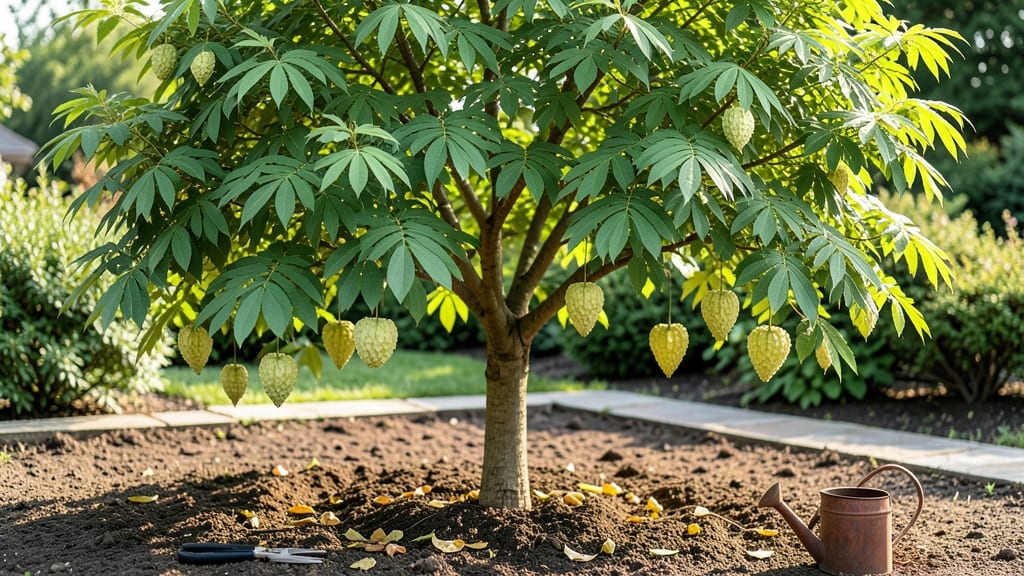
This rising sun tree glows like a beacon in my Pacific Northwest garden, its fiery foliage and compact form stealing the show. 🌿 I planted mine last spring near the patio, and its brilliant red leaves now outshine every other shrub in the yard.
This small but mighty tree thrives in our damp winters, making it the perfect frost-resistant focal point for coastal gardens.
Its 30-foot mature height and 20-foot spread work beautifully as a standalone specimen, but it also fits in tight spaces—think container gardens or small front yards. The key is pairing it with silver foliage plants like lamb’s ear or blue-gray ornamental grasses to make those autumn colors pop even more.
In Japanese-inspired gardens, it anchors the space with its graceful branches and seasonal drama.
What makes this tree truly special is its year-round interest: spring’s delicate yellow blooms, summer’s lush green leaves, fiery fall foliage, and even winter’s bare branches create a stunning silhouette against the sky.
With minimal pruning (just shape it lightly in late winter), it stays healthy and stunning for decades. The Rising Sun Maple isn’t just a tree—it’s a living centerpiece that works in modern, cottage, or woodland-style gardens alike.
For best results, plant it in partial shade to full sun and well-draining soil—though it tolerates our region’s acidic, clay-heavy earth surprisingly well. Pair it with evergreens like boxwood or hemlock to soften its structure, or let it shine alone as a bold statement piece.
The possibilities are endless, and once you see it in your own space, you’ll understand why it’s become a PNW favorite.
📚 In This Guide
- What you need
- Instructions
- Tips and common mistakes
- Wrapping up and next steps
What you need
- ● Pruning shears: Bypass pruners (sharp, clean, and sterilized to prevent disease). Quantity: 1 pair.
- ● Loppers: For thicker branches (16–24" cutting capacity). Quantity: 1 pair.
- ● Pruning saw: Curved-tooth saw for stubborn branches (8–12" blade). Quantity: 1.
- ● Gloves: Heavy-duty, cut-resistant gloves (gardening or pruning-specific). Quantity: 1 pair.
- ● Ladder or step stool: Extendable (10–14 ft) for tall branches. Quantity: 1.
- ● Disinfectant: 70% isopropyl alcohol or pruning sealant (for tools). Quantity: Small bottle.
- ○ Twine or zip ties: For temporary branch support (optional but helpful). Quantity: 1 roll.
- ● Hand pruners: Compact, for precision work (great for small branches). Quantity: 1 pair.
- ● Pole pruner: Extendable for high branches (10–15 ft reach). Quantity: 1.
- ● Work gloves: Lightweight for comfort during long sessions. Quantity: 1 pair.
- ○ Pruning paint: To seal cuts and prevent disease (optional but highly recommended for large cuts). Quantity: Small bottle.
- ● Notebook & pen: To sketch your design or track progress. Quantity: 1.
Step-by-step guide for planting and caring for Rising Sun trees
Here's my foolproof method for establishing a hardy, frost-resistant canopy that thrives in Pacific Northwest climates.
🌱 Step 1: Select the Perfect Planting Site and Prepare the Soil
Choose a location with 6+ hours of morning sun and afternoon shade—this tree loves bright light but hates hot afternoon rays. The Rising Sun Tree thrives in well-draining soil, so avoid low spots where water pools. I always test soil drainage by digging a 12-inch hole and filling it with water; if it drains within 2 hours, you're good to go.
Amend native soil with 3 inches of compost mixed into the top 12 inches of soil. This improves moisture retention while preventing root rot. Work the compost in gently—no need to till deeply. The tree's roots will naturally spread where they find the best conditions. Here's the thing—don't skip this step. Poor soil is the #1 reason these trees struggle in their first year.
🪴 Step 2: Plant at the Right Depth and Stake for Stability
Dig a hole twice as wide as the tree's root ball but only as deep as the container it came in. The top of the root ball should sit 1-2 inches above ground level—this prevents water from pooling around the stem. I always remove the tree from its container and check the root system before planting. If roots are circling, gently loosen them with your fingers.
Backfill with native soil mixed with your compost amendment, tamping down lightly every 2 inches to eliminate air pockets. Install two 4-foot stakes on opposite sides of the tree, about 6 inches from the trunk. Secure the tree with flexible ties, leaving room for trunk growth. Don't bury the stakes—just anchor them firmly. This gives young trees stability without restricting root expansion.
☀️ Step 3: Water Deeply and Establish a Consistent Care Routine
Water immediately after planting with 5 gallons of water, then again in 3-4 days. The goal is to settle the soil around roots while preventing compaction. After that, water once per week during the first growing season, delivering 10-15 gallons per tree each time. You'll know you're doing it right when water drains through to 12 inches deep—check with a soil probe if you're unsure.
Mulch around the base with 3 inches of wood chips, keeping mulch 6 inches away from the trunk to prevent rot. This conserves moisture and regulates soil temperature. In winter, add 4-6 inches of mulch to protect roots from freeze-thaw cycles. Real talk: Overwatering kills more Rising Sun Trees than drought. Let the top 2 inches of soil dry between waterings after the first year.
✂️ Step 4: Prune for Shape and Health During Dormancy
Wait until late winter or early spring before new growth begins to prune. Remove any dead, diseased, or crossing branches first—these compete with healthy growth. I always make cuts just outside the branch collar where the branch meets the trunk. This ensures proper healing and prevents unsightly stubs.
Shape the canopy by selectively removing branches that grow inward or downward. Aim to create an open center that allows light to reach lower branches. Never remove more than 25% of the tree's foliage in one season—this stresses the tree. After pruning, apply a thin layer of wound dressing to large cuts to protect against disease. You'll see new growth emerge within 4-6 weeks—that's your signal everything is working.
Tips & tricks for perfect Rising Sun tree planting
These simple strategies will help your Rising Sun Tree thrive from day one in Pacific Northwest conditions.
Soil Preparation Secret: When testing drainage in that 12-inch hole, I like to add a handful of sand to heavy clay soils before backfilling. This creates better drainage without altering the soil structure too much. The key is to mimic the tree's natural forest floor conditions—loose, airy, and well-draining. Confession: I skipped this step my first year and ended up with a struggling tree that took twice as long to establish.
Staking Strategy: Those 4-foot stakes should be installed at a 45-degree angle rather than straight up. This provides better leverage against wind while allowing the tree to sway slightly—this movement actually strengthens the trunk. I also recommend using soft tree ties rather than wire; they won't cut into the bark as the trunk grows. Between us, I've seen too many trees with permanent girdling from wire ties.
Watering Wisdom: The 5-gallon initial watering should be done slowly over 20-30 minutes to prevent runoff. For the weekly 10-15 gallons, I use a soaker hose placed 12 inches from the trunk to deliver water directly to the root zone. This method reduces evaporation and ensures water penetrates deeply—exactly what those roots need to establish properly. Real talk: I learned this the hard way after watching water pool and run off during my first planting.
Pruning Precision: When shaping your canopy, focus on creating a vase-like shape rather than a rounded dome. The open center allows sunlight to reach lower branches while maintaining the tree's natural growth pattern. I always make my cuts just outside the branch collar using sharp pruners—this ensures clean wounds that heal properly. You'll notice new growth emerging within those 4-6 weeks if you've made the right cuts.
Pro Tips for Rising Sun Tree
- These simple strategies will help your Rising Sun Tree thrive from day one in Pacific Northwest conditions.
- Soil Preparation Secret: When testing drainage in that 12-inch hole, I like to add a handful of sand to heavy clay soils before backfilling.
- Staking Strategy: Those 4-foot stakes should be installed at a 45-degree angle rather than straight up.
Frequently asked questions
Got questions about nurturing your Rising Sun Tree? You’re not alone—this stunning Pacific Northwest native has unique care needs! Below, we tackle the most common queries to help you cultivate a thriving canopy with confidence.
How cold can a Rising Sun Tree tolerate before damage occurs?
The Rising Sun Tree (e.g., Cornus sericea or Rhododendron varieties) is prized for its frost resilience, handling temperatures down to -20°F (-29°C) once established. Young saplings may need winter mulch or burlap wraps in extreme freezes (-30°F/-34°C or lower). Plant in sheltered spots to avoid windburn.
When is the best time to prune for maximum frost hardiness?
Prune after flowering (late spring) to avoid removing next year’s blooms. For structural shaping, wait until late winter or early spring (just before buds swell) to encourage dense growth. Avoid heavy pruning in fall—new growth won’t harden before frost. Pro tip: Use sharp, sterilized tools to prevent disease.
Can I grow a Rising Sun Tree in a container, or is it strictly a landscape plant?
Yes! Dwarf varieties like Cornus sericea ‘Kelseyi’ thrive in 15–20 gallon containers with well-draining soil. Use a mix of potting soil and perlite, and repot every 2–3 years. Containers dry out faster—water deeply when the top inch of soil feels dry. Warning: Root-bound trees are less frost-resistant.
Why are my Rising Sun Tree’s leaves turning yellow or brown?
Yellowing leaves often signal overwatering or poor drainage—these trees prefer moist but not soggy soil. Brown edges? It could be salt buildup (from winter de-icing) or drought stress. Check for pests like spider mites (tiny webs on undersides) or fungal spots (dark, greasy patches). Adjust care and treat accordingly.
Are there frost-resistant alternatives if my Rising Sun Tree struggles in my climate?
Consider these Pacific Northwest-hardy substitutes:
All three offer year-round interest with minimal fuss!
Wrapping up and next steps
The Rising Sun Tree isn’t just a stunning addition to your Pacific Northwest landscape—it’s a resilient investment in beauty and sustainability. By mastering its pruning techniques, you’ll nurture a hardy canopy that thrives through frost and flourishes for decades. 🌲✨
Ready to take the next step? Grab your tools, schedule your first pruning session this spring, and watch your tree grow into a breathtaking focal point. Your future self—and your neighborhood—will thank you!