
Pruning
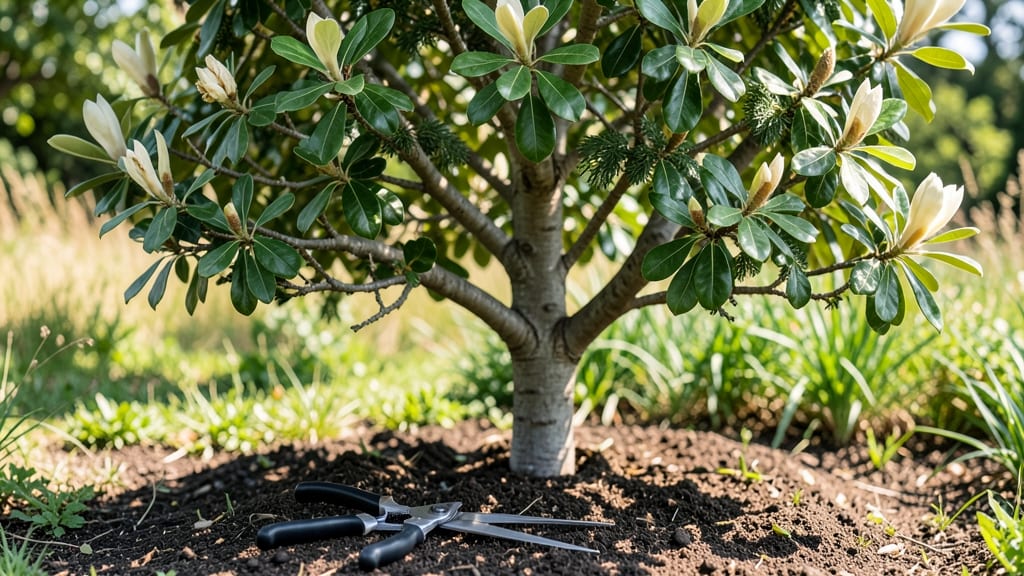
Pruning sweetbay magnolia trees in late winter is the secret to keeping them strong and blooming for decades—especially in the Pacific Northwest’s damp climate. I’ve watched my own tree go from a sad, overgrown mess to a thriving, fragrant centerpiece after just one careful pruning session.
The key isn’t cutting back aggressively, but strategically removing dead wood and opening up the canopy to let light and air circulate.
You’ll only need a few basic tools: sharp bypass pruners for smaller branches, a pruning saw for thicker limbs, and some rubbing alcohol to sterilize cuts. Timing matters too—wait until after the worst winter storms have passed but before new growth starts in early spring.
This gives the tree time to heal before the growing season kicks in, and it avoids disturbing any late-winter blooms.
What you’ll end up with is a tree that flowers more abundantly, resists pests better, and has a natural, balanced shape. The fragrance alone—especially when the branches are dusted with white blossoms—makes the effort worth it.
Plus, you’ll save yourself from future headaches like tangled branches or disease-prone spots where light can’t reach.
This method works just as well for young trees as mature ones, and it’s especially important if your sweetbay has been neglected or is growing in a tight urban space.
The Pacific Northwest’s mild winters mean you can prune later than in colder climates, but don’t wait too long—once the buds swell, it’s time to put the shears away.
📚 In This Guide
- What you need
- Instructions
- Tips and common mistakes
- Wrapping up and next steps
What you need
- ● Pruning shears or bypass pruners – Choose sharp, bypass-style shears (not anvil-type) for clean cuts. A 5- to 8-inch blade works best for most branches.
- ● Loppers – For thicker branches (½" to 1½" diameter). Opt for bypass loppers with a 10- to 12-inch handle for leverage.
- ● Pruning saw – For branches over 1½ inches thick. A bow saw or folding pruning saw with a 10- to 14-inch blade is ideal.
- ● Disinfectant solution – Mix 1 part bleach to 9 parts water (or use 70% isopropyl alcohol) to sterilize tools between cuts and prevent disease spread.
- ● Gloves – Wear cut-resistant, gardening gloves to protect your hands from thorns and rough bark.
- ● Safety glasses – Essential for shielding your eyes from debris, especially when using a saw.
- ● Ladder or stump – If your tree is taller than 6 feet, use a stable, extendable ladder (or a sturdy stump) to reach higher branches safely.
- ● Heavy-duty trash bags – For collecting and disposing of pruned branches and debris.
- ○ Tree wound dressing (optional but helpful) – A pruning sealant (like Tanglefoot Tree Wound Pruning Seal) to protect large cuts (over ½ inch).
- ● Extension pole pruners – For high branches without a ladder (reaches up to 10 feet).
- ● Rope or harness – If working on very tall trees, secure yourself with a tree-climbing harness and rope for safety.
- ● Marking spray or paint – To tag branches for removal before cutting (great for complex pruning plans).
- ● Knee pads or stool – For comfort if you’ll be kneeling or working on the ground for extended periods.
- ● First-aid kit – Always better to be prepared for minor cuts or scrapes!
Step-by-Step guide for pruning sweetbay magnolia trees
Late-winter is the perfect time to shape your sweetbay magnolia for health and beauty.
Assess the Tree’s Structure and Health
Start by examining the tree from all sides, looking for dead, crossing, or diseased branches. Sweetbay magnolias have a natural, graceful shape, so avoid over-pruning—this tree thrives on minimal intervention. Focus on removing only what’s necessary to improve airflow and sunlight penetration.
Use your hands to gently test branch flexibility. If a branch snaps easily or feels hollow, it’s likely dead and should be removed. Look for signs of disease, like discolored bark or oozing sap, which indicate branches that need cutting back to healthy wood.
I mark branches for removal with a small piece of twine or a paint marker. This helps me visualize the final shape before making any cuts. The goal is to maintain the tree’s natural form while promoting strong, healthy growth.
Gather Your Tools and Prepare the Work Area
You’ll need sharp, clean pruning shears for small branches and a pruning saw for thicker limbs. Disinfect your tools with rubbing alcohol to prevent spreading disease between cuts. Wear gloves to protect your hands from thorns and sap.
Clear the area around the tree of debris, tools, or anything that could get in the way. Sweetbay magnolias can be messy when pruned, so lay down a tarp or rake up leaves afterward. I also like to have a bucket nearby to collect cuttings for composting or disposal.
Work on a dry day when the tree isn’t stressed by extreme weather. Late winter, before new growth begins, is ideal because the tree is dormant and can heal quickly from pruning wounds.
Make the Cuts Correctly for Fast Healing
When removing a branch, cut just outside the branch collar—the swollen area where the branch meets the trunk. This ensures the tree can seal the wound properly. For larger branches, make a second cut slightly above the first to avoid tearing the bark.
Never leave stubs. A clean cut promotes faster healing and reduces the risk of disease. If you’re unsure where to cut, look for the branch collar and make your cut just beyond it. For thicker branches, use a pruning saw to avoid damaging the branch or trunk.
Step back occasionally to assess the tree’s shape. Sweetbay magnolias respond well to light pruning, so avoid removing more than 25% of the tree’s foliage in one session. Over-pruning can stress the tree and reduce flowering.
Clean Up and Monitor the Tree’s Recovery
After pruning, collect all cuttings and dispose of them properly. Diseased branches should be burned or placed in a sealed bag to prevent spreading pathogens. Healthy cuttings can be composted or used as mulch.
Water the tree deeply after pruning to help it recover. Sweetbay magnolias are drought-tolerant once established, but a good soak encourages new growth. Avoid fertilizing immediately after pruning—wait until spring when new growth begins.
Monitor the tree over the next few weeks for signs of stress, like wilting or discolored leaves. If you notice any issues, adjust your care routine. With proper pruning, your sweetbay magnolia will reward you with lush foliage and fragrant blooms for years to come.
Tips & tricks for pruning sweetbay magnolia trees
Sweetbay magnolias are forgiving, but these small details make all the difference between a healthy tree and one that struggles to recover.
Branch Assessment Trick: In Step 1, when testing for dead branches, look for another key sign: tiny holes or insect trails in the bark. These often appear before branches become completely brittle. I also check for "water sprouts"—thin, upright branches growing straight up from the trunk or main branches. These compete with your tree for nutrients and should be removed first, as they're easy to spot and cut.
Tool Prep Secret: Before you start cutting in Step 2, sharpen your pruning shears by slicing through a few sheets of newspaper—you'll notice a cleaner cut immediately. For thicker branches, I recommend using a pruning saw with a fine-tooth blade to avoid splintering the bark. And here's what nobody tells you: Wipe your tools with a damp cloth after each cut to prevent sap buildup that can dull blades quickly.
Cutting Technique: When making those precise cuts in Step 3, remember the "three-cut method" for branches thicker than 2 inches. First, make an undercut about 12 inches out from the trunk. Then cut just outside the branch collar from the top. Finally, make a third cut to remove the branch completely. This prevents bark tearing and gives you better control. The branch collar is your guide—it's that swollen ridge where the branch meets the trunk.
Recovery Monitoring: After pruning in Step 4, keep an eye out for "epinasty"—when leaves curl downward along the stem. This is often a sign of stress, but with sweetbay magnolias, it usually resolves within a few weeks. If you notice excessive leaf drop, your cuts may have been too severe. Remember, these trees are resilient, but they do best when you remove no more than that 25% foliage guideline we mentioned.
Pro Tips for Pruning Sweetbay Magnolia Tree
- Sweetbay magnolias are forgiving, but these small details make all the difference between a healthy tree and one that struggles to recover.
- Branch Assessment Trick: In Step 1, when testing for dead branches, look for another key sign: tiny holes or insect trails in the bark.
- Tool Prep Secret: Before you start cutting in Step 2, sharpen your pruning shears by slicing through a few sheets of newspaper—you'll notice a cleaner cut immediately.
Frequently asked questions
Got questions about pruning your Sweetbay Magnolia? You’re not alone! Here are some of the most common concerns—and straightforward answers—to help you prune like a pro.
When is the best time to prune a Sweetbay Magnolia in the Pacific Northwest?
The ideal window is late winter (February–March), just before new growth begins. This timing minimizes stress on the tree, reduces disease risk, and encourages vibrant spring blooms. Avoid pruning in fall or early spring when the tree is still dormant or actively growing.
Can I prune my Sweetbay Magnolia in winter if it’s still cold?
Yes, but wait for warmer days (above 40°F). Pruning in freezing temps can shock the tree and slow healing. If you must prune in winter, choose a mild spell and avoid heavy cuts. Pro tip: If branches are ice-laden, wait until they thaw naturally to assess damage before pruning.
Will pruning reduce next year’s flowers?
Not if done correctly! Sweetbay Magnolias bloom on old wood, so avoid cutting back into last year’s growth. Focus on removing dead, diseased, or crossing branches—this actually enhances airflow and future blooms. Just avoid over-pruning; aim to remove no more than 25% of the canopy in one season.
What should I do if I accidentally prune too much?
Don’t panic! If you’ve over-pruned, stop cutting and let the tree recover. Water deeply and apply a balanced fertilizer (like 10-10-10) in early spring to support regrowth. Monitor for stress signs (yellowing leaves, stunted growth) and avoid pruning again for at least a year.
Are there alternatives to traditional pruning for shaping?
Yes! For natural shaping, try selective thinning—removing only the most problematic branches to open the canopy. You can also use coping saws or loppers for precision cuts on smaller branches. If you prefer a cleaner look, hedging (light shaping) works, but avoid shearing into dense foliage to prevent disease.
Wrapping up and next steps
Pruning your Sweetbay Magnolia in late winter isn’t just about shaping—it’s about setting the stage for a vibrant, resilient tree that thrives in the Pacific Northwest’s unique climate. 🌿 By following the right techniques, timing, and tools, you’ll encourage healthier blooms, better airflow, and a stunning silhouette that stands out in your landscape.
Now that you’re armed with the know-how, there’s only one step left: grab those pruners and give your tree the care it deserves!
Next step: Mark your calendar for late February or early March, gather your supplies, and get ready to transform your Sweetbay Magnolia into a showstopper for seasons to come. Happy pruning! ✂️