
Trees
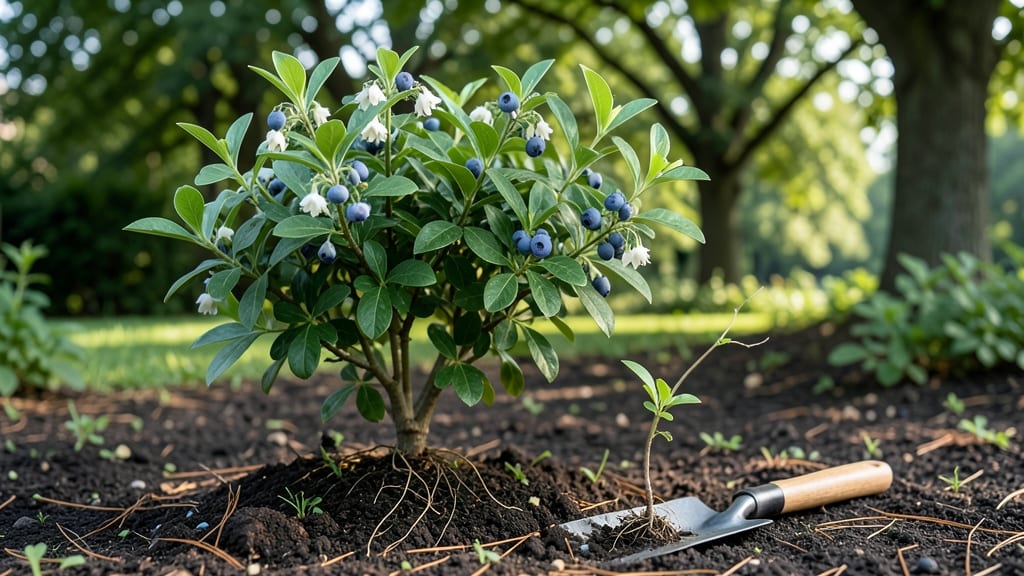
The secret to planting blueberry trees isn’t just picking the right variety—it’s creating the perfect acidic soil they crave.
I’ve planted three different types over the years, and the ones thriving in my yard share one thing: soil with a pH between 4.5 and 5.5, mimicking their natural bog habitats. Without this, even the hardiest varieties struggle, producing tiny berries or none at all.
Start with the right highbush or lowbush variety for your climate—highbush handles colder zones better, while lowbush thrives in warmer regions. You’ll need well-draining soil, a sunny spot with 6+ hours of light daily, and a 5-gallon container for nursery plants.
The key move? Amending your soil with peat moss or sulfur before planting to lock in that critical acidity.
After planting, you’ll watch those first leaves unfurl within 2-3 weeks, followed by white bell-shaped flowers in spring. With consistent 1-2 inches of water weekly (more in summer heat), your tree will reward you with harvest-ready berries in 2-3 years.
The first crop might be small, but each year brings bigger, sweeter rewards.
This works for backyard gardens, containers, or even urban patios—just scale the soil prep accordingly. Whether you’re a beginner or a seasoned grower, the payoff is worth the upfront effort. Let’s get those roots in the right soil!
📚 In This Guide
- What you need
- Instructions
- Tips and common mistakes
- Wrapping up and next steps
What you need
- ● Blueberry tree saplings: 1–3 (choose northern or southern varieties based on your climate zone).
- ● Well-draining, acidic soil: pH 4.5–5.5 (amend with peat moss, pine bark, or sulfur if needed).
- ● Compost or organic matter: 2–3 gallons per planting hole (for nutrients).
- ● Slow-release fertilizer: Acid-loving plant blend (e.g., Osmocote or Miracle-Gro Azalea/Camellia).
- ● Mulch: Pine needles or wood chips (2–3 inches thick; avoid cedar).
- ● Shovel & garden fork: For digging and aerating soil.
- ● Garden hose or watering can: With a gentle spray nozzle.
- ● Pruning shears: Sharp and sterilized (for shaping and maintenance).
- ● pH testing kit: To monitor soil acidity regularly.
- ○ Drip irrigation system (optional but recommended): For consistent moisture.
- ● Epsom salt: Magnesium boost for leaf health (1 tbsp per gallon of water, monthly).
- ● Bird netting: To protect ripening berries from hungry critters.
- ● Soil moisture meter: For precision watering.
- ● Organic pest control: Neem oil or insecticidal soap (if pests appear).
- ● Trellis or stakes: For support if planting in windy areas.
Step-by-step guide for planting blueberry trees
Here's how to establish thriving blueberry bushes with proper site prep and planting technique.
Test and Amend Soil for Acidic Conditions
Blueberries demand soil with a pH between 4.5 and 5.5—far more acidic than most garden soils. Grab a soil test kit and verify your current pH before planting. If your soil tests above 5.5, you'll need to amend it using sulfur or peat moss mixed into the planting hole. I recommend adding 1 pound of sulfur per 100 square feet and mixing it into the top 6 inches of soil.
For new planting beds, blend 50% native soil with 50% acid-loving mix (a pre-formulated blueberry soil blend works best). This ensures proper drainage while maintaining the required acidity. Avoid composted manure—it raises pH and can introduce pathogens. Instead, use pine bark fines or sphagnum peat moss for organic matter that won't alter pH negatively.
Prepare Planting Holes and Soil Mix
Dig holes twice as wide as the root ball but only as deep as the container's height. Blueberries hate having their root crown buried too deep, which can cause rot. Remove the tree from its container and gently loosen the roots if they're circling. I always give them a quick soak in water mixed with a root stimulator for 15-20 minutes before planting to reduce transplant shock.
Fill the bottom third of the hole with your prepared acid soil mix. Position the tree so the top of the root ball sits 1-2 inches above ground level. This prevents water from pooling around the stem. Backfill with the remaining mix, tamping down lightly every 2 inches to eliminate air pockets. Water deeply until the soil settles—you'll see the level drop slightly.
Mulch and Establish Proper Drainage
Spread 3-4 inches of pine bark mulch (not wood chips) over the root zone, keeping it 6 inches away from the trunk. This mulch slowly acidifies the soil while suppressing weeds. Avoid organic mulches like straw or leaves—they can raise pH over time. Water again to settle the mulch and ensure good soil contact.
Blueberries are particularly sensitive to wet feet, so ensure your planting site has well-draining soil. If your area has heavy clay, consider planting on a slight mound to improve drainage. After planting, maintain 1-1.5 inches of water per week, either from rainfall or supplemental irrigation. Use drip irrigation to keep foliage dry and prevent fungal diseases.
Prune and Fertilize for First-Year Growth
Remove any dead or damaged branches immediately after planting. For young trees, prune back one-third of the oldest stems to encourage new, vigorous growth. I also trim any water sprouts (thin, upright shoots) that appear—they drain energy from fruit production. Sterilize your pruners with rubbing alcohol between cuts to prevent disease spread.
Apply a slow-release acid fertilizer (specifically formulated for blueberries) in early spring and again in early summer. Follow package instructions for dosage—over-fertilizing can burn roots. In the first year, focus on root establishment rather than fruit production. You'll likely see minimal berries, but strong root growth sets the stage for bountiful harvests in years 2-3.
Tips & tricks for perfect blueberry tree planting
Planting blueberries successfully comes down to understanding their unique soil needs and careful handling during transplant. Here's what I've learned after years of trial and error.
Soil pH Precision: The 4.5-5.5 pH range is non-negotiable for blueberries. I recommend testing your soil twice—once before amending and again after mixing in sulfur or peat moss. Some garden centers offer free tests, and the results are worth the small investment. Remember, quick fixes like vinegar won't work—you need to amend the soil's mineral composition, not just its surface acidity.
Root Ball Preparation: That 15-20 minute soak in water with root stimulator is crucial for stressed nursery plants. I've seen trees with circling roots fail to establish when skipped. If you're planting multiple bushes, prepare them one at a time—don't let them dry out while you work. For container-grown trees, gently squeeze the root ball to check moisture before planting; it should feel like a damp sponge, not bone-dry.
Mulching Strategy: The 3-4 inches of pine bark mulch serves multiple purposes beyond weed suppression. It creates a slow-release acidifying effect over time and helps maintain soil moisture. I always refresh the mulch layer annually in spring—this prevents pH drift and keeps the soil consistently acidic. Pro tip: Use coarse pine bark rather than fine chips; it breaks down more slowly and maintains structure better.
First-Year Focus: Resist the temptation to harvest berries in the first year—your priority should be establishing strong roots. I've seen growers frustrated when their bushes produce minimal fruit early on, only to realize they were over-fertilizing for immediate harvests. Focus on root establishment through proper watering (that 1-1.5 inches per week) and light pruning to encourage structural growth rather than fruit production.
Pro Tips for Planting Blueberry Trees
- Planting blueberries successfully comes down to understanding their unique soil needs and careful handling during transplant.
- Soil pH Precision: The 4.5-5.5 pH range is non-negotiable for blueberries.
- Root Ball Preparation: That 15-20 minute soak in water with root stimulator is crucial for stressed nursery plants.
Frequently asked questions
Got questions about planting blueberry trees?
Here are answers to the most common ones—so you can grow a thriving bush with confidence!
When is the best time to plant blueberry trees?
Plant blueberry trees in early spring (just as buds swell) or fall (4-6 weeks before your first frost). Avoid extreme heat or cold—roots need time to establish without stress. Container-grown bushes can even be planted in late winter if soil isn’t frozen!
How often should I water newly planted blueberry trees?
Keep soil consistently moist (not soggy!) for the first 1-2 years. Water deeply 2-3 times per week in dry spells, aiming for 1-1.5 inches of water per week. Mulch helps retain moisture—just keep it 3 inches away from the trunk to prevent rot.
Can I grow blueberries in containers or just in the ground?
Dwarf varieties (like ‘Top Hat’ or ‘Peach Sorbet’) thrive in 5-gallon+ containers with acidic potting mix (pH 4.5–5.5). Ensure pots have drainage holes and move them to full sun (6+ hours/day). Containers let you control soil acidity—perfect for urban gardeners!
Why aren’t my blueberry bushes producing fruit?
Common culprits: wrong soil pH (test and amend with sulfur/pine needles), lack of pollination (plant multiple varieties or hand-pollinate), or young age (bushes need 2-3 years to bear fruit). Also check for pests (bird netting helps!) or over-fertilizing with nitrogen (which boosts leaves over fruit).
Do blueberry trees need winter protection?
Most varieties handle cold down to -15°F, but young trees or tender southern types benefit from mulch (4-6 inches) around the base. In extreme zones (5-6), wrap the trunk with burlap for extra insulation. Prune in late winter to remove dead wood—just avoid heavy cuts that stress the plant.
Wrapping up and next steps
Planting blueberry trees is a rewarding journey that starts with understanding their love for acidic soil and patience. With the right preparation—whether you’re choosing bare-root saplings or container-grown plants—you’ll be well on your way to a bountiful harvest of juicy, antioxidant-rich berries. 🌱
Now that you’re armed with soil secrets and step-by-step guidance, it’s time to roll up your sleeves! Start by testing your soil’s pH (aim for 4.5–5.5) and amend it if needed.
Then, pick a sunny spot, dig with care, and watch your blueberry bushes thrive. Happy planting—and enjoy those sweet rewards! 🍇