
Trees
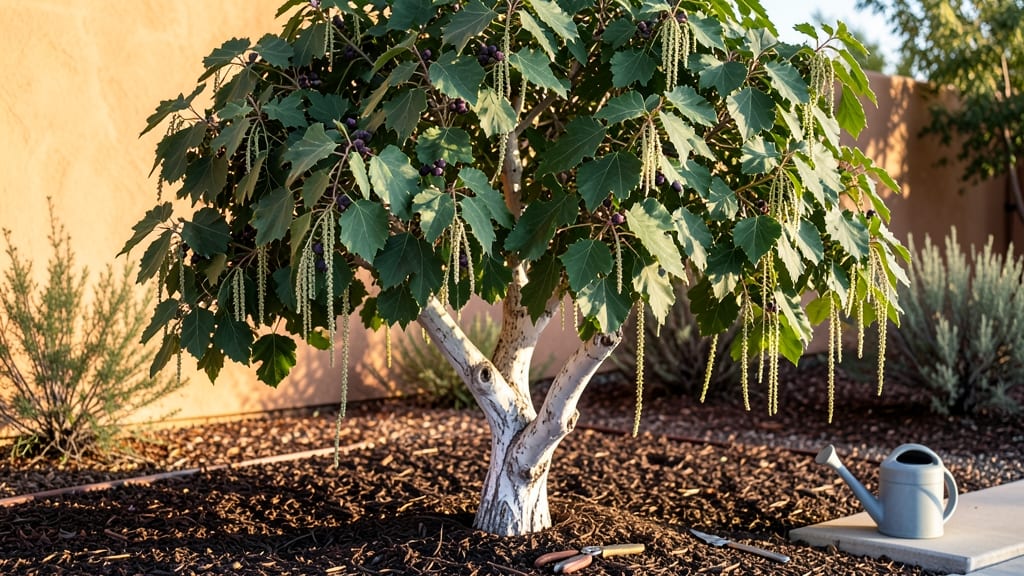
Growing mulberry trees in Las Vegas turns your desert yard into a productive oasis with shade and sweet fruit—if you know the tricks. 🌵 I planted mine in the scorching summer heat, and with the right approach, they thrive where other trees struggle.
The secret lies in mimicking their natural desert resilience while giving them just enough care to reward you with harvests.
Start with well-draining soil mixed with compost to help roots establish in the harsh climate. Mulberries love heat but need deep watering every 7-10 days once established—think of it as giving them a long drink instead of frequent sips.
Choose a variety like 'Illinois Everbearing' for reliable fruit production in our zone 9 climate, and plant where they can spread their shade without crowding other plants.
By summer, you’ll see glossy leaves and clusters of fruit ripening under the sun. The trees provide year-round shade, reduce cooling costs, and attract birds—though you’ll need to net them if you want to keep the berries for yourself.
Prune in late winter to shape the tree and remove dead wood, and watch as it becomes the centerpiece of your desert landscape.
Watch for urban regulations—some Las Vegas neighborhoods restrict fruit trees—but if approved, your mulberry will outperform most ornamental trees. The real payoff? Fresh berries in July when grocery stores charge premium prices for out-of-season fruit. Here’s how to make it work without the guesswork.
📚 In This Guide
- What you need
- Instructions
- Tips and common mistakes
- Wrapping up and next steps
What you need
- ● Mulberry Tree Saplings: 1-3 bare-root or potted saplings (choose Morus alba or Morus nigra for best desert adaptation).
- ● Well-Draining Soil Mix: 50% native desert soil + 50% compost or cactus/succulent mix (avoid heavy clay).
- ● Drip Irrigation System: 1-2 emitters per tree (0.5–1 gallon/hour flow rate) to conserve water.
- ● Organic Mulch: 2–3 inches of wood chips or gravel (retains moisture, regulates temperature).
- ● Fertilizer: Slow-release, low-nitrogen fertilizer (e.g., 5-10-10 ratio) for desert-adapted plants.
- ● Pruners: Sharp bypass pruners (sterilized with rubbing alcohol).
- ○ Support Stakes (Optional for Young Trees): 2–3 bamboo stakes + soft ties to prevent wind damage.
- ● Sun Exposure: Full sun (6+ hours daily).
- ● Water Rights: Confirm with Las Vegas Water Authority for irrigation rules.
- ● Pest Monitoring: Check for aphids or scale insects (common in Nevada).
- ● Shade cloth (30–50%) for saplings during extreme heat (100°F+).
- ● Soil moisture meter to track watering needs.
- ● Fruit thinning shears (for managing heavy berry loads).
- ● Bird netting (if squirrels or birds are a nuisance).
How to plant and care for mulberry trees in the Las Vegas desert
Here's how to grow thriving mulberry trees that thrive in extreme heat and produce sweet berries.
🌱 Step 1: Choose the Right Variety and Planting Site
Las Vegas' 100°F+ summers demand mulberry varieties bred for heat tolerance. I recommend Illinois Everbearing or Texas Evergreen—both handle drought and produce fruit reliably. Avoid traditional varieties like Black Mulberry, which struggle with our soil and climate.
Plant in full sun (6+ hours daily) with well-draining soil. Mulberries hate soggy roots, so amend heavy clay with 3 inches of compost or use raised beds. The best spot gets afternoon shade during peak summer months—look for natural shade from structures or other trees.
🪴 Step 2: Plant at the Correct Depth and Spacing
Dig a hole twice as wide as the root ball but only as deep—planting too deep suffocates roots. Place the tree so the graft union (visible bump near the base) sits 1-2 inches above soil level. This prevents rot in our hot, dry climate.
Space 15-20 feet apart for mature trees—mulberries spread aggressively. I've seen them send up shoots 50 feet away if given the chance. For urban areas, plant near fences or property lines to contain root spread naturally.
☀️ Step 3: Water Deeply and Establish Root Systems
Water once weekly for the first 3 months, giving 15-20 gallons per tree each time. Soak until water runs out the drainage holes—mulberries need deep moisture to establish roots. After establishment, water every 2-3 weeks during summer, checking that top 6 inches of soil stay dry between waterings.
Mulch with 3 inches of wood chips around the base (keep mulch 6 inches from trunk) to retain moisture and regulate soil temperature. This is critical in Las Vegas—our soil heats up enough to cook shallow roots during summer.
✂️ Step 4: Prune for Shape and Fruit Production
Prune in late winter (February) before new growth begins. Remove dead, crossing, or weak branches first, then thin the canopy to let sunlight reach the center. Mulberries fruit on new wood, so avoid heavy pruning in summer—it reduces next year's crop.
Watch for suckers (shoots from the base)—remove them immediately. These drain energy from the main tree. I prune mine with sterilized loppers to prevent disease spread, especially in our dry heat where wounds take longer to heal.
Tips & tricks for perfect mulberry trees in Las Vegas
Here's what nobody tells you about growing mulberries in extreme heat—and how to avoid costly mistakes.
Variety Selection: The Illinois Everbearing and Texas Evergreen varieties aren't just recommendations—they're your best bets for Las Vegas. I planted Black Mulberry once and watched it struggle through our first summer. These heat-tolerant varieties produce fruit consistently even when temperatures hit 100°F+ regularly.
Soil Preparation: Don't skip the 3 inches of compost when amending heavy clay soil. I learned this the hard way after my first mulberry tree's roots suffocated in compacted soil. For raised beds, use a mix of native desert soil with 50% compost to improve drainage while retaining moisture. The goal is to mimic the well-draining conditions mulberries thrive in naturally.
Watering Strategy: Those first 3 months are critical—don't cut corners on the weekly 15-20 gallon waterings. I've seen trees establish beautifully with this routine, but many homeowners give up after the first month when they see no immediate growth. The key is deep watering that encourages roots to grow downward where they'll find natural moisture during dry periods.
Pruning Timing: February is your only chance to shape the tree without risking next year's fruit production. I always prune mine right after our coldest nights (around January 31-February 1) when new growth hasn't started yet. Use sterilized tools to prevent bacterial infections that can spread rapidly in our dry heat climate.
Pro Tips for Mulberry Trees In Las Vegas
- Here's what nobody tells you about growing mulberries in extreme heat—and how to avoid costly mistakes.
- Variety Selection: The Illinois Everbearing and Texas Evergreen varieties aren't just recommendations—they're your best bets for Las Vegas.
- Soil Preparation: Don't skip the 3 inches of compost when amending heavy clay soil.
Frequently asked questions
Got questions about growing mulberry trees in the Las Vegas heat? You’re not alone! Here are some of the most common concerns—and their answers—to help you thrive with these desert-friendly fruit trees.
Can mulberry trees survive Las Vegas’ extreme heat and dry climate?
Mulberry trees are highly drought-tolerant once established (after 1–2 years). Their deep root systems access water efficiently, and they thrive in full sun—perfect for Las Vegas’ USDA Zone 9a. Just mulch well and water deeply weekly during the first year to help roots spread.
How long does it take for a mulberry tree to bear fruit in Las Vegas?
Patience pays off! Dwarf varieties may fruit in 2–3 years, while standard trees can take 3–5 years. Las Vegas’ warm climate actually speeds up growth—just ensure consistent watering and avoid over-fertilizing nitrogen, which delays fruiting.
Are there low-maintenance mulberry varieties for beginners?
Yes! Try these desert-friendly picks:
- Illinois Everbearing: Compact, cold-hardy, and produces fruit twice a year.
- Texas Improved: Drought-resistant, disease-resistant, and thrives in heat.
- Dwarf Mulberry: Grows to 10–15 feet (ideal for small yards).
Why are my mulberry leaves turning yellow or dropping?
Common culprits in Vegas’ climate:
- Overwatering: Yellow leaves = soggy roots. Let soil dry between waterings.
- Underwatering: Crispy edges? Water deeply once a week (more in summer).
- Pests: Spider mites or aphids (check undersides of leaves). Spray with neem oil if needed.
- Fungal issues: Too much shade or poor airflow? Prune for sunlight and space.
Can I grow mulberries in containers in Las Vegas?
Yes! Use a 5-gallon+ pot with drainage holes and well-draining soil (cactus/succulent mix works). Dwarf varieties like ’Dwarf Mulberry’ thrive in containers. Place in full sun and water every 2–3 days in summer. Just repot every 2–3 years as roots grow!
Are mulberry trees messy? Do they stain sidewalks?
Mulberries do stain—both leaves (when wet) and fruit (when ripe). To minimize mess:
- Plant near gravel or mulch (not pavement).
- Pick fruit regularly before it drops.
- Choose ’Illinois Everbearing’—its smaller berries stain less.
- Rinse tools/clothes immediately after handling.
Wrapping up and next steps
Growing mulberry trees in Las Vegas isn’t just about adding beauty to your desert landscape—it’s about embracing resilience, sustainability, and delicious rewards. 🌵🍇 These hardy trees thrive in the heat, offer shade, and produce fruit that’s perfect for jams, fresh eating, or sharing with neighbors.
Whether you’re a seasoned gardener or a beginner, their low-maintenance nature makes them a fantastic choice for your yard.
Ready to take the next step? Start small—plant a single tree, experiment with varieties, or even share cuttings with fellow green thumbs in your community. Your desert oasis (and taste buds) will thank you!