
Trees
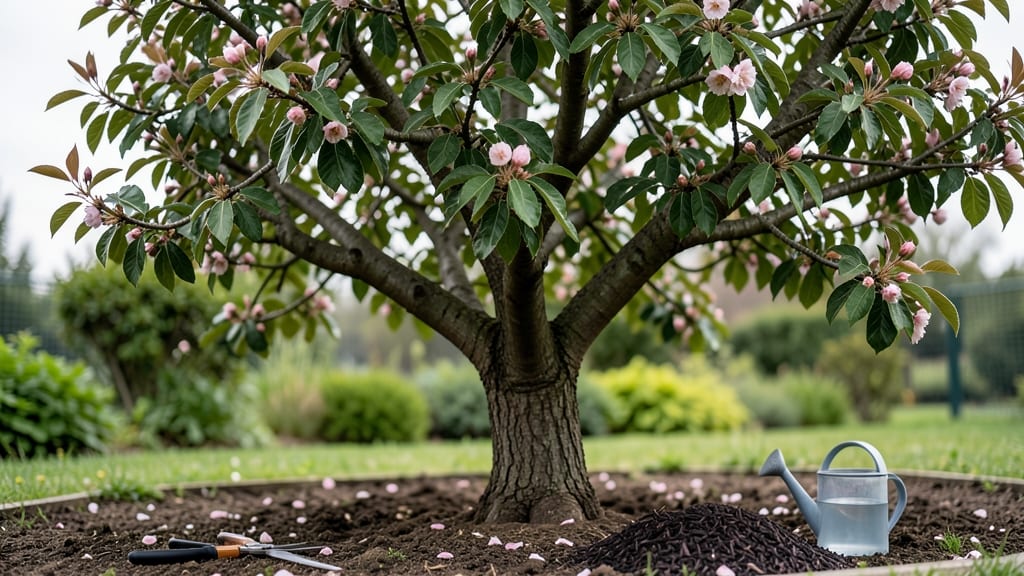
Creating majestic peach trees that steal the show in your landscape starts with intentional design—where their delicate spring blossoms, summer fruit, and fiery autumn foliage become the centerpiece of your garden’s story. 🌸 I’ve learned that the right placement, complementary plants, and seasonal pruning transform these trees from ordinary fruit producers into breathtaking focal points that evolve with each season.
The secret lies in their year-round drama: snow-dusted branches in winter, fragrant pink blooms in spring, juicy peaches in summer, and brilliant orange-red leaves in fall.
Pair them with low-growing perennials like lavender or ornamental grasses to highlight their height, or use them as a natural backdrop for roses and hydrangeas. Their 25-foot mature height demands space, but even smaller varieties can anchor a patio or entryway with strategic placement.
Smart pruning keeps them shapely and productive while maximizing their visual impact—think open canopies that let light filter through to the ground below, creating dappled shadows that enhance neighboring plants.
The result? A tree that’s as much a work of art as it is a harvest. Ready to design around their natural beauty?
Whether you’re working with a sprawling backyard or a cozy courtyard, these trees adapt—just match their needs to your space. Their seasonal transformations ensure your garden stays dynamic, not static. Let’s craft a design that makes your peach tree the undisputed star.
📚 In This Guide
- What you need
- Instructions
- Tips and common mistakes
- Wrapping up and next steps
What you need
- ● Peach Tree Variety: Choose disease-resistant varieties like Elberta, Redhaven, or J.H. Hale (dwarf or standard, depending on space).
- ● Soil: 50 lbs of well-draining, slightly acidic soil (pH 6.0–6.5). Mix in compost (20 lbs) and perlite (10 lbs) for aeration.
- ● Fertilizer: Slow-release 10-10-10 NPK fertilizer (1 lb per tree) + micronutrients (zinc, iron).
- ● Mulch: 3–4 inches of wood chips or straw (avoid fresh mulch near the trunk).
- ● Pruning Tools: Bypass pruners (for small branches)
- ● Loppers (for ½–1.5-inch branches)
- ● Pruning saw (for thick branches)
- ● Safety Gear: Gloves, long sleeves, and disinfectant (70% isopropyl alcohol) for tools.
- ● Support: Tree stakes (2–3 per tree) + tie straps (for young trees).
- ● Pest Control: Neem oil spray or reflective mulch (to deter birds).
- ● Drip Irrigation: Soaker hoses or drip emitters (1–2 per tree).
- ● Tree Wrap: For young trunks (to prevent sunscald).
- ● Seasonal Care: Winter mulch (extra straw) + summer shade cloth (for hot climates).
How to cultivate majestic peach trees through strategic pruning
Smart pruning transforms ordinary peach trees into stately, productive giants.
✂️ Step 1: Prune for Structure in Late Winter
When buds begin swelling but before leaves emerge—typically February through March—is the ideal window. This late-winter pruning shapes the tree's framework while it's dormant. Start by removing any dead, diseased, or crossing branches first. These are your tree's weak points and should go completely.
Next, cut back any suckers growing from the base or graft union. These compete with the main tree for nutrients and weaken its structure. I use clean, sharp pruners to make cuts just outside the branch collar—the swollen area where the branch meets the trunk. This ensures clean wounds that heal properly. Aim to open the center of the tree to sunlight and airflow, reducing disease risk.
For young trees, I remove about 20-30% of the total branches to encourage strong scaffold branches. Older trees can handle slightly more aggressive pruning—up to 30-40% of the canopy—but never remove more than that in one season. You'll see new, vigorous growth emerging from the pruned areas by early spring, signaling the tree is responding well.
☀️ Step 2: Thin Fruit for Size and Quality in Early Spring
Once flowers bloom but before fruit sets—usually April through early May—it's time for fruit thinning. This step is critical for producing large, high-quality peaches rather than a heavy load of small, poor-quality fruit. Start by removing any misshapen or damaged fruit first. These won't develop properly and will drain energy from the tree.
Next, thin clusters so that only 6-8 inches of stem remain between each fruit. This spacing allows each peach to grow to its full potential without competing for nutrients. I also remove any fruit growing too close to the trunk or in the center of the tree, where sunlight and airflow are limited. Use sharp pruning shears to make clean cuts just above a leaf bud or branch junction.
Here's the thing—this step feels counterintuitive at first. You're intentionally reducing your harvest, but trust me, the remaining peaches will be larger, sweeter, and of better quality. You'll notice the branches holding the remaining fruit are sturdier and the tree looks more open and airy, which reduces the risk of fungal diseases like brown rot.
🌿 Step 3: Summer Pruning to Maintain Health and Shape
Mid-summer, around July through August, is the time for light maintenance pruning. This isn't about major structural changes but rather keeping the tree healthy and shaped. Start by removing any water sprouts—those fast-growing, vertical shoots that appear along the branches. These are energy vampires and should be pruned back to a leaf bud or branch junction.
Next, look for branches that are rubbing against each other. These create wounds that invite disease and pests. Carefully prune one of the branches so they no longer make contact. I also check for any branches growing inward toward the center of the tree and prune them back to encourage an open canopy. This improves airflow and reduces humidity, which is crucial for preventing fungal diseases.
Finally, thin out any overly dense foliage. You want sunlight to penetrate to the inner branches, which encourages fruit production deeper in the tree. Aim to keep the tree's shape balanced and symmetrical. You'll see the tree's overall health improve as you move through the summer, with fewer signs of stress and better fruit development.
⏰ Step 4: Light Winter Pruning for Airflow and Light
In late winter, just before buds begin to swell—typically January through February—do a final light pruning pass. This is about fine-tuning the tree's shape and ensuring good airflow and light penetration. Start by removing any dead, diseased, or weak branches that may have appeared over the past year.
Next, prune back any branches that are growing too close together. The goal is to maintain an open, vase-like shape that allows sunlight to reach all parts of the tree. I also check for any branches that have grown too long and are now shading the center of the tree. These should be pruned back to a lateral branch or leaf bud to encourage a more compact, productive shape.
This final pruning session sets the stage for the coming growing season. You'll see the tree's structure become more defined, with a strong framework of branches that support heavy fruit loads. The open canopy you create now will pay off in better fruit quality and fewer disease issues throughout the season.
Tips & tricks for cultivating majestic peach trees
Transforming your peach tree into a year-round fruit powerhouse starts with these essential pruning strategies that go beyond the basics.
Timing is Everything: The February-March window for late-winter pruning (Step 1) is non-negotiable because it aligns with the tree's dormant state. This timing prevents stress and allows clean cuts that heal properly. If you're in a warmer climate, adjust to late winter when buds are just swelling—not when they're already breaking. I've seen trees stressed beyond recovery when pruned too early, so mark your calendar for that critical February-March window.
The Branch Collar Technique: When pruning in Step 1 or Step 4, always cut just outside the branch collar—the swollen area where branches meet the trunk. This is where healing tissues form naturally. I've made the mistake of cutting too close to the trunk, which creates wounds that take forever to heal and invite disease. Use clean, sharp pruners to make angled cuts that follow the branch's natural slope away from the trunk.
Fruit Thinning Visual Cues: During Step 2's fruit thinning, aim for 6-8 inches of stem between each remaining peach. Here's what to watch for: the remaining fruit should have space to develop without touching other branches, and you should be able to see sunlight reaching the center of the tree. I like to visualize a "peach spa" where each fruit gets its own personal space to grow into a juicy, sun-ripened masterpiece.
Seasonal Pruning Checklist: Create a simple checklist for each pruning season:
- Late winter (Jan-Feb): Remove dead/diseased branches, thin crowded areas
- Early spring (Apr-May): Thin fruit clusters to 6-8" spacing, remove damaged fruit
- Summer (Jul-Aug): Prune water sprouts, separate rubbing branches, thin dense foliage
- Light winter (Jan-Feb): Final shape adjustments before bud swell
This systematic approach ensures you don't miss any critical steps during each season's maintenance.
Pro Tips for Majestic Peach Trees
- Transforming your peach tree into a year-round fruit powerhouse starts with these essential pruning strategies that go beyond the basics.
- Timing is Everything: The February-March window for late-winter pruning (Step 1) is non-negotiable because it aligns with the tree's dormant state.
- The Branch Collar Technique: When pruning in Step 1 or Step 4, always cut just outside the branch collar—the swollen area where branches meet the trunk.
Frequently asked questions
Got questions about nurturing your majestic peach trees? You’re not alone! Here are some common queries—and their answers—to help you grow a thriving orchard year after year.
How often should I prune my peach tree?
Prune your peach tree once a year, ideally during late winter or early spring (before buds swell). This keeps the tree healthy, improves airflow, and boosts fruit production. Avoid pruning in fall—it can leave wounds vulnerable to disease. Pro tip: Remove dead, crossing, or overcrowded branches first!
When do peach trees start bearing fruit?
Most peach trees take 3–5 years to bear fruit after planting, depending on the variety and care. Dwarf trees may fruit sooner (2–3 years), while standard trees can take longer. Patience pays off—healthy trees reward you with sweet, juicy peaches for decades!
Do peach trees need cross-pollination?
Yes! Most peach trees are self-pollinating but produce more fruit with a pollinator nearby. Plant two compatible varieties (e.g., ‘Elberta’ + ‘Redhaven’) within 50–100 feet for better yields. Bees love peach blossoms—just ensure your tree isn’t isolated!
Why aren’t my peach tree leaves turning green?
Yellow or pale leaves often signal nutrient deficiency (like nitrogen or magnesium) or pests/disease. Check for:
- Yellowing between veins: Likely magnesium (Epsom salt spray helps).
- Curling or spots: Fungal disease (neem oil or copper spray).
- Wilting: Underwatering or root rot (adjust irrigation).
Can peach trees survive cold winters?
Peach trees thrive in USDA Zones 5–9 but need protection in colder climates. Young trees benefit from winter mulch (straw or leaves) and tree wraps to shield bark from freeze-thaw cycles. Mature trees are hardier—just avoid late-spring frosts, which can damage blossoms.
What’s the best alternative if I don’t have space for a full-sized tree?
Consider dwarf peach trees (grafted onto semi-dwarf rootstock) or container-growing varieties like ‘Bonanza’ or ‘Flavor Grenade.’ These stay under 8–10 feet tall and produce abundant fruit in pots or small yards. Just ensure they get 6+ hours of sun daily!
Wrapping up and next steps
Growing majestic peach trees is a rewarding journey that combines patience, care, and a touch of horticultural magic. With the right pruning techniques and seasonal attention, you’ll unlock a year-round bounty of sweet, sun-kissed peaches—plus stunning ornamental beauty.
Whether you’re a seasoned gardener or just starting, your efforts will pay off in delicious harvests and a thriving landscape.
Ready to take the next step? Start small—plant a tree, master pruning, and watch your orchard flourish! 🌱🍑 Your future self (and taste buds) will thank you!