Pruning
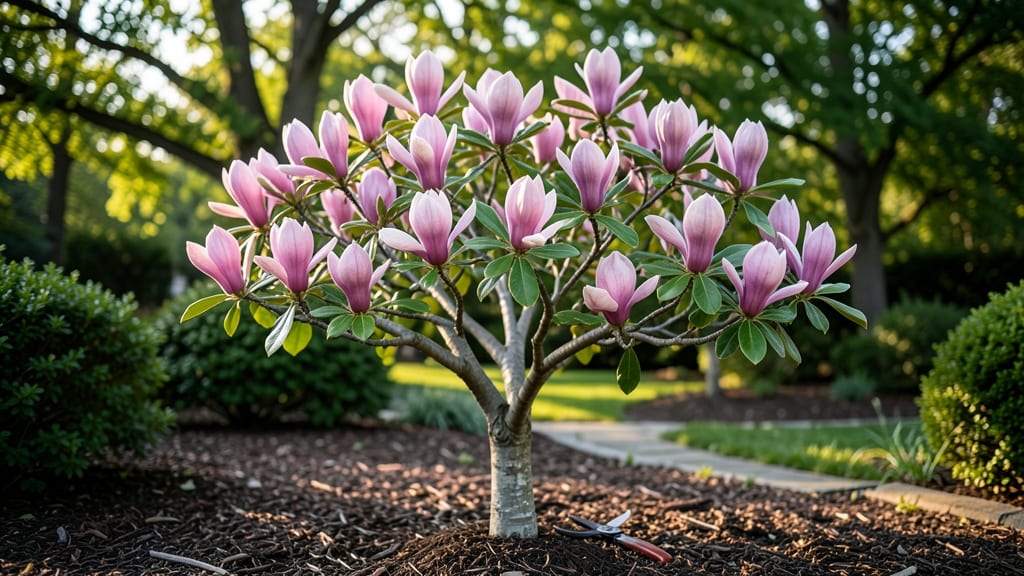
When magnolia trees burst into bloom in spring, their heavy branches can become a structural weak spot—especially after winter storms. I’ve learned the hard way that pruning before new growth appears (late February to early March) prevents weak wood and keeps those iconic flowers coming back bigger every year.
The key is timing: too early and you risk frost damage to fresh cuts; too late and you sacrifice next season’s blossoms.
You’ll need just three things: sharp bypass pruners, a ladder (for taller trees), and a bucket of rubbing alcohol to sterilize cuts. Focus on removing dead, crossing, or rubbing branches first—these are the ones that crowd out flowers and invite pests.
Magnolias bloom on old wood, so never cut back more than 25% of the canopy, or you’ll sacrifice next year’s show.
What you’ll end up with is a stronger tree that supports heavier blooms without sagging. The branches will grow straighter, the canopy will open up to let sunlight reach the center, and you’ll avoid the heartbreak of broken limbs during spring rains.
Plus, fewer hiding spots mean fewer pests like scale or spider mites.
This method works for both small patio magnolias and towering backyard giants—just adjust your ladder and pruning approach. The best part? You’ll know you’ve done it right when those first buds appear, plump and unbroken, come late spring. Let’s get those branches in shape before the blooms arrive.
📚 In This Guide
- What you need
- Instructions
- Tips and common mistakes
- Wrapping up and next steps
What you need
- ● Pruning shears – Bypass-style (sharp, clean cuts; 6”–8” blade for small branches, 10”+ for larger limbs)
- ● Loppers – 10”–14” reach (for thicker branches up to 2” diameter)
- ● Pruning saw – Curved-tooth (for branches 2”+ in diameter)
- ● Disinfectant (70% isopropyl alcohol or bleach solution) – 1 part bleach : 9 parts water (to sterilize tools between cuts)
- ● Garden gloves – Heavy-duty, cut-resistant (protects hands from thorns and debris)
- ○ Pruning sealant – Optional but recommended (for cuts larger than ½” to prevent disease; use a latex-based product)
- ● 5-gallon bucket or trash bag – For collecting pruned branches
- ● Ladder (if needed) – Sturdy, extendable (for high branches; ensure it’s rated for your weight + tools)
- ● Handheld leaf blower – Clears debris from the canopy after pruning
- ● Sharpie or label markers – Mark branches to track progress or note areas needing attention
- ● Knee pads or stool – For comfort if pruning near the base
- ● Camera or phone – Snap before/after photos to track your magnolia’s growth!
- ● ✅ Timing: Prune after the last frost (typically late March–early April in most climates) to avoid damaging new buds.
- ● ✅ Weather: Choose a dry, overcast day to prevent stress on the tree.
- ● ✅ Tree health: Inspect for disease or pest signs (e.g., powdery mildew, borer holes) before pruning.
- ● ✅ Safety gear: Wear closed-toe shoes and eye protection (thorns and falling branches can be sneaky!).
How to prune magnolias in spring for stronger growth
Spring is the perfect time to shape your magnolia’s future—here’s how to do it right.
Time the Pruning for Frost Safety
Wait until after the last frost date in your area, when daytime temperatures consistently stay above 40°F. Magnolias bloom on old wood, so pruning too early risks removing next year’s flowers. I check my local frost calendar and mark the date—pruning before frost can stress the tree and leave it vulnerable to cold damage.
Look for fresh, green growth on the branches as your cue. When you see new buds swelling along the stems, that’s your signal to start. If you’re unsure, wait another week—magnolias are forgiving, but timing matters for flower production.
Remove Dead, Damaged, or Crossing Branches
Start by inspecting the canopy for dead branches—they’re easy to spot because they’re brown, brittle, and don’t bend. Use sharp pruning shears to cut these back to the main trunk or a healthy lateral branch. Next, look for branches that rub against each other or grow inward—they’ll eventually damage each other and create weak entry points for disease.
Make clean cuts just outside the branch collar (the swollen area where the branch meets the trunk). Avoid leaving stubs, which can rot and invite pests. If a branch is larger than ½ inch in diameter, use a pruning saw for a smooth cut. Work methodically from the bottom up to avoid missing any hidden issues.
Thin the Canopy for Better Airflow
Magnolias benefit from an open, airy structure that lets sunlight and air circulate. Focus on removing up to 25% of the smallest branches to improve airflow and reduce humidity-related diseases. Start at the outer edges of the canopy and work inward, cutting branches that grow too densely.
You’ll know you’re thinning correctly when you can see light filtering through the branches from above. Avoid heavy pruning—magnolias respond poorly to drastic cuts. If you’re unsure, step back and assess the shape from a distance. A well-thinned magnolia will have a balanced, natural silhouette.
Shape the Tree for Long-Term Health
Now’s the time to refine the tree’s form. Use your pruners to shorten overly long branches by cutting just above a outward-facing bud. This encourages new growth in the right direction. For larger branches, make the cut at a 45-degree angle, about ¼ inch above the bud to prevent water from pooling.
Pay attention to the tree’s natural growth pattern—magnolias grow best when pruned to maintain their vase-like shape. Avoid cutting back more than one-third of any branch’s length in a single season. If you’re pruning a young magnolia, focus on removing only the most problematic branches to avoid stunting its growth.
Clean Up and Protect the Tree
After pruning, rake up and dispose of all clippings—don’t leave them on the ground, as they can harbor pests and diseases. Sterilize your pruning tools with rubbing alcohol or a 10% bleach solution to prevent spreading pathogens between cuts.
Apply a balanced, slow-release fertilizer around the base of the tree to replenish nutrients lost during pruning. Water deeply to help the tree recover, especially if your area has been dry. Mulch with 2-3 inches of organic mulch (like shredded bark) to retain moisture and protect the roots from temperature swings.
Tips & tricks for perfect spring magnolia pruning
These focused strategies will help you prune with confidence and keep your magnolia thriving for years to come.
Timing is Everything: The 40°F threshold isn't just a number—it's your safety net against frost damage. I've seen magnolias stressed by late frosts after pruning, so double-check your local frost calendar. If you're in doubt, wait until you see those first fresh green leaves and swelling buds. That's nature's perfect cue, not just a date on the calendar.
Cutting Technique Matters: When making those clean cuts just outside the branch collar, take your time. The branch collar is like the tree's natural bandage—it protects the wound and helps it heal. I've seen too many pruning jobs where people left stubs, and those can rot or attract pests. For branches over ½ inch thick, use a pruning saw and make that cut at a 45-degree angle about ¼ inch above the bud to prevent water pooling.
Thinning Strategy: That 25% guideline for thinning isn't arbitrary—it's the sweet spot for maintaining airflow without shocking the tree. Start from the outside and work inward, always stepping back to check your progress. You'll know you're doing it right when you can see light filtering through the branches. This open structure prevents those dreaded fungal diseases that thrive in dense, humid canopies.
Post-Pruning Care: After all that work, don't forget the finishing touches. Sterilizing your tools between cuts prevents spreading disease, and that 2-3 inches of organic mulch is like putting a cozy blanket around your tree's roots. I've noticed the biggest difference in tree recovery when people take these final steps seriously—it's where many pruning jobs go wrong.
Pro Tips for Magnolia Tree Spring
- These focused strategies will help you prune with confidence and keep your magnolia thriving for years to come.
- Timing is Everything: The 40°F threshold isn't just a number—it's your safety net against frost damage.
- Cutting Technique Matters: When making those clean cuts just outside the branch collar, take your time.
Frequently asked questions
about pruning your magnolia tree in spring—because every gardener deserves clarity! Here are answers to the most common questions to help you revive your frost-resilient canopy with confidence.When is the exact best time to prune a magnolia tree in spring?
The ideal window is late March to early April, after the last frost but before new buds swell. This timing balances frost protection with early-season growth. If you miss it, wait until June—but avoid pruning after mid-summer to prevent late-season dieback. Pro tip: Check your local frost dates for precision!
Can I prune a magnolia tree if frost is still a risk?
Absolutely not! Pruning stimulates growth, and new shoots are highly frost-sensitive. Wait until temperatures consistently stay above 40°F (4°C) for 5+ days. If frost hits after pruning, tender growth may blacken—so patience is key.
How much can I trim without harming the tree?
For mature magnolias, limit pruning to 15-20% of the canopy per year. Focus on:
- Dead, crossing, or diseased branches (cut to the collar).
- Overcrowded growth to improve airflow.
- Avoid "topping"—never cut more than ⅓ of a branch’s length.
What if my magnolia isn’t flowering after pruning?
Magnolias bloom on old wood, so aggressive pruning can delay flowers. If blooms are missing:
- Check if you pruned too late (after buds formed).
- Ensure the tree gets 6+ hours of sunlight.
- Fertilize lightly in spring with balanced 10-10-10 if soil is poor.
Are there frost-resistant magnolia alternatives for colder climates?
Yes! If your zone is USDA 5 or colder, consider:
- Yulan Magnolia (Magnolia denudata): Blooms early but tolerates light frost.
- Saucer Magnolia (M. × soulangeana): Hardy to Zone 4 with proper pruning.
- Little Gem (M. grandiflora ‘Little Gem’): Compact and cold-hardy (Zone 7+).
Wrapping up and next steps
Watching your magnolia tree spring into vibrant life after a careful pruning is incredibly rewarding!
By following these frost-resilient techniques, you’ve set the stage for a lush, healthy canopy that will dazzle your landscape for years. Now’s the time to step back, admire your work, and let nature do the rest.
Ready to take it further? Monitor your tree’s progress over the next few months, and consider adding mulch or fertilizing to boost its recovery. Happy gardening—your magnolia’s spring revival is just beginning! 🌸🌿