
Trees
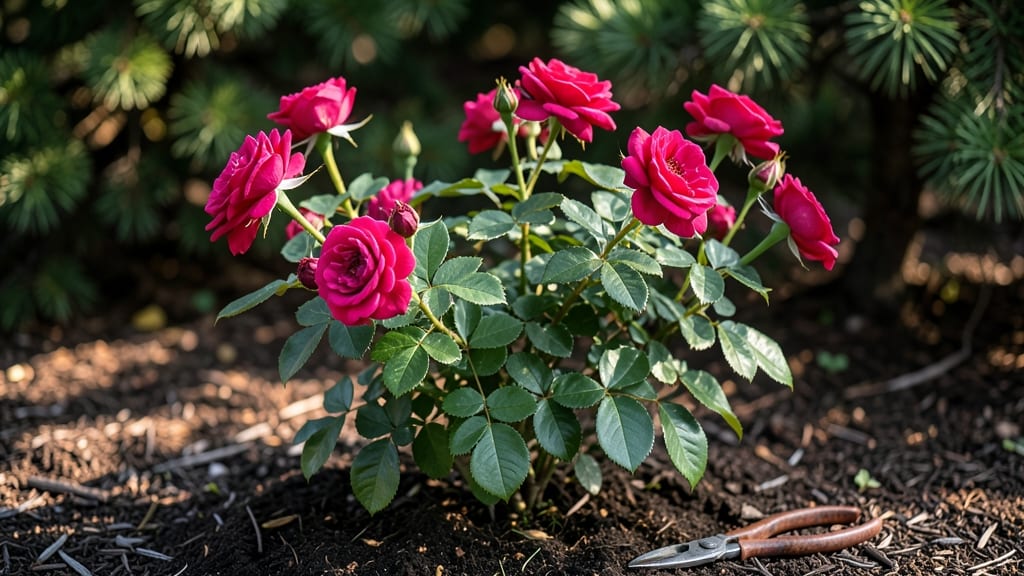
Growing knockout rose trees in the Pacific Northwest means vibrant blooms with almost no fuss—these roses thrive where others struggle, and their minimal pruning needs make them perfect for busy gardeners.
I planted mine last spring, and they’ve been covered in blooms from May through October with almost no extra work. The secret is their resilience: they handle our rainy summers, cool winters, and even forgetful watering better than most roses.
These roses love full sun but tolerate partial shade, making them adaptable to different spots in your yard. Start with well-draining soil—amend heavy clay with compost—and space plants 3 to 4 feet apart for airflow.
Water deeply once a week (more in summer heat), and you’ll avoid the common pitfalls of overwatering or fungal issues. Fertilize lightly in early spring with a balanced rose food, and you’re set for a season of effortless beauty.
What you’ll love most is how they reward low maintenance with nonstop blooms—no deadheading required, and pruning is just a light cleanup in late winter. The flowers stay vibrant even in our damp climate, and they attract pollinators without any extra effort.
Whether you’re shaping a hedge, lining a border, or planting in containers, these roses deliver drama with minimal upkeep.
For Pacific Northwest gardeners, knockout roses are a game-changer—they handle our weather, resist pests, and still look stunning. The only real mistake is waiting to try them. Start with one, and you’ll wonder why you didn’t plant more years ago.
📚 In This Guide
- What you need
- Instructions
- Tips and common mistakes
- Wrapping up and next steps
What you need
- ● Knockout rose tree: 1 bare-root or container-grown plant (choose disease-resistant varieties like R. ‘Knock Out®’ or R. ‘Double Knock Out®’).
- ● Planting hole: Dig a hole twice as wide and slightly shallower than the root ball.
- ● High-quality potting mix or native soil: Amend with compost (5-10 gallons) for better drainage.
- ● Organic mulch: 3-4 inches of wood chips or shredded bark (keep mulch 3-6 inches away from the trunk).
- ● Fertilizer: Balanced rose fertilizer (10-10-10) or slow-release granules (follow package rates).
- ● Watering can or hose with a gentle spray nozzle.
- ● Garden gloves & pruning shears: Bypass pruners (sterilized with rubbing alcohol).
- ○ Staking (optional but helpful): 1-2 6-foot bamboo stakes + soft plant ties (if planting in windy areas).
- ● Rose food: Liquid feed (like fish emulsion) for a mid-season boost.
- ● Drip irrigation system: For consistent moisture (especially in dry PNW summers).
- ● Epsom salt: 1 tablespoon per gallon of water (every 4-6 weeks for magnesium).
- ● Fungicide (preventative): Copper-based spray for rainy seasons.
- ● Decorative rocks or gravel: To enhance drainage around the base.
Step-by-step guide for planting and caring for knockout rose trees
Here's how to get these hardy roses thriving in your Pacific Northwest garden with minimal fuss.
🌱 Step 1: Choose the Right Planting Location and Time
Knockout roses love sun but handle the Northwest's cooler climate better than most. Pick a spot with at least 6 hours of direct sunlight daily—morning sun with afternoon shade works well in hotter microclimates. Avoid low spots where cold air settles, as these roses can suffer winter damage if too chilly.
Plant in early spring or fall, when soil temperatures are cool but not frozen. Fall planting gives roots time to establish before winter, while spring planting avoids late-season frost risks. The key is getting them in the ground 4-6 weeks before the first hard frost—this ensures strong root development before dormancy.
🪴 Step 2: Prepare the Soil and Plant Correctly
Amend your native soil with 2-3 inches of compost mixed into the top 12 inches of planting hole. Knockout roses tolerate a range of soil types but thrive in well-draining, slightly acidic soil (pH 6.0-6.5). If your soil is heavy clay, add sand or perlite to improve drainage—waterlogged roots lead to root rot, and these roses hate soggy feet.
Dig a hole twice as wide as the root ball but only as deep as the container's root level. Place the rose so the graft union (the swollen area near the base) sits 2 inches above soil level. This prevents the graft from being buried, which can cause the plant to revert to wild-type growth. Backfill with native soil mixed with compost, tamping gently to remove air pockets.
☀️ Step 3: Water and Mulch for Establishment
Water deeply immediately after planting, soaking the root zone until water runs out the bottom of the hole. Then, water every 2-3 days for the first 2 weeks, keeping the soil evenly moist but not soggy. You'll know it's right when the top 2 inches of soil feel damp but not wet. Overwatering at this stage causes more problems than underwatering.
Apply 3 inches of mulch (wood chips or shredded bark) around the base, keeping it 6 inches away from the stem to prevent rot. Mulch helps retain moisture, suppress weeds, and regulate soil temperature. Replenish mulch annually in late winter—this protects roots from extreme temperature swings that Northwest winters can deliver.
✂️ Step 4: Prune Strategically for Northwest Conditions
Knockout roses are famously low-maintenance, but a little pruning keeps them bushy and blooming hard. Prune once a year in early spring, just as new growth begins. Remove dead, diseased, or crossing branches first, cutting back to a healthy bud or outward-growing branch. Then, trim back last year's growth by one-third to encourage new, vigorous shoots.
Skip the summer pruning these roses hate—unlike hybrid teas, they don't need deadheading. Instead, let spent blooms stay on the plant; they provide winter interest and protect buds from late frosts. In the Pacific Northwest, where winters are damp, avoid heavy pruning in fall, as it exposes tender growth to rot.
Tips & tricks for perfect knockout rose trees
Here's what I've learned after years of growing these hardy beauties in the Pacific Northwest—simple tricks that make all the difference.
Sunlight Strategy: The 6 hours of sunlight mentioned is your baseline, but here's the thing: morning sun with afternoon shade works best in hotter microclimates. If your yard has afternoon sun, consider planting near a structure that provides shade during the hottest hours—this prevents leaf scorch, especially in summer. I've seen roses in full afternoon sun develop brown patches that never fully recover.
Timing is Everything: When planting in early spring or fall, check your local frost dates—those 4-6 weeks before first frost are critical. In the Pacific Northwest, this usually means planting by mid-October for fall or early April for spring. I once planted too late in fall and lost a young rose to winter damage. Use your local agricultural extension service's frost date calculator if you're unsure.
Soil Secrets: That pH 6.0-6.5 range is perfect, but here's what nobody tells you—if your soil tests higher, don't panic. These roses are tough! I've seen them thrive in soil up to pH 7.0, though they'll bloom more prolifically in the ideal range. For clay soil, mix in sand or perlite at a 1:1 ratio with your native soil when amending—this dramatically improves drainage without overwhelming the plant.
Pruning Precision: When you're trimming back last year's growth by one-third in early spring, look for the strongest canes—these are the ones that will produce the most flowers. I cut back to an outward-facing bud to encourage bushier growth. And here's a pro move: after pruning, spray the cuts with diluted horticultural oil to prevent fungal infections, especially in our damp Northwest climate.
Pro Tips for Knockout Rose Trees
- Here's what I've learned after years of growing these hardy beauties in the Pacific Northwest—simple tricks that make all the difference.
- Sunlight Strategy: The 6 hours of sunlight mentioned is your baseline, but here's the thing: morning sun with afternoon shade works best in hotter microclimates.
- Timing is Everything: When planting in early spring or fall, check your local frost dates—those 4-6 weeks before first frost are critical.
Frequently asked questions
Got questions about Knockout roses thriving in the Pacific Northwest? We’ve got answers!
Whether you’re a newbie gardener or a seasoned pro, these common queries will help you grow stunning, low-maintenance roses with ease.
How cold-hardy are Knockout roses in the PNW?
Knockout roses are highly cold-resistant, surviving winters in USDA Zones 5-9—perfect for the PNW’s chilly seasons! They handle frost and snow, but mulching (3-4 inches) around the base in late fall adds extra protection. Just avoid heavy mulch near the stem to prevent rot.
Do Knockout roses really need less pruning than other roses?
While they benefit from light pruning (removing dead/diseased wood in early spring), they’re far more forgiving than traditional roses. Skip the heavy cuts—just shape lightly after blooms fade to encourage bushier growth. Pro tip: Deadhead spent blooms to prolong flowering!
Can I grow Knockout roses in containers or just the ground?
Yes! These roses thrive in both ground plantings and large containers (minimum 15-gallon pots). For containers, use well-draining soil, a time-release fertilizer, and stake them early—they grow top-heavy! Just ensure pots get 6+ hours of sunlight daily.
What pests or diseases should I watch for in PNW Knockout roses?
Knockout roses are disease-resistant, but watch for aphids (spray with water) or black spot (remove infected leaves + fungicide). Overwatering or poor drainage can invite root rot, so amend soil with compost and ensure good airflow. Prevention: Space plants 3-4 feet apart!
When is the best time to plant Knockout roses in the PNW?
Plant in early spring (March-April) or fall (September-October) for best root establishment. Avoid summer heatwaves—roots need time to settle before stress. Bare-root roses can go in even later (until ground isn’t frozen), but potted roses prefer cooler temps.
Wrapping up and next steps
Knockout rose trees are the perfect low-maintenance superstars for Pacific Northwest gardens, blending beauty with resilience. Their vibrant blooms, disease resistance, and minimal pruning needs make them a dream for both novice and experienced gardeners alike.
Whether you're drawn to their bold colors or their hardy nature, these roses prove that stunning landscapes don’t require endless effort.
Ready to transform your outdoor space? Plant one today—your future self (and your garden!) will thank you. 🌸 For extra tips, check out our gardening resources or connect with local PNW gardening groups for hands-on advice!