
Pruning
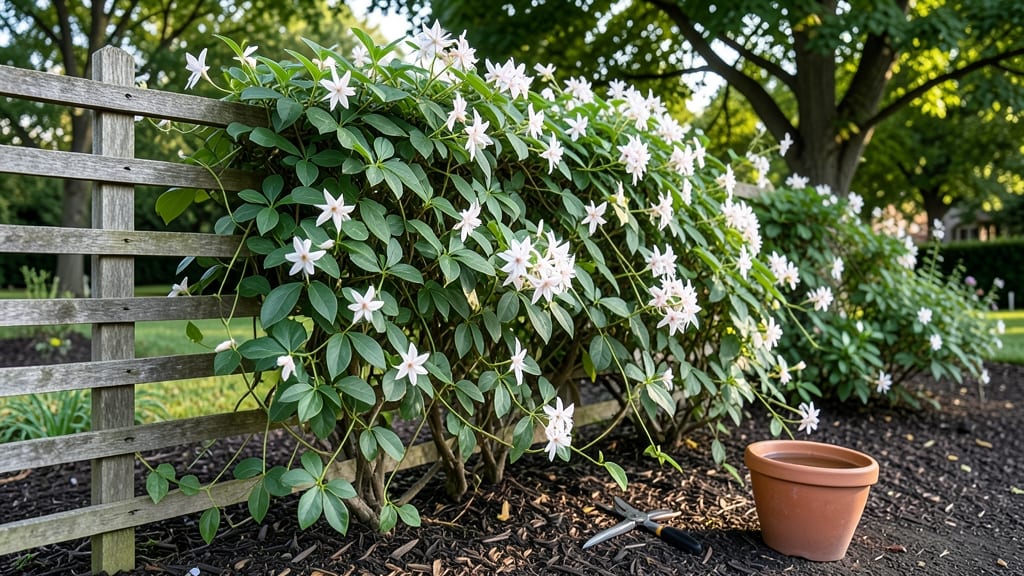
The jasmine flower tree’s intoxicating fragrance transforms any yard into a fragrant paradise—but only if you prune it right. 🌿 After struggling with sparse blooms for years, I discovered that precision cuts at the right time can turn a struggling jasmine into a nonstop floral show.
The key isn’t just cutting back; it’s understanding when and why to shape those vines for maximum fragrance and health.
Most gardeners prune once a year, but jasmine thrives with three strategic cuts: a light shape in early spring, a mid-summer bloom boost, and a winter cleanup. You’ll need sharp pruners, a ladder (for taller varieties), and about 20 minutes to work your way through the branches.
The goal? Encourage air circulation so flowers multiply and pests stay away.
Within weeks of proper pruning, you’ll see fresh green growth and clusters of buds forming where old wood used to be. Star jasmine and Confederate jasmine respond especially well, filling the air with their signature scents by summer’s end.
Even neglected trees rebound with the right technique—no more sad, bare branches.
Works for both climbing varieties and bush forms, and adapts to containers or in-ground plantings. Let’s get those blooms back in full force—your nose will thank you.
📚 In This Guide
- What you need
- Instructions
- Tips and common mistakes
- Wrapping up and next steps
What you need
- ● Pruning shears: Bypass pruners (sharp, clean, and sterilized with rubbing alcohol) for small branches (1/4"–3/4" thick). Example: Felco F-2 or Corona bypass pruners.
- ● Loppers: For thicker branches (3/4"–2" thick). Example: Fiskars PowerGear loppers.
- ● Pruning saw: For stubborn, thick branches (2"+). Example: Felco F-1 pruning saw.
- ● Gloves: Heavy-duty gardening gloves (cut-resistant, like Felco or Southwest brands) to protect from thorns and sap.
- ● Disinfectant: 70% isopropyl alcohol or a pruning sealant (e.g., Tanglefoot Pruning Seal) to prevent disease spread.
- ○ Extension pole: Optional but helpful for high branches (e.g., 3–6 ft telescoping pole with pruners attached).
- ● Trash bags: Heavy-duty bags (10–20 gallon) for debris cleanup.
- ● Rake or broom: For clearing fallen leaves/blooms post-pruning.
- ● Weather: Prune on a dry, overcast day (avoid extreme heat or frost). Ideal temps: 50–75°F.
- ● Timing: Late winter/early spring (Jan–Feb): Major structural pruning (before new growth).
- ● After blooming (May–June): Light shaping and deadheading.
- ● Safety gear: Safety glasses (to shield from debris) and a dust mask (if working in dusty conditions).
- ● Tree health check: Inspect for diseased or pest-infested branches before pruning. Pro tip: If branches ooze sap or have holes, quarantine them!
- ● Pruning paint: Seal large cuts (>1/2") with pruning paint (e.g., Tree Seal Tape) to prevent decay.
- ● Tree ties: For supporting weak branches post-pruning (e.g., soft plastic ties).
- ● Fertilizer: Slow-release balanced fertilizer (e.g., 10-10-10) to nourish the tree after pruning.
- ● Camera/phone: Snap before-and-after pics to track progress!
Step-by-step guide for reviving your jasmine flower tree through strategic pruning
Precision cuts at the right time unlock lush, continuous blooms—here's how to do it right.
✂️ Step 1: Assess and Plan Your Cuts in Late Winter
Start when your jasmine tree is still dormant, ideally in late February or early March before new growth begins. Look for dead, crossing, or inward-growing branches—these are your first targets. I always use sharp, clean pruning shears to avoid tearing bark, which invites disease. Make your first cuts just above a bud that faces outward on the branch; this encourages fuller growth and better airflow.
Here's the thing—don't overthink it. Focus on removing no more than 25% of the tree's total foliage in this first session. Your goal is to shape, not strip. If you're unsure which branches to cut, remember: thinner branches in the center and branches growing straight up (rather than outward) are your priorities. These cuts create space for new, flower-bearing growth.
🌿 Step 2: Encourage Blooming with Summer Light Pruning
After the initial late-winter prune, wait until mid-to-late summer (around July or August) to do your second round of cuts. This is when your jasmine tree is actively growing but hasn't yet set next year's flower buds. Look for last year's flower clusters—these are the tiny brown stems where blooms emerged. Cut these back to just above a leaf node or bud, but leave the current season's growth intact.
This summer pruning trick works because it forces the tree to redirect energy into producing new flower buds rather than maintaining old growth. You'll see fresh, vibrant shoots emerge within 2-3 weeks—that's your signal it's working. Just avoid cutting into green, healthy wood unless it's blocking light or growing in the wrong direction. The key is selective thinning, not heavy pruning.
⏰ Step 3: Maintain Year-Round with Minimal Fall and Spring Trims
In early fall (September or October), do a quick light maintenance pass. Remove any deadheading flower clusters that haven't dropped naturally, and trim back any overly vigorous shoots that are growing too long or leggy. This keeps the tree tidy and prevents energy waste on unproductive growth. I like to do this after the first frost—it signals the tree to slow down and focus on root development.
Then, in early spring (March or April), give your tree a final shape-up. This is where you refine the structure you created in late winter. Look for shoots that grew in the wrong direction during the summer and trim them back to a bud. Avoid heavy cuts now—just touch up the shape. The goal is to encourage balanced growth so your tree stays compact and bushy, not leggy and sparse.
☀️ Step 4: Post-Prune Care for Maximum Blooms
After any major pruning session, give your jasmine tree a deep watering to help it recover. The roots need moisture to support new growth, especially if you've removed a significant portion of the canopy. I always water slowly at the base over 15-20 minutes to ensure the soil absorbs deeply. Avoid wetting the leaves to prevent fungal issues.
Here's where it gets fun—watch for new shoots emerging within 3-4 weeks after pruning. These are your future blooms. To encourage even more growth, apply a balanced, slow-release fertilizer (10-10-10 ratio) around the drip line of the tree. This gives the roots the nutrients they need to support strong, flowering branches. Just don't overdo it—jasmine trees are sensitive to excess nitrogen, which can lead to leafy growth at the expense of flowers.
Tips & tricks for perfect jasmine flower tree pruning
Mastering the timing and technique of jasmine pruning transforms a struggling shrub into a fragrant, blooming powerhouse.
Timing is Everything: The late winter cut in late February or early March is non-negotiable—this dormant period lets you see the tree's natural structure clearly. I've seen gardeners miss this window and end up with uneven growth or delayed blooms. If you're in a warmer climate, wait until just before buds swell. The key is catching the tree before it wakes up for the season—think of it as catching a sleepy giant before it stretches.
Tool Precision Matters: Sharp pruning shears aren't just about clean cuts—they're about preserving the tree's health. I learned this the hard way when I used dull shears and ended up with ragged cuts that took months to heal. Always clean your tools with rubbing alcohol between cuts to prevent spreading disease. For thicker branches, use loppers, but never exceed ⅓ of the branch diameter to avoid damaging the tree.
Summer Pruning Strategy: That mid-to-late summer (July-August) prune is where the magic happens for blooms. When you cut back last year's flower clusters to just above a bud, you're essentially telling the tree, "Forget these old blooms—let's make new ones!" I've seen gardeners skip this step and wonder why their jasmine never produces as many flowers. The 2-3 week window for new shoots to appear is your confirmation that the pruning worked.
Post-Prune Recovery: That 15-20 minute deep watering after major pruning sessions is crucial—it's not just about hydration, but about giving the roots time to absorb moisture without shock. I've noticed that trees watered quickly often develop root stress. For container jasmine, water until it drains from the bottom, then let it sit for 10 minutes before moving it back to its spot. This mimics natural rainfall and prevents root rot.
Pro Tips for Jasmine Flower Tree
- Mastering the timing and technique of jasmine pruning transforms a struggling shrub into a fragrant, blooming powerhouse.
- Timing is Everything: The late winter cut in late February or early March is non-negotiable—this dormant period lets you see the tree's natural structure clearly.
- Tool Precision Matters: Sharp pruning shears aren't just about clean cuts—they're about preserving the tree's health.
Frequently asked questions
Got questions about keeping your jasmine flower tree thriving with the perfect prune? Here are some of the most common queries—and their answers—to help you master year-round blooms like a pro!
When is the best time to prune a jasmine flower tree?
The ideal time is late winter or early spring, just before new growth begins. This encourages healthy blooms for spring and summer. Light pruning after flowering (in early fall) can also promote denser growth. Avoid heavy pruning in fall—jasmine needs time to harden off before winter!
How much can I trim without harming the tree?
For established trees, you can safely remove up to 1/3 of the foliage in one session. Focus on dead, diseased, or crossing branches first. For younger trees, limit cuts to 10-15% to avoid stress. Always use clean, sharp tools to prevent damage!
What if my jasmine isn’t blooming after pruning?
Lack of flowers often means too much shade, over-fertilizing (especially with high nitrogen), or pruning at the wrong time. Move your tree to 6+ hours of sunlight daily, switch to a balanced bloom-boosting fertilizer, and prune right after flowering to encourage next season’s buds.
Can I prune a jasmine tree in summer?
Yes, but lightly! Summer pruning (June–August) should focus on shaping or removing spent blooms to redirect energy. Avoid heavy cuts—this stresses the tree and can reduce fall/winter hardiness. If you must prune heavily, do it in early summer and keep the tree well-watered.
What’s a good alternative if my jasmine tree won’t recover from pruning?
If your tree shows yellowing leaves, dieback, or no new growth after pruning, it may need rejuvenation pruning—cutting back 1/2 to 2/3 of the canopy in stages over 2–3 years. If it’s beyond saving, consider replacing it with a hardy variety like Arabian jasmine or star jasmine, which are more forgiving!
Wrapping up and next steps
Pruning your jasmine flower tree isn’t just about shaping—it’s about unlocking a year-round cascade of fragrant blooms! 🌿 With the right tools, timing, and techniques, you can revitalize your tree’s health and beauty while keeping pests and diseases at bay.
Remember, consistency is key: a little effort now means months of stunning, aromatic flowers later.
Ready to transform your garden? Start by scheduling your next pruning session—whether it’s a light trim in spring or a deeper cut in late winter. Your jasmine tree will thank you with waves of intoxicating blossoms! 🌸