Pruning
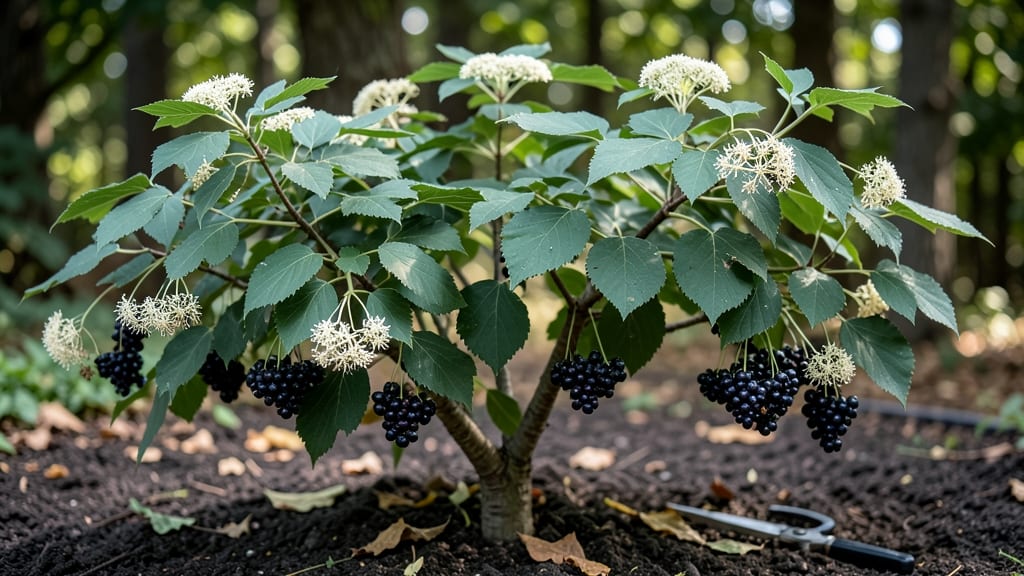
The elderberry tree size you end up with depends entirely on how you prune—let these towering beauties stay tame at 6-10 feet, or watch them explode into unruly 20-foot giants. 🌿 I’ve wrestled with these fast-growing shrubs for years, and the difference between a wild tangle and a tidy harvest comes down to two cuts a year: one in late winter and another after fruiting.
The right pruning turns what could be a backyard eyesore into a productive, picturesque focal point.
Most elderberry varieties—like the hardy Adams or York—grow 3-5 feet per year without pruning, so containment requires planning. If you’re working with limited space, dwarf varieties like Black Beauty stay under 8 feet, while standard types need 10-15 feet of horizontal room to avoid crowding.
The key is pruning back one-third of the oldest canes each year to encourage fresh growth while keeping the shape open enough for airflow (and easier berry picking).
You’ll end up with a tree that’s dense but controlled, producing more berries per square foot than an unpruned plant. The berries ripen in late summer, and the dark purple clusters become a magnet for birds—unless you harvest them first.
Pruned elderberries also resist disease better, and the compact form makes them ideal for hedges, privacy screens, or even large containers with proper support.
For small spaces, consider multi-stemmed training—growing several smaller stems from the base instead of one tall trunk. This keeps the height under 6 feet while maximizing fruit production.
Whether you’re designing a pollinator-friendly border or just want easier harvests, pruning transforms elderberries from a wild thicket into a neat, productive powerhouse.
📚 In This Guide
- What you need
- Instructions
- Tips and common mistakes
- Wrapping up and next steps
What you need
- ● Pruning shears: Bypass pruners (sharp, clean, and disinfected with rubbing alcohol to prevent disease). Size: 6–8 inches for small branches.
- ● Loppers: For thicker branches (½–1.5 inches in diameter). Look for: Long handles (20–24 inches) for leverage.
- ● Pruning saw: For branches >1.5 inches thick. Type: Curved-tooth saw for clean cuts.
- ● Gloves: Heavy-duty, cut-resistant gloves (elderberry thorns are no joke!).
- ● Disinfectant: 70% isopropyl alcohol or a 10% bleach solution (1 part bleach to 9 parts water).
- ○ Twine or zip ties: For securing branches during pruning (optional but helpful for large cuts).
- ● Bucket or bag: To collect pruned branches (for compost or disposal).
- ● Pruning sealant: (e.g., tree wound paint) for cuts >½ inch—controversial but some swear by it!
- ● Ladder: If your tree exceeds 6 feet tall. Safety first: Use a sturdy, non-slip ladder.
- ● Hand lens or magnifier: For spotting disease signs (e.g., powdery mildew) on branches.
- ● Marking spray: (e.g., white paint) to tag branches for future reference.
How to control elderberry tree size through pruning
Here’s how to keep your elderberry tree manageable while boosting fruit production.
🌿 Step 1: Assess the Tree’s Natural Growth Pattern
Elderberries grow aggressively—sometimes 12-15 feet tall and 8-10 feet wide if unchecked. Before pruning, observe where new growth emerges: older wood (2+ years) produces the best fruit, while young, vigorous shoots compete for energy. Look for suckers at the base—these are the first to remove unless you want a thicket.
Use a sharp pruning saw for thick branches over 1 inch in diameter and bypass pruners for thinner growth. I always prune on dry days to reduce disease risk, and I sanitize tools with 70% rubbing alcohol between cuts. This keeps infections from spreading through open wounds.
✂️ Step 2: Thin Out Crowded Branches for Airflow
Start by removing dead, diseased, or crossing branches—these rob the tree of energy and invite pests. Aim to create a central leader (main vertical stem) with well-spaced scaffold branches (major limbs). Elderberries respond well to an open-center shape, so I target 6-8 main branches radiating outward.
Cut back overlapping branches to 1/3 of their length—never leave stubs. If a branch is too thick to cut cleanly, make a 30° angle cut just outside the branch collar (the swollen area where the branch meets the trunk). This ensures faster healing. After thinning, you’ll notice more sunlight reaching the center, which is key for fruit development.
🌱 Step 3: Prune for Compact Growth in Stages
Elderberries fruit on second-year wood, so I prune in three phases: winter (dormant), early spring (before buds swell), and summer (after harvest). In winter, remove 50% of the oldest wood—this forces new, fruit-bearing branches to grow. In early spring, cut back last year’s growth by 1/3 to encourage bushier growth.
Here’s the trick: summer pruning is where you control size. After harvest, trim new shoots that exceed 3-4 feet to 12-18 inches. This keeps the tree 6-8 feet tall while maintaining vigor. If you skip summer pruning, you’ll end up with a 15-foot monster in just a few years.
☀️ Step 4: Encourage Fruitful Branches with Strategic Cuts
Focus cuts on non-fruiting wood—these are the thin, fast-growing shoots that steal energy from fruiting branches. I look for pencil-thick stems (about 1/4 inch diameter) and cut them back to 2-3 buds. This redirects energy to thicker, older branches where the berries form.
You’ll know you’re on the right track when new shoots emerge from the lower half of the tree—this creates a fuller, more compact shape. Avoid heavy pruning in fall, as fresh cuts won’t heal before winter. Instead, do a light cleanup to remove any deadwood or weak growth.
⏰ Step 5: Maintain Size Year-Round with Light Pruning
Even after initial pruning, elderberries send up suckers and water sprouts that demand attention. I spend 10-15 minutes monthly removing these vigorous, vertical shoots—they’re the tree’s way of escaping your size goals. Use hand pruners for small growth and a pruning saw for thicker stems.
For established trees, a light annual pruning in late winter (just as buds swell) keeps the canopy open and manageable. If you notice leggy growth reaching toward the sun, it’s a sign the tree needs more frequent thinning. Over time, you’ll see a balanced, fruit-bearing shrub instead of a towering wild plant.
Tips & tricks for strategic elderberry pruning
Took me years of trial and error to figure out these pruning secrets—here's how to keep your elderberry tree both productive and manageable.
Timing is Everything: The three-phase pruning schedule in Step 3 is non-negotiable for elderberries. Winter's 50% oldest-wood removal forces new fruiting branches to develop, while early spring's 1/3 reduction of last year's growth creates that perfect bushy structure. That summer trim to 12-18 inches for any shoots over 3-4 feet is where you actually control the tree's height—this is the step most people skip, and it's why their trees turn into unruly giants.
Branch Collar Technique: When cutting thicker branches in Step 2, always make your cut just outside the branch collar at a 30° angle. This isn't just theory—it's how the tree naturally heals. I've seen branches die back when people cut too close to the trunk or leave stubs. The collar contains healing cells that regenerate the branch tissue, so protecting it makes all the difference in wound recovery.
Seasonal Disease Prevention: Fall pruning is a common mistake—never do heavy cuts then. The fresh wounds won't have time to heal before winter's moisture arrives, creating perfect entry points for fungal infections. Instead, do that light cleanup in fall to remove only deadwood. The real work happens in winter when the tree's dormant and can heal properly during its growing season.
Pruning Tool Maintenance: That 70% rubbing alcohol sanitization between cuts in Step 1 isn't optional. I've seen entire branches infected just from using the same saw on diseased wood then healthy branches. Keep your tools sharp too—dull blades tear wood instead of making clean cuts, which slows healing and invites pests. A clean, sharp saw makes all the difference in your tree's health.
Pro Tips for Elderberry Tree Size
- Took me years of trial and error to figure out these pruning secrets—here's how to keep your elderberry tree both productive and manageable.
- Timing is Everything: The three-phase pruning schedule in Step 3 is non-negotiable for elderberries.
- Branch Collar Technique: When cutting thicker branches in Step 2, always make your cut just outside the branch collar at a 30° angle.
Frequently asked questions
How fast does an elderberry tree grow, and how big can it get without pruning?
Elderberry trees grow fast—up to 3–5 feet per year! Without pruning, they can reach 12–15 feet tall and spread 8–10 feet wide. If you’re short on space, prune annually to keep it under 6–8 feet while maintaining healthy fruit production.
When is the best time to prune an elderberry tree to control its size?
Prune elderberries late winter or early spring (just before buds swell) for best results. Avoid pruning in fall, as new growth may not harden off before winter. Pro tip: Remove 1/3 of the oldest canes each year to encourage compact growth and airflow.
Will pruning reduce the number of elderberries my tree produces?
Not if done right! Pruning actually boosts fruit production by redirecting energy to younger, more productive canes. Focus on removing dead, diseased, or overly crowded wood—this keeps the tree healthy and bountiful. Just avoid over-pruning (never cut more than 25% of the canopy at once).
Can I grow elderberries in a container, or do they need to be planted in the ground?
Yes! Dwarf elderberry varieties (like Sambucus canadensis ‘Adams’) thrive in large containers (20+ gallons) with well-draining soil. Just ensure the pot has drainage holes and replant every 3–5 years to refresh root space. Containers also make pruning and harvesting easier!
My elderberry tree isn’t growing as expected—what could be wrong?
Check these common issues:
- Poor soil: Elderberries love moist, slightly acidic soil (pH 5.0–6.5). Amend clay or sandy soil with compost.
- Overcrowding: If planted too close to other trees, it may struggle. Give it 8–10 feet of space.
- Pests/disease: Yellow leaves or holes? Watch for Japanese beetles or powdery mildew. Prune affected branches immediately.
If growth stalls, fertilize in early spring with a balanced 10-10-10 formula.
Wrapping up and next steps
Understanding elderberry tree size and mastering strategic pruning can transform your garden into a thriving, manageable space—while reaping the rewards of lush harvests! 🌿 With the right techniques, you’ll keep your elderberry compact, healthy, and productive for years to come.
The key? Consistent care and patience—your efforts will pay off with vibrant growth and delicious berries.
Ready to take the next step? Grab your pruners, sketch a quick pruning plan, and start shaping your elderberry tree today. Your compact, bountiful garden awaits! 🌟