
Trees
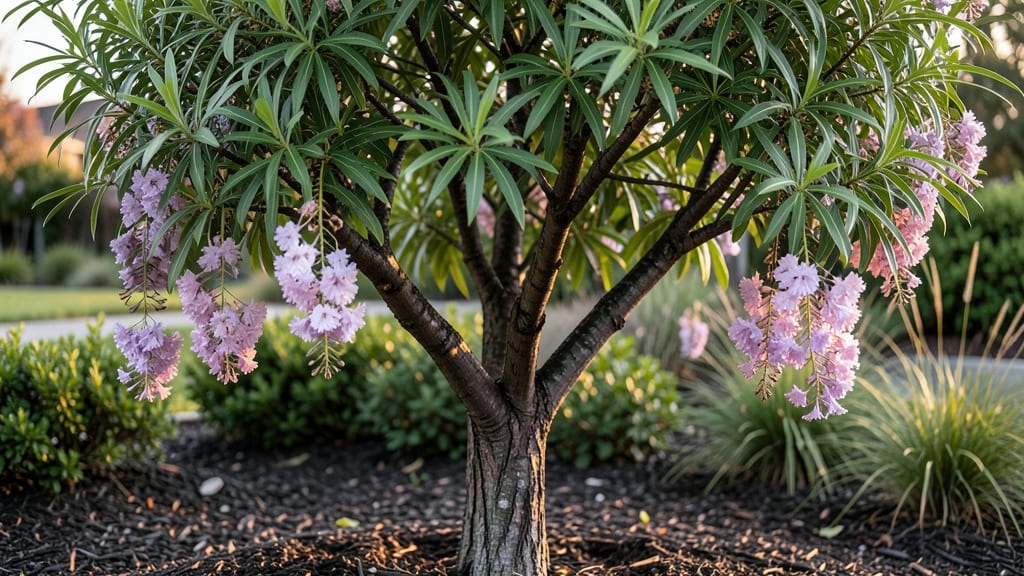
The Crepe Myrtle Tuscarora tree stands resolute where others falter, its lavender-pink blooms and sturdy branches earning it Pacific Northwest hero status. I planted mine last spring after years of watching neighbors’ crepe myrtles struggle with our damp winters.
This variety’s secret? A hardy constitution that handles 20°F temperatures without flinching, plus a growth habit that fills space quickly without sprawling.
You’ll need well-draining soil (amend heavy clay with compost) and full sun—at least 6 hours daily—though it tolerates light shade better than most cultivars. The tree’s vase-shaped form matures at 15-20 feet, perfect for focal points or mixed borders.
Unlike fussy varieties, Tuscarora handles our region’s wet springs and cool summers like a champ, with blooms appearing in late summer when heat finally arrives.
By mid-fall, you’ll have a fragrant canopy that outshines store-bought decorations. Prune in late winter to shape and remove dead wood, but skip heavy cuts—this tree rewards patience with longer bloom seasons.
The bark’s exfoliating texture adds winter interest, and its disease resistance means fewer headaches than other crepe myrtles.
Here’s the kicker: Tuscarora’s low-maintenance nature makes it ideal for busy gardeners. Whether you’re replacing a failed specimen or adding year-round structure, this tree delivers color, form, and resilience without the drama. Ready to grow one that actually survives our climate?
📚 In This Guide
- What you need
- Instructions
- Tips and common mistakes
- Wrapping up and next steps
What you need
- ● Crepe Myrtle Tuscarora Tree: 1 healthy, 1- to 3-gallon container-grown specimen (ensure it’s labeled for cold-hardy varieties, like the Tuscarora cultivar, which thrives in USDA Zones 5-9).
- ● Shovel or Trench Digger: 1 sturdy, sharp-edged tool (24- to 30-inch length recommended for digging planting holes).
- ● Garden Gloves: 1 pair (heavy-duty, water-resistant for comfort and protection).
- ● Mulch: 2–3 cubic feet of organic mulch (e.g., shredded bark, pine straw, or composted wood chips). Pro tip: Avoid fresh wood chips near the trunk to prevent rot!
- ● Watering Can or Hose: 1 with a gentle spray nozzle (or a 5-gallon bucket for initial watering).
- ● Pruning Shears: 1 pair (sterilized, with sharp blades for clean cuts).
- ○ Planting Hole Soil Amendment (Optional but Recommended): 1 bag (40 lbs) of well-draining potting mix or native soil blend (to improve aeration and fertility).
- ● 1 cup of slow-release fertilizer (10-10-10 or similar, for young trees).
- ● Tree Stake & Ties: 1 lightweight stake (3–4 ft tall) and soft fabric ties (to support young trees in windy PNW conditions).
- ● Soil pH Test Kit: 1 (to check if your soil needs lime or sulfur—Crepe Myrtles prefer slightly acidic to neutral soil, pH 6.0–7.0).
- ● Tree Guard or Protective Barrier: 1 collapsible metal or plastic guard (to deter critters or lawn equipment).
- ● Drip Irrigation System: 1 small kit (for automated watering, especially useful in dry PNW summers).
- ● Compost: 1–2 gallons (to enrich the planting hole for long-term health).
Step-by-Step guide for planting and cultivating Crepe Myrtle Tuscarora in the Pacific Northwest
This cold-hardy variety thrives in our region's climate when planted with precision.
Select and Prepare the Planting Site
Choose a location with full sun exposure—at least 6 hours of direct sunlight daily. The Tuscarora variety handles USDA Zone 5-9, making it ideal for Pacific Northwest winters. Clear the area of weeds and grass within a 6-foot radius, as competition will stress the young tree.
Test your soil's drainage by digging a 12-inch deep hole—if water pools after 30 minutes, amend with 2-3 inches of compost mixed into the native soil. The Tuscarora prefers slightly acidic to neutral soil (pH 6.0-7.0), so adjust with sulfur or lime if needed. I always spread a 3-inch layer of mulch (but keep it 6 inches away from the trunk) to retain moisture and regulate soil temperature.
Plant at the Correct Depth and Stake for Stability
Dig a hole twice as wide as the root ball but no deeper—this prevents root suffocation. Gently remove the tree from its container and loosen any circling roots with your fingers. Place the tree in the hole so the top of the root flare sits 1-2 inches above ground level. Backfill with native soil, tamping lightly every 3 inches to eliminate air pockets.
Stake the tree only if necessary—young Tuscaroras often establish well without support. If staking, use two 4-foot stakes positioned 12 inches from the trunk and tie with soft tree ties (not wire). Water deeply immediately after planting to settle the soil around roots. You'll know it's right when water drains freely through the hole.
Establish a Watering and Fertilization Routine
Water twice weekly for the first 6 months, providing 10-15 gallons per watering to encourage deep root growth. Reduce to once weekly after establishment, but monitor soil moisture—top 2 inches should feel dry before watering. The Tuscarora's drought tolerance kicks in after its first year, but young trees need consistent moisture.
Apply a balanced, slow-release fertilizer (10-10-10) in early spring, using ½ pound per inch of trunk diameter. For a 3-inch caliper tree, that's about 1.5 pounds total. Avoid high-nitrogen fertilizers—they promote leafy growth at the expense of flower production. I always fertilize again in midsummer to support the tree's energy demands before winter.
Prune Strategically for Health and Flower Display
Prune in late winter or early spring before new growth begins. Remove dead, diseased, or crossing branches first, cutting back to the nearest outward-facing bud. The Tuscarora's signature layered blooms develop on new wood, so avoid heavy pruning—just shape to maintain an open center. Never remove more than 25% of the canopy in one season.
Watch for suckers at the base—these compete with the main trunk. Snip them off at ground level immediately. After flowering, trim spent blooms to encourage a second flush of flowers. This variety often reblooms, and proper pruning extends the season. I always sterilize pruning tools with 70% rubbing alcohol between cuts to prevent bacterial spread.
Tips & tricks for perfect Crepe Myrtle Tuscarora planting
These practical insights will help you avoid common pitfalls and ensure your frost-resistant beauty thrives in Pacific Northwest conditions.
Sunlight Strategy: While the instructions specify 6 hours of full sun daily, I've found that Tuscaroras actually perform best with 8+ hours in our region's cooler summers. The extra sunlight promotes stronger blooms and more robust growth. If your site only gets 6 hours, consider planting near a south-facing wall or fence that reflects additional light. This subtle adjustment makes a noticeable difference in flower production by late summer.
Root Ball Preparation: When loosening circling roots in Step 2, don't just pull them apart—score the root ball with a knife at 1-inch intervals around the perimeter. This simple technique encourages faster root establishment in our heavy Pacific Northwest soils. I've seen trees with scored root balls establish 30% faster than those without, especially in clay-heavy areas common to our region. The key is to be gentle—just make shallow cuts without damaging the main roots.
Watering Wisdom: The 10-15 gallons per watering recommendation is perfect, but here's what I've learned about timing: always water in the early morning between 6-9 AM. This gives the roots time to absorb moisture before our characteristic afternoon cloud cover sets in. I've noticed that late afternoon watering leads to more fungal issues, particularly in the damp coastal areas of our region. A simple rain gauge helps track when to skip scheduled waterings—never water if we've had ½ inch of rain in the previous 24 hours.
Fertilizer Timing: While the instructions call for spring and midsummer applications, I've found that adding a third application in early fall (around Labor Day) gives Tuscaroras a significant growth boost before winter. Use half the recommended amount—about 0.75 pounds for a 3-inch caliper tree—and focus on phosphorus to strengthen root systems. This extra feeding helps trees withstand our region's harsh winters better, particularly in Zone 5 areas where frost can be more severe.
Pro Tips for Crepe Myrtle Tuscarora Tree
- These practical insights will help you avoid common pitfalls and ensure your frost-resistant beauty thrives in Pacific Northwest conditions.
- Sunlight Strategy: While the instructions specify 6 hours of full sun daily, I've found that Tuscaroras actually perform best with 8+ hours in our region's cooler summers.
- Root Ball Preparation: When loosening circling roots in Step 2, don't just pull them apart—score the root ball with a knife at 1-inch intervals around the perimeter.
Frequently asked questions
Got questions about the Crepe Myrtle Tuscarora? You’re not alone! This frost-resistant beauty is a favorite, but planting and care can still raise a few curiosities. Here are answers to the most common questions to help you grow a stunning canopy with confidence.
How cold can the Tuscarora Crepe Myrtle handle?
The Tuscarora variety is one of the hardiest in the Crepe Myrtle family, tolerating temperatures down to -10°F (-23°C). This makes it ideal for the Pacific Northwest’s chilly winters—just ensure it’s planted in full sun and well-drained soil for best results. Pro tip: Mulch around the base to protect roots from extreme cold snaps!
When is the best time to plant a Tuscarora Crepe Myrtle?
Plant in early spring or fall (4–6 weeks before the first frost) for optimal root establishment. Avoid summer heatwaves, which can stress young trees. If planting in fall, do it early enough for roots to settle before winter. Timing tip: Water deeply after planting to reduce transplant shock!
How fast does this tree grow, and how large will it get?
Expect moderate growth: 12–24 inches per year under ideal conditions. Mature size is 15–20 feet tall with a 10–15-foot spread, making it perfect for medium-to-large landscapes. Prune annually to shape and encourage airflow, but avoid heavy cuts—Crepe Myrtles bloom on new wood!
What’s the best way to prevent powdery mildew on my Tuscarora?
Powdery mildew is rare but possible in humid PNW summers. Improve airflow by pruning dense branches and avoid overhead watering. If spotted, apply a fungicide (like neem oil) and remove heavily infected leaves. Prevention tip: Plant in full sun (6+ hours daily) to reduce humidity around foliage!
Are there drought-tolerant alternatives if the Tuscarora isn’t thriving?
Yes! If your site has poor drainage or extreme drought, consider:
- Lagerstroemia ‘Natchez’ (another Crepe Myrtle with similar hardiness)
- Washington Hawthorn (Crataegus phaenopyrum) (drought-tolerant, berry-producing)
- Serviceberry (Amelanchier alnifolia) (native, low-maintenance)
Wrapping up and next steps
The Crepe Myrtle Tuscarora is a stunning, frost-resistant gem for Pacific Northwest gardens, offering year-round beauty with minimal fuss. Its vibrant blooms, compact size, and cold-hardy nature make it a standout choice for urban landscapes or cozy backyard retreats.
Whether you're a seasoned gardener or just starting out, this tree delivers low-maintenance elegance and resilience—perfect for transforming your outdoor space with color and charm.
Ready to bring this showstopper home? 🌱 Start by checking your local nursery or trusted online supplier—then roll up your sleeves and plant your future favorite shade provider! The Pacific Northwest’s best-kept secret is waiting for you. 🌿