
Pruning
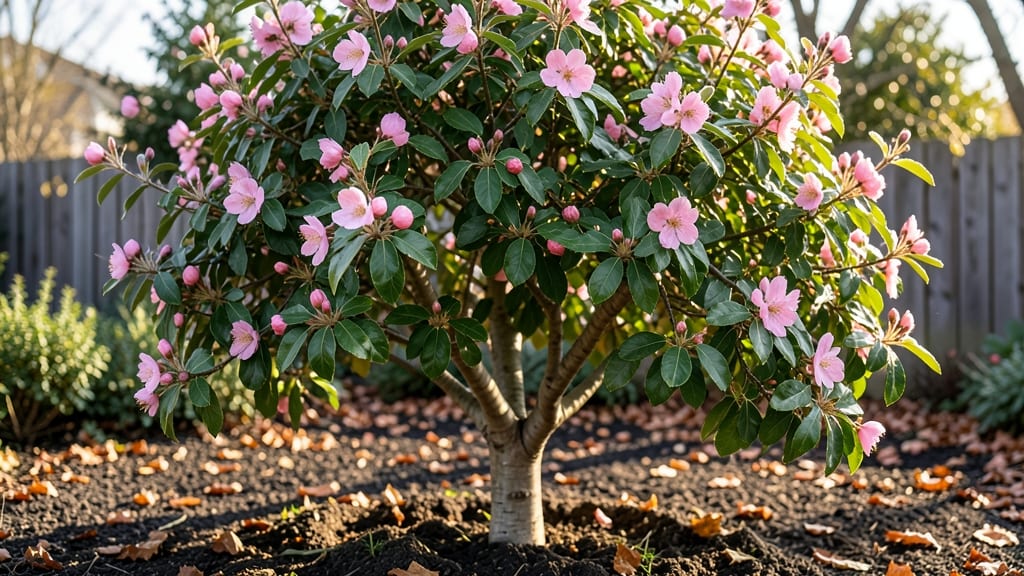
Your pink crabapple tree’s frost-resistant blooms start with a sharp pair of pruners and a clear plan. I’ve pruned these trees for over a decade, and the difference between a sparse show and a dazzling spring canopy comes down to timing, technique, and knowing which branches to cut.
The right cuts now mean 3-4 weeks of pink blossoms next spring that outshine anything from a nursery.
Here’s the thing—most gardeners prune too late or too aggressively. My method focuses on shaping the tree in late winter when it’s still dormant but before buds swell, and I always cut back to outward-facing buds to encourage an open, airy structure.
You’ll need a ladder for taller branches, but the payoff is a tree that blooms earlier and more abundantly than unpruned neighbors.
After pruning, your tree will reward you with velvety pink flowers that attract pollinators and create a stunning focal point. The best part? These blooms often arrive before spring frosts can damage them, thanks to the tree’s natural resilience. Just avoid heavy pruning in fall—it stresses the tree before winter.
This blueprint works for Malus varieties like ‘Pink Perfection’ or ‘Royal Raindrops,’ whether you’re shaping a young sapling or revitalizing an older tree. The key is consistency—prune the same way each year, and you’ll turn a good tree into a showstopper.
📚 In This Guide
- What you need
- Instructions
- Tips and common mistakes
- Wrapping up and next steps
What you need
- ● Pruning shears: Sharp, bypass-style shears (1 pair) for clean cuts on small branches.
- ● Loppers: Heavy-duty loppers (1 pair) for branches ½ to 1½ inches thick.
- ● Pruning saw: Curved-tooth saw (1) for thick branches over 1½ inches.
- ● Disinfectant: 70% isopropyl alcohol or bleach solution (1 part bleach : 9 parts water) to sterilize tools.
- ○ Pruning sealant: Tree wound sealant (optional but recommended for cuts over ½ inch).
- ● Gloves: Heavy-duty gardening gloves (1 pair) for protection.
- ● Safety gear: Safety goggles (1 pair) and long sleeves/pants to avoid scratches.
- ● Marking twine or tape: For tagging branches to prune (1 roll).
- ● Extension pole: For hard-to-reach branches (adjustable length, 6–12 ft).
- ● Ladder: Sturdy, non-slip ladder (if tree is tall).
- ● Sharpie or paint: To mark branches for future reference.
- ● Trash bags: For collecting pruned branches (1–2 large bags).
- ● Tree growth regulator: (e.g., dormant oil spray) to protect against pests post-pruning.
Step-by-step guide to reviving pink crabapple tree blooms after frost
Here's how to nurse your frost-damaged pink crabapple back to vibrant spring blooms.
Assess Damage and Timing
First, examine the tree's condition—look for brown, mushy buds or blackened branches. This is your starting point. The best time to prune is late winter to early spring, right before new growth begins. If you wait until buds swell, you risk cutting off next year's flowers. I always check for green tissue beneath the bark—if it's still alive, the branch can recover.
Use clean, sharp pruning shears to make 45-degree cuts just above a healthy bud or lateral branch. Avoid leaving stubs—these invite disease. If you're unsure whether a branch is dead, scratch the bark with your thumbnail. Green underneath means life; brown means it's gone.
Remove Dead and Weak Wood
Start by removing any branches that show signs of frost damage—they won't bloom or support new growth. Look for branches that are brittle, cracked, or completely devoid of buds. These should be cut back to the main trunk or a strong lateral branch. I like to work from the inside out, so I can see the tree's structure as I go.
Next, thin out crowded branches to improve airflow and sunlight penetration. Pink crabapples need good circulation to prevent fungal issues. Aim to remove 20-30% of the tree's total branches, focusing on those that cross or rub against each other. This reduces competition for nutrients and encourages stronger blooms.
Shape for Frost Resistance
Open the tree's canopy by pruning inward-facing branches. This creates an umbrella-like shape that allows sunlight to reach the center, where buds often form. Frost damage is worse in dense areas because cold air gets trapped. I always step back every few cuts to visualize the tree's new form—it's easier to see what needs adjustment from a distance.
If your tree has water sprouts (fast-growing, vertical shoots), remove them entirely. These drain energy from the tree and rarely produce flowers. Use your shears to cut them at the base. For larger branches, make a three-cut method to avoid tearing the bark: undercut first, then top-cut, and finally remove the branch cleanly.
Fertilize and Mulch for Recovery
After pruning, apply a balanced, slow-release fertilizer (like 10-10-10) around the tree's drip line. This helps the tree recover and supports new growth. Water deeply to help the fertilizer absorb into the soil. Pink crabapples are shallow-rooted, so 1-2 inches of water per week is ideal during the growing season.
Spread 3-4 inches of organic mulch (like wood chips) over the root zone, keeping it 6 inches away from the trunk. Mulch insulates roots from temperature swings and retains moisture. Avoid piling mulch against the trunk—this can cause rot. Over the next few weeks, you'll see new shoots emerge from the base of the tree, signaling recovery.
Tips & tricks for perfect crabapple tree pruning
Here's what I've learned from years of helping frost-damaged pink crabapples bounce back beautifully.
Timing is Everything: Late winter to early spring is the only window for pruning pink crabapples. This timing ensures you don't cut off next year's flower buds, which swell right before new growth begins. I've seen gardeners make the mistake of waiting until buds are visibly swelling—by then, you're already too late for optimal bloom revival. Mark your calendar for the first signs of sap rising in the tree, usually around late February to early March in most climates.
Visual Damage Assessment: When checking for dead branches, don't rely solely on color—scratch the bark with your thumbnail. Green underneath means life, while brown signals death. I've pruned branches that looked brown on the outside but had green tissue underneath, only to discover they were still viable. This simple test saves you from over-pruning and gives your tree the best chance to recover. For branches with partial damage, cut back to the last healthy bud or lateral branch.
Structural Balance: Aim to remove 20-30% of the tree's total branches during pruning. This might sound aggressive, but thinning crowded branches improves airflow and sunlight penetration—critical factors for frost resistance. I always step back every few cuts to visualize the tree's new shape. The goal is an open, umbrella-like structure that prevents cold air from getting trapped in dense areas. Focus on removing branches that cross or rub against each other, as these create weak points and invite disease.
Post-Pruning Care: After pruning, water deeply to help the tree recover. Pink crabapples have shallow roots, so 1-2 inches of water per week during the growing season is ideal. Spread 3-4 inches of organic mulch around the root zone, keeping it 6 inches away from the trunk. This mulch layer acts like a blanket, insulating roots from temperature swings. I've seen trees recover dramatically after just one season of proper post-pruning care, with new shoots emerging from the base within weeks.
Pro Tips for Crabapple Tree Pink
- Here's what I've learned from years of helping frost-damaged pink crabapples bounce back beautifully.
- Timing is Everything: Late winter to early spring is the only window for pruning pink crabapples.
- Visual Damage Assessment: When checking for dead branches, don't rely solely on color—scratch the bark with your thumbnail.
Frequently asked questions
When is the best time to prune a pink crabapple tree to ensure frost-resistant blooms?
Prune your crabapple tree pink in late winter or early spring (just before buds swell but after the worst frost). This timing balances bloom revival and frost protection. Avoid pruning in fall—new growth may not harden off before winter. For heavy pruning, split it into two sessions: first in late winter, then again in early spring if needed.
How do I know if I’m over-pruning my pink crabapple tree?
Watch for these red flags: sparse blooms, leaf yellowing, or stunted growth. A healthy crabapple should retain 25–30% of its branches after pruning. If you’ve removed more than that, you’ve likely overdone it. Pro tip: Never cut more than 25% of the canopy in a single year—this variety thrives on gradual shaping!
Can I prune a pink crabapple tree in summer, and what’s the risk?
Summer pruning is possible but risky—it can stimulate soft, frost-vulnerable growth before winter. If you must prune in summer, do so early (June) and limit cuts to dead or diseased branches. Avoid heavy pruning; focus on thinning out crowded branches to improve airflow and reduce disease risk.
What’s the difference between pruning for blooms vs. pruning for fruit (if applicable)?
Pink crabapples are ornamental (not typically fruited), so prune to encourage dense, vibrant blooms. For blooms: Open the canopy to sunlight, remove crossing branches, and thin out interior growth. Avoid "heading back" (cutting back to a bud)—this can reduce flowering. If your tree does produce fruit, prune similarly but leave some fruiting spurs (short branches with fruit clusters).
My pink crabapple tree isn’t blooming well after pruning—what could be wrong?
Check these common issues:
- Over-pruning (too many cuts = fewer blooms),
- Poor timing (pruned too late in spring), or
- Nutrient deficiency (add balanced fertilizer in early spring). Also, ensure it gets 6+ hours of sunlight—shady spots reduce flowering. If branches are dieback, fungal issues (like apple scab) may be to blame—prune infected areas and apply copper fungicide preventatively.
How cold can a pink crabapple tree handle, and does pruning affect its frost resistance?
Pink crabapples are hardy to USDA Zones 4–8 (typically -30°F to -10°F). Proper pruning improves frost resilience by: Reducing dense growth (prevents trapped cold air), Removing weak branches (less prone to winter damage), and Encouraging strong scaffold branches (better structural support). Avoid heavy pruning in Zone 4—wait until late spring to minimize frost risk to new growth.
Wrapping up and next steps
Reviving your crabapple tree pink blooms with frost-resistant pruning is all about timing, technique, and a little patience! By following the steps outlined—like pruning in late winter and shaping strategically—you’ll encourage vibrant, resilient growth that thrives even after harsh winters. 🌸✂️
Now that you’re armed with the know-how, roll up your sleeves and give your tree the care it deserves. Start small, observe progress, and soon, you’ll be rewarded with a stunning canopy of pink blossoms year after year!
Next step? Mark your calendar for late winter and grab those pruners—your tree’s spring revival begins with you! 🌱